 Glenhaven Siding
 Why Metal Roofing Makes Sense for Lynden Homes
Lynden sits in a part of Whatcom County that sees a lot of wet weather move through every year — long stretches of drizzle, heavier driving rain off and on through fall and winter, and enough humidity and shade in places to keep moss and moisture around longer than homeowners in drier climates ever have to think about. A roof here isn't just shedding water for a few storms a year; it's dealing with near-constant moisture exposure for months at a stretch. Metal roofing holds up well under that kind of load when it's installed correctly, which is really the key phrase. A metal roof is only as good as the flashing, fastening, and underlayment work underneath it — the panel itself is the easy part.
We install metal roofing across Whatcom County, and Lynden jobs come with their own set of considerations: mature tree cover that drops needles and leaves into valleys and behind chimneys, older homes with roof lines that were never designed with modern ventilation in mind, and a moss season that runs longer than most people expect. This page covers what we actually look at, install, and warranty when a Lynden homeowner asks us about a metal roof — not a generic rundown of what metal roofing is everywhere.
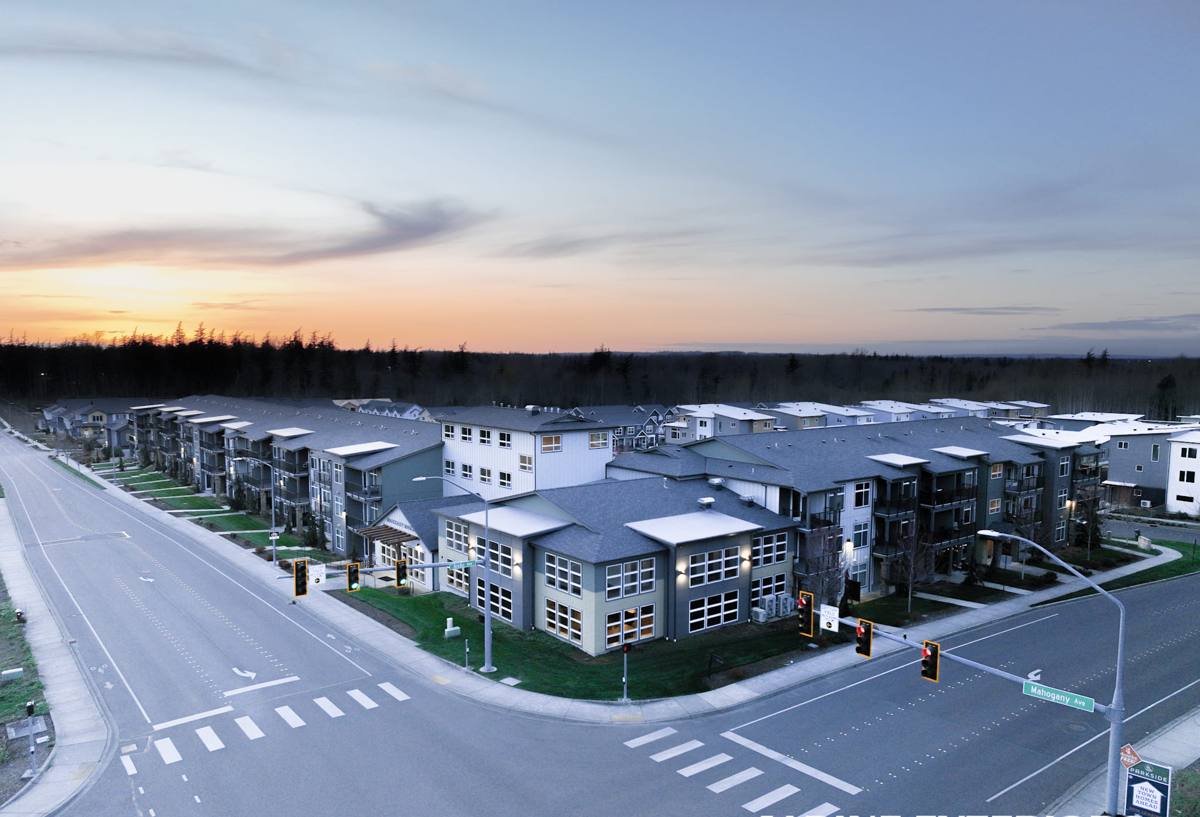
What Whatcom County Weather Does to a Roof Over Time
Moss and Organic Growth
Moss doesn't just sit on a roof looking bad — it holds moisture against the roofing material, works its way under shingle tabs and panel edges, and on older or poorly flashed roofs it can hold enough water to cause rot in the decking below. Metal roofing gives moss a much harder surface to root into compared to asphalt shingles, and a properly installed metal roof sheds water fast enough that standing moisture rarely gets the chance to establish. It's not moss-proof — algae and moss can still build up in shaded valleys or where debris collects — but it's far less hospitable to it than a shingle roof, and cleaning is simpler.
Driving Rain and Wind-Driven Moisture
Rain that comes in at an angle finds every weak seam, nail hole, and flashing gap a roof has. This is where installation quality matters more than the material itself. A metal roof with rushed flashing around chimneys, skylights, or roof-to-wall transitions will leak in driving rain even though the panels themselves are watertight. We pay particular attention to those transition points on every Lynden roof because they're consistently where callbacks happen on jobs that weren't detailed properly the first time.
Humidity, Condensation, and Attic Ventilation
A roof deck that stays damp from the underside is just as much a problem as one that leaks from the top. Sustained regional humidity means attic spaces need real airflow — intake at the eaves, exhaust at the ridge — or condensation builds up on the underside of the roof deck and framing over time. Metal roofing actually makes this easier to get right than some other materials, since ridge vent systems integrate cleanly into most panel profiles, but only if ventilation is planned into the job rather than treated as an afterthought.
Metal Roofing Options We Install
Not every metal roofing product is the right fit for every house, budget, or roofline. Here's how the main options compare for a typical Lynden home.
| Type | Look | Typical Lifespan | Best Fit |
|---|---|---|---|
| Standing seam | Clean vertical lines, hidden fasteners | 40-60 years | Homes wanting a modern or high-end look; best long-term seam performance in driving rain |
| Exposed-fastener panel | Ribbed, visible screw pattern | 25-40 years | Budget-conscious projects; requires fastener maintenance over time |
| Stone-coated steel | Mimics shingle, tile, or shake profiles | 40-50 years | Homeowners who want metal's durability with a more traditional look |
Standing seam is what we recommend most often for this climate because the concealed fastener system removes one of the most common failure points — exposed screws whose rubber washers degrade and eventually leak after years of sun and rain cycling. It costs more up front, but for a roof that's going to be dealing with Whatcom County weather for decades, that trade-off usually makes sense. Exposed-fastener panels aren't a bad product, but they're a maintenance commitment: washers should be checked periodically, and we're upfront with homeowners about that before they choose it to save on the front end.
What a Correct Metal Roof Installation Involves
The panels get the attention in most sales conversations, but the layers underneath them are what actually determine whether the roof performs for 40+ years or starts giving trouble in year eight.
- Deck inspection and repair — any soft, rotted, or delaminated sheathing gets replaced before anything goes down over it.
- Synthetic underlayment — a high-temperature, water-resistant underlayment rated for use under metal, not a generic felt product.
- Ice-and-water shield at vulnerable points — eaves, valleys, and around penetrations, even though hard freezes aren't the primary concern here; it also guards against wind-driven rain intrusion.
- Panel layout and fastening — correct panel spacing, thermal movement allowance, and fastener pattern specific to the panel profile and roof pitch.
- Flashing at every transition — chimneys, skylights, sidewalls, and valleys custom-formed and sealed, not covered with generic trim pieces.
- Ridge and eave ventilation — sized to the attic volume, not just bolted on to match the roof style.
Skip any one of these and the roof can still look right for a few years. The failures show up later, usually as a soft spot near a chimney or a stain on an interior ceiling after a hard rain — which is exactly the kind of problem a homeowner shouldn't have to diagnose themselves.
Our Process From Estimate to Cleanup
- On-site inspection. We walk the roof (or use appropriate access for steep or fragile roofs), check the decking condition where visible, look at existing ventilation, and note flashing points and tree/moss exposure.
- Written estimate. You get a clear scope: panel type, underlayment, flashing details, ventilation plan, and a firm price — not a vague allowance.
- Material order and scheduling. Metal panels are often fabricated to the specific roof measurements, so lead time varies by product and manufacturer.
- Tear-off and deck repair. Old roofing comes off, decking is inspected, and any damaged sheathing is replaced before underlayment goes down.
- Installation. Underlayment, flashing, panels, and ventilation components installed in sequence, with flashing details done by hand at every transition.
- Final walkthrough and cleanup. We check seams, fastener lines, and flashing with you before we consider the job finished, and the property is cleaned of debris and old material.
Cost Factors for a Metal Roof in Lynden
Metal roofing costs more upfront than asphalt shingles, generally by a meaningful margin, but the math changes when you factor in lifespan and reduced maintenance over 30-40 years. Broadly, homeowners should expect metal roofing to run from the moderate-to-upper range of residential roofing costs depending on the factors below — we give exact numbers only after seeing the roof.
| Factor | Why It Matters |
|---|---|
| Panel type | Standing seam costs more per square than exposed-fastener panel; stone-coated steel falls in between |
| Roof complexity | Valleys, dormers, and multiple roof planes mean more flashing labor and material waste |
| Existing deck condition | Rot or delamination found during tear-off adds repair cost that can't always be predicted beforehand |
| Ventilation upgrades | Adding proper intake/exhaust venting where none existed is worth the added cost for long-term deck health |
| Tear-off vs. layover | Most metal roofing goes over a full tear-off for correct performance; layovers are rarely appropriate here |
Metal Roofing vs. Asphalt Shingles for This Climate
Asphalt shingles are a reasonable, proven product and we're not going to tell a homeowner they made a bad choice if that's what's on their house now. But when we're asked to weigh in on new construction, a full re-roof, or a roof nearing the end of its life in a climate like this one, metal has real advantages worth naming honestly. Shingles absorb and hold moisture at the granule surface, which is part of what makes them more hospitable to moss and algae growth over time in a wet climate. Metal sheds water immediately and gives organic growth much less to hold onto. Shingles also have a shorter service life here — typically 20-25 years under sustained wet-weather cycling — compared to 40+ years for a well-installed metal roof. The trade-off is upfront cost and, for exposed-fastener systems, some ongoing fastener maintenance. For homeowners planning to stay in a Lynden property long-term, metal roofing's lifespan usually offsets the higher initial investment.
Maintenance Checklist for Metal Roofs in a Moss-Prone Climate
Metal roofing needs far less upkeep than shingles, but "low-maintenance" isn't "no-maintenance." A short annual routine keeps a metal roof performing for its full lifespan.
- Clear leaves, needles, and debris from valleys and behind chimneys or dormers each fall.
- Check for moss or algae buildup in shaded areas and remove buildup gently — no pressure washing directly against seams or panel edges.
- Inspect exposed fasteners (if applicable) every couple of years for washer wear or backing-out screws.
- Confirm gutters and downspouts are clear so water leaving the roof has somewhere to go.
- Have flashing around chimneys, skylights, and sidewalls checked after any major windstorm.
- Look for interior ceiling stains after heavy rain events, which is often the first visible sign of a flashing issue.
Why Hire a Crew That Already Works in Lynden
Roofing crews who mostly work in drier climates or in neighborhoods with different roof styles don't always plan for the specific combination of moss exposure, driving rain, and tree cover that shows up on a lot of Lynden properties. We work throughout Whatcom County and see the same recurring issues on this type of roof: undersized ventilation on older homes, flashing that was never upgraded when a roof was replaced in the past, and valleys that collect debris because of surrounding tree cover. Knowing what to look for before the tear-off starts means fewer surprises mid-project and a roof detailed for the conditions it will actually face, not a generic installation dropped onto a house that needed something more specific.
If you're weighing a metal roof for a Lynden home, we're glad to come take a look, walk you through what your specific roof needs, and give you a straightforward estimate — no pressure, no sales script. Use the form below to request a free estimate.