 Glenhaven Siding
 New-Construction Windows Are a Different Job Than a Replacement
When people call about "new windows," most of the time they mean a retrofit — pulling an old sash out of an existing frame and dropping a new one in. New-construction windows are a different animal entirely. They come with a nailing fin, get installed before the siding goes on, and rely on the window, the wall's water-resistive barrier, and the flashing all being integrated correctly during the build. There's no old frame to hide mistakes behind. If the opening is prepped wrong or the flashing sequence is off, the problem doesn't show up as a drafty room — it shows up two or three years later as rot inside the wall cavity, and by then it's a much bigger repair.
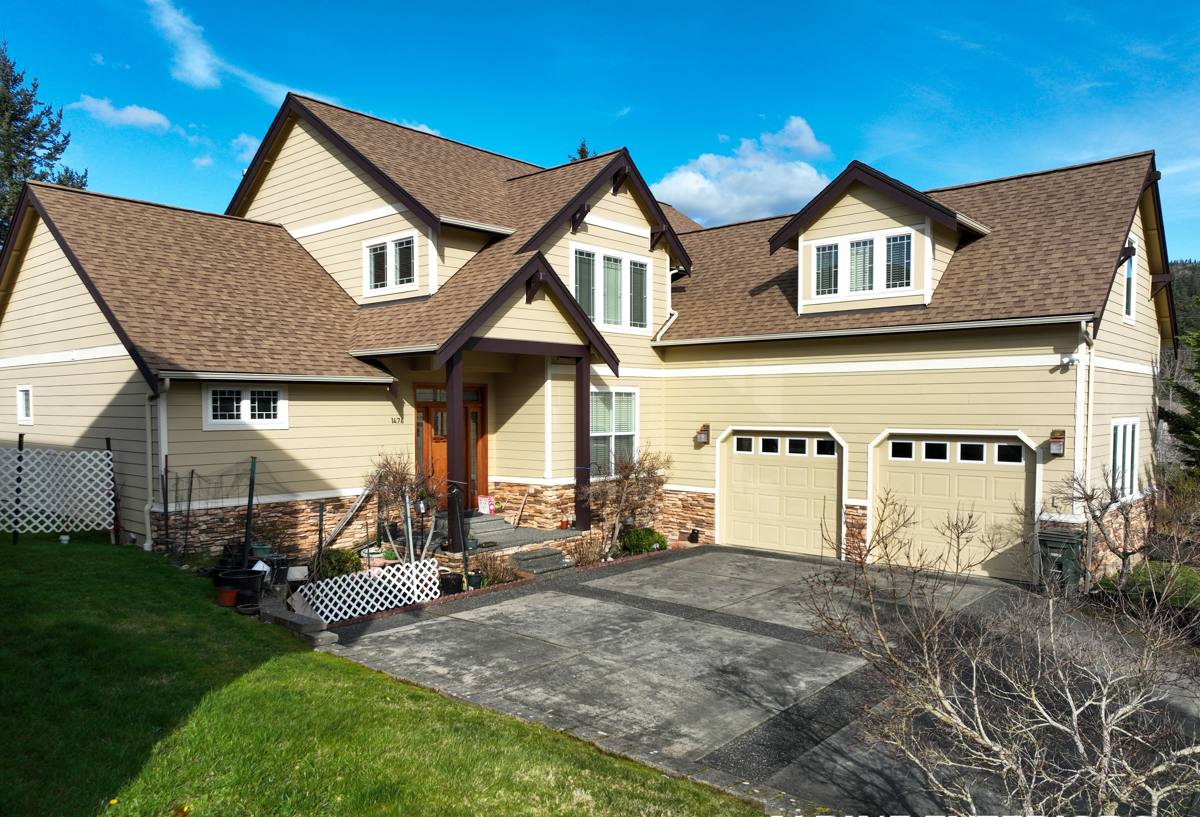
For a home going up in Fairhaven, or an addition being framed onto an existing Fairhaven house, this is the stage where the building envelope either gets built right or doesn't. We treat new-construction window installs as a systems job — window, flashing, sill pan, and WRB all working together — not just a product swap.
What Fairhaven's Climate Actually Does to a Window Opening
Fairhaven sits close enough to the water that salt-laden air is a real, everyday factor, not an occasional nuisance. Combine that with the driving rain that comes off Bellingham Bay during fall and winter storms, and a long stretch of the year where surfaces stay damp enough to grow moss, and you've got three separate stressors hitting the same window opening:
- Salt air accelerates corrosion on unprotected fasteners, cheap flashing tape adhesives, and lower-grade hardware and finishes.
- Driving, wind-driven rain doesn't fall straight down — it gets pushed sideways into wall assemblies, which means flashing details that would be fine in a drier climate aren't enough here.
- Extended damp/moss season keeps siding, trim, and sills wet for longer stretches, which means any small gap or reverse-lapped flashing detail has more time to do damage before anyone notices.
None of this means new-construction windows can't hold up beautifully in Whatcom County — most do, for decades. It means the installation details that get treated as "good enough" in milder or drier regions need to be done to a higher standard here, every time, not just on the homes closest to the water.
Choosing a Window That's Right for a New-Construction Opening Here
Frame material
Vinyl, fiberglass, and clad-wood are the three materials we install most often in new construction, and each behaves differently in a salt-air, high-moisture environment. Wood-only frames without a protective exterior cladding are the one option we steer people away from in this specific setting — bare wood exposed to Fairhaven's damp cycle for years needs more upkeep than most owners want to sign up for, and we'd rather be upfront about that trade-off than sell a product we know will create maintenance headaches.
Glass package
Double-pane, low-E glass with an argon fill is the baseline we recommend for new construction in this area — it's a meaningful step up in comfort and energy performance over single-pane or basic dual-pane without the coating, and the cost difference is modest relative to the life of the window.
| Frame Material | Salt-Air Durability | Maintenance | Typical Use |
|---|---|---|---|
| Vinyl | Very good — won't corrode or rot | Low — occasional cleaning | Cost-conscious builds, additions |
| Fiberglass | Excellent — dimensionally stable, resists moisture | Low | Larger openings, higher-end new builds |
| Clad-Wood | Good exterior protection; interior wood look | Moderate — cladding needs to stay sealed at joints | Owners wanting a wood interior finish |
| Bare Wood | Poor without diligent upkeep | High — regular refinishing needed | Not our default recommendation here |
What a Correct New-Construction Install Actually Involves
The sill pan comes first
Before the window ever goes in the opening, the rough sill needs a sloped, sealed pan that directs any water that gets past the window back outside the wall — not down into the framing. Skipping this step, or using a flat sill with no slope, is one of the most common shortcuts we see, and it's invisible once the siding is up.
Flashing has to shed water like shingles
Every layer — sill pan, window flange, jamb flashing, head flashing, and the wall's water-resistive barrier — has to lap over the one below it, like shingles on a roof, so water is always directed outward and down. Reverse-lapped flashing (a very easy mistake to make under time pressure) will let water track behind the WRB instead of over it, and in a climate with as much driving rain as Fairhaven gets, that mistake shows up faster than it would in a drier region.
Sealant is a backup, not the plan
Caulk and sealant have a service life, and in salt air they break down faster than most people expect. A properly flashed and pan-flanged window will keep working even after the sealant ages; a window that relies on sealant alone as its primary water barrier is one failed bead away from a leak.
Fasteners and hardware
We use corrosion-resistant fasteners appropriate for coastal exposure — the wrong fastener choice is a small cost saving upfront that turns into staining, streaking, or hardware failure down the road, and it's an easy detail for a crew unfamiliar with this environment to overlook.
Our Process, Start to Finish
- Site and plan review — we look at rough openings, wall assembly, and window schedule before the walls are even fully framed, so sizing and flashing details are planned, not improvised on site.
- Sill pan installation — sloped and sealed at every rough opening before the window arrives.
- Window set and shim — leveled, plumbed, and squared, checked for proper reveal and operation before it's fastened permanently.
- Flashing integration — jamb and head flashing tied into the WRB in correct shingle-lap order, sealed with materials rated for the exposure.
- Interior and exterior air-sealing — low-expansion foam or backer rod and sealant at the interior gap, so the window is sealed for air and moisture on both sides of the wall.
- Final inspection — operation check, seal check, and a walkthrough before siding closes the opening up for good.
Mistakes We Commonly Find on New-Construction Openings
- No sill pan, or a flat (unsloped) sill pan
- Flashing tape applied in the wrong order, directing water inward instead of out
- Relying on caulk as the only water barrier instead of proper flashing
- Windows set out of square, causing premature seal and hardware wear
- Standard fasteners used in a coastal-exposure setting instead of corrosion-resistant hardware
- Gaps left unsealed on the interior side, allowing condensation and drafts even when the exterior looks fine
Cost Factors for New-Construction Windows in Fairhaven
Every project is different, but the main variables that move the price on a new-construction window job are consistent from house to house:
| Factor | Why It Matters |
|---|---|
| Number and size of openings | More openings and larger units mean more material and labor hours |
| Frame material chosen | Vinyl, fiberglass, and clad-wood carry different unit costs |
| Glass package | Upgraded low-E coatings or gas fills add modest cost for real comfort gains |
| Wall assembly complexity | Certain siding types or wall details require more flashing labor to integrate correctly |
| Site access and timing | Coordinating install around the framing schedule affects labor efficiency |
We give straightforward, itemized estimates rather than a single lump number, so you can see what's driving the cost and where there's room to adjust the plan if the budget needs it.
Why Hiring a Crew That Already Works in Fairhaven Matters
New-construction window flashing isn't installed to a single universal standard — it's installed to handle the conditions of the specific site. A crew that mostly works drier inland regions can do technically correct work that still isn't built for what Fairhaven's salt air and driving rain will throw at it over the next twenty years. Working regularly in Whatcom County means we're already familiar with local wall assemblies, inspection expectations, and which details need extra attention given the exposure this area gets. That's not a marketing point — it's the difference between a window that's still performing well in fifteen years and one that starts showing water staining or hardware corrosion in five.
Maintenance Once the Windows Are In
New-construction windows installed correctly need relatively little upkeep, but a few habits go a long way in this climate:
- Rinse salt residue off exterior frames and glass periodically, especially after storms
- Keep gutters and downspouts clear so runoff isn't dumping extra water onto window heads
- Check exterior sealant lines annually for cracking or separation, since sealant is a backup layer that does age over time
- Keep moss and organic growth cleared from adjacent siding and trim so it doesn't hold moisture against the window frame
- Operate hardware (locks, cranks, rollers) a few times a year to keep it from seizing, particularly on coastal-exposure hardware finishes
If you're framing a new home, planning an addition, or working with a builder on a project in Fairhaven, we're happy to walk the plans with you and talk through window selection and flashing details before the walls close up. Reach out for a free, no-pressure estimate using the form below.