 Glenhaven Siding
 Why Siding in the Nooksack Area Wears Differently
Homes in the Nooksack pocket of Glenhaven sit in a specific weather lane: enough distance from open water that people forget salt air still reaches them, enough elevation change and tree cover to hold onto rain long after a storm passes, and enough shaded, damp stretches of yard and roofline to grow moss on nearly anything that sits still. None of that is dramatic on its own. It's the combination, repeated season after season, that wears siding down faster than it would in a drier inland town.
Siding repair here isn't a one-size-fits-all job. A crack that would be cosmetic in a dry climate can be a moisture entry point in Whatcom County. A stain that looks like dirt is often the first visible sign of trapped water behind the board. When we get called out for siding repair in this part of Glenhaven, we're not just patching what's visible — we're checking what the visible damage is telling us about what's happening underneath.
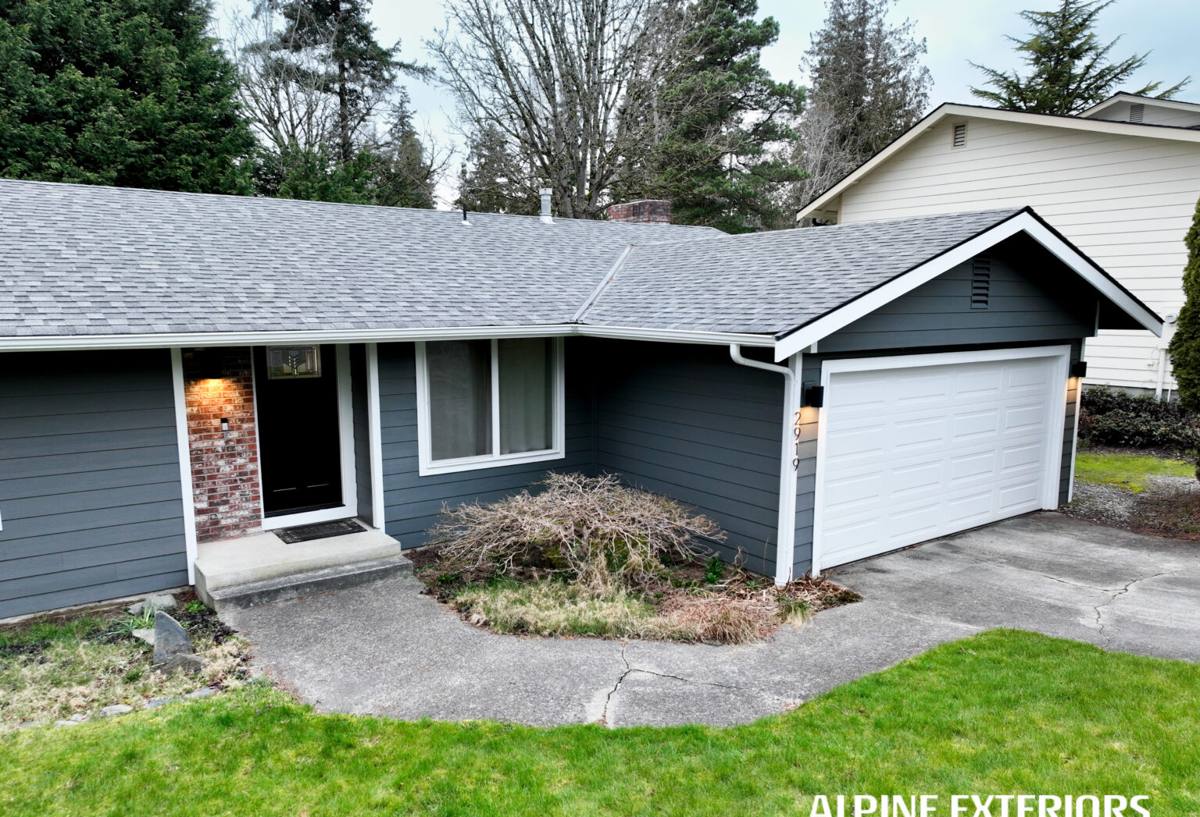
What Actually Damages Siding Around Nooksack
Salt Air and Slow Corrosion
Salt-laden air moves further inland than most homeowners assume, and it doesn't need to be constant to do damage — occasional exposure, repeated over years, is enough. The main casualties are metal: nail heads, flashing, trim fasteners, and any exposed hardware. Once fasteners start to corrode, they lose their grip, siding panels loosen, and gaps open up that let water in behind the cladding. By the time you can see a panel has shifted, the fastener problem has usually been building for a while.
Driving Rain and Wind-Driven Moisture
Whatcom County storms don't always fall straight down. Wind-driven rain pushes water sideways, into laps, seams, and butt joints that were never designed to handle water moving in that direction. Over time this finds the weak points — a slightly open seam, a caulk line that's shrunk, a corner where two trim pieces meet. Repair work in this climate has to assume water has traveled further than the stain suggests, not just treat the spot where it happened to surface.
Moss, Algae, and the Long Wet Season
Shaded north- and east-facing walls, gutters that overflow during heavy rain, and a wet season that runs long here all add up to ideal moss and algae conditions. Moss itself doesn't destroy siding overnight, but it holds moisture against the surface for extended periods, which accelerates rot in wood-based products and breaks down paint and caulk faster than clean, dry siding would age. Left alone, a mossy section becomes a chronically wet section, and chronically wet sections are where repairs turn into replacements.
Signs a Nooksack Home Needs Siding Repair
Most siding problems give warning signs well before they become structural. Homeowners in this area should walk their exterior at least once a year, ideally after the wettest stretch of winter, and look for:
- Soft or spongy spots when you press on the siding, especially near the bottom courses and around windows
- Visible gaps, buckling, or panels that have pulled away from the wall
- Rust streaks running down from nail heads or trim fasteners
- Peeling or bubbling paint that keeps coming back in the same spot after repainting
- Dark staining or persistent moss growth concentrated in one area rather than spread evenly
- Any musty smell or visible moisture on interior walls that back up to exterior siding
- Cracked or missing caulk at seams, corners, and around penetrations like faucets and vents
What a Correct Repair Actually Involves
A quality siding repair is more than swapping a damaged board for a new one. Done right, it's a small investigation followed by a targeted fix:
- Confirm the extent of damage — not just the panel that's visibly cracked or stained, but the surrounding area and the sheathing behind it.
- Check for moisture intrusion — probing suspect wood, checking house wrap or building paper condition where accessible, and identifying how water is getting in, not just where it's showing up.
- Address the cause, not just the symptom — a failed seal, missing flashing, or corroded fastener needs to be corrected, or the same spot fails again within a season or two.
- Replace damaged material with a matching product — patched siding that doesn't match in profile, texture, or finish stands out and can create new water paths where old and new material meet.
- Reseal and refinish properly — correct caulking at seams and a finish that matches the surrounding panels, so the repair blends in rather than becoming the next weak point.
Skipping any of those steps is how a $300 repair turns into a $3,000 repair two years later. Patching over a soft spot without finding the moisture source is one of the most common shortcuts we see when we're called in to fix someone else's repair.
Repair vs. Replacement: How We Decide
Not every damaged section needs full replacement, and not every homeowner needs to hear "you need all new siding" when a targeted repair will hold up fine. Here's generally how the decision breaks down:
| Factor | Favors Repair | Favors Replacement |
|---|---|---|
| Extent of damage | Isolated to one or two areas | Spread across multiple walls or elevations |
| Age of existing siding | Under 15-20 years, otherwise sound | Original siding nearing or past its expected lifespan |
| Moisture intrusion depth | Surface-level, caught early | Sheathing or framing already compromised |
| Material availability | Matching product still available or close match achievable | Discontinued product, poor color/profile match |
| Cost pattern | Single repair, no recurring issues | Repeat repairs in the same or nearby areas |
Costs for siding repair are genuinely case-by-case — a small section of trim and caulk work is a different job than replacing a run of damaged panels and the sheathing behind them. We'll always give you a straight number after we've actually looked at the damage, not a guess over the phone.
Why We Repair with James Hardie Fiber Cement
When a repair calls for replacing damaged sections rather than just resealing what's there, the material matters as much as the workmanship. This company installs and repairs exclusively with James Hardie fiber cement siding. It's non-combustible, engineered specifically for wet Pacific Northwest climates through Hardie's HZ5 product line, and finished with ColorPlus factory coating that resists the fading and chalking that field-painted repairs are prone to in a climate like this one.
There's a practical repair benefit too: because Hardie's colors and profiles are consistent and well-documented, matching a repaired section to existing siding is far more reliable than trying to match a discontinued vinyl profile or a faded, field-painted board. A repair that blends in rather than standing out is part of doing the job right, and Hardie makes that achievable in a way that some other siding materials don't.
Why a Local Nooksack Crew Matters
Siding repair in this specific pocket of Glenhaven benefits from a crew that already knows the conditions. That means knowing which orientations in this area tend to hold moisture longest, understanding how salt exposure shows up differently here than it does further inland, and having a realistic read on the rain windows so repairs get done and properly sealed before the next wet stretch rolls in. It also means being available for a follow-up look if a repair needs a second visit — something a crew driving in from outside the county is a lot less likely to prioritize.
We've done enough repair work in and around Nooksack to recognize patterns quickly: which symptoms usually mean a simple fix and which ones usually mean there's more going on behind the wall. That familiarity saves homeowners both time and unnecessary exploratory work.
Maintaining Siding Between Repairs
A few habits go a long way toward stretching the life of a repair, or avoiding the need for one in the first place:
- Keep gutters clear so overflow water isn't running down siding it wasn't designed to handle
- Trim back vegetation and tree cover that keeps walls shaded and slow to dry
- Gently wash off moss and algae buildup before it has a chance to hold moisture against the surface for months
- Re-caulk seams and penetrations proactively rather than waiting for a gap to open up
- Walk the exterior annually, particularly after the wettest part of the year, checking the signs listed above
If you're seeing any of these signs on a home in the Nooksack area, we're glad to come take a look. The estimate is free, there's no pressure, and we'll tell you honestly whether you're looking at a repair or something bigger — just fill out the form below to get started.