 Glenhaven Siding
 Why Puget Roofs Wear Differently
If you live in the Puget area of Glenhaven, you already know your roof doesn't fail the way a roof does further inland. Three things are working against it at the same time: salt-laden air drifting off the water, driving rain that comes in sideways during winter storms, and a moss season that can run most of the year in Whatcom County's damp, shaded conditions. None of these alone would be a big deal. Together, over years, they find every weak point in a roof system and turn a small issue into a leak.
Salt air accelerates corrosion on exposed metal — nail heads, flashing, vent caps, gutter hangers. Driving rain doesn't just fall straight down; it gets pushed under shingle tabs, around chimney flashing, and into any gap that a calmer climate would never test. And moss doesn't just look bad — it holds moisture against the roofing material, lifts shingle edges as it grows, and slowly breaks down the surface underneath it. A roof repair in this part of Whatcom County has to account for all three, not just patch whatever is leaking at the moment.
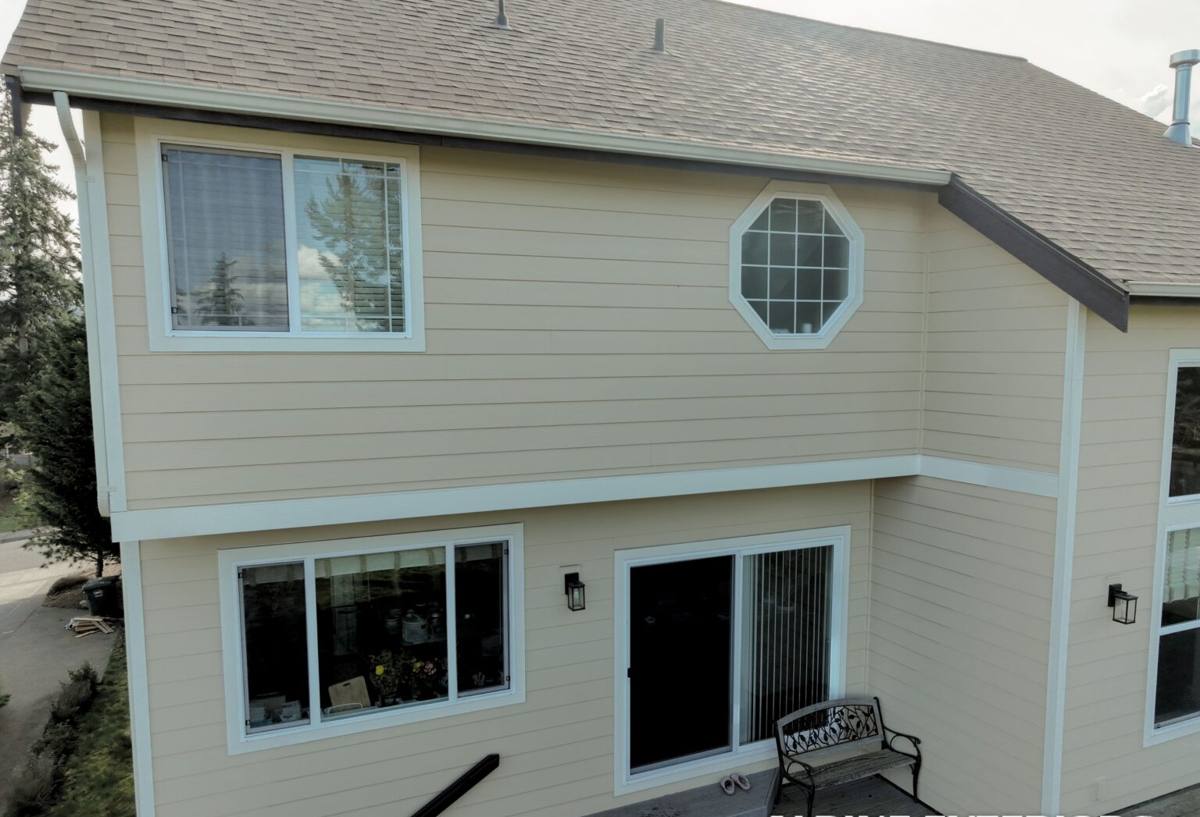
What "Roof Repair" Actually Covers
Roof repair is a broad term, and a lot of it comes down to catching the right problem before it becomes a bigger one. In Puget, the repair calls we see most often fall into a handful of categories:
- Moss and organic growth removal — clearing moss, algae, and debris buildup that's trapping moisture against the roofing material
- Flashing repair or replacement — around chimneys, skylights, vent pipes, and roof-to-wall transitions, where corrosion or movement has opened a gap
- Shingle or roofing material repair — replacing wind-lifted, cracked, or granule-worn sections rather than the whole roof
- Gutter and drip edge issues — clogged or undersized gutters that back water up under the roofing edge during heavy rain
- Ventilation problems — poor attic airflow that traps moisture and accelerates rot from the underside
- Sealant and fastener failure — exposed nail heads and old sealant that salt air and UV have broken down over time
Most of these are individually inexpensive to fix when caught early. The cost problem comes from letting two or three of them run at the same time, because water damage compounds — a small flashing gap combined with a clogged gutter can rot decking in a single wet winter.
Signs Your Puget Home Needs a Roof Repair
Homeowners often wait until there's an active drip inside before calling, but by then the damage usually extends well beyond the visible leak. Here's what we'd want you to check for, or have us check for you:
- Dark streaking or thick moss patches, especially on north-facing slopes that stay shaded and damp
- Granules collecting in gutters or at downspout outlets — a sign the roofing surface is wearing thin
- Curling, cracked, or lifted shingle edges, particularly on slopes exposed to prevailing wind and rain
- Rusty streaks below metal flashing or vent caps
- Soft spots, sagging, or discoloration on interior ceilings near exterior walls or chimneys
- Daylight visible through the attic roof deck
- Gutters that overflow during moderate rain, not just downpours
If you're seeing more than one of these, it's worth having someone walk the roof rather than guessing from the ground. A lot of moss and flashing damage isn't visible from the yard.
What a Correct Repair Actually Involves
Diagnosis Before Patching
A repair that only addresses the spot where water is showing up inside the house often misses the actual entry point — water can travel along the underside of the decking before it drips. A correct repair starts with tracing the leak to its source, not just sealing the ceiling stain's rough location.
Matching the Existing System
Repairs need to tie into the existing roofing material, flashing, and underlayment correctly — not just get layered on top. That means matching shingle profile and color as closely as possible, using flashing metal and fasteners rated for coastal exposure, and making sure new sealant is compatible with what's already there.
Addressing the Cause, Not Just the Symptom
If moss caused the failure, the repair should include a plan to slow regrowth — not just replace the damaged material and leave the same shaded, damp conditions in place. If poor ventilation contributed, that gets addressed too. Otherwise you're paying for the same repair again in a few years.
Our Process
| Step | What Happens |
|---|---|
| 1. Inspection | Full roof walk, attic check where accessible, and photo documentation of problem areas |
| 2. Assessment | We identify the actual leak path or failure cause, not just the visible symptom |
| 3. Written Estimate | Clear scope and price before any work starts — no surprise add-ons mid-job |
| 4. Repair Work | Matching materials, correct flashing detail, and cleanup of moss or debris contributing to the problem |
| 5. Walkthrough | We show you what was done and what to watch going forward |
Repair or Replace? Honest Cost Factors
Not every roof issue in Puget calls for a full replacement, and we won't push one when a repair will do. Here's generally how we think through it:
| Factor | Leans Toward Repair | Leans Toward Replacement |
|---|---|---|
| Age of roofing material | Under roughly two-thirds of expected lifespan | Near or past expected lifespan |
| Extent of damage | Isolated to one section or a few spots | Widespread across multiple slopes |
| Underlying decking | Solid, no rot found | Soft or rotted decking in multiple areas |
| Moss/algae history | Recent growth, surface-level | Long-term growth with material breakdown underneath |
| Number of past repairs | First or second repair on this roof | Repeated repairs in the same areas |
Broad honest ranges: minor flashing or vent repairs are typically a modest line-item cost, while section replacement or extensive moss/decking remediation runs higher depending on roof access, pitch, and material. We'll always give you the actual number in writing before starting — not a rough guess to get the appointment.
Materials and Standards We Hold To
For repair work in a salt-air, high-moisture area like Puget, material choice matters as much as workmanship. We use flashing metal and fasteners rated for coastal/corrosive exposure rather than standard-grade hardware that looks fine for the first year and then starts rusting. Sealants are chosen for UV and moisture performance, not just whatever cures fastest. When matching existing shingles, we're upfront if an exact match isn't available — better to tell you that honestly than to install a mismatched patch and hope it doesn't stand out.
We're also selective about how we handle moss treatment. Pressure washing a roof surface can strip granules and shorten the material's remaining life, so our approach favors gentler removal methods and treatments that slow regrowth without damaging the roofing surface itself. It's a tradeoff — slower and slightly more labor-intensive — but it protects the investment you're making in the repair.
Why a Crew That Already Works Puget Matters
Roofing crews that mostly work drier, inland climates tend to underestimate two things here: how fast moss regrows in Whatcom County's shaded, wet microclimates, and how much salt air shortens the working life of standard fasteners and flashing. A crew that already works Puget knows which slopes on local homes tend to hold moisture longest, which flashing details fail first in driving coastal rain, and how to sequence repair work around this area's wet season instead of fighting it.
That local pattern recognition is what separates a repair that lasts from one that reopens in eighteen months. It's also why we can usually spot a developing problem — a slightly lifted shingle tab, an early moss patch — before it becomes an active leak, because we've seen the same conditions on other roofs in the area.
Timing Your Repair Around the Season
Roof repairs can happen year-round, but timing affects the work. Dry, mild stretches in late spring through early fall give sealants and flashing work the best cure conditions. Waiting until the peak of the wet season to address a known issue means the damage has more time to spread, and active rain can delay or complicate the repair itself. If you've noticed a problem, addressing it before the heaviest rain sets in is almost always cheaper than waiting for an emergency call during a storm.
Moss treatment specifically works best when applied before the wettest months, since moss growth accelerates with sustained moisture and shade. Getting ahead of it in late summer or early fall gives it less of a foothold going into winter.
A Quick Pre-Winter Checklist
- Clear gutters and downspouts of debris before the fall rains start
- Check for moss buildup on shaded, north-facing slopes
- Look for lifted or cracked shingle tabs after any high-wind event
- Inspect flashing around chimneys, skylights, and vent pipes for rust or gaps
- Check the attic for daylight, staining, or musty odor
- Confirm attic ventilation isn't blocked by insulation or debris
If any of these turn up something, it's better to get it looked at while it's still a repair-sized problem.
If you're dealing with a leak, moss buildup, or storm damage on a Puget roof, we're happy to come take a look and give you a straight assessment — no pressure, no inflated scope. Fill out the form below for a free estimate and we'll get you a clear picture of what your roof actually needs.