 Glenhaven Siding
 Cordata sees more than its share of weather working against a roof. Sitting inland from Bellingham Bay but still close enough to catch salt-laden air off the water, this part of Whatcom County combines three things that are hard on roofing systems: airborne salt that accelerates corrosion on metal fasteners and flashing, driving rain that finds every weak seam during winter storms, and a moss season that can run eight months or longer in the shaded, tree-lined lots common to the neighborhood. A roof replacement here isn't just about swapping old shingles for new ones — it's about building a system that's specifically suited to hold up under those three pressures year after year.
We've replaced roofs across Cordata and the surrounding Glenhaven area long enough to know which failure patterns show up here again and again. This page covers what that means for your home, what a correct replacement actually involves, and how we run the job from first inspection to final cleanup.
Why Cordata Roofs Wear Differently
Roofs in dry, sunny climates fail mostly from UV breakdown. Roofs here fail from moisture cycling — wet, dry, wet, dry, freeze, thaw — repeated for months at a stretch. That cycling is what pushes water past marginal flashing details, swells and rots sheathing at the edges, and gives moss and moss-adjacent algae the damp, shaded surface they need to take hold.
Salt Air and Metal Components
Even a few miles inland, salt air carried off the bay accelerates corrosion on exposed metal — nail heads, drip edge, flashing, and vent stacks. Standard electro-galvanized fasteners can start showing rust streaks well before the shingles themselves are due for replacement. That's a maintenance headache and, eventually, a leak point.
Driving Rain and Wind-Driven Water
Whatcom County storms don't always come straight down. Wind-driven rain gets pushed sideways and upward under shingle tabs, around chimney and skylight flashing, and into any gap where two roof planes meet. A roof that's fine in a light shower can still leak in a sideways winter storm if the underlayment and flashing details weren't built for it.
Moss, Shade, and Tree Cover
Many Cordata lots have mature tree cover, which is great for shade and privacy but keeps roof surfaces damp longer after every rain. Moss doesn't just sit on top of shingles looking bad — its root structure works into the granule surface and lifts shingle edges, which is exactly where wind and rain get their first opening.
Signs Your Roof Is Due for Replacement, Not Another Repair
Not every roof problem calls for a full tear-off. But there's a point where patching individual leaks costs more over time than doing the job right once. Here's what tells us a repair won't hold:
- Granule loss heavy enough that you can see bare asphalt on multiple shingles, not just one or two spots
- Soft or spongy decking felt underfoot when walking the roof, especially near valleys or eaves
- Moss or algae staining across large sections rather than isolated patches
- Curling, cupping, or cracked shingles concentrated on south- or west-facing slopes
- Rusted or failing flashing around chimneys, vents, and skylights
- Daylight visible through the roof deck from inside the attic
- Multiple past repairs in different spots — a sign the whole system is aging out together
What a Correct Roof Replacement Actually Includes
A roof is a system, not a single product. Shingles get the attention, but the layers underneath and the details around penetrations are what actually keep water out in this climate. We treat every one of these as non-negotiable on a full replacement:
Tear-Off and Deck Inspection
We remove the existing roofing down to the deck rather than layering over it. That's the only way to actually see the sheathing condition — rot, soft spots, and delaminated plywood are common findings on older Cordata roofs once the old layer comes off, and they need to be addressed before anything new goes down.
Sheathing Repair
Any damaged or undersized decking gets replaced before underlayment goes on. Skipping this step to save time is one of the most common shortcuts in the trade, and it's the reason a "new" roof can still leak or sag within a few years.
Underlayment Built for Wet Climates
Given how much moisture this area sees, we use synthetic underlayment across the field and self-adhering, waterproof ice-and-water membrane at the eaves, valleys, and any low-slope transitions — the spots where wind-driven rain is most likely to work its way underneath the shingle layer.
Flashing Done Properly, Not Patched
New flashing at every chimney, skylight, vent, and wall transition — step flashing woven correctly, not caulked over old flashing as a shortcut. Caulk is a maintenance item, not a waterproofing detail, and it fails faster than properly formed metal.
Ventilation Balance
Correct intake and exhaust ventilation keeps the attic space dry and temperature-balanced, which matters for shingle lifespan and for reducing the moisture that feeds moss growth from the underside as well as the top.
Corrosion-Resistant Fasteners and Metal
Because of the salt air here, we use fasteners and flashing rated for coastal exposure rather than standard-grade hardware. It costs a little more up front and saves you from premature rust staining and loosened fasteners down the line.
Material Options for Cordata Homes
There's no single "best" roofing material for every house — the right choice depends on your roof's slope, sun and shade exposure, budget, and how much long-term maintenance you want to take on. Here's an honest comparison of the options we most often discuss with Cordata homeowners:
| Material | Typical Lifespan | Moss Resistance | Maintenance | Notes for This Area |
|---|---|---|---|---|
| Architectural asphalt shingle | 25–30 years | Moderate (algae-resistant granules help) | Periodic moss/debris removal | Best value; wide color range; good option under tree cover with regular upkeep |
| Standing seam metal | 40–50+ years | High — moss struggles to grip smooth metal | Low | Strong choice for heavily shaded lots; higher upfront cost, minimal upkeep |
| Synthetic/composite shingle | 30–50 years | Moderate to high depending on product | Low to moderate | Impact-resistant, consistent appearance, good middle-ground option |
| Cedar shake | 20–30 years with upkeep | Low — needs active maintenance | High | We're honest that in a moss-heavy, damp climate this requires real ongoing commitment to look and perform well |
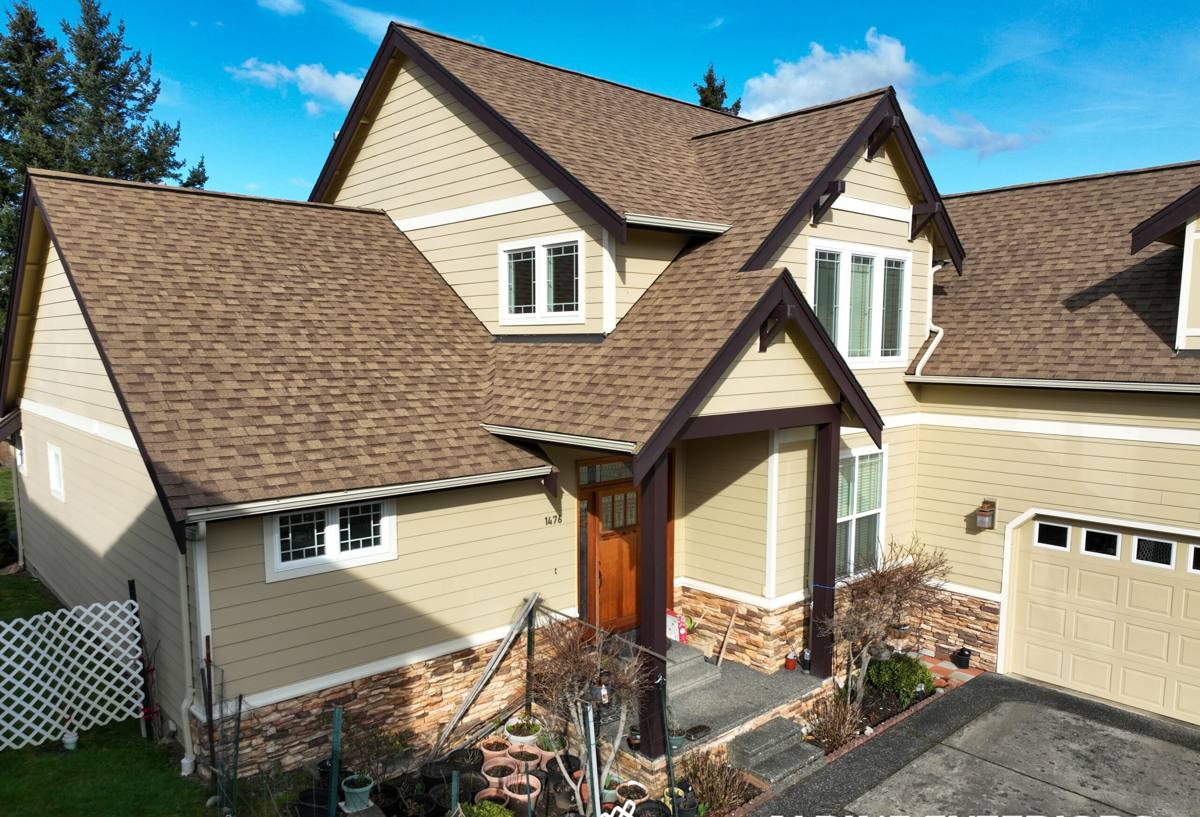
Asphalt architectural shingles remain the most common choice we install in Cordata because they balance cost, appearance, and performance well when the underlayment and flashing beneath them are done correctly. Metal is worth a serious look for homes under heavy tree canopy where moss is a constant fight.
Our Replacement Process, Start to Finish
- On-site inspection — we walk the roof and attic, check for soft decking, ventilation issues, and flashing condition, and photograph anything relevant to the estimate.
- Written estimate — a clear breakdown of materials, scope, and price, with any decking repair called out as a possible add rather than buried in fine print.
- Scheduling around weather — we plan tear-off days with realistic weather windows in mind, since an open roof deck in this climate isn't something we leave exposed longer than necessary.
- Tear-off and deck assessment — old roofing removed, deck inspected and repaired as needed before anything new is installed.
- Underlayment and flashing installation — waterproof membrane at vulnerable areas, synthetic underlayment across the field, new flashing throughout.
- Roofing material installation — installed to manufacturer specification, including proper nailing patterns and exposure for wind resistance.
- Ventilation check — intake and exhaust confirmed balanced for the attic space.
- Cleanup and magnetic sweep — job site, gutters, and yard cleared of debris and stray fasteners.
- Final walkthrough — we go over the finished roof with you before calling the job complete.
Cost Factors Worth Understanding Before You Get Quotes
Roof replacement pricing varies by roof size, pitch, material, and how much decking repair turns up once the old roofing is off. Rather than quote a number that won't hold up once your roof is actually inspected, here are the factors that most affect the final price:
- Roof size and number of planes, valleys, and penetrations
- Pitch — steep roofs take longer and require more safety setup
- Material selected — asphalt, metal, and composite carry different material and labor costs
- Deck condition — hidden rot or soft sheathing found during tear-off adds material and labor
- Access — tree cover, tight lot lines, and driveway access affect staging and disposal
- Ventilation and flashing upgrades needed to bring an older roof up to a proper standard
We'll walk through all of this in person rather than guess over the phone, because a fair price depends on actually seeing your roof.
Why Local Experience in Cordata Matters
A crew that only occasionally works this part of Whatcom County can install a technically fine roof and still miss the details that matter locally — using standard-grade fasteners instead of corrosion-resistant ones, underestimating how much ice-and-water membrane a shaded valley needs, or not accounting for how much moss buildup a particular lot's tree cover will generate. Crews that work Cordata regularly see the same houses, the same weather patterns, and the same failure points repeatedly, and that experience shows up in fewer callbacks and roofs that actually perform the way they're supposed to for their full lifespan.
If your roof is showing its age or you just want an honest opinion on where it stands, we're happy to take a look. Reach out for a free, no-pressure estimate using the form below — we'll walk the roof, tell you straight what we find, and give you options that fit your home and your budget.