 Glenhaven Siding
 Deming's Climate Is Harder on Siding Than It Looks
Deming sits back in the Nooksack River valley, tucked under heavy tree cover with the North Cascades foothills close by. It doesn't feel like a coastal town, but Whatcom County's weather doesn't respect that distinction. The same marine-driven systems that soak Bellingham and the Sound push inland and dump on Deming just as hard, and the moist air that rolls through the valley behaves the same way it does everywhere else in this county: it lingers. Add the shade from mature evergreens that surrounds a lot of Deming properties, and siding here stays wet longer after every storm than it would on a more open, sun-exposed lot.
That combination — driving rain, marine humidity, and shaded walls that don't dry out between storms — is exactly the setup that grows moss for the better part of the year on north- and east-facing elevations. None of that is a problem if the siding is built for it and installed correctly. It becomes a problem fast when the material softens, swells, or holds moisture against the wall instead of shedding it.
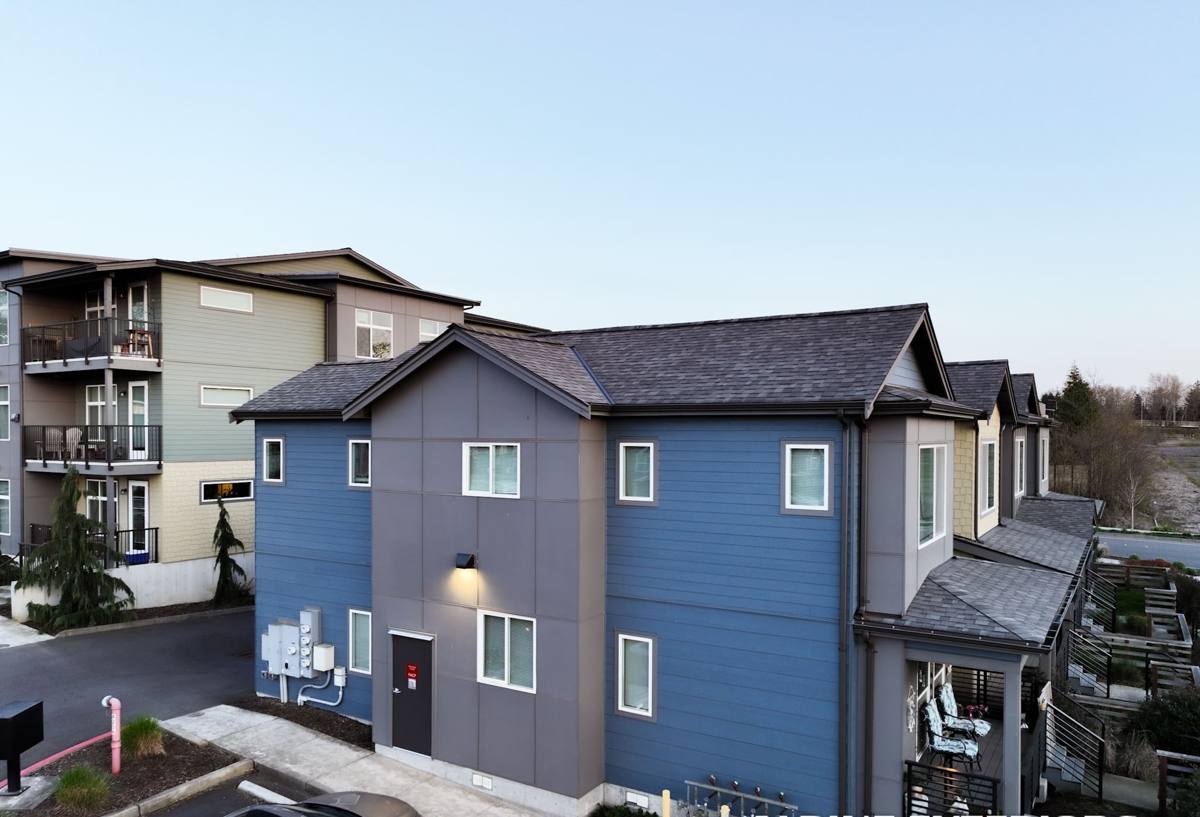
Signs a Deming Home Needs Replacement, Not Another Repair
Repair makes sense when the damage is isolated and the material underneath is still sound. Replacement becomes the honest answer once the siding itself is failing as a system — moisture is getting behind it, the material is compromised, or patching one spot just means you'll be back out here patching the next spot in a year. Some signs to check for before deciding which situation you're in:
- Boards that feel soft, spongy, or give when you press on them
- Paint that won't hold anymore, or that's peeling within a couple of years of a fresh coat
- Cupping, bowing, or visible gaps opening at seams and corners
- Moss or algae that comes back within weeks of being cleaned off
- Rot or dark staining at the bottom courses, near grade or under downspouts
- Siding older than 20-25 years, especially if it's wood-based or an early-generation composite
- Interior signs — musty smell, staining on interior walls near exterior corners — that point to moisture already past the siding layer
If you're seeing two or more of these at once, especially on the shaded side of the house, you're usually looking at a system-wide problem rather than a spot repair.
Why We Install Only James Hardie Fiber Cement
We standardized on James Hardie fiber cement siding for every job we take on, including replacements in Deming, and we don't install vinyl, LP SmartSide, Cemplank, Allura, primed spruce, or cedar. That's not a marketing position — it's a decision based on what holds up in this climate over decades, not just through the first few winters.
What We Turned Down, and Why
Vinyl siding is inexpensive and low-maintenance in mild, dry climates, but it expands and contracts more than fiber cement across temperature swings, and it can go brittle and crack in a hard cold snap — which the Nooksack valley gets its share of in winter. Its seams also give wind-driven rain more opportunities to work behind the panel over time.
Engineered wood products like LP SmartSide, along with primed spruce and cedar, all share a wood-based core. That core performs fine when it's kept dry and every cut edge is sealed properly at installation — but it's genuinely sensitive to installation quality, and under the extended damp exposure a shaded Deming lot delivers, any missed edge or gap becomes an entry point for swelling and rot. We don't like betting a homeowner's siding on every single cut edge being caught and sealed.
Other fiber cement brands like Cemplank and Allura are reasonable products, but we've standardized on Hardie specifically for its climate-engineered HZ5 formulation (built for the Pacific Northwest's wet-freeze cycle), its factory-applied ColorPlus finish, and the strength of its transferable warranty. Consistency across every job also means our crews know the product cold — no guessing on fastener spacing or gapping because we switched materials mid-season.
What Hardie Gets Right for This Valley
James Hardie fiber cement is non-combustible, doesn't feed mold the way wood-based siding can when it stays damp, and its ColorPlus factory finish is baked on rather than site-applied — which matters directly in a place like Deming, where shade and moisture would otherwise mean repainting far sooner than a homeowner should have to.
What a Correct Siding Replacement Actually Involves
Siding replacement is not just pulling off the old boards and nailing up new ones. The parts nobody sees — flashing, house wrap, fastener pattern, gapping — are what determine whether the job lasts 5 years or 40. Here's where jobs typically go wrong versus how they should be done:
| Step | Correct Practice | Shortcut That Fails in Deming's Climate |
|---|---|---|
| Sheathing inspection | Full tear-off, sheathing checked and repaired before anything new goes up | New siding installed over rotten or soft sheathing to save a day of labor |
| Water-resistive barrier | New house wrap, properly lapped and taped at every seam | Old or torn wrap reused, or seams left unsealed |
| Flashing at openings | Window and door flashing integrated with the house wrap, kickout flashing at roof-wall intersections | Caulk used in place of proper flashing |
| Ground clearance | Minimum clearance maintained between siding bottom edge and grade or hard surfaces | Siding installed tight to grade, wicking moisture straight up |
| Fastener pattern | Manufacturer-specified nailing pattern and fastener type for the HZ product line | Generic fasteners or inconsistent spacing that let panels work loose over time |
| Cut edges | Factory edges used wherever possible; field cuts sealed per spec | Cut edges left unsealed |
Every one of these steps is invisible once the job is finished, which is exactly why it matters who's doing the work — not just what material goes on the wall.
Our Process for a Deming Siding Replacement
- On-site assessment. We walk the exterior, check the shaded and moisture-prone elevations closely, and look for the signs listed above before anything is quoted.
- Sheathing and moisture check. Once tear-off starts, we inspect what's underneath before assuming it's sound.
- Repair before rebuild. Any compromised sheathing or framing gets addressed before new house wrap and siding go on — no covering up a problem.
- Install to Hardie's spec. Correct wrap, flashing, gapping, and fastening, for the HZ product line and profile you've chosen.
- Final walk-through. We go over the finished job with you before we consider it done.
Cost Factors for Deming Siding Replacement Projects
Every home is different, and we won't quote a number without seeing the house, but these are the variables that move the price up or down on most Deming projects:
| Factor | How It Affects the Project |
|---|---|
| Home size and wall area | More square footage means more material and labor, in a fairly direct relationship |
| Condition of existing siding and sheathing | Rot or moisture damage found during tear-off adds repair time before new siding can go on |
| Trim complexity | Homes with lots of corners, dormers, or architectural detail take more time to finish cleanly |
| Product line and profile | HardiePlank, HardiePanel, and shingle-style profiles carry different material and labor costs |
| Color and finish | Standard ColorPlus colors versus custom finishes affect material pricing |
| Site access | Sloped lots, long driveways, and tree-crowded sites common around Deming can add setup and staging time |
Why a Crew That Already Works in Deming Matters
Deming's older homes tend to share the same set of issues we see repeatedly — sheathing that's taken on moisture behind shaded walls, siding that was never gapped properly for the wet-dry cycle, or repairs from a previous owner that hid a bigger problem. A crew that has already worked on homes in this valley knows to check for those things by default, rather than being surprised by them mid-project. We're also familiar with Whatcom County's permitting process, so that part of the job doesn't turn into a delay. That local familiarity, combined with being reachable if a warranty question comes up years down the road, is worth more than it sounds like on paper.
Keeping Your New Siding Looking Right
Once new Hardie siding is up, the maintenance load drops considerably compared to what most Deming homeowners are used to. There's no repainting cycle to plan around, since the ColorPlus finish is factory-applied and warrantied against the exact fading and wear that shows up fastest on shaded, damp walls. What still matters: keeping gutters clear so water isn't sheeting down the siding, trimming back vegetation that's crowding a wall and keeping it from drying out between rains, and an occasional soft wash on the shadiest elevations to keep moss from getting a foothold in the first place.
If your Deming home's siding is showing its age, or you just want an honest read on whether repair or replacement is the right call, we're glad to come take a look. There's no pressure and no obligation — just a straight answer and a written estimate you can take your time with. The form below is the easiest way to get that started.