 Glenhaven Siding
 Roof Replacement Built for Everson's Weather
Everson sits in a part of Whatcom County where roofs work harder than they do almost anywhere else in the state. You've got moisture rolling in off the Salish Sea, wind-driven rain that finds every weak seam, and a moss season that seems to stretch longer every year. A roof that's merely "installed correctly" on paper can still fail early here if it wasn't built with this specific climate in mind. That's the gap we aim to close: a roof replacement that's engineered for what Everson actually throws at a house, not a generic install pulled from a manual written for a drier region.
We're not asking you to take our word for the climate part — you already know it if you've lived here more than a winter. What we bring is the roofing side: knowing which underlayments, ventilation setups, and flashing details actually hold up under that combination of salt air, sustained rain, and moss pressure, and building the job around those choices from day one.
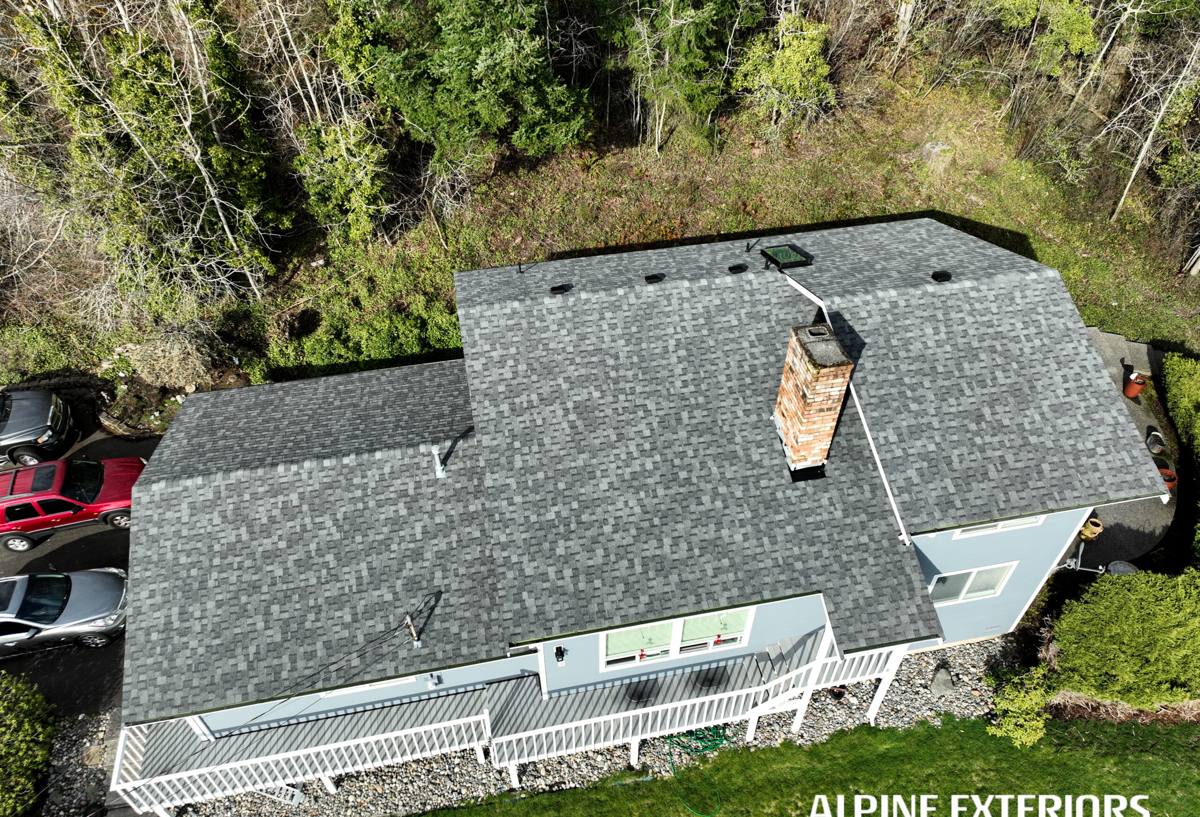
What Everson's Climate Actually Does to a Roof
Salt Air and Metal Fatigue
Everson isn't right on the coast, but Whatcom County still gets enough marine influence that salt-laden moisture works its way inland, especially with the prevailing weather patterns off the Sound. Salt air accelerates corrosion on any exposed metal — flashing, fasteners, vent caps, drip edge. Cheap or improperly coated metal components can start showing rust streaks and pinhole corrosion years before a comparable roof inland would. This is a slow, cumulative problem, which is exactly why it gets missed: nothing looks wrong in year one or two.
Driving Rain
Rain that falls straight down is the easy case. Rain that comes in sideways during a windstorm is what actually causes leaks, because it gets pushed up and under shingles, around vents, and into any flashing detail that was cut a little short. A roof replacement in this area has to assume wind-driven rain as the normal condition, not the exception — which changes how underlayment, ice-and-water shield placement, and flashing overlaps get specified.
Moss and Organic Growth
Whatcom County's long wet season, combined with tree cover common around Everson properties, creates ideal conditions for moss, algae, and lichen to take hold on a roof. Moss isn't just cosmetic. It holds moisture against the roofing material, works its rhizoids into shingle granules and seams, and can lift edges enough for water to get underneath. A roof that isn't detailed with moss resistance in mind will need moss treatment or removal within a few years — and repeated scraping shortens the life of the roof covering itself.
Signs an Everson Roof Needs Replacing, Not Patching
Not every roof problem calls for a full replacement, and we'll tell you plainly if a repair is the more honest answer. But there's a point where patching starts costing more than it saves. Watch for:
- Granule loss showing up in gutters or at downspout outlets, especially after a windy rain event
- Shingles that are curling, cupping, or visibly brittle at the edges
- Moss or algae that returns within months of cleaning, even after treatment
- Daylight visible through the roof deck from the attic, or water stains on attic sheathing
- Multiple past repairs in different areas of the same roof
- Roof age past 20–25 years for asphalt systems, even if it "looks fine" from the ground
- Soft or spongy spots underfoot during inspection, indicating deck rot
If you're seeing two or more of these, it's worth having someone look at the whole system rather than chasing individual leaks one at a time.
What a Correct Roof Replacement Involves Here
Tear-Off and Deck Inspection
A full tear-off is the only way to know what's actually happening under the old roofing. In this climate, we routinely find soft or delaminated decking around old flashing points and valleys — areas that stayed damp longer than the rest of the roof. Any compromised sheathing gets replaced before anything new goes down. Skipping this step to save time is one of the most common shortcuts in the trade, and it's the one that causes the earliest failures.
Underlayment Selection
Given the driving rain typical of this area, we favor synthetic underlayments with strong water resistance over older felt products, and we pay particular attention to ice-and-water shield placement at eaves, valleys, and around penetrations — the spots most likely to see wind-driven water intrusion.
Flashing Detail
Flashing is where most roof leaks actually start, not in the field of the shingles themselves. Chimneys, skylights, sidewalls, and valleys all need step flashing, counter-flashing, or valley metal installed with proper overlap and, where it matters most, corrosion-resistant materials given the salt exposure in this part of the county.
Ventilation
A roof deck that can't breathe traps moisture, which speeds up rot and gives moss and mildew a head start from the inside as well as the outside. Balanced intake and exhaust ventilation is part of a correct replacement here, not an upsell.
Material Selection for Moss and Algae Resistance
Many manufacturers now offer shingles with algae-resistant granules (often copper- or zinc-infused) built specifically for wet, shaded climates like this one. We'll walk you through what's appropriate for your roof's sun exposure and tree cover, since a heavily shaded roof needs a different approach than one that gets more direct sun.
Comparing Common Roofing Choices for Everson Homes
| Material | How It Handles This Climate | Maintenance Reality |
|---|---|---|
| Standard 3-tab asphalt | Adequate but more moss- and wind-vulnerable than upgraded options | Shorter lifespan here than in drier climates; more frequent moss cleaning |
| Algae-resistant architectural asphalt | Better moss/algae resistance; thicker profile sheds driving rain better | Still needs periodic inspection, but slower regrowth of moss |
| Metal roofing | Excellent water shedding; needs corrosion-resistant coatings near marine influence | Low maintenance long-term; higher upfront cost |
| Cedar shake | Traditional Pacific Northwest look, but holds moisture and is moss-prone without diligent upkeep | Highest maintenance burden of common options in this climate |
There's no single "best" material for every home — sun exposure, tree cover, roof pitch, and budget all factor in. We'll talk through the honest trade-offs for your specific roof rather than pushing one product across the board.
How Our Process Works
- Inspection and estimate. We walk the roof and attic, note deck condition, ventilation, and flashing issues, and give you a clear written estimate — no pressure, no inflated urgency.
- Material selection. We go over options suited to your home's exposure and your budget, including moss-resistant and corrosion-resistant choices where they matter most.
- Scheduling around weather. Given how wet this region gets, we plan tear-off and dry-in carefully so your home isn't left exposed longer than necessary.
- Tear-off and deck repair. Old roofing comes off, the deck gets inspected, and any rot or soft spots get replaced before anything new is installed.
- Underlayment, flashing, and ventilation. Installed to the standard the climate actually requires, not the bare minimum code allows.
- Final walkthrough. We go over the finished roof with you, including care and moss-prevention basics specific to your property.
Cost Factors to Understand Before You Get Quotes
Roof replacement pricing varies enough between homes that a flat number isn't honest to quote sight unseen. What actually moves the price:
| Factor | Why It Matters |
|---|---|
| Roof size and pitch | Steeper roofs take longer and require more safety setup |
| Deck condition | Rotted sheathing found during tear-off adds material and labor |
| Material choice | Standard asphalt, algae-resistant asphalt, and metal have different price points |
| Number of penetrations | Chimneys, skylights, and vents each need individual flashing work |
| Access and tree cover | Limited access or heavy overhead branches can add setup time |
| Layers to remove | Multiple existing layers mean more tear-off labor and disposal |
Generally, homeowners in this area can expect a wide range depending on these factors — anywhere from a modest mid four-figure job for a small, simple asphalt roof up to well into five figures for larger roofs or upgraded materials like metal. An accurate number only comes from seeing your actual roof.
Why a Crew That Already Works Everson Matters
Roofing crews that work broadly across very different climates tend to default to generic specs — whatever holds up in an average, drier region. A crew that regularly works Whatcom County jobs already knows which flashing details fail first under driving rain here, which fastener coatings actually resist the salt influence, and which shingle lines hold up against moss pressure in this specific mix of shade and moisture. That local pattern recognition is the difference between a roof that needs moss treatment and edge repairs in year three, and one that doesn't.
It also means faster, more accurate estimates. We're not guessing at how this climate behaves — we're applying what we've already seen work and fail on roofs in this same weather pattern.
Simple Roof Maintenance That Extends Life Here
A correctly installed roof still benefits from basic upkeep in this climate. A short list worth following:
- Clean gutters and downspouts at least twice a year so water has somewhere to go
- Have moss growth addressed before it spreads across a full slope, not after
- Trim back overhanging branches to reduce shade, debris buildup, and moss-friendly conditions
- Schedule a roof inspection after major windstorms, especially if you notice granules in the gutters
- Check attic ventilation isn't blocked by insulation or debris
Get a Straight Answer About Your Roof
If your Everson roof is showing its age, dealing with recurring moss, or you just want an honest read on how much life it has left, we're glad to take a look. We'll give you a clear, no-pressure estimate and tell you plainly whether replacement or repair makes more sense for your home. Reach out using the form below to get started.