 Glenhaven Siding
 Roofing in Sehome: What the Local Climate Actually Demands
Sehome sits close enough to the water and the weather patterns that move through Whatcom County that a roof here works harder than the same roof would fifty miles inland. Salt-laden air pushed in off the water accelerates corrosion on exposed metal. Driving, wind-blown rain finds the small gaps that a calm-weather roof would never expose — under-sized flashing, dried-out sealant, a shingle tab that lost its nail seal. And the long stretch of damp, low-sun months every fall through spring gives moss and algae months of uninterrupted growing time on any roof plane that doesn't get direct afternoon sun.
None of that means Sehome needs an exotic roof. It means the ordinary details — underlayment choice, flashing metal, fastener type, ventilation, and moss management — have to be done correctly rather than adequately. A roof built to a generic spec sheet can look fine for a year or two here and still fail early at the details that matter for this specific climate.
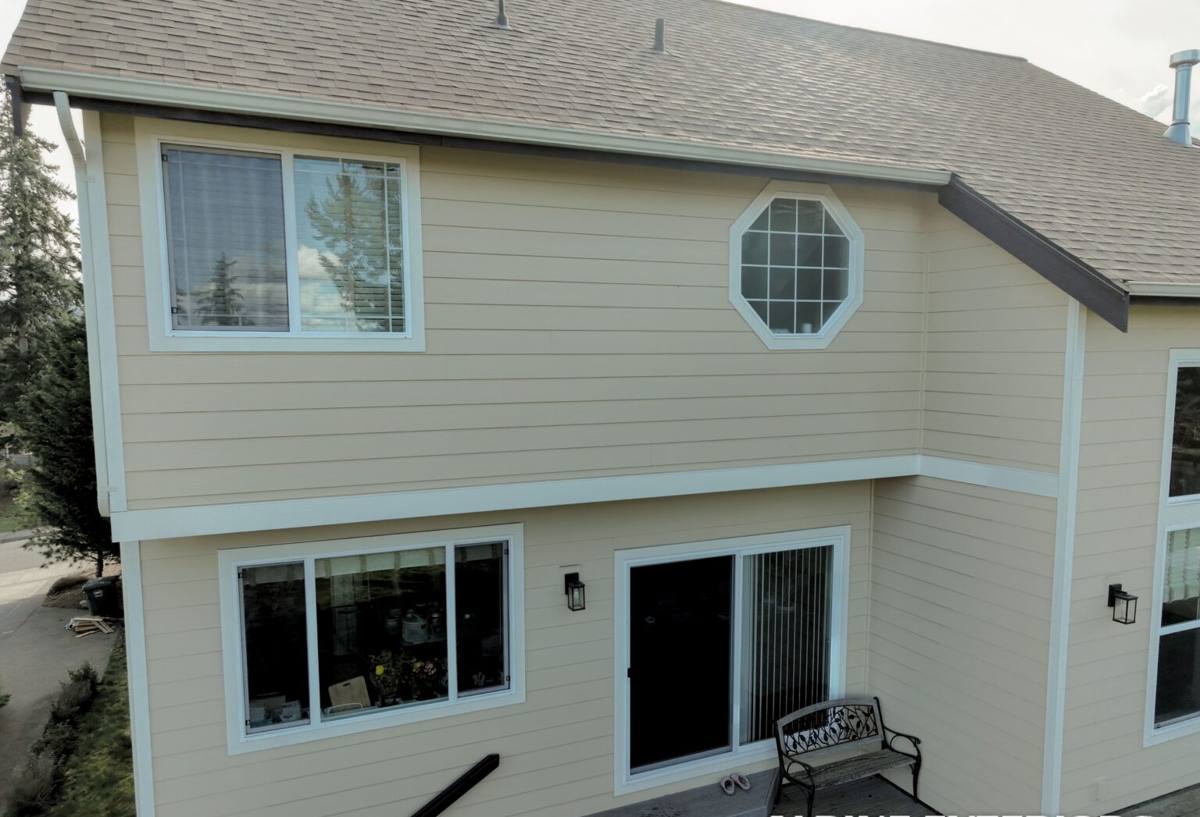
Signs Your Sehome Roof Needs Replacing, Not Just Patching
Roofs rarely fail all at once. They give warnings first, and in a wet coastal climate those warnings show up sooner than they would in a dry one.
Visual and physical signs
- Shingles that are cupping, curling at the edges, or losing granules in the gutters and downspouts
- Dark streaking or thick moss growth on north-facing or shaded slopes, especially near valleys
- Soft or spongy spots when walked on, which usually means the decking underneath has taken on moisture
- Daylight visible through the roof deck from inside the attic, or damp insulation after a storm
- Flashing around chimneys, skylights, and sidewalls that's rusted, lifted, or caulked over instead of properly formed
- Granule loss heavy enough that the underlying mat is showing through in patches
Age and history
Most asphalt shingle roofs in this climate are realistically in the 18–25 year range before replacement becomes the more sensible call over repair, and that window shortens on north- or shade-facing roof planes that stay damp longer after every rain. If your roof has already had two or three repair visits for recurring leaks in the same area, that's usually the roof telling you the underlying material has reached the end of its service life, not that the last repair was done wrong.
Choosing the Right Roofing Material for a Coastal Whatcom County Home
There's no single "best" roofing material — there's a best fit for your roof's pitch, your home's style, your budget, and how much long-term maintenance you're willing to take on. Here's how the common options stack up specifically against Sehome's conditions.
| Material | Moss & moisture behavior | Salt-air / corrosion notes | Typical lifespan | Maintenance load |
|---|---|---|---|---|
| Architectural asphalt shingle | Good when installed with proper ventilation; algae-resistant granules help but don't eliminate moss on shaded planes | Fasteners and flashing should be corrosion-resistant; the shingle itself isn't affected by salt air | 20–30 years | Periodic moss/debris clearing |
| Standing seam metal | Sheds moisture fast, very poor surface for moss to root into | Needs a coastal-rated finish and stainless or coated fasteners, or corrosion shows early | 40–60 years | Low, but fastener and sealant checks matter more over time |
| Synthetic / composite shingle | Resists moisture absorption well; performs similarly to asphalt for moss | Not affected by salt air directly; hardware still needs to be corrosion-resistant | 30–50 years (varies by product) | Low to moderate |
| Cedar shake | Highest moisture and moss exposure risk in this climate without diligent upkeep | Not a corrosion concern, but ongoing treatment is required to control rot and moss | 20–30 years with maintenance | High — regular treatment needed |
For most Sehome homes, an architectural asphalt shingle with algae-resistant granules and correctly detailed flashing is the practical middle ground — solid lifespan, manageable cost, and it handles the climate well when installed correctly. Metal earns its higher upfront cost on steep, shaded roofs where moss has been a repeat problem, or for homeowners who want the longest realistic service life. We'll walk through the honest trade-offs for your specific roof rather than push one product across the board.
What a Correct New Roof Installation Actually Involves
The material on top is only part of the system. In this climate, the layers underneath and the flashing details around every penetration matter just as much — often more, since they're what actually keeps water out during driving rain.
Tear-off and deck inspection
A full tear-off to bare decking lets us actually see the plywood or OSB underneath instead of guessing what's under a second layer of old shingles. Any decking that's delaminated, soft, or water-stained gets replaced before anything new goes down — installing new roofing over compromised decking just hides a problem that will resurface as a leak.
Underlayment
Synthetic underlayment is our standard for full-roof coverage — it holds up better to the weeks of exposure a roof sometimes sees mid-project and resists water absorption better than old-style felt. In valleys, around chimneys, at eaves, and anywhere ice or wind-driven rain is most likely to push water backward under the shingle, we add a self-adhering ice-and-water membrane as a second line of defense.
Flashing
Flashing is where most roof leaks actually originate, not the shingle field. Step flashing at sidewalls, properly formed counter-flashing at chimneys, and correctly lapped valley flashing all need to be installed in the right sequence with the underlayment and shingles — not caulked together after the fact as a shortcut.
Ventilation
Balanced intake and exhaust ventilation keeps the attic space close to outdoor temperature and humidity, which reduces condensation on the underside of the decking and extends the life of both the roof and the insulation below it. In a damp climate like this one, under-ventilated attics are a common hidden cause of decking rot that isn't visible from outside.
Moss prevention
Zinc or copper strips installed near the ridge let rainwater carry trace metal ions down the roof plane, which suppresses moss regrowth on the slopes below. It's not a substitute for eventual cleaning, but it meaningfully extends the time between moss treatments on shaded roofs.
What Drives the Cost of a New Roof
Roof replacement costs vary enough between houses that a single flat number isn't honest. What matters is understanding which factors move the price so an estimate makes sense when you see it.
| Factor | Why it matters |
|---|---|
| Roof size (squares) | Material and labor are priced per 100 sq. ft. — bigger roof, more of both |
| Pitch / steepness | Steep roofs need more safety setup and take longer to work, which adds labor time |
| Layers to remove | Tearing off two old layers costs more in labor and disposal than one |
| Decking condition | Rotten or delaminated sheathing found during tear-off has to be replaced, which isn't always visible before the job starts |
| Roof complexity | Valleys, dormers, skylights, and multiple chimneys each add flashing labor and material |
| Material choice | Asphalt, synthetic, and metal sit at different price tiers, as shown above |
| Access and staging | Tight lots, tall second stories, or limited driveway access can add setup and material-handling time |
As a broad range, most full asphalt shingle replacements on a typical single-family home run somewhere in the low-to-mid five figures, with metal or highly complex roofs running higher. We'd rather walk your specific roof and give you real numbers than throw out a figure that doesn't match your house.
Our Installation Process, Start to Finish
- On-site inspection. We walk the roof and the attic, check decking condition where accessible, and talk through what we're seeing before recommending anything.
- Written estimate. You get a clear scope of work and price — what's included, what material, and what would trigger a change order (like unexpected decking damage).
- Material order and scheduling. We book a weather window that gives us a realistic margin to dry-in the roof before rain moves back through.
- Protection setup. Landscaping, siding, and gutters get protected before tear-off starts.
- Tear-off and deck inspection. Old roofing comes off down to the deck, and any compromised sheathing is identified and replaced.
- Underlayment and flashing. Ice-and-water membrane at vulnerable areas, synthetic underlayment across the field, then all new flashing formed and installed in sequence.
- New roofing installed. Shingles, metal panels, or composite material installed to manufacturer spec, including proper nailing pattern and exposure.
- Ventilation check. Intake and exhaust venting confirmed or corrected as part of the install, not left for later.
- Final walkthrough and cleanup. Magnetic sweep for stray fasteners, debris haul-away, and a walkthrough so you know exactly what was done.
Permits, Timing, and Working Around Whatcom County Weather
Full roof replacements typically require a permit, and requirements can vary by jurisdiction within Whatcom County, so we handle the permitting conversation as part of scheduling rather than leaving it for you to sort out. If Sehome is within an HOA or has specific covenant guidelines on roofing color or material, that's worth checking before you fall in love with a particular product.
Timing matters more here than in drier climates. We aim to schedule tear-offs during stretches of the year with more predictable dry windows and avoid starting a full tear-off when a multi-day rain system is forecast to move through mid-project. A roof that's properly dried-in with underlayment can tolerate some weather, but there's no substitute for planning around it rather than hoping around it.
Why Hiring a Crew That Already Works in Sehome Matters
A roofing crew that regularly works Sehome and the surrounding Glenhaven area already knows how local homes are built, what the typical roof pitches and complexities look like in this part of Whatcom County, and which details — moss strips, valley flashing, ventilation balance — actually earn their keep against this specific climate versus a generic install spec written for a drier region. That familiarity shows up in fewer surprises during tear-off, a more accurate estimate up front, and a roof detailed for the weather it will actually face rather than the weather a national spec sheet assumes.
It also means being reachable after the job is done. A roof warranty is only as good as the contractor standing behind it, and a local crew that plans to keep working in this neighborhood has every reason to get the details right the first time.
Keeping Your New Roof Performing Season to Season
A correctly installed roof still benefits from a little seasonal attention, especially in a climate that stays damp for long stretches.
- Clear gutters and downspouts each fall so water isn't backing up under the eave line
- Keep overhanging branches trimmed back to reduce shade, debris buildup, and moss pressure on the roof plane
- Do a visual check after major windstorms for lifted shingles, displaced flashing, or debris caught in valleys
- Have moss or algae growth addressed before it thickens rather than after it's established
- Schedule a quick attic check every year or two to confirm ventilation is still doing its job and there's no hidden moisture
If you're weighing a repair against a full replacement, or just want an honest read on how much life is left in your current roof, we're happy to take a look. Reach out for a free, no-pressure estimate using the form below.