 Glenhaven Siding
 Sehome is one of the residential communities in the Glenhaven area, and like the rest of Whatcom County it sits under a marine climate that doesn't do a roof any favors. Salt-tinged air moves through steadily, rain tends to arrive sideways on a wind rather than straight down, and shaded rooflines can stay damp for months at a stretch once moss season sets in. Most of the roof repair calls we get from Sehome trace back to those same three conditions, just showing up differently depending on a home's age, roof pitch, and how much tree cover it sits under. This page covers what a Sehome roof actually needs from a repair, what a correct repair job involves, how our process works, and why hiring a crew that already works this area beats hiring one that's learning the climate on your roof.
What Sehome's Climate Puts a Roof Through
A repair that holds up in a dry, inland climate can fail fast here if it doesn't account for what this specific climate does to a roof, day in and day out, across a full year rather than just during a storm.
Salt Air and Corrosion
Airborne salt moving through the area speeds up corrosion on anything metal on a roof: fasteners, flashing, vent stacks, and gutter hardware. A repair that uses standard fasteners or off-the-shelf flashing instead of corrosion-resistant material might look fine for a season or two, then start rusting at exactly the points that matter most for keeping water out. We've opened up plenty of "recent repairs" that were already failing at the fastener heads within a few years, simply because the hardware wasn't rated for this kind of exposure.
Wind-Driven Rain
Rain here doesn't just fall onto a roof, it gets pushed into laps, seams, and flashing joints by wind coming off the water. That sideways pressure finds gaps a straight-down rain never would, which is why so many Sehome leaks show up at valleys, chimney flashing, and roof-to-wall transitions rather than out in the middle of an open shingle field. A repair that only patches the visible damage without addressing how water moves sideways across that same section tends to leak again at the first real storm.
A Moss Season That Doesn't Let Up
Mild temperatures and near-constant moisture give moss a long growing season on shaded, north-facing, and tree-covered roof slopes. Moss isn't just a cosmetic problem: it holds water against the roofing material, lifts shingle edges as it grows, and works its way under laps that weren't sealed tightly to begin with. A section of roof that's been under heavy moss for a while often has more damage underneath than it looks like from the ground, which is part of why we inspect before quoting rather than pricing a repair off a description over the phone.
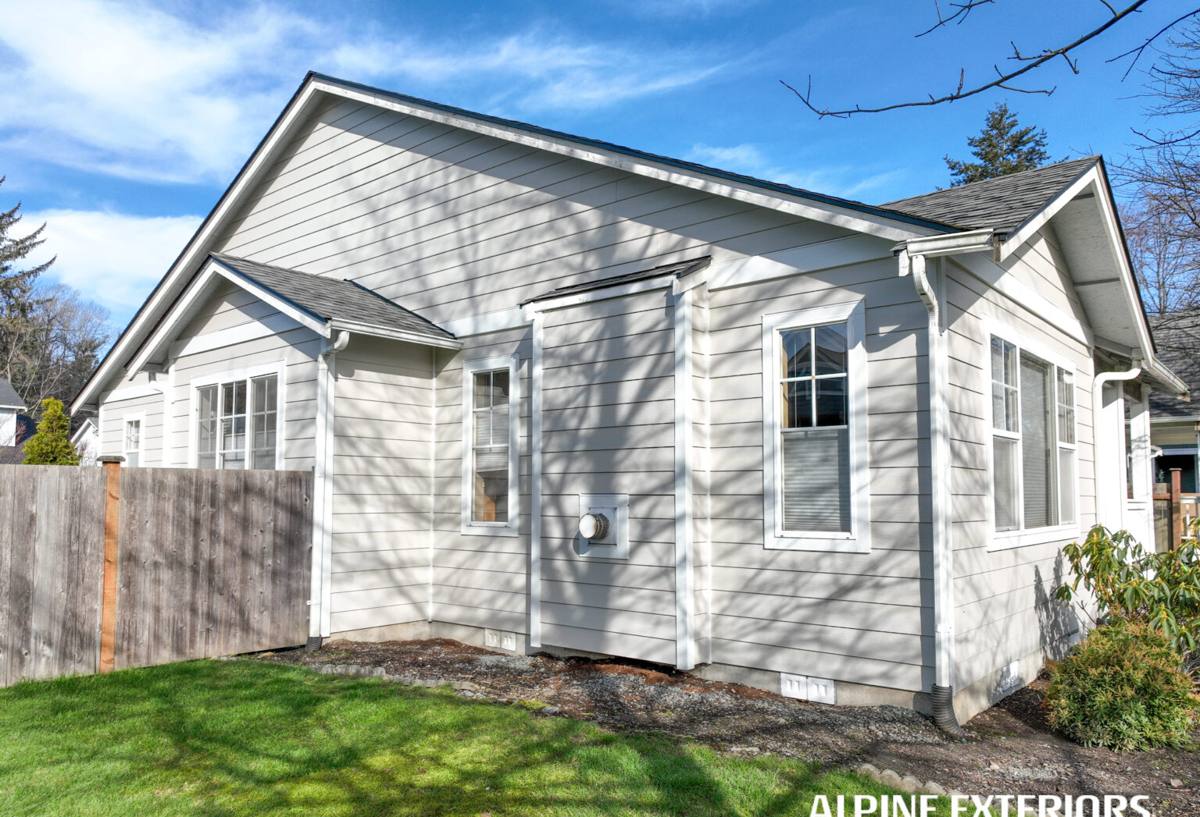
Repair or Replace? Reading a Sehome Roof Correctly
Not every roof problem in Sehome calls for a full replacement, and not every leak is a quick fix either. The honest answer usually comes down to how contained the damage is and whether it's reached the roof deck itself.
| What You're Seeing | What It Usually Means | Repair or Full Replacement |
|---|---|---|
| One or two isolated leaks near a chimney, skylight, or vent | Failed flashing or worn sealant at a single penetration | Usually a straightforward, contained repair |
| Missing or damaged shingles in one section after a storm | Localized wind or debris damage | Repair, assuming a reasonably close matching material is available |
| Moss holding moisture across a large section of roof | Long-term moisture retention lifting shingle edges over time | Repair if caught early; replacement if the underlying material is already compromised |
| Soft or spongy decking felt underfoot in more than one area | Sustained moisture has reached the roof deck itself, not just the surface | Often points toward replacement once damage has spread past one contained spot |
| Roof nearing or past its material's expected service life | General wear spread across the whole roof rather than one failure point | Replacement usually makes more sense than repeated, one-off repairs |
We'll give a straight answer either way. If a repair will genuinely hold for a reasonable stretch, we say so. If the roof is past the point where repair makes financial sense, we'll explain why rather than stringing along a series of patches on a roof that needs to come off.
Common Roof Repairs We Handle in Sehome
- Flashing repair and replacement at chimneys, skylights, vent stacks, and roof-to-wall transitions, which is where the majority of Sehome leaks actually start
- Valley repair where two roof planes meet and wind-driven rain concentrates more than anywhere else on the roof
- Storm and wind damage repair, including replacing missing or torn shingles and securing lifted sections before the next round of weather
- Moss and moisture damage remediation, including removing affected material, treating the surface, and repairing anything moss has already lifted or loosened
- Soft deck and sheathing repair where a leak has been running long enough to soften the wood beneath the roofing material
- Gutter and edge repair where failed drainage at the roofline is pushing water back up under shingles instead of away from the house
Some of these show up as an obvious active leak, and some show up as a slow-building problem the homeowner only notices once staining reaches the ceiling inside. Either way, the repair itself only works if it addresses the actual entry point rather than just the spot where the water became visible.
What a Correct Roof Repair Actually Involves
A roof repair is easy to do badly and look fine for a little while. Doing it correctly, especially in this climate, means a few things we won't skip.
Finding the Real Source of a Leak
Water rarely enters a roof at the same spot where it shows up as a stain inside. It can travel along rafters, sheathing, or underlayment before dripping somewhere else entirely. We trace a leak back to its actual source before repairing anything, because patching the visible drip point without finding where water is really getting in just means the same leak reappears somewhere new after the next storm.
Flashing Repair Done Right
Given how many Sehome leaks trace back to flashing, this is the part of a repair we're least willing to shortcut. That means removing and replacing compromised flashing rather than caulking over it, integrating new flashing correctly with the surrounding underlayment and roofing material, and using corrosion-resistant flashing suited to this area's salt exposure rather than whatever's cheapest at the supply house.
Matching Materials and Fasteners
A repair using mismatched shingles, incompatible underlayment, or standard fasteners in place of corrosion-resistant ones might close up a hole today and open a new problem in a year or two. We match materials to what's already on the roof where possible, and where an exact match isn't available, we pick the closest reasonable option and explain the trade-off rather than making that call without telling the homeowner.
Underlayment and Decking Repairs
If a leak has been running long enough to reach the underlayment or the roof deck itself, patching the surface layer alone won't hold. That means replacing damaged underlayment, and where sheathing has softened or rotted, cutting it out and replacing it before anything new goes back down. Skipping this step to save time is one of the more common reasons a "repaired" roof leaks again within a season.
Our Roof Repair Process
- On-site inspection. We look at the roof itself, not just the spot where the leak shows up inside, and trace the actual source of the problem.
- Honest assessment. We tell you plainly whether a repair makes sense, what it will involve, and whether we're seeing signs the roof is closer to needing full replacement.
- Straightforward estimate. You get a clear scope and price before any work starts, not a number that grows once the job is underway.
- Repair work. Flashing, shingles, decking, or underlayment are repaired or replaced as needed, following manufacturer specification rather than a shortcut version of it.
- Cleanup and inspection. We clear debris from the work area and check the repair holds up under a close look before calling the job finished.
- Follow-up if needed. If a repair uncovers a bigger issue once we're actually into the roof, we talk through it with you before proceeding rather than assuming the original scope still applies.
Cost Factors for Sehome Roof Repairs
| Factor | Why It Affects a Sehome Repair |
|---|---|
| Size and location of the damaged area | A single flashing repair costs far less than reworking an entire valley or roof slope |
| Roof pitch and access | Steeper or harder-to-reach sections take longer and need more safety setup |
| Extent of hidden deck damage | Moisture that's reached the sheathing under a leak adds repair scope that isn't visible until the area is opened up |
| Material availability | Matching an existing shingle color or profile on an older roof can take more effort than it sounds like it should |
| Number of separate problem areas | Several unrelated leak points cost more to resolve than one concentrated repair, even if the total damaged area is similar |
These are the variables that actually move a repair estimate, not a fixed price list. We walk the roof before quoting, since two roofs with a similar-looking leak from the ground can have very different amounts of hidden damage once we're actually up there.
Why Hire a Crew That Already Works Sehome
A roofer who mostly works drier, calmer climates isn't wrong about roofing in general, they're just working from a different set of defaults. Fastener specs, flashing choices, and underlayment coverage that hold up fine in a milder climate are often undersized for what Sehome's salt air and wind-driven rain throw at a roof year-round. A crew that already works this area has seen which repair shortcuts actually fail here, not just which ones fail in a training manual written for somewhere else.
That local pattern recognition shows up in small decisions on a repair job: which flashing points are worth extra time even when they look intact from the ground, how long a section under heavy shade has likely been retaining moisture, and which fastener and sealant choices are worth the extra cost because the alternative means a callback in a year or two. It also shows up in honesty about scope. A crew that's seen this climate for years is quicker to recognize when a repair genuinely will hold versus when it's a short-term patch on a roof that needs more attention.
Keeping a Repaired Roof Sound Through the Next Wet Season
A correct repair still benefits from some basic upkeep given Sehome's conditions:
- Keep gutters clear so water isn't backing up under roof edges during heavy, wind-driven rain
- Address new moss growth while it's still light, rather than letting it re-establish across a full slope
- Trim back tree limbs that keep a section of roof shaded and slow to dry between storms
- Have flashing points checked after any major windstorm, since that's where a repair is most likely to be tested first
- Deal with a small leak sign right away rather than waiting to see if it gets worse on its own
Get a Free, No-Pressure Roof Estimate
If your Sehome home has a leak, storm damage, moss buildup, or a repair from a few years back that never really held, we're glad to take a look and give you a straightforward, honest read on what it actually needs. Reach out using the form below to schedule a free estimate, no pressure, no upsell script.