 Glenhaven Siding
 Why Blaine Siding Wears Differently Than the Rest of Whatcom County
Blaine sits about as close to the water and the border as a Washington town gets, and that location shapes what happens to a house's exterior. Salt-laden air off the Strait of Georgia and Semiahmoo Bay works its way into wood fiber, fasteners, and paint film year-round. Add driving rain off the water during fall and winter storms, plus a moss season that can run from October well into May in the shaded, damp lots common around Blaine, and you have three separate stressors hitting the same wall assembly at once. A siding product that handles inland Whatcom County fine can fail faster here simply because of the address.
We're a Glenhaven-based crew, and Blaine is inside our regular service area — not a stretch job we take once and never see again. That matters more than it sounds like it should, because siding problems in this town tend to be specific to this town, and recognizing them early is a matter of pattern recognition built from repeat visits, not a one-time inspection.
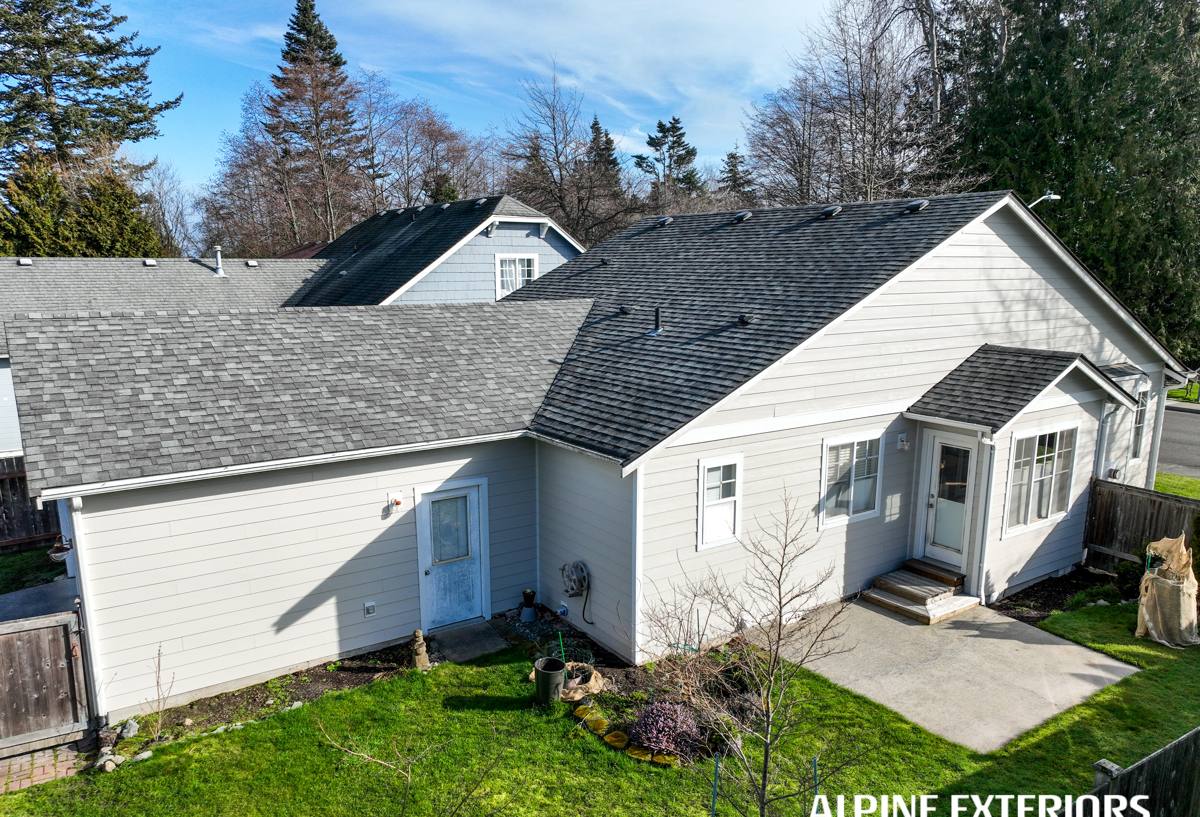
What Salt Air, Rain, and Moss Actually Do to a Wall
Salt Air
Airborne salt is hygroscopic — it pulls moisture out of the air and holds it against whatever surface it lands on. On metal fasteners and trim, that means accelerated corrosion, especially with lower-grade or exposed hardware. On painted wood siding, salt residue breaks down the paint film faster than an inland home would ever experience, which is why homes closer to Blaine's shoreline often need repainting on a noticeably shorter cycle than homes even ten miles inland.
Driving Rain
Blaine's exposure to wind off the water means rain doesn't just fall here, it drives sideways into wall assemblies, especially on north and west elevations. That puts real pressure on laps, seams, butt joints, and anywhere caulking or flashing is doing the work of keeping water out. A siding system with poor water management, or a job where the water-resistive barrier and flashing details were rushed, shows its weaknesses in Blaine faster than almost anywhere else in the county.
Moss and Sustained Moisture
Long, mild, wet winters mean moss and algae get a real foothold on north-facing walls, under eaves, and anywhere direct sun doesn't reach. Moss holds moisture against the siding surface for extended periods. On wood-based products, that sustained dampness is exactly the condition that leads to swelling, delamination, and rot. It's not a cosmetic issue — it's a moisture-management issue that happens to look like a cosmetic issue until it isn't.
What This Means for Material Choice
Given that combination — salt, wind-driven rain, and moss — the siding material matters more in Blaine than in a drier, more sheltered part of the county. This is a big part of why we standardized on James Hardie fiber cement and stopped installing wood-based composite products like LP SmartSide, along with vinyl and unfinished wood siding, on any home we work on.
| Factor | Wood-Based Composite (e.g., LP SmartSide) | James Hardie Fiber Cement |
|---|---|---|
| Core material | Engineered wood strand, resin-treated | Cement, sand, and cellulose fiber — non-combustible |
| Moisture response | Can swell or delaminate at cut edges and damaged spots if moisture gets in and stays | Doesn't swell, rot, or support fungal growth from moisture exposure |
| Salt air exposure | Finish and edge sealing need diligent maintenance near salt air | Factory ColorPlus finish is formulated to resist fading and hold up in coastal-influenced climates |
| Moss/algae contact | Sustained damp contact is a real risk factor for the wood core | Cement composition doesn't feed fungal or moss growth the way organic material can |
| Long-term maintenance | Requires consistent caulking, edge sealing, and repainting on a defined schedule | Factory finish substantially reduces repainting frequency when installed and detailed correctly |
To be fair to wood-based composite siding, it has real strengths — it's lighter to handle, often less expensive up front, and performs reasonably well in drier, more sheltered locations. Our position isn't that it's a bad product everywhere. It's that Blaine's specific climate combination — salt, wind-driven rain, and a long moss season — leans hard against a wood-fiber core, and we'd rather put a material on your home that doesn't ask you to fight that battle for the next 20 years.
What a Correct Siding Replacement Involves Here
Replacing siding isn't just pulling off old boards and nailing up new ones. In a location like Blaine, the details underneath the siding matter as much as the siding itself.
Tear-Off and Sheathing Inspection
Once old siding comes off, we check the sheathing for water damage, soft spots, and rot — especially around window and door openings, at the base of walls, and on north-facing elevations where moss and moisture tend to concentrate. Any compromised sheathing gets replaced before anything new goes up. Skipping this step just buries an existing problem under a new surface.
Water-Resistive Barrier and Flashing
Given how much wind-driven rain this area sees, the house wrap and flashing details around windows, doors, and penetrations need to be done correctly and in the right sequence — proper lapping, sealed seams, and flashing that actually directs water out and away rather than trapping it behind the siding.
Fastener and Hardware Selection
Because of salt air, fastener corrosion resistance isn't optional here. We use fasteners rated for the exposure, and we pay attention to any exposed metal trim or flashing components that could become a weak point over time.
Installation to Manufacturer Spec
James Hardie's warranty and real-world performance depend on installation to their specifications — correct nailing patterns, proper clearances from grade and roofing, correct gapping and caulking at joints. This is where a lot of the long-term performance difference between a good siding job and a mediocre one actually gets decided, and it's invisible once the job is finished.
Our Process for a Blaine Siding Replacement
- On-site assessment: We walk the exterior, check current siding condition, look for moisture entry points, and note elevations exposed to prevailing wind and moss growth.
- Scope and material plan: We identify what needs full replacement versus repair, confirm the Hardie product line and profile that fits the home, and go over color and finish options.
- Written estimate: A clear breakdown of scope, materials, and cost factors — no vague allowances.
- Tear-off and sheathing check: Old material comes off, sheathing gets inspected and repaired as needed before anything new is installed.
- Water management and installation: House wrap, flashing, and Hardie siding installed to manufacturer spec, with attention to the joints and elevations that take the most weather here.
- Final walkthrough: We review the finished work with you before calling the job complete.
Cost Factors for a Blaine Siding Replacement
Every home is different, but the main variables that move the price on a siding replacement in this area are consistent enough to lay out plainly.
| Factor | Why It Matters |
|---|---|
| Home size and elevation count | More square footage and more complex rooflines/elevations mean more material and labor |
| Existing sheathing condition | Rot or water damage found during tear-off adds repair scope before new siding can go on |
| Hardie product line and profile | Lap siding, shingle-style panels, and trim packages carry different material costs |
| ColorPlus vs. field-painted finish | Factory-finished ColorPlus costs more up front but reduces future repainting |
| Access and site conditions | Tight lots, landscaping, or multi-story sections affect labor time |
We don't quote a number without seeing the house — anyone who does is guessing, and a guess isn't useful to you when you're planning a real budget.
Signs a Blaine Home Needs Siding Replacement Now, Not Later
- Soft or spongy spots when you press on the siding, particularly near the bottom of walls or under windows
- Visible swelling, bubbling, or separation at seams and butt joints
- Persistent moss or dark staining on north-facing or shaded walls that keeps returning after cleaning
- Paint that's peeling, chalking, or failing faster than a normal repaint cycle would suggest
- Warping or buckling panels, especially on walls that face prevailing wind and rain
- Rising energy bills alongside noticeably drafty rooms, which can point to compromised siding and water-resistive barrier underneath
Why a Local Crew Matters for This Specific Job
Siding replacement in Blaine isn't the same job as siding replacement in a sheltered inland neighborhood, and a crew that only occasionally works this stretch of Whatcom County doesn't always catch that. Working here regularly means we already know which elevations tend to hold moisture, how aggressive the moss growth gets in shaded yards near the water, and how fastener and flashing choices need to change to hold up against salt air. That local pattern recognition is the difference between a siding job that looks right at handoff and one that actually performs for the next few decades.
If your siding is showing wear, or you're planning ahead before it becomes a bigger repair, we're glad to come take a look. Request a free, no-pressure estimate using the form below, and we'll walk your home's exterior with you and give you a straight assessment of what it needs.