 Glenhaven Siding
 Windows in Barkley Work Harder Than Windows Almost Anywhere Else
Barkley sits in a stretch of Whatcom County where the weather doesn't take a season off. Salt-laden air moves in off the water, driving rain comes sideways more often than most homeowners expect, and a long, damp moss season settles in for months at a time. Windows are one of the first parts of a house to show the wear from that combination — not because the glass fails, but because the frame, the seal, and the flashing around the opening slowly lose their fight with moisture and salt.
A window that's a poor match for this climate, or one that was installed with shortcuts, doesn't usually fail all at once. It fails slowly: a soft spot in the sill, a drafty corner, condensation between panes, or paint that won't hold no matter how often it's redone. By the time it's obvious, there's often water damage in the wall framing behind it. Getting the installation right the first time — with the right product and the right technique for this specific climate — is what actually prevents that.
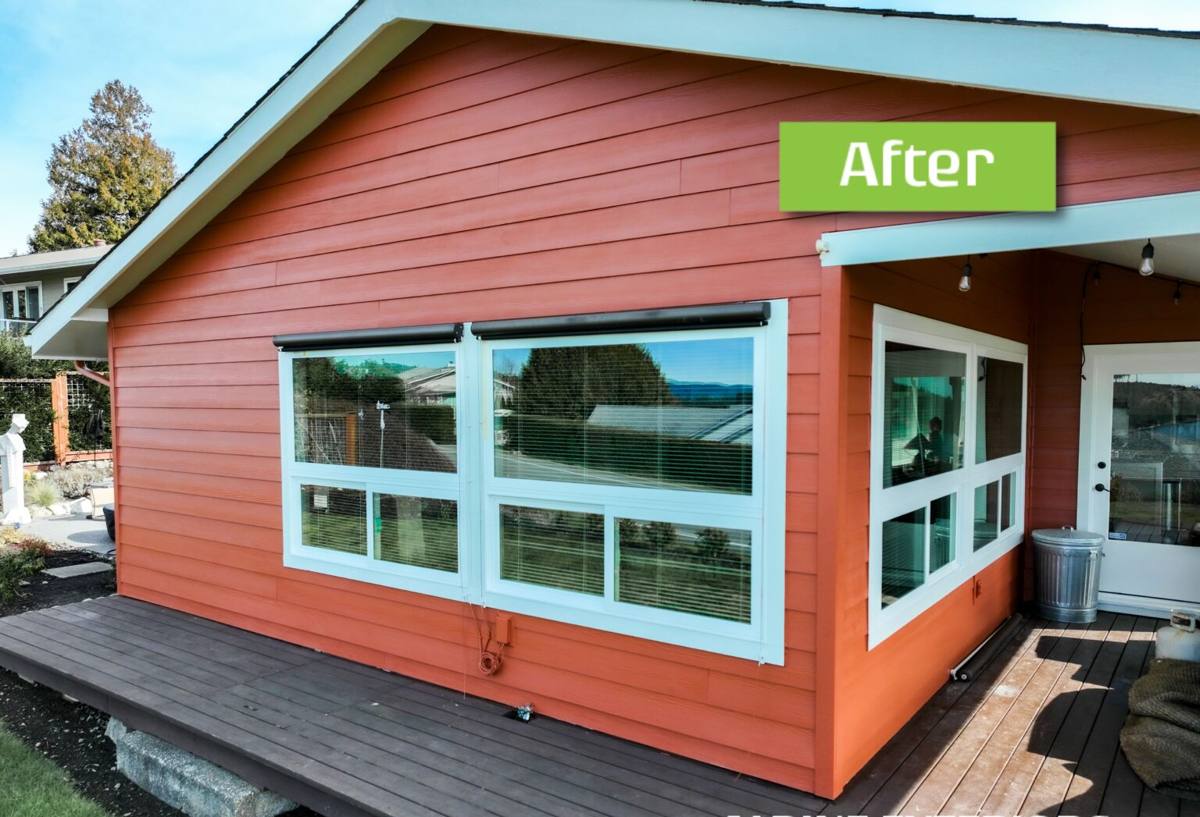
Signs a Barkley Home's Windows Are Losing the Battle
Most homeowners don't think about their windows until something forces the issue. Here's what we look for, and what you can check yourself before it becomes a bigger repair:
- Soft, spongy, or discolored wood at the sill or bottom corners of the frame
- Visible moss, algae, or green staining building up on the exterior trim or casing
- Fogging or moisture trapped between panes of double-pane glass
- Noticeable drafts or cold spots near the window even with it fully closed and latched
- Paint or caulk that's cracking, peeling, or failing again within a year or two of being redone
- Windows that are hard to open, close, or latch — often a sign the frame has shifted or swollen
- A musty smell in the room, which can point to hidden moisture in the wall cavity below the window
Any one of these on its own might be minor. Two or three together usually mean the window system — glass, frame, and the seal to the wall — is no longer doing its job.
What a Correct Window Installation Actually Involves
Setting a new window into an opening looks simple from the outside, but the parts that determine whether it lasts fifteen years or thirty in this climate are mostly hidden once the trim goes back on.
Flashing and Water Management
Every window opening needs to be flashed so that any water that gets behind the siding or trim is directed back out, not down into the wall framing. This includes sill pan flashing at the bottom of the opening, house wrap integration at the sides and top, and a shingle-style lap order so upper layers overlap lower ones. Skipping or rushing this step is the single most common cause of hidden rot in older window replacements, and it's the step that matters most in a climate with as much driving rain as ours.
Sealing Without Trapping Moisture
Sealant belongs on the outside of the window to stop bulk water from getting in, but the inside air seal needs to allow any moisture that does get in to dry out rather than getting trapped in the wall cavity. Over-sealing an opening on all sides, inside and out, is a mistake that traps water — it doesn't prevent it.
Fastening and Structural Fit
The window has to be shimmed square and plumb, fastened per the manufacturer's schedule, and checked for proper reveal and operation before trim goes back on. A window that's slightly out of square will bind, won't seal evenly, and will show stress at the corners within a few years.
Trim and Exterior Finish
The exterior casing, sill, and any brick mold need to be back-primed and installed with the same water-shedding logic as the flashing underneath. This is also where moss resistance starts — smooth, well-sealed trim with no exposed end grain gives moss and algae far less to grab onto than rough or unsealed wood.
Window Material and Frame Comparison for This Climate
There's no single "best" window material for every home — it depends on your budget, your home's age and style, and how much upkeep you want to take on. Here's how the common options actually perform in salt air, driving rain, and long wet seasons:
| Frame Material | Moisture & Salt Air Performance | Maintenance | Typical Fit |
|---|---|---|---|
| Vinyl | Very good — won't rot, resists salt corrosion, no repainting needed | Low; occasional cleaning | Most homes, best value |
| Fiberglass | Excellent — very stable dimensionally, holds paint well if you want a custom color | Low to moderate | Higher-end replacements, larger openings |
| Aluminum | Fair — durable but can corrode near salt air over time and conducts cold, which increases condensation risk | Moderate | Best reserved for specific architectural needs |
| Wood / wood-clad | Attractive but the most vulnerable to our climate if the exterior clad or paint layer is ever breached | High; regular inspection and refinishing | Historic or high-end homes where the look is a priority |
For most Barkley homes, we steer people toward vinyl or fiberglass because they hold up against salt exposure and constant moisture with the least ongoing maintenance. We're upfront about wood: it can look great, but in this climate it demands a maintenance commitment that a lot of homeowners underestimate when they're comparing options up front.
Double-Pane vs. Triple-Pane Glass
Triple-pane glass adds real value in a few specific situations — north-facing rooms, homes right along an exposed stretch with constant wind, or anyone prioritizing energy performance above all else. For most Barkley homes, a quality double-pane unit with a good low-E coating and a warm-edge spacer performs well and keeps the project more affordable. We'll walk through both options honestly rather than upselling the more expensive one by default.
Our Window Installation Process in Barkley
- On-site assessment — we look at every window opening individually, not just the visible glass. Rot, settling, or old flashing failures change the scope of the job.
- Product selection — we go over frame material, glass package, and style options based on your home, your budget, and how exposed that side of the house is to wind and rain.
- Written estimate — a clear scope and price before any work starts, with no vague allowances hiding in the fine print.
- Removal and inspection — old windows come out carefully so we can inspect the framing and sheathing underneath for hidden moisture damage before it's covered back up.
- Flashing and installation — sill pans, house wrap integration, and correct fastening, done in the sequence that actually keeps water out.
- Exterior and interior finish — trim, caulking, and paint-ready or paint-matched finish work, inside and out.
- Final walkthrough — every window operated, latched, and checked with you before we call it done.
Cost Factors for Window Replacement in Barkley
We don't post fixed prices online because window jobs vary too much house to house — but the factors that actually move the number are consistent. Here's what tends to drive cost up or down:
| Factor | Effect on Cost |
|---|---|
| Number of windows replaced at once | Per-window cost usually drops as the project size grows |
| Frame material chosen | Vinyl is typically the most affordable; fiberglass and wood-clad cost more |
| Hidden rot or framing damage found during removal | Adds cost, but far cheaper to address now than after a wall failure |
| Window size and style (standard vs. custom shapes, bay, or picture windows) | Custom and larger units cost more than standard sizes |
| Full-frame replacement vs. insert replacement | Full-frame costs more but is the right call when the original frame or flashing has failed |
| Glass package upgrades | Triple-pane and specialty coatings add cost for specific performance needs |
We'll always tell you plainly whether a lower-cost option is a reasonable fit for your situation or whether it's cutting a corner you'll regret in a few winters.
Why a Crew That Already Works Barkley Matters
Window installation isn't a one-size-fits-all trade. A crew that's done this work up and down this part of Whatcom County knows which sides of a house typically take the worst of the driving rain, how much moss buildup to expect on north- and west-facing trim, and where salt air tends to cause the earliest wear on hardware and fasteners. That's not something you learn from a manual — it comes from having installed and later serviced windows in this exact kind of weather, on homes built in this same general era and style.
It also matters for accountability. A local crew is still around next season if a question comes up, and has a reputation in the community worth protecting. That's a different relationship than a crew that installs once and moves on to the next region.
Living With New Windows Through a Barkley Moss Season
New windows still need a little seasonal attention, even the low-maintenance materials. A couple of habits go a long way:
- Rinse exterior frames and trim once or twice a year to keep moss and algae from getting a foothold, especially on shaded or north-facing walls
- Check exterior caulking lines each fall before the wet season sets in, and touch up any that have cracked or pulled away
- Keep gutters and downspouts clear so runoff isn't sheeting down across the top of window openings
- Operate each window a few times through the year, even ones you rarely open, so hardware doesn't seize up from disuse in a damp climate
- Watch for any new moisture spots or soft trim after a stretch of heavy weather, and address it early rather than waiting
None of this is a lot of work, but skipping it is exactly how a well-installed window ends up with an avoidable problem five or ten years down the road.
Get a Straight Answer on Your Windows
If you're not sure whether your current windows need replacing, patching, or just some overdue maintenance, that's a fair question to bring to us before spending anything. We'll give you a free, no-pressure estimate, tell you honestly what we see, and lay out your real options — including if the answer is that your windows have some life left in them yet.