 Glenhaven Siding
 Why Windows Wear Out Faster in Cordata
Cordata sits inside a stretch of Whatcom County that gets the full Pacific Northwest treatment: salt-laden marine air drifting in off the water, driving rain that comes sideways more often than straight down, and a moss season that can stretch from late fall well into spring. None of that is dramatic on its own, but stacked year after year it's exactly the combination that ages windows early — long before the glass itself fails.
Most homeowners don't notice window failure as a single event. It shows up as a draft that wasn't there last winter, a sash that sticks in damp weather, or a sill that stays dark and soft no matter how many times it's wiped down. By the time those signs are obvious, the frame and the flashing behind it have usually been losing the fight for a while.
Salt Air and Coastal Moisture
Airborne salt is corrosive to hardware — hinges, balances, cranks, and screws — and it also holds moisture against surfaces longer than dry inland air would. On older aluminum-frame windows especially, this shows up as pitting, stiff operation, and finishes that chalk and dull faster than the same window would a hundred miles inland.
Driving Rain and Wind-Driven Water
Whatcom County's weather doesn't just drop rain, it pushes it — into joints, under trim, and against any gap in the flashing. A window that's watertight in a light shower can still leak in a wind-driven storm if the flashing detail behind the frame wasn't done correctly. This is one of the most common causes of "mystery" water stains that show up on interior walls under or beside a window.
Moss, Mold, and a Long Damp Season
Extended damp stretches give moss, algae, and mold a long runway on anything that stays wet — window sills, bottom corners of frames, and the trim around them. Left alone, that moisture retention breaks down wood trim, discolors vinyl, and can work its way into the wall assembly if it's not addressed.
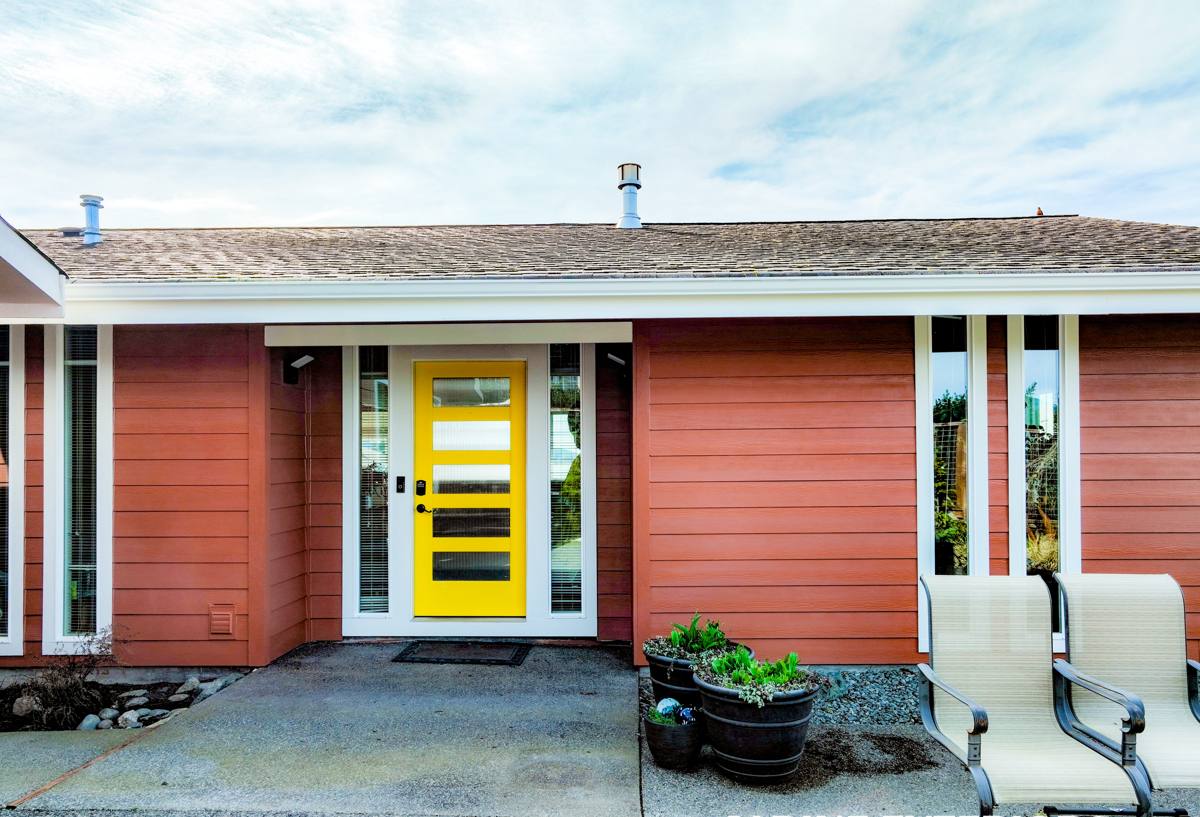
Signs a Cordata Home Needs Replacement, Not Just Repair
Repair makes sense for isolated problems — a broken balance, failed weatherstripping, a cracked pane. Replacement is the right call when the frame itself, or the seal system, has broken down. Here's what tells us which situation we're looking at.
- Visible fog, haze, or moisture trapped between panes — the seal has failed and can't be fixed, only replaced
- Soft, spongy, or dark wood at the sill or bottom corners of the frame
- Windows that won't stay open, won't latch, or have to be forced
- Noticeable draft near the frame even with the window fully closed and locked
- Condensation forming on the inside of the glass regularly through fall and winter
- Paint or finish that's peeling or bubbling specifically around the window, not the rest of the wall
- Rising heating bills with no other explanation and older single-pane or early dual-pane glass still in place
If a home has two or three of these at once, that's usually a sign the whole window unit — not just a part of it — has reached the end of its useful life.
What a Correct Job Involves in This Climate
Window replacement in a wet coastal climate is not the same job as it would be somewhere dry. The window itself matters, but the water management around it matters just as much — arguably more, since a good window installed with sloppy flashing will still leak.
Flashing and Water Management
Every opening needs a proper flashing sequence — sill pan, side flashing, and head flashing integrated with the house wrap so water is always directed out and down, never trapped behind the window. This is the step that's easiest to rush and hardest to inspect after the trim goes back on, which is exactly why it deserves the most attention during install, not after a problem shows up.
Frame Material Choices for Whatcom County
There's no single "best" frame material for every home — it depends on exposure, budget, and how the house is built. Here's how the common options hold up under the salt air, rain, and moss conditions typical of Cordata:
| Frame Material | Moisture & Salt Air Resistance | Maintenance | Best Fit |
|---|---|---|---|
| Vinyl | Good — won't rust or rot, seams are the weak point if not welded well | Low | Most homes; strong value for the climate |
| Fiberglass | Excellent — dimensionally stable, resists moisture and corrosion | Low | Higher-exposure walls, larger openings |
| Aluminum-clad wood | Good exterior protection, but interior wood core needs the seal to stay intact | Moderate | Homes wanting a wood interior look with exterior protection |
| Bare wood | Poor without diligent upkeep — the material most vulnerable to this climate | High | Historic or period-specific projects only |
For most Cordata homes we steer people toward vinyl or fiberglass because they handle sustained damp exposure with the least ongoing maintenance. Wood-look interiors are still an option through clad products — we just don't recommend bare wood exteriors in this climate, not because the material is bad, but because it demands a level of upkeep most homeowners don't want to keep up with year after year.
Glass Package
Dual-pane with a Low-E coating and argon fill is the baseline we install for this region — it cuts heat loss and reduces condensation risk compared to older single-pane or basic dual-pane glass. Triple-pane is available and does perform better, but for most Cordata homes the added cost doesn't pencil out against dual-pane with a good Low-E package unless the home has unusual noise or exposure concerns.
Our Window Replacement Process
1. Assessment and Measurement
We look at each opening individually — not just the window, but the sill, the framing behind it, and any existing water damage. Every window on a home doesn't always need the same solution, especially on a house with mixed exposure.
2. Removal and Prep
Old windows come out carefully so we can actually see the condition of the framing underneath, not just assume it's fine. Any rot or soft framing gets addressed before a new window goes in — installing a new window over a compromised opening just hides the problem for a few more years.
3. Installation and Sealing
The window gets set level and square, shimmed correctly, flashed in the proper sequence, and sealed with materials rated for exterior exposure. This is where the climate-specific detail work happens — it's also the step that determines whether the window is still performing in ten years or leaking in two.
4. Final Inspection and Cleanup
Every window gets checked for operation, seal, and finish before we call the job done, and the site gets cleaned up like we weren't there.
Cost Factors for Window Replacement in Cordata
Every home is different, and we won't quote a number without seeing the actual openings, but these are the main things that move the price up or down.
| Factor | How It Affects Cost |
|---|---|
| Frame material | Vinyl is typically the most budget-friendly; fiberglass and clad-wood cost more upfront |
| Window size and count | Larger openings and full-house replacements have different per-unit economics than a few windows |
| Existing damage | Rotted framing or sills found during removal adds repair work before the new window can go in |
| Glass package | Upgrading from dual-pane to triple-pane, or adding specialty coatings, raises cost per unit |
| Access and complexity | Second-story, oddly shaped, or hard-to-reach openings take more labor |
| Trim and finish work | Matching existing trim or upgrading finish materials adds to the scope |
Homeowners doing a full-home replacement often save on a per-window basis compared to doing a few at a time over several years, but there's no wrong way to phase the work if budget requires it.
Why a Crew That Already Works in Cordata Matters
Window replacement done right in this climate isn't about following a generic install manual — it's about knowing how Whatcom County weather actually behaves against a house. A crew that's already worked in and around Cordata has seen how driving rain hits certain wall orientations, how moss builds up on north-facing sills, and where salt air tends to do the most damage to hardware first. That's not something you learn from a spec sheet; it's something you learn by doing the work here, repeatedly, and paying attention to what fails and why.
It also means faster, more accurate estimates. We're not guessing at how a local build style handles flashing or trim — we already know the common patterns in this area's housing stock, which means fewer surprises once the openings are actually opened up.
Keeping New Windows Performing in This Climate
A correctly installed window still benefits from a little upkeep in a climate like this one:
- Rinse salt residue and grime off exterior frames a couple times a year, especially on wind-exposed walls
- Keep sills and tracks clear of debris so water has a clear path to drain, not pool
- Check weatherstripping annually — it's the first thing to wear and the easiest thing to replace before it causes bigger problems
- Watch for moss or algae starting on sills and trim, and clean it off before it takes hold
- Operate every window through its full range a few times a year so hardware doesn't seize up from disuse
None of this is complicated, but skipping it is how a well-installed window ends up looking and performing like a poorly installed one after a decade.
If windows in your Cordata home are drafty, fogged, sticking, or just past their prime, we're happy to take a look and walk you through what we're actually seeing — no pressure, no sales script. Use the form below to request a free estimate.