 Glenhaven Siding
 Geneva's Climate Is Hard on Asphalt Shingle Roofs
Homes in the Geneva area sit inside a Whatcom County climate that doesn't let a roof coast. Salt-laden air moving in off the water accelerates corrosion on fasteners, flashing, and any exposed metal. Driving rain, often pushed sideways by wind, finds every gap in flashing and underlayment that a calmer climate would never expose. And the long stretch of cool, damp weather each year gives moss and algae months to take hold on north-facing slopes and anywhere tree cover keeps shingles from drying out fully between storms.
None of that means a roof in Geneva needs to be exotic. It means the ordinary parts of the job — deck condition, underlayment choice, flashing detail, and ventilation — matter more here than they would in a drier, calmer part of the state. A shingle roof installed without those details in mind may look fine for a year or two and then start failing at the seams: nail pops, granule loss, soft spots at valleys, and moss ridges that trap moisture against the shingle mat.
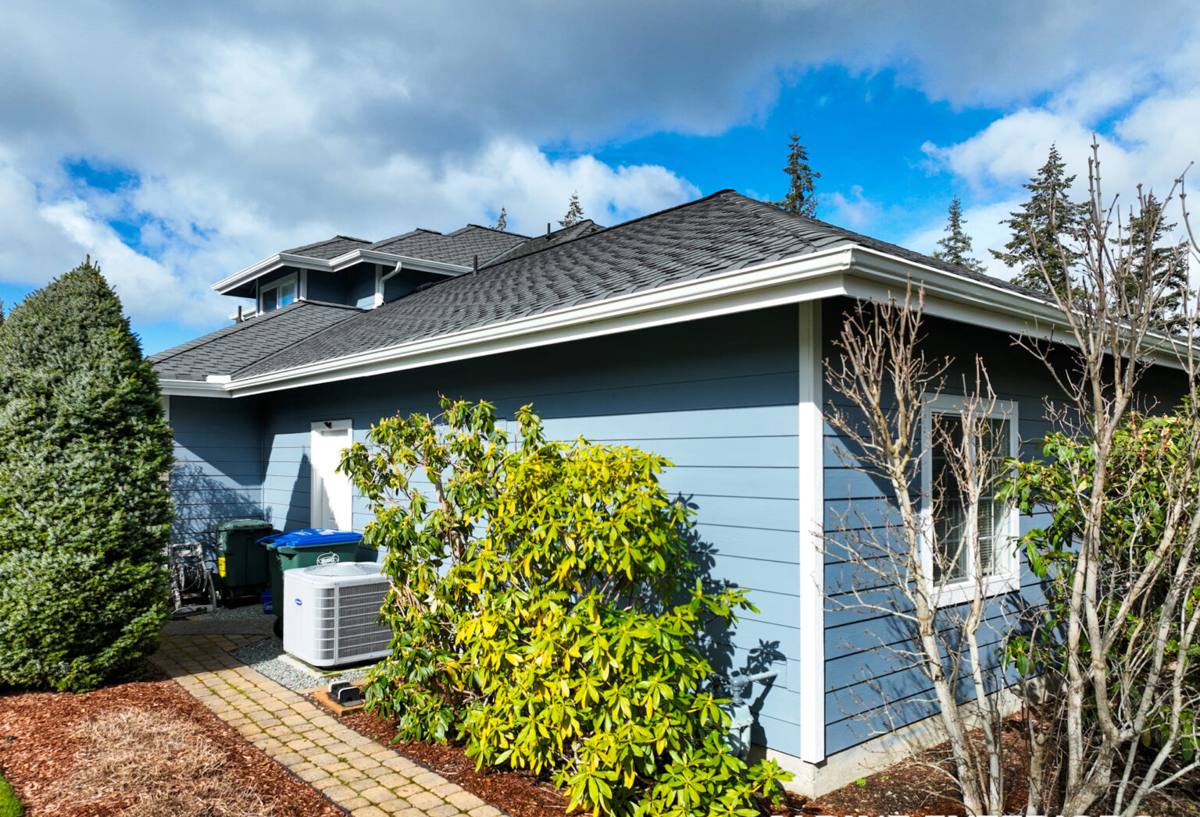
What a Correct Asphalt Shingle Installation Involves
Asphalt shingle roofing is a mature, well-understood system, but "correct" and "fast" aren't always the same job. A roof that's going to hold up through repeated wet seasons needs each layer done in order, not shortcuts stacked on top of each other.
Tear-Off and Deck Inspection
We pull the old roofing down to bare decking rather than layering over it. That's the only way to actually see the plywood or OSB underneath — soft spots, delamination, or old water staining around vents and valleys don't show up until the shingles are off. Any damaged sheathing gets replaced before anything new goes down, because no underlayment or shingle can compensate for a deck that's already failing.
Underlayment and Water Protection
Given how much wind-driven rain this area sees, we don't treat underlayment as an afterthought. Synthetic underlayment across the full roof, with self-adhering ice-and-water membrane at eaves, valleys, and around every penetration, gives the roof a real second line of defense if wind ever forces water up under a shingle edge.
Flashing Details
Step flashing at walls and chimneys, properly lapped valley metal, and correctly sized drip edge at eaves and rakes are where most leaks actually start — not in the field of the shingles themselves. We replace flashing rather than reuse old, corroded pieces, since salt air is exactly the condition that shortens the life of bare or lightly coated metal.
Ventilation
Balanced intake at the soffits and exhaust at the ridge keeps the attic close to outdoor temperature and humidity. Without it, moisture from daily living gets trapped under the deck, which can rot sheathing from underneath and shorten shingle life from below — a failure mode that has nothing to do with the shingles themselves and everything to do with what's happening in the attic.
Choosing a Shingle Line for This Climate
Most manufacturers offer three general tiers of asphalt shingle. The right choice depends on how long you plan to stay in the home, your roof's exposure to wind and sun, and your budget — there isn't a single "correct" answer for every house.
| Shingle Type | Typical Lifespan | Best Fit For |
|---|---|---|
| 3-tab | 15-20 years | Budget re-roofs, rentals, lower-slope simple roofs |
| Architectural (laminate) | 25-30 years | Most homes; better wind rating and appearance depth |
| Premium / designer | 30-50 years | Higher-end homes, steep or highly visible rooflines |
For most Geneva homes we recommend architectural shingles as the practical baseline. They carry a higher wind rating than 3-tab, which matters when storms push through with sustained gusts, and their heavier mat sheds wind-driven rain better at the tab edges. Most major manufacturers also offer algae-resistant granules (often copper- or zinc-infused) as a standard or optional upgrade — worth having in a climate where algae and moss pressure is a given rather than an occasional nuisance.
We install lines from established manufacturers with solid warranty backing rather than the cheapest available product, because a shingle roof's warranty is only as good as the manufacturer's track record and the correctness of the install underneath it — most warranty claims get denied over installation issues, not material defects.
Moss and Algae: Managing a Long Wet Season
Moss doesn't just sit on top of a shingle roof — it roots into the granule layer, holds moisture against the mat, and lifts shingle edges as it grows, which is exactly the kind of slow damage that turns into a leak two or three years later. Shaded, north-facing slopes and roofs under tree cover are the areas that need the most attention, since they simply don't get enough sun and airflow to dry out between storms.
A few honest points on moss management:
- Algae-resistant shingles reduce staining and slow regrowth but don't make a roof moss-proof forever, especially in deep shade.
- Pressure washing a shingle roof is a fast way to strip granules and shorten its life — soft washing or manual removal with a soft brush is the safer approach.
- Zinc or copper strips near the ridge help limit regrowth over time but work gradually, not instantly.
- Keeping nearby branches trimmed back so the roof gets more sun and airflow does more for long-term moss control than any one-time treatment.
Signs Your Roof Needs Attention
Most roof failures give some warning before they turn into an active leak. Worth checking for, especially heading into the wetter months:
- Granules collecting in gutters or at downspout outlets
- Shingle edges that look cupped, curled, or lifted
- Moss ridges building up along shingle tabs, not just on the ridge cap
- Dark streaking that doesn't wash off with light rain
- Soft or spongy spots when walking the roof (we check this, not you)
- Daylight visible through the roof deck from inside the attic
- Rusting or lifted flashing around chimneys, vents, or skylights
Any one of these on its own isn't necessarily an emergency, but a few together usually mean it's time for an actual inspection rather than a guess from the ground.
Our Process, Start to Finish
- On-site inspection. We walk the roof, check the attic for ventilation and moisture signs, and look at flashing, valleys, and deck condition — not just the shingle surface.
- Written estimate. A clear breakdown of scope, material choice, and price, with the reasoning behind any recommended repairs beyond a straight shingle swap.
- Scheduling around weather. Tear-off exposes the deck, so we plan around forecasted rain rather than starting a job we can't dry-in the same day.
- Tear-off and deck repair. Old roofing removed down to the sheathing; any damaged decking replaced before underlayment goes down.
- Underlayment, flashing, and shingle installation. Done in the order and detail described above, not compressed to save a day.
- Cleanup and magnetic nail sweep. Job site and surrounding yard cleared of debris and stray fasteners before we consider the job done.
- Final walkthrough. We go over the finished roof with you before calling it complete.
Cost Factors for a Geneva Re-Roof
Every roof is priced from its own specifics, but the main variables that move the number are consistent from job to job:
| Factor | Why It Affects Price |
|---|---|
| Roof size and pitch | Steeper roofs take longer and need more safety setup |
| Number of existing layers | Removing multiple old layers adds tear-off time and disposal cost |
| Deck condition | Rotted or delaminated sheathing needs replacement before anything else goes on |
| Shingle tier chosen | 3-tab, architectural, and premium lines carry different material costs |
| Ventilation upgrades | Adding intake or exhaust vents where none exist adds labor and materials |
| Roof complexity | Valleys, dormers, chimneys, and skylights all add flashing work |
We'd rather walk you through these factors on your actual roof than quote a number that doesn't hold up once we're up there.
Why a Crew That Already Works in Geneva Matters
A roofing crew that regularly works this part of Whatcom County has already seen how salt air ages flashing, how shaded lots hold moss longer than open ones, and how wind-driven rain behaves against a given roof's exposure. That's not a marketing point — it changes real decisions on the job, like which flashing metal to spec, where extra ice-and-water membrane earns its cost, and which slopes need algae-resistant granules even if the rest of the roof doesn't strictly need them.
It also matters after the job is done. A local crew is a short drive away for a warranty check or a question about maintenance, not a call center reading from a script. If something needs a second look after the first hard storm of the season, we're close enough to actually go take that look.
If you're weighing a repair against a full replacement, or just want a straight answer on what your roof actually needs, we're glad to take a look and give you a free, no-pressure estimate — use the form below to get started.