 Glenhaven Siding
 Metal Roofing in Silver Beach: A Different Set of Conditions
Silver Beach sits close enough to the water that homes here deal with a different mix of weather stress than roofs further inland in Whatcom County. Salt-laden air off the water accelerates corrosion on unprotected metal and fasteners. Driving rain — the kind that comes in sideways during a fall or winter blow — tests every seam, flashing detail, and fastener on a roof, not just the field panels. And the long moss season that comes with our marine climate and heavy tree cover means anything that traps moisture becomes a long-term liability. A metal roof installed correctly can handle all of this for decades. A metal roof installed generically, without those conditions in mind, tends to show problems early — streaking, fastener corrosion, seam failures, and moss buildup in the wrong places.
This page covers what that means in practice for a Silver Beach home: what the climate actually does to a roof over time, what a correct metal roofing installation involves here, how our process works, and why a crew that already works this stretch of the county is worth choosing over a roofer who's never dealt with salt air or this much rain.
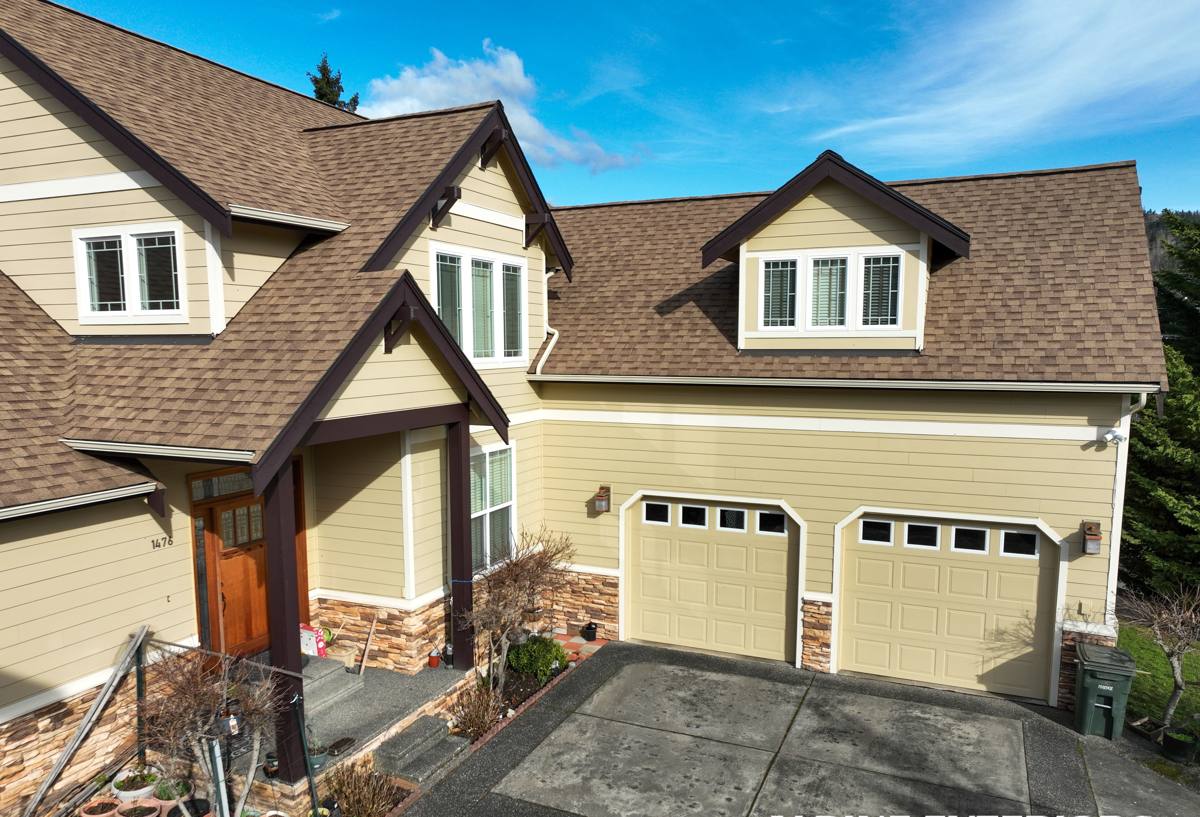
What Salt Air, Rain, and Moss Actually Do to a Roof
Salt Air and Corrosion
Airborne salt doesn't need to be blowing off a beach directly onto your roof to cause problems — it travels on the wind and settles on any exposed metal, especially fasteners, flashing edges, and cut panel ends. Over time it accelerates galvanic corrosion, particularly where dissimilar metals touch (steel screws in aluminum flashing, for example, or the wrong fastener coating against a panel's finish). The result shows up as rust streaking, pitting at cut edges, and eventually fastener failure — which is a bigger problem than it sounds, since a failed fastener is a leak point.
Driving Rain and Wind-Driven Water
Standard roofing assumes rain falls mostly straight down. Storms here regularly push rain sideways, which means water finds its way into laps, seams, and flashing details that would stay dry in a calmer climate. Underlayment quality, seam design, and flashing at every penetration and transition matter more here than they would somewhere with gentler weather.
Moss and Trapped Moisture
Whatcom County's tree cover and damp, mild winters give moss a long growing season. Moss itself doesn't damage metal panels the way it does shingles, but it does hold moisture against fasteners and seams, and moss buildup in valleys or at low-slope transitions can back water up under flashing. On a metal roof, the goal isn't to make moss impossible — it's to design the roof so moss doesn't have anywhere damp and undisturbed to build up, and so any moisture that does collect drains instead of sitting.
What a Correct Metal Roofing Job Looks Like Here
None of this is exotic — it's standard trade knowledge applied consistently, which is exactly where a lot of installs fall short. The details that matter most on a Silver Beach roof:
Panel Material and Finish
Steel and aluminum are both viable, and the right choice depends on the home, not a blanket rule. Aluminum doesn't rust and handles salt exposure well on its own; steel needs a quality protective coating (like a Galvalume or similar zinc-aluminum coating) plus a good paint finish to hold up in salt air over the long run. Either can perform well here — what matters is matching the coating and finish to the exposure, not cutting corners on either.
Fasteners and Flashing
Fastener material and coating need to be compatible with the panel material — mismatched metals are one of the more common causes of early corrosion on coastal-adjacent roofs. Flashing at every valley, wall transition, chimney, and vent penetration needs to be detailed for wind-driven rain, not just standard straight-down runoff. This is the part of a metal roof that's easy to rush and hard to inspect once the job is done.
Underlayment and Ventilation
A high-quality synthetic or self-adhering underlayment underneath the panels is cheap insurance against wind-driven rain finding a way through a seam. Proper attic or roof-deck ventilation also matters more in a damp climate — trapped moisture underneath the roof deck causes its own problems (rot, mold) independent of anything happening on the surface.
Panel Profile and Seam Type
Standing seam and exposed-fastener panel systems both have a place, but they perform differently under the conditions Silver Beach sees. The table below breaks down the practical trade-offs.
| Factor | Standing Seam (Concealed Fastener) | Exposed-Fastener Panel |
|---|---|---|
| Water resistance in driving rain | Excellent — seams interlock, no exposed penetrations in the field | Good, but exposed fasteners are potential leak points as gaskets age |
| Salt air / fastener corrosion risk | Low — fasteners are hidden and protected under the seam | Higher — exposed fastener heads take direct weather and salt exposure |
| Long-term maintenance | Minimal; occasional fastener/gasket checks at exposed accessory points only | Periodic fastener and gasket inspection needed over the roof's life |
| Upfront cost | Higher material and labor cost | More budget-friendly upfront |
| Best fit | Primary roofs, especially with low slopes or high wind/rain exposure | Outbuildings, garages, secondary structures, tighter budgets |
Our Process for a Silver Beach Metal Roofing Project
The process itself isn't unusual — what changes is what we're checking for at each step, given the local conditions.
- On-site assessment. We look at the existing roof deck, current flashing condition, moss and moisture patterns, tree cover, and wind exposure specific to the property before recommending a system.
- System and finish selection. Based on that assessment, we walk you through panel material, profile, and coating options suited to the home's exposure — not a one-size-fits-all recommendation.
- Deck and underlayment prep. Any rot or damaged decking gets addressed before panels go on; underlayment is installed to handle wind-driven rain, not just standard runoff.
- Installation. Panels, seams, flashing, and fasteners are installed to spec, with particular attention to valleys, penetrations, and any low-slope transitions where water and moss tend to collect.
- Final walkthrough. We go over the finished roof with you, including what routine maintenance (if any) it needs and what to watch for over time.
Cost Factors for Metal Roofing in This Area
Every roof is different, so a real number comes from an on-site look, not a phone estimate. That said, the main factors that move the price on a Silver Beach project are consistent:
- Panel material and finish (aluminum vs. coated steel, paint system quality)
- Panel profile — standing seam costs more upfront than exposed-fastener panel
- Roof complexity — number of valleys, penetrations, and transitions
- Condition of the existing deck and whether repair or replacement is needed underneath
- Tear-off and disposal of the existing roofing material
- Accessibility of the roof for material staging and safe work
As a broad range, metal roofing generally costs more upfront than asphalt shingles but requires less frequent replacement and less ongoing maintenance over the life of the roof — which is part of why it's a common choice for coastal-adjacent homes dealing with the wear this climate causes. An accurate number for your home comes from seeing the roof in person.
What Homeowners Can Check Between Inspections
A well-installed metal roof doesn't need much, but a little attention between professional inspections catches small issues before they become expensive ones.
- Clear leaves, needles, and debris out of valleys and around any roof penetrations, especially heading into fall and winter
- Watch for moss or organic buildup collecting in shaded valleys or low-slope areas
- Look for streaking or discoloration near fasteners or seams, which can be an early sign of a coating or fastener issue
- Check that gutters and downspouts are clear so water is actually draining away from the roof edge, not backing up
- After any major windstorm, do a visual check from the ground for lifted flashing or obviously displaced panels
Why a Local Crew Matters for This Kind of Roof
Metal roofing installation isn't unique to Silver Beach — but the conditions that determine whether it holds up long-term are local. A crew that already works this part of Whatcom County has seen firsthand where roofs in this area tend to fail: which flashing details actually hold up to wind-driven rain off the water, which fastener and coating combinations age well in salt air, and where moss tends to collect on roofs with this kind of tree cover and exposure. That's the difference between a roof that's installed to code and a roof that's installed for the specific weather it's going to face for the next several decades.
We're a Glenhaven-based crew, and Silver Beach is part of the area we work regularly — not a stretch outside our normal territory. That means shorter response times for follow-up questions, familiarity with the kinds of homes and roof conditions common in this neighborhood, and a crew that isn't guessing at how local weather affects a metal roof over time.
Get a Free, No-Pressure Estimate
If you're considering a metal roof for a Silver Beach home — whether it's a full replacement, a re-roof over an aging system, or you're just trying to understand your options — we're happy to take a look and walk you through what makes sense for your specific roof. There's no pressure and no obligation. Use the form below to request a free estimate.