 Glenhaven Siding
 Roof Replacement Built for Whatcom Falls
A roof in Whatcom Falls doesn't fail because of one bad storm. It fails slowly, from years of the same three things working on it at once: salt-tinged air moving in off the water, rain that gets driven sideways into flashing and shingle edges instead of falling straight down, and a moss season that can hang on for most of the year on shaded slopes. By the time a homeowner notices a stain on the ceiling or shingles curling at the edge, that process has usually been underway for a while.
This page is about full roof replacement specifically for homes in Whatcom Falls — not a generic overview of roofing in general. It covers what the local climate demands from a new roof, what a correct replacement actually involves layer by layer, how we price and run the job, and why it matters to hire a crew that already has hands-on experience with this specific pocket of Whatcom County rather than one learning the area on your roof.
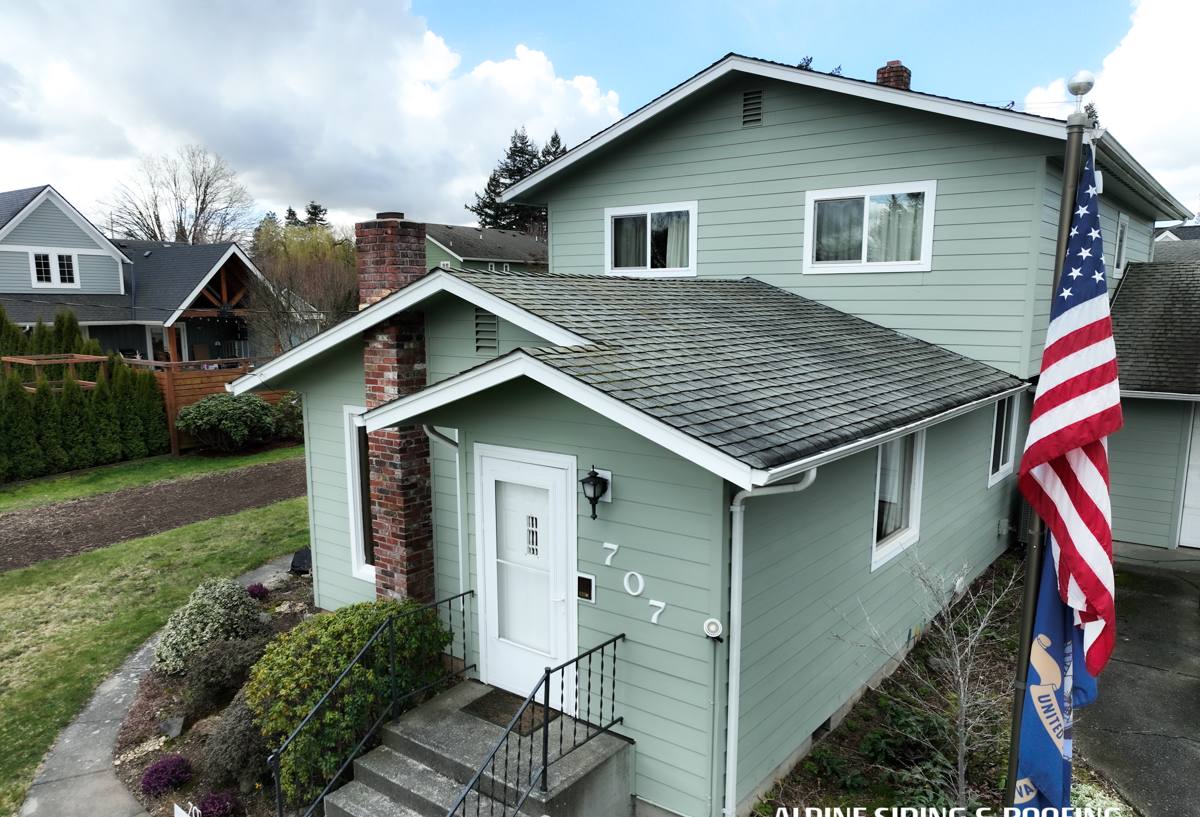
When Replacement Makes More Sense Than Another Repair
Not every roof problem in Whatcom Falls calls for a full tear-off. A single damaged valley or a boot that's cracked around a vent pipe is usually a repair, not a replacement decision. But there's a point where patching stops being the honest answer, and homes in this area tend to hit that point in a few recognizable ways.
- Granules building up in the gutters or at the base of downspouts, a sign the shingle surface is wearing thin
- Moss established across multiple roof planes rather than just one shaded corner
- Flashing at chimneys, valleys, or skylights that's been caulked over more than once instead of properly replaced
- Two or more separate leak repairs in the last few years, especially if they keep showing up near the same area
- Soft or spongy decking discovered during a repair, which means the problem has already reached the wood underneath
- A roof that's simply reached the end of its material's realistic lifespan in this climate, even if it looks okay from the street
When several of these show up together, continuing to chase individual repairs usually costs more over a few years than doing the replacement once, correctly.
What Whatcom Falls' Climate Actually Demands From a Roof
The salt air, driving rain, and long moss season that define this stretch of Whatcom County aren't abstract talking points — they translate into specific, physical stresses on a roof, and a correct replacement has to account for each one directly rather than relying on a standard install and hoping it holds up.
Salt Air and Corrosion
Airborne salt accelerates corrosion on exposed metal — flashing, fasteners, vent caps, gutter hardware. A fastener or flashing detail that would hold up for decades in a drier inland climate can start losing integrity years sooner this close to the water. That's why fastener grade and flashing metal aren't places to cut corners on a Whatcom Falls roof, even though they're largely invisible once the job is finished.
Wind-Driven Rain
Rain in this area doesn't just fall — it gets pushed sideways and forced upward under shingle tabs and flashing edges during the wetter stretches of the year. A roof built for calm, straight-down rainfall leaves gaps that this kind of weather finds eventually. The underlayment and flashing details have to be built with that sideways pressure in mind from the start.
A Long Moss Season
Shaded and north-facing roof planes in Whatcom Falls can stay damp enough for moss to take hold within a year or two of a new roof going on, and once established, it holds moisture directly against the shingle surface for months at a stretch. Moss isn't just cosmetic — its rhizoids work into the granule layer and gradually lift shingle edges, which is exactly where wind-driven rain gets its opening.
What a Correct Roof Replacement Involves
Replacing a roof correctly is a layered process, and in a climate that stacks these three stresses on top of each other, skipping or shortcutting any one layer shows up as a problem within a few years rather than a few decades.
Full Tear-Off and Deck Inspection
A complete tear-off down to the plywood or OSB decking is the only way to find rot, soft spots, or moisture damage that's been developing quietly out of sight. Layover installs — new shingles over old — skip this step entirely and seal whatever problems already exist underneath a fresh surface, which just delays the discovery of a bigger problem.
Underlayment and Ice-and-Water Protection
A synthetic or self-adhered underlayment gives the deck a real second line of defense against wind-driven rain, which matters directly here. Self-adhered ice-and-water membrane at eaves, valleys, and other vulnerable transitions adds another layer of protection precisely where water is most likely to find a way in.
Flashing at Every Transition
Most leaks on roofs in this area don't start in the open field of shingles — they start at flashing. Valleys, chimneys, skylights, and wall transitions all need new flashing that's properly lapped and integrated with the underlayment as part of the system, not old flashing patched with a bead of caulk and left in place.
Fastening to Specification
Nail count, placement, and pattern need to follow the shingle manufacturer's specification exactly, not a faster shortcut. That's what keeps a roof holding its edges under wind load rather than lifting over time, and it matters more on exposed or elevated lots than on tightly sheltered ones.
Ventilation
Balanced intake and exhaust ventilation keeps the underside of the deck dry through the wet months, which extends the life of the shingles and works against moss forming from underneath. It's easy to overlook because it's invisible from the ground, but poor attic airflow can quietly shorten a new roof's life regardless of how good the shingles themselves are.
Comparing Roofing Materials for a Whatcom Falls Home
| Material | National Lifespan | Realistic Lifespan in This Climate |
|---|---|---|
| 3-tab asphalt shingles | 15-20 years | 12-18 years, weaker fit for wind-exposed lots |
| Architectural (laminate) shingles | 25-30 years | 20-25 years, the common practical choice locally |
| Standing seam metal | 40-60 years | 35-50 years with correct fastener and flashing detail |
| Composite/synthetic shingle | 30-50 years | 25-40 years, strong moss and algae resistance |
For most Whatcom Falls homes, architectural shingles with algae-resistant granules strike the right balance of upfront cost and long-term durability. Homes with heavily shaded roof planes or a long-term ownership horizon are often better served stepping up to a composite shingle or metal roof, where the higher material cost gets offset by decades of reduced maintenance.
Cost Factors Worth Understanding
Two written estimates for the same roof can land thousands of dollars apart, and the gap is almost always real scope, not one contractor simply undercutting the other. Knowing what drives the number makes it possible to actually compare bids instead of just picking the lowest one.
| Factor | What It Affects |
|---|---|
| Tear-off vs. layover | Whether hidden deck damage gets found and repaired before new material goes down |
| Underlayment grade | How well the roof resists wind-driven rain working under shingle edges |
| Material and wind rating | Expected lifespan and performance on exposed sections of the property |
| Flashing scope | How thoroughly valleys, chimneys, and wall transitions are addressed |
| Ventilation upgrades | Long-term moisture control and how long the new roof actually lasts |
| Roof pitch and access | Labor time, staging, and safety requirements on the job |
| Decking repair or replacement | Whether rotted or soft sheathing found during tear-off is included or billed separately |
A written estimate that itemizes these components separately tells you far more than a single bottom-line number. It's reasonable to ask any contractor bidding your Whatcom Falls roof to walk through what's included, line by line, before comparing it against anything else you've received.
How Our Process Works
A roof replacement is a significant investment, and we run the process so you know what's happening at every stage rather than finding out after the fact.
- In-person inspection: We walk the roof and attic ourselves rather than estimating from a photo, and document what we actually find before writing a number.
- Written, itemized estimate: Tear-off, underlayment, flashing, ventilation, material selection, and cleanup are each spelled out, not bundled into one vague line.
- Scheduling around the weather: We build reasonable flexibility into the timeline, because wet-season delays are a normal part of working in this region rather than an excuse we reach for later.
- Tear-off and deck repair: Old roofing comes off completely, and any deck damage found underneath gets repaired before anything new is installed.
- Underlayment, flashing, and roofing installation: Each layer goes on to manufacturer specification, with extra attention at valleys, penetrations, and wall transitions.
- Final walkthrough and cleanup: We review the finished roof with you in person and do a full site and magnetic nail sweep before calling the job done.
Why Hiring a Crew That Already Works in Whatcom Falls Matters
A crew that regularly replaces roofs in and around Whatcom Falls has already seen how salt air corrodes underspecified fasteners, how wind-driven rain finds gaps in improperly lapped underlayment, and which roof orientations hold moss longest through the wet months. That kind of earned, specific knowledge shapes dozens of small decisions over the course of a job — decisions a crew unfamiliar with this stretch of Whatcom County might not think to make at all.
It also matters after the job is finished. A workmanship warranty is only as good as the company standing behind it years down the road, and a contractor with an ongoing, established presence in the area is one you can actually reach if a question comes up later, rather than a name that moved on to a different market.
A Practical Checklist Before You Choose a Roofer
- Do they perform a full tear-off with deck inspection, not just a layover?
- Does the estimate specify underlayment type and shingle or metal product, not just "new roof"?
- Is flashing work at valleys, chimneys, and walls explicitly written into the bid?
- Do they carry current Washington contractor licensing, liability insurance, and workers' compensation?
- Can they point to recent, real replacement work in or near Whatcom Falls?
- Does the bid clearly separate the manufacturer's material warranty from the contractor's own workmanship warranty?
After the New Roof Goes On
A correctly installed roof still benefits from basic upkeep in this climate. Keeping gutters and valleys clear of needle and leaf debris prevents standing water from sitting against the shingle edge. Having moss professionally removed rather than pressure washed protects the granule layer that pressure washing would otherwise strip away. And a quick visual check after major windstorms — looking for lifted shingles or displaced flashing — catches small problems while they're still small. None of this is expensive or time-consuming, but skipping it is one of the more common ways a well-installed roof ends up needing attention years earlier than it should.
If you'd like an honest, no-pressure look at your Whatcom Falls roof and a written estimate you can compare against anything else you've received, we're glad to come take a look. Use the form below to request a free estimate.