 Glenhaven Siding
 Barkley Decks Face a Tougher Job Than Most
If you own a home in the Barkley area of Glenhaven, you already know your deck works harder than a deck in a drier climate would. Whatcom County's combination of salt-tinged air, long stretches of driving rain, and a moss season that can run most of the year puts constant pressure on wood, fasteners, and framing. None of that damage happens overnight. It shows up slowly — a soft spot near a post base, a railing that's started to wobble, boards that stay damp two days after the rain stops. By the time it's obvious, the underlying structure has usually been dealing with moisture for a while.
This page is about deck repair specifically for Barkley homes, not a general overview. The framing, the fasteners, the drainage details, and the maintenance schedule that make sense here are shaped directly by the local climate, and that's what we focus on with every repair we do in this neighborhood.
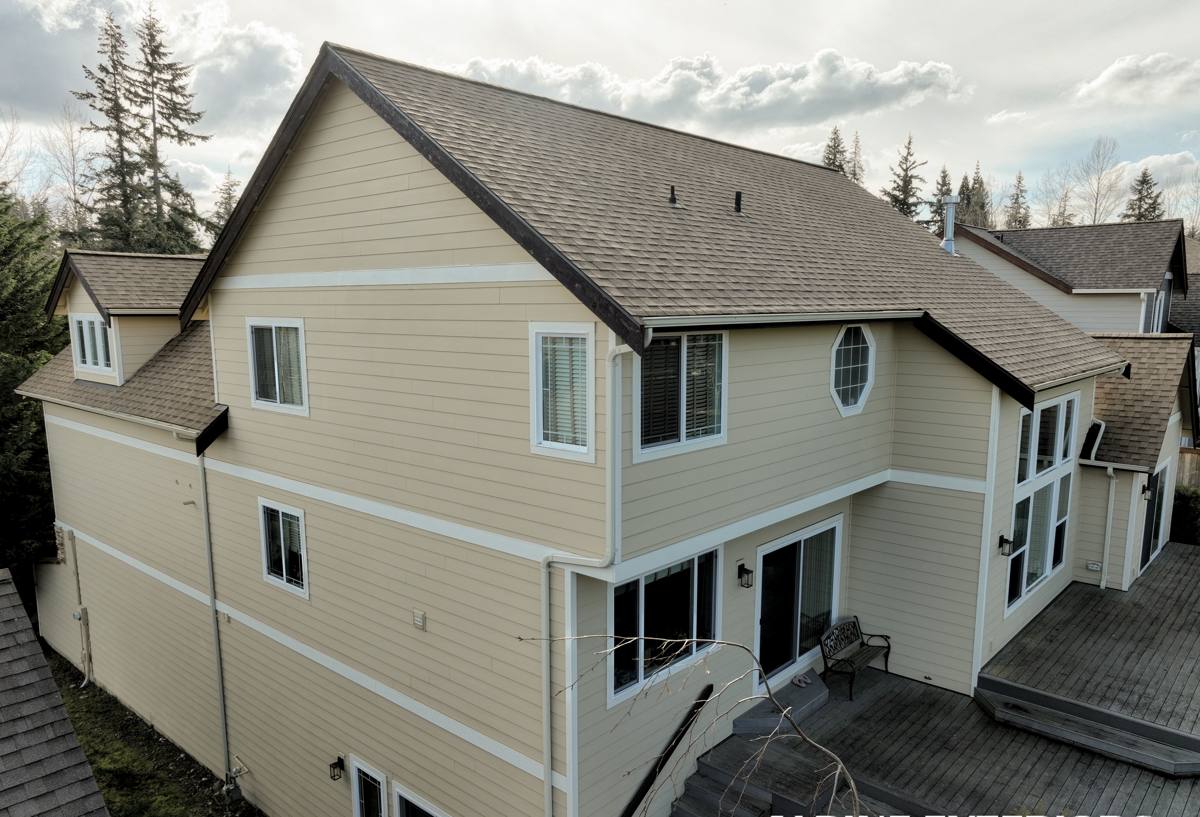
How Local Climate Shows Up as Deck Damage
Salt Air and Metal Fasteners
Homes closer to the water deal with airborne salt that accelerates corrosion on nails, screws, and structural hardware. Once a fastener starts to rust, it loses grip strength long before the rust is visible from the surface. A deck board that feels solid can still be attached with a screw that's lost half its holding power underneath.
Driving Rain and Water Intrusion
Rain that comes in sideways, which is common here, gets pushed into places a straight-down rain never would — under railing caps, behind fascia boards, and into the ledger board connection where the deck meets the house. That ledger connection is one of the most important structural points on any deck, and it's also one of the most common places we find hidden rot during a repair inspection.
Moss and Prolonged Moisture Contact
A long moss season means extended periods where wood surfaces stay damp instead of drying out between storms. Moss holds moisture directly against the board, and where it grows thick on stair treads or low, shaded sections of decking, it also becomes a slip hazard. Left long enough, that constant dampness softens the wood fibers underneath, which is how a moss problem quietly turns into a structural one.
Signs a Barkley Deck Needs Repair
Some of these are easy to miss if you're not looking for them. Walk your deck and check for the following before deciding whether you need a repair or just a good cleaning:
- Boards that feel spongy, springy, or noticeably softer underfoot than the boards around them
- Railings or posts that move when pushed, even slightly
- Visible gaps or dark staining where the deck framing meets the house (the ledger board area)
- Fasteners with rust bleeding onto the surrounding wood
- Persistent moss or algae in the same spots season after season, even after cleaning
- Stair stringers that flex or feel uneven when you walk down them
- Gaps opening up between deck boards wider than when the deck was built
- Any visible daylight or soft wood where support posts meet concrete footings
Any one of these on its own might be minor. Two or three together, especially near the ledger board or a support post, usually means it's time for a closer look rather than a wait-and-see approach.
What a Correct Deck Repair Actually Involves
Starting With the Structure, Not the Surface
A repair that only replaces the boards you can see and ignores what's underneath doesn't hold up long in this climate. Before we touch decking material, we check the framing: joists, the ledger board connection, support posts, and footings. If there's rot or fastener failure at that level, replacing the surface boards on top of it just hides the problem for another season.
The Ledger Board Connection
This is where the deck attaches to the house, and it carries a significant share of the deck's structural load. It also sits in one of the wettest spots on the whole structure if flashing wasn't installed correctly the first time. Part of a proper repair is confirming that flashing is doing its job — directing water away from this connection rather than letting it collect there.
Fasteners and Hardware
Given how fasteners hold up in salt-influenced air, we don't just match what's already there if it's the reason for the failure. Corroded hardware gets replaced with fasteners and structural connectors rated for exterior, corrosion-prone conditions, not general-purpose hardware.
Decking Boards and Railings
Individual board replacement is common and often all that's needed if the framing underneath is sound. Railings get the same scrutiny — a wobbly railing is sometimes just a loose bracket, and sometimes it's a sign the post itself has softened at the base. We check before assuming it's the simple fix.
Repair or Replace: How We Help You Decide
Not every deck with problems needs to be torn out and rebuilt, and not every deck can be reasonably patched. The honest answer depends on how much of the structure is affected versus the surface.
| Factor | Leans Toward Repair | Leans Toward Replacement |
|---|---|---|
| Framing condition | Joists and posts are solid; damage is isolated | Rot or fastener failure is widespread through the structure |
| Ledger board | Connection is sound, flashing intact | Ledger is compromised or was never flashed correctly |
| Age of the deck | Relatively recent build with a localized issue | Original construction is old and multiple systems are failing together |
| Extent of damage | A handful of boards, one railing section, or one post | Damage spread across most of the deck's footprint |
| Code and design | Current layout and footings meet current standards | Older footings or spans don't meet current structural expectations |
We walk through this with you directly during the estimate rather than defaulting to whichever option costs more. Plenty of Barkley decks just need targeted structural repair; some genuinely are past that point.
Our Repair Process
1. On-Site Inspection
We check the deck from the ground up — footings, posts, joists, the ledger connection, then the surface. We're specifically looking for the moisture and corrosion patterns typical of this area, not just doing a visual walk of the decking boards.
2. A Clear, Written Scope
You get a straightforward explanation of what's failing, why, and what it takes to fix it correctly — including whether we found anything beyond the original reason you called.
3. The Repair Itself
Structural work first, then surface work, then hardware and railings. We match new material and fasteners to what will actually hold up here, not just what's cheapest to source.
4. Cleanup and a Straight Answer on Maintenance
We leave the site clean and give you a realistic sense of what upkeep will keep this repair from repeating itself, given the moss and moisture patterns typical of the neighborhood.
Materials and Why We Choose Them Here
Wood decking is common in this area and can perform well for years when it's properly maintained — sealed or stained on a reasonable schedule and kept clear of standing moss. Composite decking is lower-maintenance on the surface but isn't a shortcut around good structural framing, flashing, and fastener choices underneath; a composite deck built on a poorly flashed ledger board will still fail at the ledger. Our standard either way is corrosion-resistant fasteners and structural connectors, correctly installed flashing at every point where the deck meets the house, and framing sized and spaced to hold up under sustained wet weather, not just dry-season conditions.
Moss, Algae, and Keeping a Repair From Repeating Itself
A repair is only as good as the maintenance that follows it. In a climate with this long a moss season, that means clearing debris out of gaps between boards so water can actually drain, keeping gutters and downspouts directing water away from the deck rather than onto it, and addressing moss growth before it's had months to sit against the wood. None of this is complicated, but it's easy to let slide, and it's the difference between a repair that lasts and one that needs revisiting in a couple of years.
Why Hiring a Crew That Already Works Barkley Matters
A repair crew that regularly works in Barkley and the surrounding Glenhaven area has already seen how the local combination of salt air, sideways rain, and moss plays out on decks in this specific setting — which framing details tend to fail first, where flashing gets missed, which fastener choices hold up and which don't. That's a different starting point than a crew working from a generic checklist. It means less time spent diagnosing and more time spent fixing the actual problem, correctly, the first time.
If you're noticing soft spots, movement in a railing, or a stubborn moss problem on your deck, we're glad to take a look. A free, no-pressure estimate is the easiest way to find out exactly what's going on and what it would take to fix it — just fill out the form below.