 Glenhaven Siding
 Why Bellingham Roofs Face a Tougher Fight
A roof in Bellingham does more work than a roof almost anywhere else in the state. You're close enough to the water that salt-laden air reaches fasteners, flashing, and metal components year-round. Add Whatcom County's long stretch of driving rain each fall and winter, followed by a slow, shaded moss season that can run for months, and you have a climate that punishes shortcuts. A roof that would hold up fine in a drier inland climate can fail early here if it wasn't built with this specific combination of salt, moisture, and shade in mind.
That's the lens we bring to every roof replacement we do in Bellingham: not "what's the standard install," but "what does a roof actually need to survive this particular stretch of Whatcom County for the next 25-30 years."
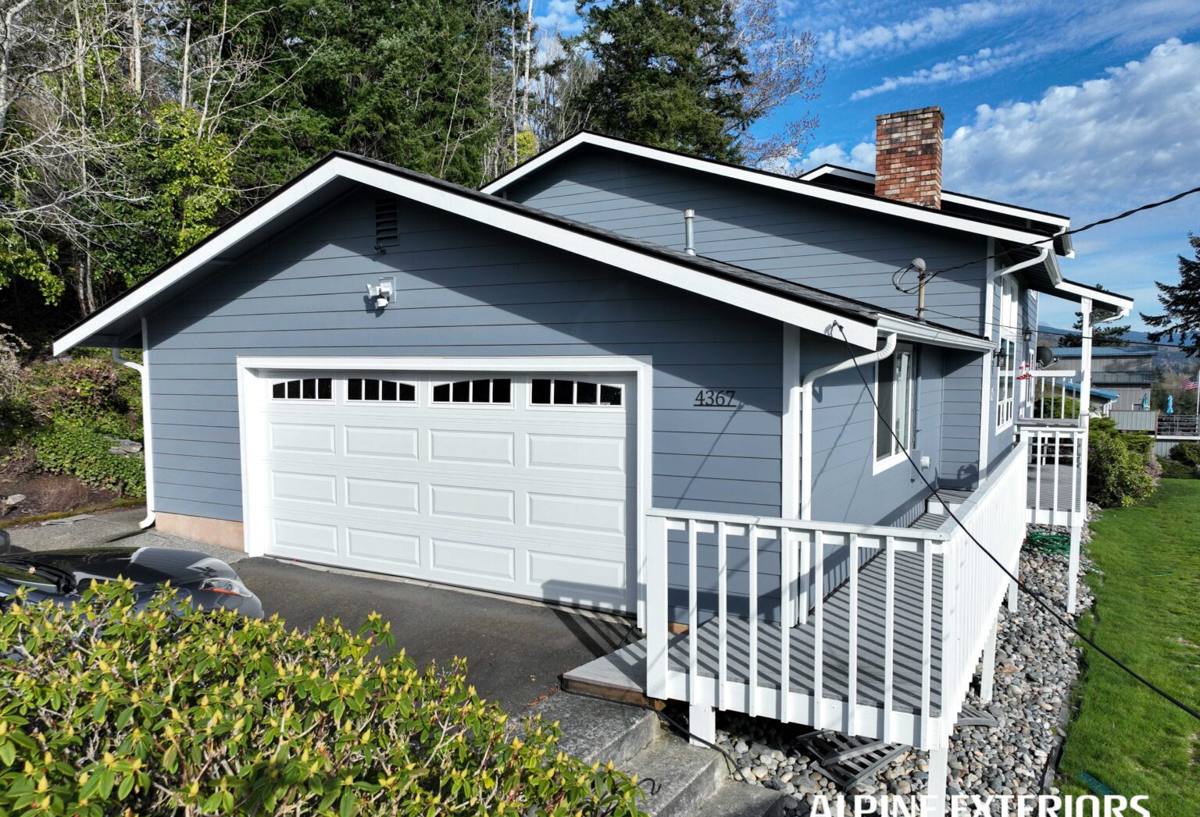
Signs It's Time for a Full Roof Replacement
Homeowners often ask whether they need a full replacement or just another round of repairs. A few isolated issues can usually be patched. But once a roof is showing several of the signs below at once, patching becomes a losing game — you're spending money to delay a job that still has to happen, and often paying for water damage on top of it.
- Shingles curling, cupping, or cracking across multiple slopes, not just one spot
- Granules collecting in gutters or at downspout outlets
- Moss mats thick enough to hold moisture against the roof deck, not just surface staining
- Daylight visible through the roof deck from inside the attic
- Soft or spongy spots when walked, or visible sagging along the ridge or rafter lines
- Interior ceiling stains, especially ones that reappear after drying
- A roof that's 20-25+ years old and has already had multiple patch repairs
- Flashing around chimneys, vents, or skylights that's rusted, lifted, or missing sealant
If you're seeing two or three of these, it's worth having someone look at the whole roof rather than just the spot that's leaking. In our experience, the visible problem is rarely the only one.
What a Correct Roof Replacement Actually Involves
"Roof replacement" covers a wide range of quality, from a quick shingle swap to a full system rebuild. In a climate like Bellingham's, the difference between those two shows up in year 8, not year 1.
Tear-Off and Deck Inspection
We remove the old roofing down to the deck rather than layering over it. That's the only way to actually see the plywood or plank decking underneath, which is where hidden rot from long-term moisture intrusion usually hides. Soft or delaminated decking gets replaced before anything new goes down — skipping this step is the single most common reason a "new" roof fails early.
Underlayment and Water Protection
Given how much rain this region sees, underlayment isn't a formality. We use synthetic underlayment across the field for its tear resistance and water shedding, with self-adhered ice-and-water membrane at the eaves, valleys, and any low-slope transitions — the spots where wind-driven rain is most likely to work its way backward under the shingles.
Flashing Details
Flashing around chimneys, skylights, walls, and roof-to-roof transitions is where most leaks actually start, not in the open field of shingles. We install new step flashing, counter-flashing, and pipe boots rather than caulking over the old ones, since sealant is a maintenance item, not a repair.
Ventilation
A roof deck that can't breathe traps moisture underneath the shingles, which accelerates rot and helps moss get a foothold from below as well as above. We check intake and exhaust ventilation as part of every replacement and correct it when it's undersized or blocked — a detail that's easy to skip but shows up later as premature shingle failure or attic moisture problems.
Choosing the Right Roofing Material for a Marine Climate
There's no single "best" roofing material — the right choice depends on your home's structure, your budget, and how much long-term maintenance you're willing to take on. Here's how the common options actually perform in a salt-air, high-moisture, moss-prone environment like Bellingham's.
| Material | Typical Lifespan | Moisture & Moss Considerations | Best Fit For |
|---|---|---|---|
| Asphalt composition shingle | 25-30 years | Performs well with proper ventilation and algae-resistant granules; moss still needs periodic removal | Most homes; best balance of cost and durability |
| Standing seam metal | 40-50+ years | Sheds water and moss far more effectively than shingles; fasteners and coatings should be rated for coastal exposure | Homeowners planning to stay long-term or wanting minimal moss maintenance |
| Cedar shake/shingle | 20-30 years with upkeep | Attractive but absorbs moisture; requires regular treatment and moss removal to avoid rot in this climate | Homeowners committed to ongoing maintenance for the look |
| Synthetic/composite shingle | 30-50 years (varies by product) | Doesn't absorb water like wood; moss resistance varies by product line | Homeowners wanting a wood or slate look with less upkeep |
We don't push one material on every job. What we will tell you honestly is when a product is going to require maintenance you may not want to keep up with — that's a real trade-off in this climate, not a knock on the material itself.
Moss: The Slow-Motion Roof Killer in Whatcom County
Moss is the issue almost every Bellingham homeowner ends up asking about eventually. It's not just cosmetic. Moss holds moisture against the shingle surface long after the rest of the roof has dried, which softens the mat over time and can work its way under shingle edges and tabs. On shaded, north-facing slopes — common on wooded lots throughout Whatcom County — moss can establish itself within a couple of years of a new roof going on if nothing is done to slow it down.
A few things reduce moss pressure without requiring constant homeowner effort: proper attic ventilation (a warmer, wetter roof deck grows moss faster), keeping overhanging branches trimmed back so the roof gets more light and airflow, and zinc or copper strips near the ridge, which release trace metal ions that discourage regrowth as rain washes over them. None of these eliminate moss entirely, but combined with occasional gentle cleaning, they meaningfully extend the years between problems.
Our Roof Replacement Process, Step by Step
- On-site inspection and estimate. We look at the whole roof system — decking, ventilation, flashing, and slope exposure — not just the shingles, and give you a written estimate with no pressure to sign on the spot.
- Material selection. We walk through the trade-offs in the table above based on your budget, your home's exposure, and how much maintenance you want going forward.
- Scheduling around weather. Given how much rain this region gets, we plan tear-off and dry-in carefully so your home isn't left exposed overnight.
- Tear-off and deck inspection. Old roofing comes off, the deck is inspected, and any damaged sections are replaced before anything new goes down.
- Underlayment, flashing, and ventilation correction. The details covered above get installed to spec, not just to code minimums.
- Final installation and cleanup. New roofing goes on, site is cleaned of debris and nails, and we walk the finished roof with you.
- Warranty documentation. You get paperwork on materials and workmanship so you know exactly what's covered and for how long.
Roof Replacement Cost Factors
Every roof is priced individually, but the same handful of factors drive most of the variation in cost from one Bellingham home to the next.
| Factor | Why It Affects Price |
|---|---|
| Roof size and pitch | Steeper roofs take longer and require more safety setup; larger roofs need more material and labor |
| Material choice | Metal and premium synthetics cost more upfront than asphalt shingle but last longer and need less upkeep |
| Number of existing layers | Multiple layers of old roofing take longer to remove and dispose of than a single layer |
| Deck condition | Rotted or delaminated decking found during tear-off needs replacement before new roofing goes on |
| Ventilation upgrades | Adding or correcting intake/exhaust venting protects the new roof but adds to the scope of work |
| Access and site conditions | Steep lots, limited driveway access, or mature landscaping can add setup time and equipment needs |
Be cautious of any estimate that's dramatically lower than the others you've collected — it usually means one of these factors is being skipped, not that you found a better deal.
Why It Matters to Hire a Crew That Already Works Bellingham
A roofing crew that mostly works drier, inland climates will size ventilation, choose underlayment, and think about moss differently than one that works Whatcom County roofs regularly. That's not a knock on those crews — it's just that the right call on a Bellingham roof is shaped by conditions they don't see as often: salt exposure near the water, shaded moss-prone slopes on wooded lots, and rain that tests every flashing detail multiple times a year. A crew that already knows this area brings that judgment to your job by default, instead of learning it at your home's expense.
Local experience also means straightforward answers about permitting, realistic timelines around the region's weather patterns, and a crew that's still around next year if a warranty question comes up — not just during the install.
If your roof is showing its age or you just want an honest read on where it stands, we're happy to take a look. Use the form below to request a free, no-pressure estimate for your Bellingham home.