 Glenhaven Siding
 Siding That Has to Work Year-Round in Barkley
Homes in the Barkley area of Glenhaven sit in a stretch of Whatcom County where the exterior of a house earns its keep. Marine air moves through constantly, rain arrives sideways as often as it falls straight down, and the shaded, tree-lined character that makes this neighborhood attractive also keeps north- and west-facing walls damp for long stretches of the year. Siding here isn't just a cosmetic layer — it's the first line of defense against moisture intrusion, and the material choice matters more than most homeowners realize until something goes wrong.
We install James Hardie fiber cement exclusively. Not because it's the only product on the market, but because after years of servicing homes in this climate, it's the only one we're willing to put our name behind for the conditions Barkley homes actually face.
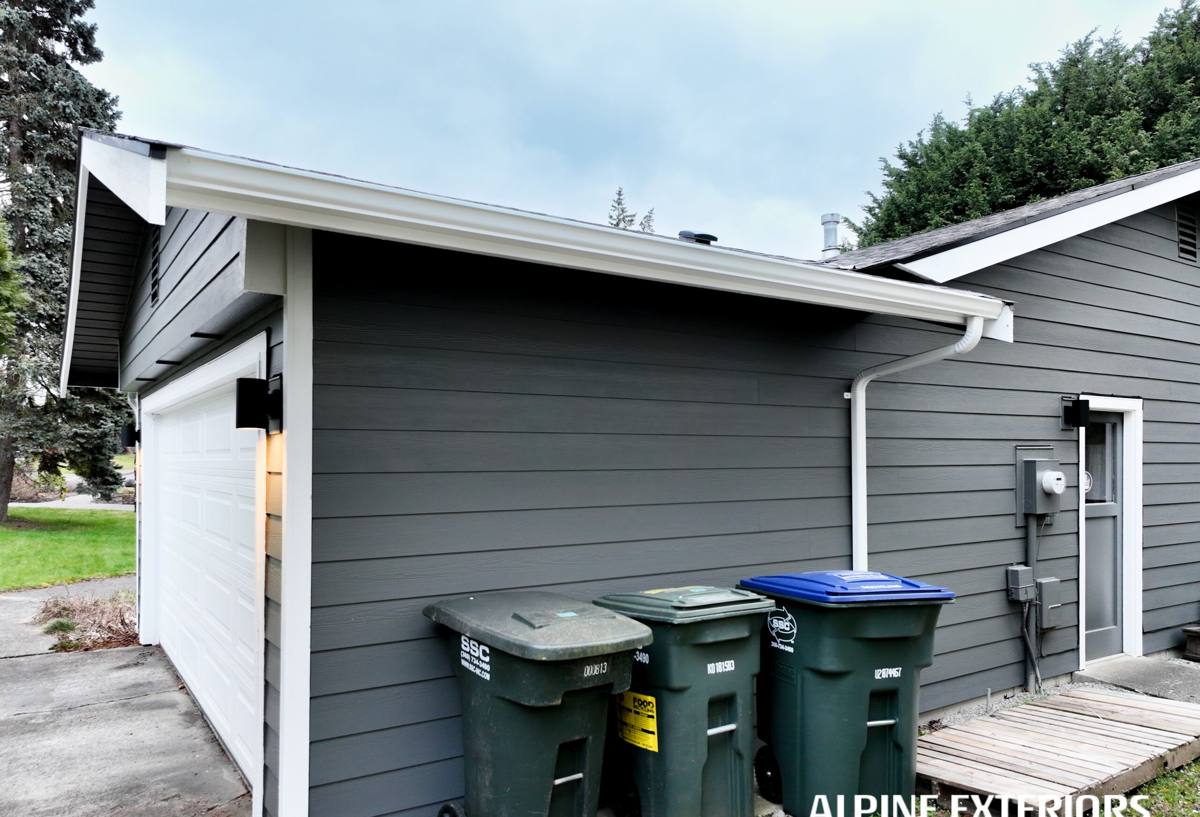
What Salt Air, Driving Rain, and Moss Season Do to Siding
Salt Air
Whatcom County's proximity to Puget Sound and the Strait of Georgia means airborne salt is a real factor, even a few miles inland. Salt-laden moisture accelerates corrosion on fasteners, trim flashing, and any exposed metal components. It also breaks down organic and low-density materials faster than dry-climate weathering would suggest, which is part of why wood-based and some engineered wood products underperform their advertised lifespan in coastal Pacific Northwest settings.
Driving Rain
Wind-driven rain doesn't just wet a wall — it forces water sideways and upward under laps, around penetrations, and into any gap that isn't properly flashed or caulked. A siding system's water-shedding design and the quality of the installation behind it matter as much as the material itself. Poor lap spacing or missing flashing details are invisible on day one and expensive by year three.
Moss Season
Shaded lots, tree cover, and a long wet season combine to give this area an extended window — often eight months or more — where north and east elevations stay damp enough to support moss and algae growth. Porous or fibrous siding materials can hold that moisture at the surface, feeding growth and slowly degrading the substrate underneath. Dense, factory-finished fiber cement resists this far better than raw wood, primed spruce, or many engineered products.
What a Correct James Hardie Installation Involves
The product is only half the equation. A huge share of siding failures we're called to diagnose in this region trace back to installation shortcuts, not the material itself. Done right, a James Hardie job on a Barkley home includes:
- A weather-resistant barrier installed and lapped correctly behind the siding, with all penetrations sealed
- Rain screen or proper drainage plane detailing so moisture that gets behind the cladding can escape instead of sitting against the wall sheathing
- Correct fastener type, spacing, and depth per James Hardie's published installation specs — this is where warranty claims are most often denied when skipped
- Proper clearance between siding and grade, decks, roofing, and other transitions to prevent wicking
- Factory-mitered or properly caulked joints at corners and trim, using materials rated for the exposure
- Flashing at every window, door, and roof intersection — the details that actually stop driving rain
None of this is unusual or exotic. It's simply the difference between an installation that meets manufacturer spec and one that doesn't, and in a climate this demanding, that difference shows up within a few wet seasons.
The James Hardie Product Lines We Use Here
James Hardie engineers its siding by climate zone, and Whatcom County falls into the HZ5 category — the zone built for regions with significant moisture exposure, freeze-thaw cycling, and cooler, wetter weather patterns. That's a meaningful distinction from HZ10 products engineered for hot, humid Southern climates. Using the correct zone-matched product isn't a marketing detail; it affects moisture resistance and long-term performance.
For Barkley homes we typically work with:
- HardiePlank lap siding — the most common choice for traditional Pacific Northwest home styles, available in several exposure widths and textures
- HardiePanel vertical siding — often used for accent gables, shed-style additions, or a more modern look
- HardieTrim boards — matched trim that resists the same moisture and moss pressure as the field siding, instead of mismatched wood trim that fails first
- ColorPlus factory finish — a baked-on finish that holds color and resists fading and moisture far better than field-applied paint, which matters when repainting means scaffolding a two-story wall
Why We Don't Install Vinyl, LP SmartSide, or Other Fiber Cement Brands
We get asked why we standardized on one manufacturer instead of offering the full menu of siding products. The honest answer: we did offer more of them, and we watched how each performed on homes in this exact climate over years, not sales brochures.
Vinyl siding is affordable and easy to install, but it's a thin plastic product that expands and contracts with temperature swings, can crack in cold snaps, and offers little resistance to wind-driven rain at the seams — it relies almost entirely on what's behind it to stay dry. LP SmartSide and other engineered wood products use a wood-strand core, which performs fine when installation and maintenance are perfect, but any breach in the factory coating — a nail pop, a hairline crack, a poorly sealed cut edge — gives moisture a path into a wood-based core, and in an eight-month damp season that's a real risk, not a theoretical one. Other fiber cement brands exist, but variations in formulation, factory finish quality, and warranty structure led us to standardize on James Hardie specifically rather than fiber cement as a general category.
None of these products are "bad" — they're reasonable choices in the right climate and budget. We simply concluded that for the moisture load and salt exposure Barkley homes face, non-combustible, factory-finished fiber cement engineered for this climate zone was the one product we could stand behind without caveats.
Our Process for a Barkley Siding Project
- On-site assessment — we look at existing siding condition, moisture damage, trim and flashing details, and any problem elevations (usually north- or west-facing walls)
- Written estimate — product lines, colors, trim details, and a clear scope, with any substrate repair called out separately so there are no surprises once tear-off starts
- Substrate check during tear-off — this is where hidden moisture damage from the old siding gets found and addressed before new material goes up, not covered over
- Weather barrier and drainage plane installation — done to spec before a single piece of Hardie goes on the wall
- Siding, trim, and flashing installation — following James Hardie's fastening and clearance requirements throughout
- Final walkthrough — checking laps, caulking, trim lines, and touch-up before we call the job done
Cost Factors for a Barkley Siding Project
| Factor | Why It Matters |
|---|---|
| Home size and story count | More wall area and taller elevations increase material and labor, plus scaffolding needs |
| Existing siding removal | Tear-off of old wood, vinyl, or damaged siding adds labor and disposal cost |
| Substrate repair | Rot or water damage found behind old siding must be repaired before new siding goes up |
| Product line and texture | Lap width, panel style, and ColorPlus color selection affect material pricing |
| Trim and detail work | Homes with more corners, gables, and window trim require more precision and time |
| Access and site conditions | Tree cover, tight lot lines, and slope common in Barkley can affect staging and scaffolding |
We give straight, itemized estimates rather than vague ranges, because every home's condition and scope is different — especially once we see what's behind the existing siding.
Maintenance and Longevity in This Climate
One of the practical advantages of James Hardie with a ColorPlus finish in a moss-prone, damp climate is reduced maintenance burden. It doesn't need repainting on the same cycle wood or field-finished products do, and its density resists the moisture retention that feeds moss and algae growth on shadier elevations. That said, no siding is maintenance-free here:
- Rinse shaded, moss-prone elevations periodically with a soft wash — avoid high-pressure washing directly at seams and laps
- Keep gutters clear so overflow doesn't run down the wall face during heavy rain events
- Trim back vegetation and tree limbs that keep siding shaded and damp longer than necessary
- Inspect caulking at trim joints and penetrations every couple of years and re-seal as needed
- Address any fastener corrosion or minor damage promptly rather than letting moisture find a way in
Why Hiring a Crew That Already Works Barkley Matters
A crew that regularly works this neighborhood already knows which elevations take the worst of the driving rain, where moss pressure tends to be heaviest, and how local lot conditions — tree cover, slope, tight setbacks — affect access and staging. That familiarity shows up in fewer surprises during tear-off and a finished job that's actually detailed for the conditions the home will face, not a generic install pulled from a warmer, drier climate's playbook.
If your home in Barkley needs new siding, or you're seeing early signs of moisture damage, moss buildup, or failing trim, we're happy to take a look and put together a straightforward estimate — no pressure, no sales script, just an honest read on what your home needs.