 Glenhaven Siding
 Why Bellingham Roofs Need to Handle More Than Just Rain
Bellingham sits right where the Salish Sea meets a wet, mild marine climate, and that combination is harder on a roof than most homeowners realize. It isn't one big storm that causes problems here — it's the steady drip of small stressors over years: salt-laden air drifting in off the water, driving rain that comes in sideways during winter fronts, and a moss season that can stretch from fall through spring under Whatcom County's cloud cover. A roof that would hold up fine in a drier inland climate can show corrosion, staining, or moisture problems within a few years out here if it wasn't built with this environment in mind.
Metal roofing can be an excellent fit for Bellingham homes — it sheds rain fast, doesn't rot, and stands up to wind better than most other roofing materials. But that's only true when the panels, fasteners, and flashing details are chosen and installed correctly for a coastal, moss-prone climate. Get those choices wrong and metal roofing has its own failure points, mostly around corrosion and water intrusion at the seams. This page covers what actually matters for a metal roof in the Bellingham area, not generic advice that could apply anywhere.
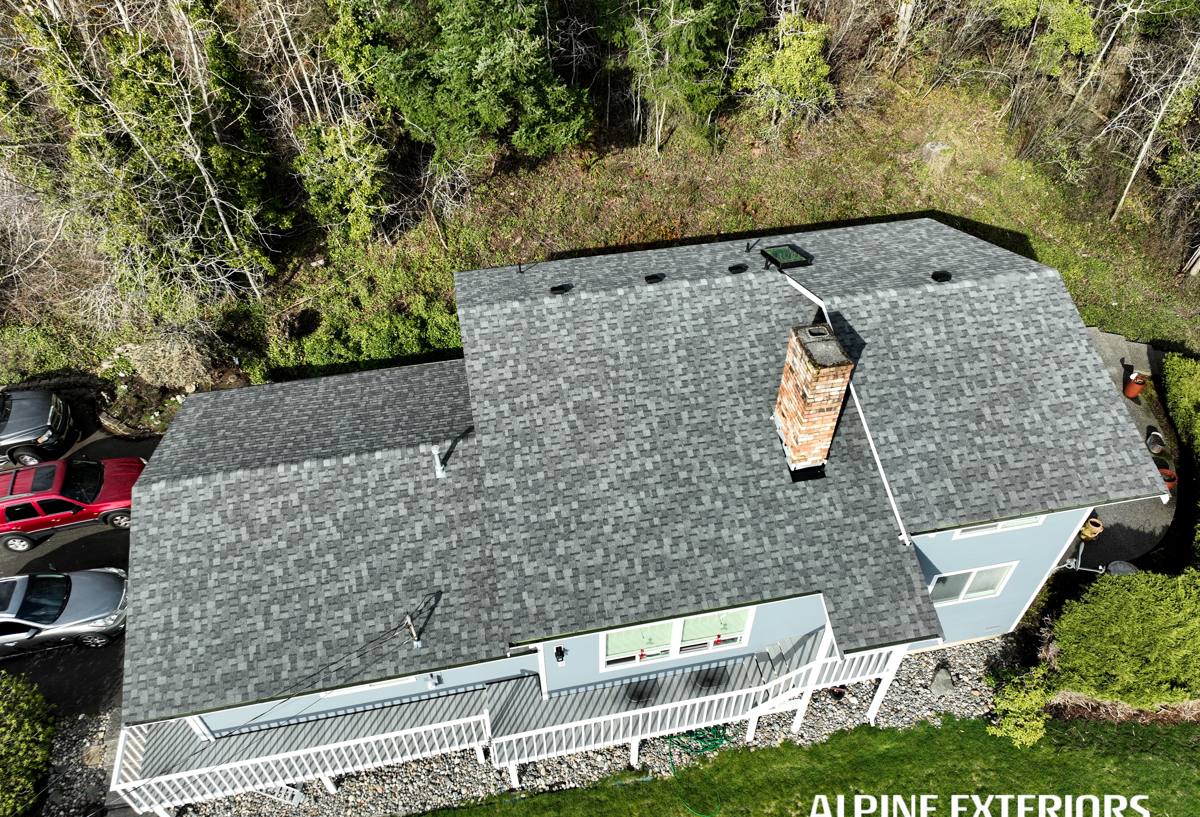
What Salt Air and Coastal Moisture Actually Do to a Roof
Proximity to Bellingham Bay and the greater Salish Sea means the air here carries more salt than an inland location, even a few miles from open water. Salt is corrosive to most metals, and it doesn't need direct ocean spray to do damage — airborne salt settles on roof surfaces gradually, day after day, and speeds up oxidation wherever a panel's protective coating is thin, scratched, or absent.
Corrosion at Fasteners and Cut Edges
The weakest points on any metal roof are the places where the factory coating has been broken: cut panel edges, drilled fastener holes, and field modifications made on-site. If a crew doesn't seal cut edges properly or uses fasteners that aren't rated for the panel material, corrosion starts at those exact spots first — often years before the rest of the roof shows any wear. Mixing dissimilar metals (for example, the wrong fastener alloy against a steel or aluminum panel) can also trigger galvanic corrosion, where the two metals react with each other in the presence of moisture and accelerate rust right at the contact point.
Why Coating Choice Matters More Near the Water
Not all factory finishes are built for the same exposure level. A coating that's perfectly adequate in a dry inland town can wear thin faster under Bellingham's combination of salt air and near-constant winter moisture. This is a case where spending a little more up front on a coastal-rated finish is genuinely worth it, not an upsell — the difference shows up as extending the roof's useful life by years, not as a cosmetic upgrade.
Metal Panel and Finish Options That Make Sense in Bellingham
There isn't one "correct" metal roofing product for every home — the right choice depends on the home's exposure, roof pitch, budget, and how long you plan to own the property. Here's how the common options stack up for a coastal Whatcom County climate:
| Option | Best For | Trade-offs in This Climate |
|---|---|---|
| Standing seam (concealed fastener) | Homes with direct wind/rain exposure or lower roof pitches | Higher material and labor cost, but far fewer exposed penetrations for water or salt air to work into |
| Exposed-fastener panel | Budget-conscious projects, outbuildings, steeper simple roofs | Fastener gaskets degrade over time and need periodic inspection; more failure points near the coast |
| Galvalume steel | Most residential roofs; strong value for the durability | Needs a quality factory finish over the base coating to hold up to salt air long-term |
| Aluminum | Homes closest to the water or with heavy salt exposure | Naturally corrosion-resistant since it won't rust the way steel can, but panel cost runs higher |
| Premium PVDF-type finish | Anyone wanting the longest realistic coating life | Costs more than a standard paint system, but resists chalking and fading in wet, low-sun climates like this one |
For most Bellingham homes, a Galvalume steel standing seam panel with a quality factory finish hits the right balance of cost and longevity. Homes with unusually direct exposure to the water, or owners planning to stay in the home for decades, are often better served stepping up to aluminum or a premium coating.
What a Correct Metal Roof Installation Actually Involves
Metal roofing has a reputation for being low-maintenance, and it is — but only when the installation underneath the panels is done right. Most metal roof problems we get called out to inspect aren't panel failures at all; they're underlayment, flashing, or ventilation mistakes that only show themselves after a few wet seasons.
Underlayment and Water Protection
A synthetic, high-temperature underlayment belongs under every metal roof, with self-adhered ice-and-water barrier at vulnerable spots like eaves, valleys, and around penetrations. This is the roof's real backup layer — if wind-driven rain ever works its way under a seam or fastener, the underlayment is what keeps it out of the decking.
Fastening and Panel Layout
Fastener spacing, torque, and panel overlap all need to match the manufacturer's specification for the wind and rain exposure of that specific roof. Overdriven or underdriven fasteners are one of the most common causes of early leaks on exposed-fastener panels, since the gasket either compresses too much or not enough to seal properly.
Flashing Details Where Roofs Actually Fail
Valleys, chimneys, skylights, and wall-to-roof transitions are where the overwhelming majority of roof leaks start, on metal roofs just as much as any other type. Correct flashing here means custom-fit metal work, not generic trim pieces caulked into place. Ventilation matters too — metal roofing can trap condensation against the underside of the panels if the attic or roof assembly isn't breathing properly, which causes moisture problems that have nothing to do with rain getting in from outside.
Moss, Overhanging Trees, and Whatcom County's Long Wet Season
Metal roofing doesn't grow moss the way asphalt shingles do — the surface doesn't hold organic material the same way. That said, a metal roof in a shaded, moss-prone yard still needs attention. Needles, leaves, and moss spores collect in valleys, against dormers, and at any spot where debris can pile up and hold moisture against the roof surface or flashing, even if the panels themselves resist growth.
Whatcom County's tree cover and long damp season mean debris accumulates faster here than in drier climates, and a roof that isn't cleared periodically can develop staining, clogged valleys, or backed-up water at the eaves. None of this is a metal roofing defect — it's simply what this climate does to any roof surface, and it's manageable with basic seasonal upkeep.
Our Process for a Bellingham Metal Roofing Project
We approach every metal roofing job in the Bellingham area the same methodical way:
- On-site assessment — we check the existing roof deck condition, current ventilation, roof pitch, and how exposed the home is to wind, rain, and salt air before recommending anything.
- Tear-off vs. re-cover decision — if the decking and structure are sound, a re-cover may be an option; if there's rot or the existing roofing isn't a suitable base, we tear off down to the deck.
- Material and finish selection — matched to that specific home's exposure, not a one-size-fits-all default.
- Installation — underlayment, flashing, fastening, and ventilation all done to the standard the manufacturer's warranty actually requires.
- Final walk-through — we go over the finished roof with the homeowner and explain what basic upkeep it needs going forward.
What Affects the Cost of a Metal Roof in Bellingham
Metal roofing costs more up front than asphalt shingles, and the total depends on several factors specific to the home and the job:
| Cost Factor | Why It Matters |
|---|---|
| Panel material (steel vs. aluminum) | Aluminum generally costs more per square but resists corrosion better in salt air |
| Standing seam vs. exposed fastener | Standing seam runs higher on labor and material but has fewer long-term failure points |
| Roof complexity | More valleys, dormers, and penetrations mean more custom flashing work |
| Tear-off vs. re-cover | Removing old roofing and repairing any deck damage adds labor and disposal cost |
| Roof pitch and access | Steep or hard-to-access roofs take longer and require more safety setup |
| Coating tier | A premium coastal-rated finish costs more than a standard finish but lasts longer here |
As a broad range, homeowners in this area typically see metal roofing land somewhere in the low-to-mid double digits per square foot, with the final number shaped heavily by the factors above. We give a firm, itemized number after seeing the actual roof, not a phone estimate.
Why Hiring a Crew That Already Works in Bellingham Matters
A crew that regularly works roofs in this specific area brings knowledge that's hard to get any other way:
- Familiarity with how driving rain and wind actually hit roofs in this part of Whatcom County, not just generic manufacturer specs
- Knowledge of which coatings and fastener systems hold up near the water versus further inland
- Experience with local permitting and inspection expectations
- Realistic scheduling around the wet season, so tear-offs aren't left exposed longer than necessary
- An understanding of how tree cover and moss patterns in this area affect long-term roof upkeep
A crew flown in from outside the region, or one that mostly works drier inland climates, may use the same panels but miss the details that actually matter for a coastal home — the coating tier, the fastener compatibility, the flashing sequence at a valley that collects runoff. Those details are exactly where roofs succeed or fail out here.
Maintenance Checklist for a Bellingham Metal Roof
Metal roofing is low-maintenance, not no-maintenance. A short seasonal check goes a long way in this climate:
- Clear needles, leaves, and moss debris from valleys and low-slope sections at least once a year
- Trim back overhanging branches that drop debris or hold moisture against the roof
- Check exposed fasteners and gaskets for signs of wear or loosening every year or two
- Inspect flashing at chimneys, skylights, and wall transitions after major storms
- Keep gutters and downspouts clear so water isn't backing up at the eaves
- Watch for any scratches or chips in the coating and have them touched up before rust can start
If you're weighing metal roofing for a home in the Bellingham area, we're happy to take a look and walk you through what it would actually involve for your specific roof. Use the form below to request a free, no-pressure estimate — there's no obligation, and you'll get a straight answer about what your roof needs.