 Glenhaven Siding
 Roof Repair Built for Bellingham's Weather, Not Just Any Roof
Bellingham homes sit in one of the tougher climates in Washington for asphalt and composition roofing. You've got salt-laden air drifting in off the bay, long stretches of driving rain that finds every weak seam, and a moss season that can run most of the year in shaded, north-facing sections of a roof. A repair that works fine in a dry inland climate can fail here in a season or two if it wasn't done with this specific combination of conditions in mind. That's the gap we work to close: repairs that are built for what a Whatcom County roof actually has to survive, not a generic patch job.
Roof repair is different from roof replacement in both scope and mindset. A repair is targeted — you're fixing what's actually broken, extending the life of a roof that still has good years left, and doing it in a way that doesn't create new problems at the repair boundary. Done wrong, a repair can trap moisture, mismatch materials, or create a new leak path six inches from the old one. Done right, it buys you real years of protection at a fraction of a full tear-off.
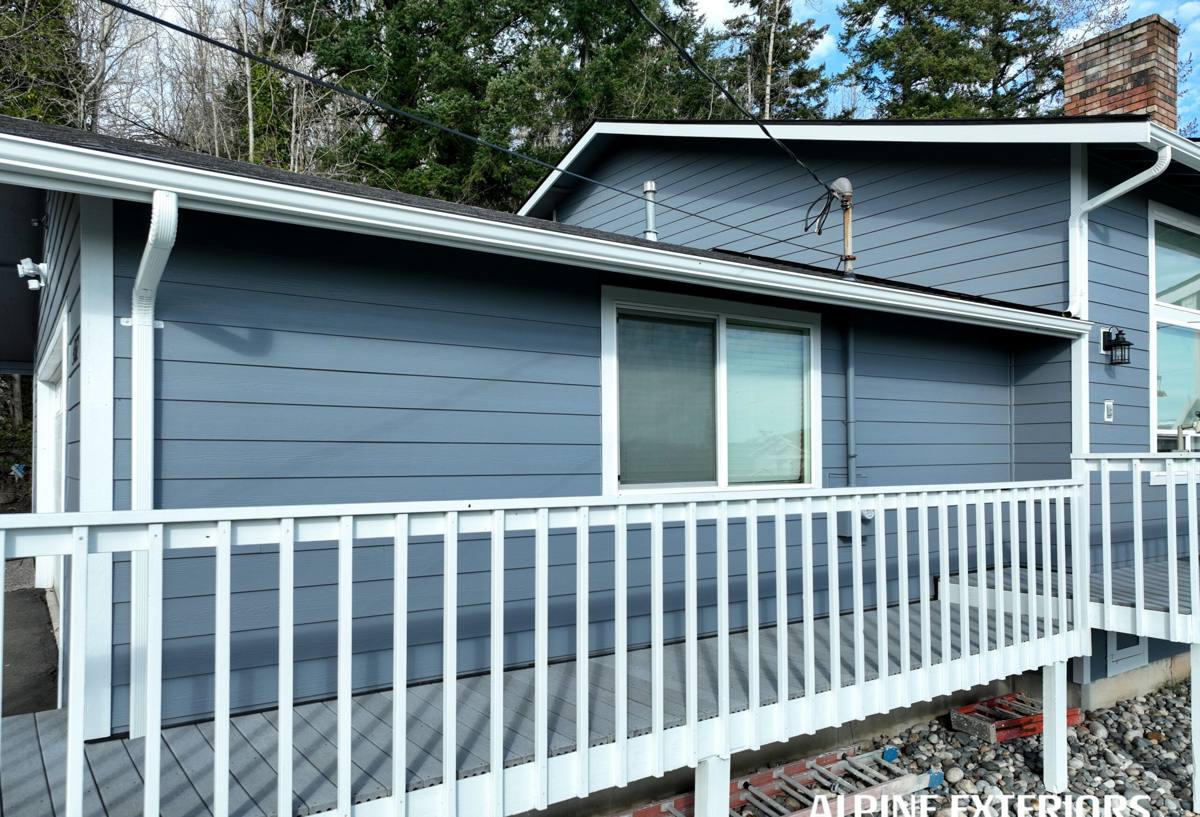
Signs a Bellingham Roof Needs Repair
Most roof repairs get requested too late, after water has already reached the interior. Catching problems earlier keeps repairs smaller and cheaper. Watch for these signs, especially after a windy winter storm off the water or a stretch of heavy Whatcom County rain:
- Dark streaking or thick moss growth concentrated on shaded slopes or north-facing sections
- Granules collecting in gutters or at downspout outlets — a sign shingles are wearing thin
- Curling, cupping, or lifted shingle edges, especially on slopes that catch prevailing wind
- Rust staining or gaps around flashing at chimneys, vents, and roof-to-wall transitions
- Soft spots, sagging, or visible daylight in the attic where roof decking meets a wall or valley
- Water stains on interior ceilings, especially near exterior walls or below valleys
- Missing or damaged ridge cap shingles after a windstorm
Any one of these on its own might just mean a small repair. Several together, or anything involving interior staining, usually means it's time for a full inspection rather than a guess from the ground.
What a Correct Roof Repair Actually Involves
It Starts with Finding the Real Source, Not Just the Symptom
Water rarely shows up directly below where it entered the roof. It travels along decking, follows a rafter, and drips somewhere downhill of the actual failure. A repair that just patches the spot where a stain appeared on the ceiling, without tracing the water back to its entry point, often looks successful for a few months and then fails again in the next heavy rain. Correct repair work means opening up the area, confirming the actual failure point, and checking the surrounding decking and underlayment for hidden rot or saturation before closing anything back up.
Matching Materials and Technique to What's Already There
A repair has to integrate with the existing roof system — same or compatible shingle type, correct nailing pattern, proper flashing overlap, and underlayment that ties into what's already installed rather than creating a new seam that water can work its way under. On an older roof, that sometimes means sourcing a close color and profile match rather than an exact one, and being upfront with the homeowner about that instead of pretending it'll be invisible.
Flashing Is Where Most Repairs Actually Live
In our experience, the majority of roof leaks in this region trace back to flashing, not the shingles themselves — chimney flashing, step flashing along wall intersections, valley flashing, and vent boots that have hardened or cracked with age. Flashing takes the brunt of driving rain because it's designed to shed water at the roof's weak points: penetrations and transitions. Salt air can also accelerate corrosion on lower-grade metal flashing over time, which is part of why we pay close attention to flashing material and installation detail on every repair, not just the visible shingle damage.
Common Repair Issues We See Around Bellingham
| Issue | Typical Cause | What the Repair Involves |
|---|---|---|
| Moss undermining shingles | Shaded, moisture-retaining roof sections | Careful moss removal, damaged shingle replacement, targeted treatment |
| Leaking chimney or vent flashing | Aged sealant, corroded or poorly lapped metal | Flashing removal and reinstallation with proper overlap and sealant |
| Wind-lifted or missing shingles | Storm gusts, aging adhesive strips | Replacement shingles matched and properly re-nailed |
| Valley leaks | Debris buildup, worn valley underlayment | Clear debris, inspect and replace valley flashing/underlayment as needed |
| Soft or rotted decking | Long-term hidden moisture intrusion | Cut out and replace affected decking before re-roofing that section |
Our Roof Repair Process
1. Inspection and Honest Diagnosis
We start on the roof itself, not just from photos or a ladder glance. That means checking the attic side too, where staining, damp insulation, or daylight through decking tells us more about the real extent of a problem than the exterior surface alone. We'll tell you plainly whether what you're looking at is a repair or whether the roof has reached the point where repair is throwing money at a system that's past its useful life.
2. A Clear, Written Scope Before Any Work Starts
You get a straightforward explanation of what's failing, why, and what the repair will involve — no vague line items. If we find something during tear-back that changes the scope, like rotted decking under a section that looked fine from outside, we stop and talk to you before proceeding rather than surprising you on the invoice.
3. The Repair Itself
We remove only what needs to come out, protect the surrounding roof and landscaping while we work, and rebuild the affected section with materials and flashing detail suited to this climate. Fasteners, flashing, and sealants are chosen for long-term performance in a wet, salt-influenced coastal climate, not just lowest cost.
4. Cleanup and Follow-Through
Nails and debris get cleared from gutters, planting beds, and the ground around the house — a magnetic sweep for stray fasteners is standard, not an upsell. We'll also walk you through basic signs to watch for afterward so small issues get caught early going forward.
Repair or Replace? How to Think About It Honestly
Not every roof problem calls for a full replacement, and not every roof is worth repairing indefinitely either. The right call depends on a few practical factors more than age alone:
| Factor | Leans Toward Repair | Leans Toward Replacement |
|---|---|---|
| Extent of damage | Localized — one slope, one flashing area | Widespread across multiple slopes |
| Roof age | Under roughly two-thirds of expected lifespan | Near or past expected material lifespan |
| Decking condition | Solid, dry decking beneath the problem area | Soft, rotted, or repeatedly wet decking |
| Shingle condition elsewhere | Rest of roof still granulated and flat | Widespread curling, cracking, granule loss |
| Repair history | First or second repair in this location | Same area repaired multiple times already |
When a roof is a genuine repair candidate, we'll say so directly — there's no benefit to us pushing a replacement a homeowner doesn't need, and it's not how we want to be known in this community.
Why It Matters That We Already Work in Bellingham
A crew that regularly works roofs in and around Bellingham has already seen how moss behaves on shaded Whatcom County slopes through a full wet season, how salt air affects exposed metal flashing over years rather than months, and which flashing details hold up against the kind of driving, wind-pushed rain this area gets off the water. That's the difference between a repair that's technically correct on paper and one that's actually built for what this specific roof will face for the next several winters. Local familiarity also means we're not guessing at typical roof ages, common construction styles, or the kind of moisture patterns local homes tend to develop — we've already seen the pattern before we get on the ladder.
Maintaining Your Roof Between Repairs
A repair holds up longer when it's not fighting neglect in between service visits. A few habits go a long way in this climate:
- Keep gutters and downspouts clear, especially before the fall rains set in
- Trim back overhanging branches that keep roof sections shaded and damp
- Have visible moss addressed before it works under shingle edges, not after
- Walk the exterior after major windstorms and look for lifted or missing shingles
- Check attic insulation and decking for damp spots once a year, ideally before winter
- Don't ignore small interior stains — they rarely stay small on their own
Get a Straightforward Look at Your Roof
If you're seeing moss buildup, a slow drip, or storm damage on a Bellingham roof, it's worth getting an honest, no-pressure look before the next round of Whatcom County rain finds its way in. We'll tell you plainly what we see, what it will take to fix it right, and what it's likely to cost — no upsell, no guesswork. Reach out using the form below for a free estimate.