 Glenhaven Siding
 Why Storm Damage Shows Up Differently on Bellingham Roofs
A storm-damaged roof in Bellingham rarely looks like storm damage in a drier climate. There's usually no single dramatic event — no hail dent you can point to, no obviously torn-off section. Instead, Whatcom County roofs take a slow combination of hits: salt-laced air off Bellingham Bay working on metal fasteners and flashing, wind-driven rain that finds its way sideways under shingle tabs, and a moss season that runs long enough to soften and lift roofing material well before a windstorm ever arrives. By the time a hard blow comes through, the roof is often already compromised in ways that aren't visible from the ground.
That's the piece a lot of storm repair estimates miss. A crew that only replaces what's obviously missing after a storm can leave a roof just as vulnerable to the next one. Understanding how our specific coastal, wet, tree-covered climate wears on roofing materials is what separates a patch job from an actual repair.
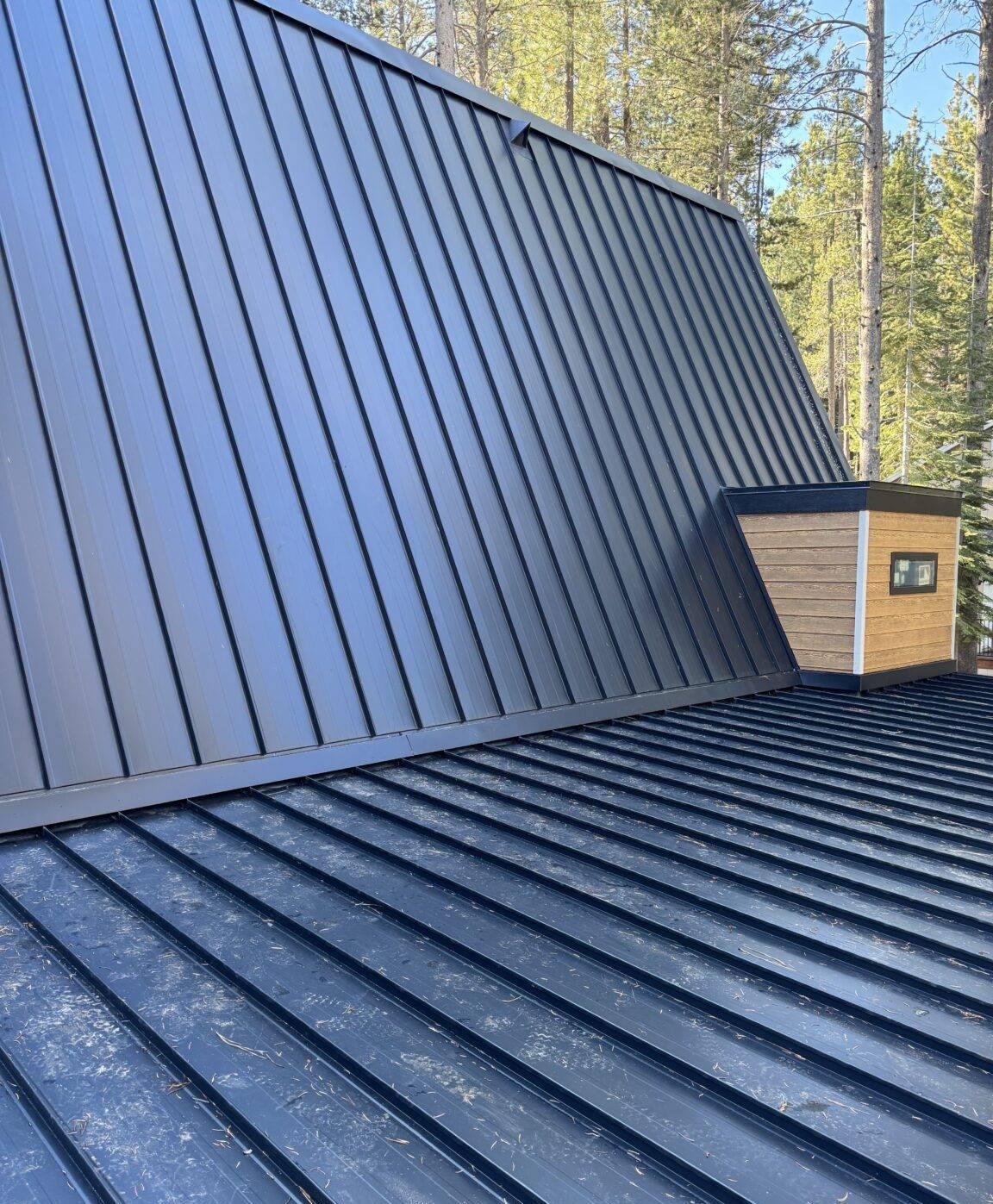
What Storm Damage Actually Looks Like Here
Homeowners usually call us after noticing one obvious problem, but a proper inspection almost always turns up more. The most common issues we find on Bellingham homes after a windstorm or heavy rain event include:
- Shingles lifted or torn loose at the tabs, especially on roof edges and rakes where wind uplift is strongest
- Ridge cap shingles cracked or blown off entirely — often the first thing to go in a gusty system
- Flashing pulled away from chimneys, skylights, and wall intersections, letting wind-driven rain track underneath
- Granule loss and brittle shingles in areas that stay shaded and damp for long stretches of the year
- Moss buildup in valleys and behind chimneys that dams water and accelerates lifting during heavy rain
- Dented, bent, or detached gutters and downspouts, which back water up under the roof edge instead of away from it
- Punctures or soft spots from branch strikes, which are common given how many mature conifers shade roofs in this area
Any one of these on its own might just need a small fix. Several of them together, which is typical after a real storm, usually means the roof needs a more thorough look before anyone starts nailing shingles back down.
Damage You Can't See From the Driveway
The damage that costs homeowners the most isn't the missing shingle you can spot from the street — it's the water that got underneath it weeks or months before the shingle finally blew off. Wind-driven rain doesn't need a big opening to get into a roof deck; it just needs a lifted tab and enough force to push moisture uphill against gravity. That's a normal weather pattern for this part of Washington, not a rare event, which is why we always check the decking and underlayment condition, not just the surface layer, whenever we're called out after a storm.
What a Correct Storm Repair Involves
Storm repair done right is a sequence, not a single step. Skipping any part of it usually means calling someone back out within a year or two.
1. Full Roof Assessment, Not Just the Damaged Spot
We check the entire roof plane, not just the area the homeowner flagged. Wind damage is rarely confined to one spot, and a storm strong enough to lift shingles in one area has usually stressed fasteners and flashing elsewhere too.
2. Decking and Underlayment Check
Wherever shingles were lifted or missing, we check the sheathing underneath for soft spots, staining, or delamination. Repairing over damaged decking just hides a problem that will come back as a leak or, eventually, a sag.
3. Matching Materials Correctly
Shingle color and profile drift over the years as manufacturers update product lines. We do our best to match your existing roofing as closely as possible, but on older roofs a perfect match isn't always available — we'll tell you honestly if that's the case rather than promise something we can't deliver.
4. Flashing and Seal Detail
This is where most storm repairs succeed or fail. Flashing around chimneys, vents, skylights, and roof-to-wall transitions has to be reset or replaced correctly, not just re-caulked. Caulk is a short-term seal, not a substitute for proper flashing geometry, and it tends to fail faster in salt-air conditions near the water.
5. Cleanup and Debris Removal
Storm repair work generates torn shingle material, old flashing, and often moss and organic debris that was contributing to the original damage. We clear it from gutters and valleys as part of the job, not as an afterthought.
Our Process for Bellingham Storm Repairs
We keep the process straightforward because storm damage is stressful enough without a confusing repair timeline:
- Inspection and documentation. We walk the full roof, photograph damage, and note anything relevant to an insurance claim if you're filing one.
- Honest scope discussion. We tell you what's storm-related, what's pre-existing wear (like moss damage that predates the storm), and what your realistic options are.
- Written estimate. Clear line items — no vague "storm repair package" pricing that hides what's actually being done.
- Repair. Matching materials where possible, proper flashing and fastening technique, and attention to the specific failure points we found during inspection.
- Final walkthrough. We show you what was done and what to watch for going forward, particularly if moss or drainage issues contributed to the original damage.
A Note on Insurance Claims
Many storm-related roof repairs in Whatcom County are eligible for insurance coverage, particularly when there's a documented wind event. That said, insurers distinguish between sudden storm damage and gradual deterioration from age or moss, and they'll often send their own adjuster to make that call. Good documentation — photos, dates, and a clear description of what failed and why — makes that conversation easier. We're glad to provide documentation to support your claim, but the claim decision itself is always between you and your insurance company.
Repair or Replace? How We Help You Decide
Not every storm-damaged roof needs full replacement, and not every roof is worth repairing again. The right call usually comes down to a few factors:
| Factor | Leans Toward Repair | Leans Toward Replacement |
|---|---|---|
| Age of existing roof | Roof is less than half its expected lifespan | Roof is near or past its expected service life |
| Extent of damage | Isolated to one or two roof planes | Widespread across most of the roof |
| Decking condition | Sheathing is sound and dry | Multiple areas of soft or water-stained decking |
| History | First significant storm event on this roof | Repeat repairs to the same areas over recent years |
| Material availability | Close shingle match still available | Discontinued product with no reasonable match |
We'll always tell you honestly which side of that table your roof falls on. A repair that patches over a roof that's fundamentally at the end of its life isn't doing you any favors — it just delays a bigger job and spends money that could have gone toward it.
Reducing the Damage From the Next Storm
Whatcom County's weather isn't going to change, but a lot of storm damage is preventable with basic maintenance between events. A few things worth checking on your own roof, or asking us to check during a repair visit:
- Gutters and downspouts clear and securely attached before the fall storm season
- Moss treated or removed from north-facing and shaded roof sections before it lifts shingles
- Flashing around chimneys and vents inspected for gaps, not just visually "looks fine"
- Overhanging branches trimmed back from roof edges, especially after any wind event
- Ridge caps checked for cracking or loosening, since they're usually the first thing to fail in high wind
- Attic checked periodically for moisture or staining that wouldn't be visible from outside
None of this eliminates storm risk entirely — no roof is stormproof — but it reduces how much damage a given storm actually causes, and it makes any future repair simpler and cheaper.
Why Local Storm Repair Experience Matters
A roofing crew that works Bellingham regularly already knows which roof orientations take the worst of the wind off the water, which neighborhoods deal with heavier moss coverage from tree canopy, and which flashing materials actually hold up to salt air over time instead of corroding out in a few seasons. That's not something you can fully substitute with a general roofing checklist — it comes from doing this work in this specific climate, season after season.
It also means a faster, more realistic response when a storm actually hits. We're not learning Whatcom County weather patterns on your roof; we're applying what we already know works here.
Get a Straight Answer on Your Storm Damage
If your roof took a hit in a recent storm, or you're just not sure whether the wear you're seeing is storm-related or has been building for a while, we're happy to take a look. Use the form below to request a free, no-pressure estimate — we'll give you an honest read on what's actually going on and what it would take to fix it right.