 Glenhaven Siding
 Windows Built for Bellingham's Coastal Climate
Bellingham sits close enough to the water that its homes take on a different kind of weather than houses fifty miles inland. Salt-laden air off the bay works on metal hardware and finishes year-round. Driving rain, pushed sideways by wind off the Strait, tests every seam and flashing detail around a window opening. And the long, damp moss season here doesn't just grow on your roof — it holds moisture against siding, trim, and window frames for months at a time. Windows in this part of Whatcom County have to do more than look good and seal out drafts. They have to shed water reliably, resist corrosion, and survive extended periods of wet, low-drying conditions without the frame or the wall behind it rotting from the inside out.
A window that's a perfectly reasonable choice in a dry climate can be the wrong call here. That's the case we make on every Bellingham job: the product and the installation method both need to answer to the local weather, not just to a spec sheet.
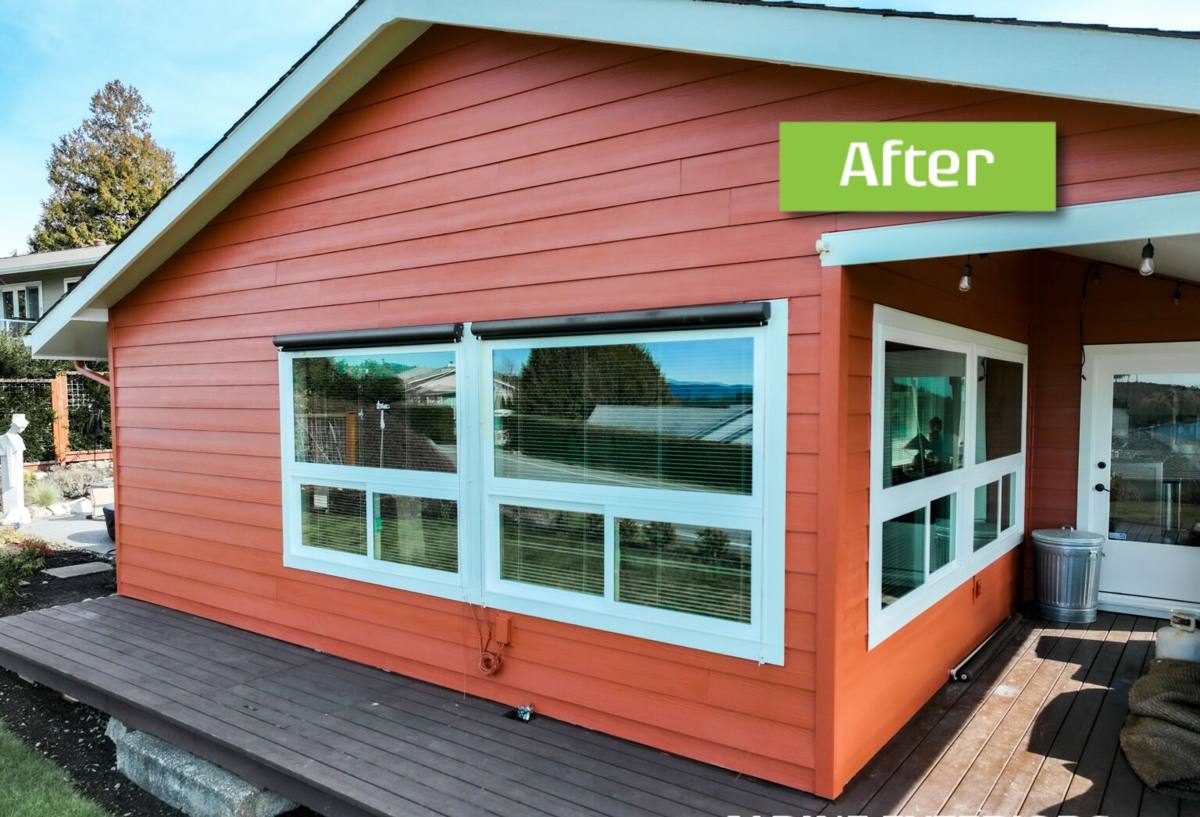
How the Local Climate Shows Up in Older Windows
If you've lived in a Bellingham home for more than a decade or two, you've probably already seen some of this firsthand:
- Soft or discolored wood at the bottom corners of window frames, where water sits longest
- Corroded or stiff hardware — latches, cranks, and balances that used to move smoothly
- Fogging or moisture between panes, meaning the seal on an older insulated glass unit has failed
- Black or green staining on sills and trim from moss and mildew that never fully dries out
- Drafts or cold spots near the frame, especially noticeable during winter storms off the water
- Paint or finish that's failing faster on the weather-facing side of the house than the sheltered side
None of these are unusual for this area — they're just what happens when a window's original seals, finishes, or flashing details reach the end of what they can handle. The question isn't really whether a window here will eventually show wear from salt air and rain; it's whether the installation gives it the best possible chance to hold up, and for how long.
What a Correct Window Installation Actually Involves
Most window problems homeowners deal with a few years down the road don't come from a bad window — they come from a rushed installation. In a climate like Bellingham's, the installation details matter as much as the product itself, sometimes more.
Water management comes first
Every opening gets prepared so water has a clear, one-way path out, never in. That means proper flashing at the sill, sides, and head of the window, integrated with the home's existing weather-resistive barrier rather than just caulked over it. A sill pan under the window creates a backup drainage path for any water that gets past the primary seal — cheap insurance against the kind of sideways, driving rain this area gets several months a year.
The rough opening has to be right
Old openings are rarely perfectly square, especially in older Bellingham homes that have settled over decades. We check and correct for level, plumb, and square before the window ever goes in, because a window installed slightly out of true will bind, leak, or wear its weatherstripping unevenly no matter how good the unit itself is.
Insulation and air sealing, done properly
Gaps around the frame get filled with a low-expansion foam or backer rod and sealant designed for window applications — not stuffed with fiberglass batting, which does little to stop air movement and can hold moisture against the frame.
Exterior sealants matched to the job
We use sealants rated for exterior exposure and for the specific materials involved (vinyl, fiber-cement, wood trim), since the wrong sealant can fail early in a climate with this much sustained moisture.
Choosing the Right Window for a Bellingham Home
There's no single "best" window material — the right choice depends on your home's exposure, your budget, and how much upkeep you want to take on. Here's how the common options stack up for a marine climate like ours:
| Material | How It Handles Salt Air & Moisture | Maintenance | Typical Cost Position |
|---|---|---|---|
| Vinyl | Won't corrode or rot; performs well in coastal air | Low — occasional cleaning | Most affordable |
| Fiberglass | Excellent moisture and corrosion resistance; very stable | Low | Mid to upper range |
| Wood-clad | Exterior cladding protects the wood, but any breach in the cladding invites rot | Higher — cladding and seals need monitoring | Upper range |
| Aluminum | Prone to corrosion in salt air unless heavily coated; conducts cold | Moderate to high | Varies |
For most Bellingham homes, especially anything with meaningful wind or salt exposure, we steer customers toward vinyl or fiberglass frames for the working parts of the window. Wood-clad windows can still be the right call for a specific look or a historic home, but we're honest about the added maintenance commitment that comes with keeping the cladding and seals intact over time — a breach that lets moisture reach bare wood is a much bigger problem here than in a dry climate.
Glass and Weatherstripping Details Worth Knowing
Double-pane, low-E insulated glass is the standard for this region and handles our temperature swings and moisture load well. Weatherstripping should be a compression or fin-seal type rated for exterior use — the cheaper foam strips found on lower-grade windows compress and lose their seal much faster in a climate that's damp most of the year.
Our Process, Start to Finish
- On-site assessment — We look at your existing windows, framing condition, and any signs of past water intrusion before recommending anything.
- Honest product recommendation — Based on your home's exposure to wind and rain, budget, and how the window fits the house.
- Opening preparation — Old windows removed, framing checked and repaired if needed, flashing and sill pan installed.
- Window installation — Set level, plumb, and square; fastened per manufacturer spec; insulated and air-sealed correctly.
- Exterior finish work — Trim, flashing, and sealant details completed to shed water, matched to your home's existing siding and trim.
- Final walkthrough — We check operation, seals, and cleanup with you before considering the job done.
We don't treat window installation as a one-size-fits-all product swap. A window facing the prevailing wind and rain on one side of a Bellingham home may need more attention to flashing detail than a sheltered window on the lee side of the same house — we plan for that difference rather than treating every opening identically.
Why Hiring a Crew That Already Works This Area Matters
Window installation looks similar on paper everywhere in the country, but the details that actually matter shift with the climate. A crew that mostly works drier regions may not think twice about a flashing shortcut or a sealant choice that would hold up fine there — and would fail here inside a few wet seasons. A crew that works Whatcom County regularly has already seen what salt air does to the wrong hardware, what a long moss season does to a poorly flashed sill, and what driving rain finds if a seam isn't done right the first time.
That local track record is also why we can be direct with you about trade-offs — which materials need more upkeep near the water, which details are worth spending on, and which are unnecessary for your specific home's exposure.
Questions Worth Asking Any Window Contractor Here
- Do you install a sill pan or secondary drainage path, or rely on caulk alone?
- How do you flash around the window to tie into the existing wall assembly?
- What warranty covers the installation itself, separate from the manufacturer's product warranty?
- Can you explain why you're recommending a specific frame material for my home's exposure?
- How do you handle an opening that turns out to be out of square or has hidden rot?
A straight answer to each of these tells you more about the quality of the work than any brochure will.
Maintenance That Extends the Life of New Windows
Even a well-installed window benefits from a little seasonal attention in this climate. Rinsing salt residue off frames and glass a few times a year, keeping weep holes and drainage tracks clear of moss and debris, and checking exterior sealant for cracking after a hard winter all go a long way. We're happy to walk you through what to watch for on your specific windows once the installation is complete.
Get a Straightforward Estimate
If your Bellingham home's windows are showing their age — or you're just tired of drafts, stuck sashes, or fogged glass — we're glad to take a look and give you a clear, no-pressure estimate. Use the form below to get started.