 Glenhaven Siding
 Deck Repair Built for Blaine's Coastal Conditions
Blaine sits close enough to the water that salt air is a daily fact of life, not an occasional nuisance. Combine that with the driving rain that rolls through Whatcom County most of the year and the long moss season that follows, and you have three separate forces working against every deck in the area at the same time. A deck that would hold up fine 40 miles inland can develop real problems here in a fraction of the time — not because it was built badly, but because it wasn't built, or maintained, for this specific combination of weather.
We repair decks in Blaine regularly, and the failures we see follow a pattern. Salt-laden air accelerates corrosion on fasteners and hardware. Wind-driven rain gets pushed sideways into gaps and joints that would stay dry in a calmer climate. And moss, once established on a shaded or north-facing deck, holds moisture against the wood for weeks at a stretch. None of these problems are dramatic on their own, but stacked together over a few seasons, they add up to soft boards, loose railings, and structural connections that need attention.
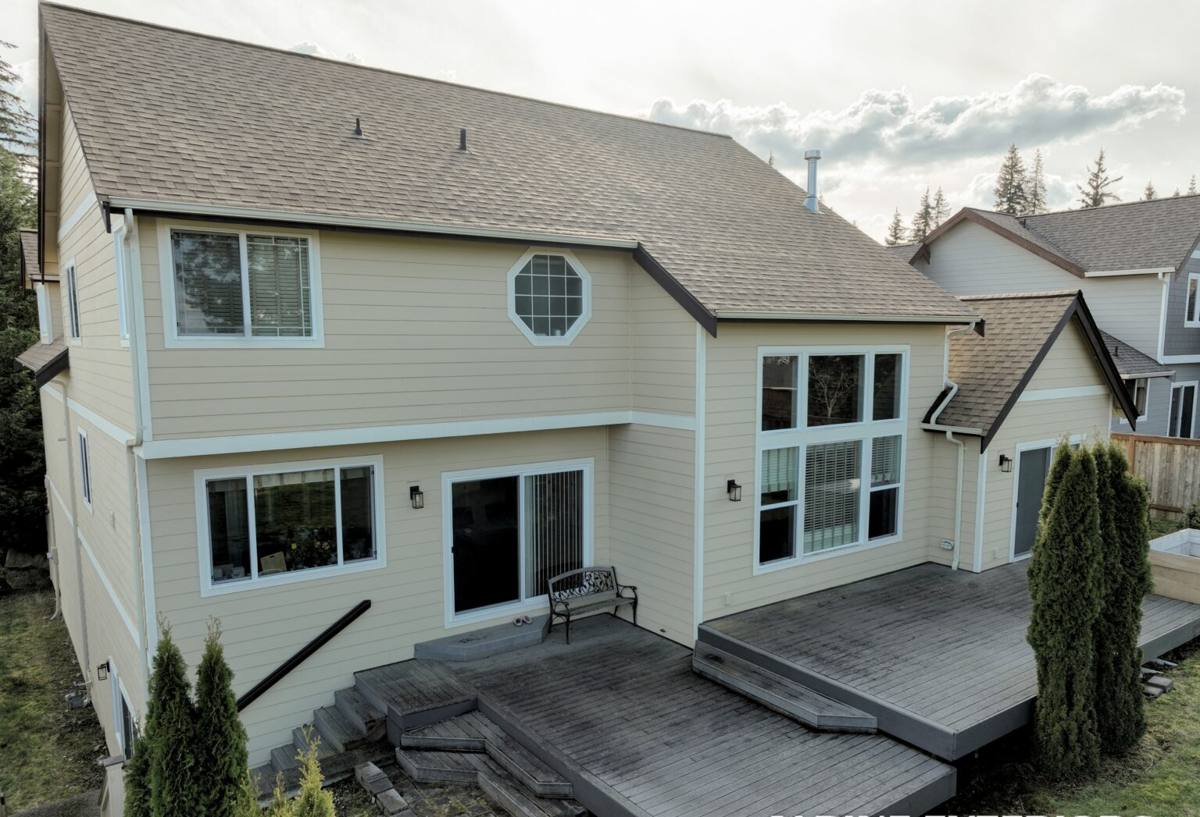
Why Decks in This Area Fail Faster Than the Manual Says
Salt air and metal hardware
Every deck depends on metal to hold it together — joist hangers, structural screws, bolts, flashing. Standard hardware rated for general outdoor use can start showing surface corrosion within a few years this close to the water, and once a fastener weakens, the wood around it takes on stress it wasn't designed to carry alone. This is one of the most common repair calls we get in Blaine: hardware that looks fine from a few feet away but is failing where it counts.
Driving rain and end grain
Wind-driven rain doesn't just fall on a deck, it gets forced into every horizontal surface and end cut. The cut ends of deck boards, the top of a ledger board, the underside of a railing cap — these are the places where water sits longest and where rot starts first. A deck built without attention to drainage and end-grain protection will show water damage in these exact spots first, regardless of what species of wood was used.
Moss and sustained moisture
Moss doesn't damage a deck by itself, but it's extremely good at trapping moisture against the surface long after a storm has passed. On shaded decks, north-facing decks, or decks tucked under overhangs, moss can hold a board wet for days. Over a full moss season that runs several months, that's a lot of extra exposure time compared to a deck that dries out within hours of a rain event.
Signs Your Deck Needs Repair — Not Just a Wash
Homeowners often power-wash a deck and consider the job done, but pressure washing doesn't fix structural issues, it just makes them harder to spot for another season. Watch for these signs that go beyond surface cleaning:
- Boards that feel spongy or flex noticeably underfoot
- Railings or posts that wiggle when pushed, even slightly
- Rust streaks bleeding out from screw heads or hardware
- Gaps opening up between boards or at the ledger board connection to the house
- Dark staining or persistent moss growth in the same spots season after season
- Stairs that feel different underfoot than they did last year — bounce, give, or noise
- Visible daylight or gaps where the deck meets the house framing
Any one of these on its own might be minor. Two or three together usually means it's time for an inspection before the next problem shows up as a safety issue rather than a maintenance item.
What an Honest Deck Repair Actually Involves
A repair that only addresses what's visible from the top often misses the reason the damage happened in the first place. Our approach starts underneath and works up:
1. Structural check first
Before touching a single board, we check the ledger board connection to the house, the condition of the joists, and the posts and footings. This is the part of the deck that determines whether it's safe, and it's also the part that's easiest to overlook because it's hidden under the decking.
2. Hardware assessment
Given how hard salt air is on metal here, we check every joist hanger, bolt, and structural screw we can access. Corroded hardware gets replaced with fasteners rated for coastal exposure — this is one of the cheapest parts of a repair and one of the most important for long-term durability.
3. Board-by-board evaluation
Not every soft-feeling board needs full replacement, but not every board that looks fine is actually sound. We test decking with more than a visual glance, particularly around fastener locations and board ends, where rot typically starts.
4. Drainage and airflow
If moss or standing water is a recurring issue in one section, we look at why. Sometimes it's a grading or slope problem underneath the deck, sometimes it's a shaded area that never fully dries, and sometimes it's simply gaps that have closed up over time and stopped water from draining through. Fixing the underlying cause matters more than replacing the same boards again in three years.
5. Finish and protection
Repaired sections get sealed or finished to match the rest of the deck, both for appearance and because exposed, unfinished wood in this climate weathers unevenly and fast.
Repair vs. Replace: How We Help You Decide
Not every deck problem calls for a full rebuild, and not every deck is worth patching indefinitely. Here's how we generally think through the decision with homeowners:
| Factor | Favors Repair | Favors Replacement |
|---|---|---|
| Structural frame condition | Solid, no rot at ledger or joists | Rot or corrosion at multiple structural points |
| Extent of damage | Isolated to a few boards or one railing section | Widespread across most of the deck surface |
| Age of the deck | Under 10-15 years, built to a reasonable standard | Original construction is old or was never well-suited to this climate |
| Hardware condition | Mostly sound, some spot corrosion | Corrosion is widespread and hard to access for spot repair |
| Budget priorities | Want to extend life a few more seasons cost-effectively | Want to stop recurring repair costs long-term |
We'll always give you our honest read on which side of that table your deck falls on, including if the answer is that a targeted repair now is the smarter move than a premature full replacement.
Materials That Make Sense for Blaine's Climate
When we're replacing boards, hardware, or railing sections, we choose materials with this specific coastal, wet climate in mind rather than defaulting to whatever is cheapest. That means stainless or coated fasteners rated for corrosion resistance near salt air, and decking or trim choices that we can back up with a clear maintenance expectation — some materials look great on day one but come with moisture behavior or upkeep demands that don't hold up well here without regular attention. We'll walk you through the real trade-offs of whatever decking material you're considering: what it needs from you as an owner, how it behaves in driving rain, and what its realistic lifespan looks like given Whatcom County's weather rather than a national average.
A Quick Self-Check Before You Call
Walking your own deck before scheduling an inspection helps us prioritize the visit and gives you a head start on understanding what's going on. Look for:
- Soft spots when you press on boards with your foot, especially near the house and near stair treads
- Rust trails below screw heads or around metal connectors
- Movement in railing posts when you push on them firmly
- Persistent moss or dark, damp-looking patches that don't dry out between rains
- Visible gaps or separation where the deck attaches to the house
- Any area that's noticeably lower or higher than the surrounding surface
Why a Crew That Already Works in Blaine Matters
A deck repair contractor who only occasionally works this close to the water can miss things that are obvious to a crew that sees this exact climate combination every week. We know which hardware grade holds up and which doesn't, which sides of a house in this area tend to develop moss problems first, and where driving rain typically finds its way into a deck structure that looks fine from above. That local pattern recognition is the difference between a repair that solves the actual problem and one that just resets the clock on the same failure.
We also know Blaine well enough to give you a realistic timeline and a straight answer about scope before we start — no surprises once boards start coming up.
Get a Straight Answer on Your Deck
If your deck in Blaine is showing soft spots, loose railings, rust, or recurring moss, it's worth having someone look at it before winter's rain and next year's moss season add to the damage. We offer free, no-pressure estimates and will tell you honestly whether you're looking at a targeted repair or something bigger — just fill out the form below to get started.