 Glenhaven Siding
 Roof Replacement in Blaine: Built for a Border Town on the Water
Blaine sits at the very top of Whatcom County, right against Semiahmoo Bay and Drayton Harbor, close enough to the water that salt air reaches nearly every roof in town, not just the ones with a water view. Add in driving rain that comes ashore with real force off the Pacific storm track and a moss season that stretches through most of the year, and you get a roofing environment that's harder on materials than most of the state. A roof that would last three decades in a drier, inland climate can start showing real problems in Blaine well ahead of schedule if it wasn't built with this specific weather in mind.
We're based in Glenhaven, and Blaine is regular work for our crew, not an occasional trip. That matters on a roof replacement more than almost any other exterior project, because a full tear-off and rebuild is the one chance to get every layer right — deck, underlayment, flashing, ventilation, and the finish material itself. Get it right and a Blaine homeowner can go another 25 to 50 years without thinking about the roof. Get it wrong and problems show up in three to five.
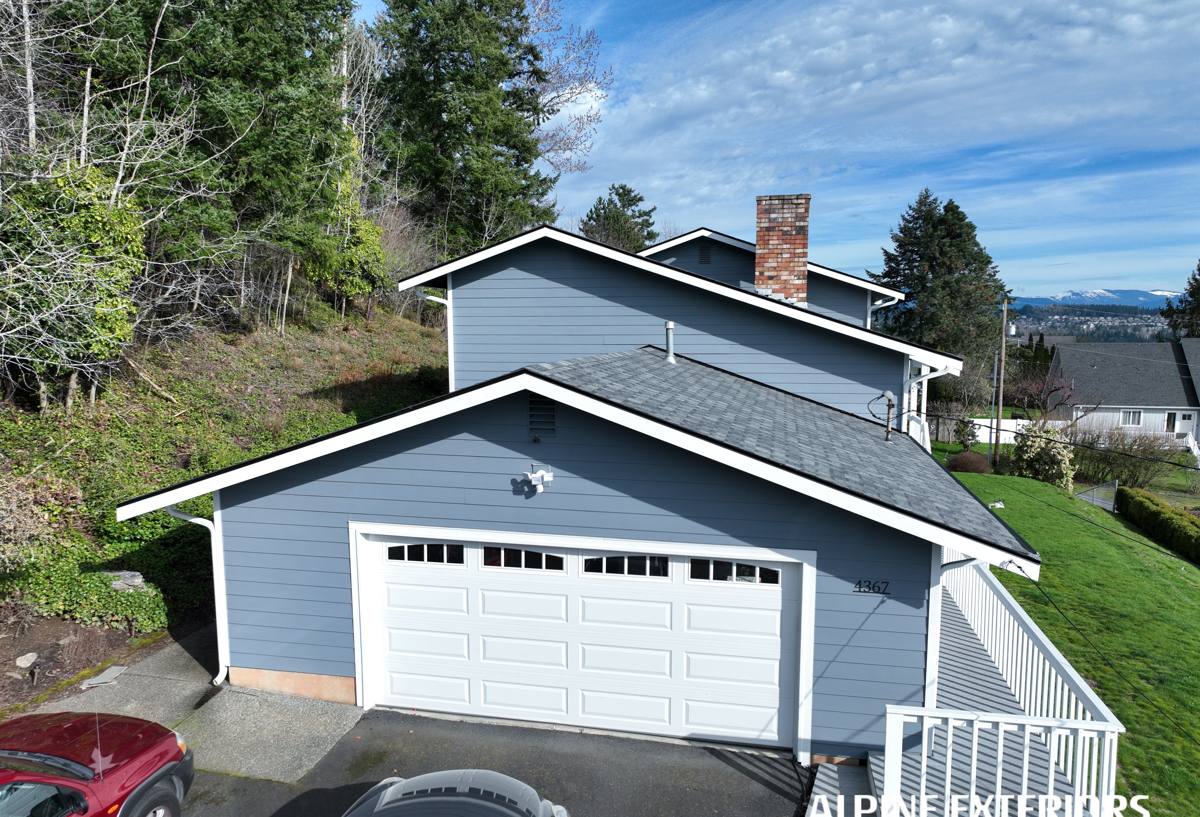
Why Roof Replacement in Blaine Isn't a Generic Job
A lot of roofing crews treat replacement as a one-size-fits-all process: strip the old material, roll out new underlayment, nail down shingles, done. That approach can work fine in a mild, dry climate. It doesn't hold up here. Three conditions specific to Blaine's location change what a correct replacement actually requires.
Salt Air and Corrosion
Metal components on a roof — fasteners, flashing, vent boots, drip edge — take a slow beating from airborne salt in a waterfront town like Blaine. Standard-grade hardware corrodes faster here than it does even a few miles inland, and corroding fasteners are one of the most common hidden causes of leaks that show up years after a roof was installed. Every metal component on a Blaine roof replacement needs to be chosen for that exposure, not just for cost.
Wind-Driven, Sideways Rain
Storms coming ashore near the border don't just drop rain straight down — they push it sideways into roof valleys, up under shingle edges, and around any penetration in the roof deck. That's a different, heavier moisture load than a simple rainfall total suggests, and it's exactly where underlayment quality and flashing detail either hold up or fail.
A Moss Season That Doesn't Really End
Mild temperatures and consistent moisture mean moss and algae can grow on a Blaine roof nearly year-round, especially on shaded or north-facing slopes. Moss isn't just cosmetic — it holds water against the roofing material and works its way under shingle edges, and over a few seasons that trapped moisture accelerates wear on the material underneath it.
Signs Your Blaine Roof Has Reached Replacement, Not Repair
Not every roof problem calls for a full replacement, and a straight answer here should never default to the most expensive option. These are the signs that usually mean patching has run its course:
- Shingles curling, cupping, or missing across multiple roof planes, not just one isolated spot
- Granule loss heavy enough that gutters are collecting them by the handful
- Moss or dark streaking spread across large sections that returns quickly after cleaning
- Soft spots or sagging felt when walking the roof, which usually means deck damage underneath
- Multiple past repairs in different locations, suggesting the whole roof is aging out at once
- Daylight visible through the roof deck from inside the attic
- Interior water staining near exterior walls, chimneys, or skylights
- A roof already at or past the low end of its material's expected lifespan
One or two of these on their own might still be a repair. Several together, especially on a roof already fifteen to twenty-five years old, usually mean it's more honest to replace than to keep patching around the edges.
What a Correct Roof Replacement Actually Involves
A roof replacement is a system, and skipping any one layer of that system is what turns a twenty-five-year roof into a twelve-year roof. On every Blaine job, that system includes:
- Full tear-off and deck inspection. We remove the existing roofing down to the deck and inspect for soft spots, rot, or delamination before anything new goes on. Deck repairs happen before, never after.
- Ice-and-water shield at vulnerable points. Eaves, valleys, and areas around chimneys and skylights get a self-adhering waterproof membrane, since these are the spots where wind-driven rain and ice concentrate.
- Synthetic underlayment rated for sustained moisture. A minimum-code underlayment is not the same as one built for a climate where the roof rarely gets a long stretch of dry weather to fully shed moisture.
- Corrosion-resistant flashing and fasteners. Every valley, chimney, vent pipe, and roof-to-wall transition gets flashing and hardware rated for salt air exposure, not standard-grade material.
- Proper attic and roof deck ventilation. Trapped moisture in the attic works against the roof from underneath. Balanced intake and exhaust ventilation lets that moisture escape instead of condensing against the deck.
- Finish material installed to manufacturer spec. Nail placement, exposure, and overlap all affect wind resistance and water shedding — details that matter more in a place that gets both wind and rain at the same time.
- Final inspection and cleanup. We walk the finished roof, check every penetration and edge, and clear the site of old material and debris.
Choosing a Roofing Material for a Blaine Home
There's no single correct material for every roof — it depends on budget, roof pitch, sun exposure, and how long you plan to stay in the house. What matters is picking with Blaine's specific conditions in mind rather than whatever's cheapest to install.
| Material | Salt Air & Moss Behavior | Typical Maintenance | Realistic Lifespan Here |
|---|---|---|---|
| Architectural asphalt shingle | Good with proper ventilation and corrosion-resistant fasteners; moss-resistant granules help | Periodic moss removal, gutter checks | 20-30 years |
| Standing seam metal | Sheds water and moss well due to a smooth surface; needs marine-grade fasteners near the coast | Low; occasional fastener and sealant checks | 40-60 years |
| Cedar shake | Absorbs moisture readily; needs strong airflow underneath to dry between rains | Higher; regular treatment and moss control | 20-30 years with consistent upkeep |
| Composite/synthetic shingle | Resists moisture absorption well; salt tolerance varies by product | Low to moderate | 30-50 years depending on product |
On a waterfront town like Blaine, the material decision is only half the picture. Standard-grade fasteners and flashing paired with a premium shingle will still corrode early. We spec the whole assembly for the exposure, not just the visible layer.
What Roof Replacement Costs Depend On
We won't quote a number without seeing the roof, but the factors that actually move a Blaine roof replacement estimate are consistent from job to job:
| Factor | Why It Matters in Blaine |
|---|---|
| Roof size and number of planes | More square footage and more complex geometry mean more material, more flashing details, and more labor hours |
| Roof pitch | Steeper roofs require more safety setup and take longer to work, especially with regular wet weather |
| Deck condition | Rot or soft spots found during tear-off require repair before new roofing goes on, which isn't always visible from a pre-job inspection |
| Material choice | Asphalt, metal, cedar, and composite carry different material and labor costs, and different long-term maintenance |
| Access and site conditions | Tight lots, mature trees, or difficult truck access near the water can add setup time |
| Ventilation and flashing upgrades | Bringing older ventilation or flashing up to current standards adds scope but reduces future problems |
How Our Roof Replacement Process Works
We keep the process straightforward and try not to make a homeowner guess what's happening at any stage:
- Inspection and estimate. We walk the roof, check the attic where accessible, and give an honest read on repair versus replacement before recommending the bigger job.
- Written scope and material selection. You'll know exactly what's being installed, including underlayment, flashing, and ventilation details, not just the shingle brand.
- Scheduling around weather. Tear-offs happen on days with a dry-enough window to keep the deck protected; we don't leave a roof exposed overnight without protection in place.
- Tear-off, deck repair, and installation. Old material comes off, the deck gets inspected and repaired as needed, and the new system goes on layer by layer.
- Final walkthrough. We review the finished roof with you, point out anything worth knowing for future maintenance, and clear the site of debris and old material.
Why a Crew That Already Works Blaine Makes a Difference
A roofing crew that only occasionally works this far north can still install a roof correctly on paper and still miss the details that matter here in practice. Knowing which roof orientations in Blaine hold moisture longest because of shade or wind exposure, how much ice-and-water shield a given valley actually needs this close to the water, and which fastener and flashing grades are worth the extra cost near the coast — that comes from working roofs in this specific town across different seasons, not from a general roofing background. We're close enough that a callback isn't a half-day drive, and close enough that we've seen how our own work holds up here over years, not just at handoff.
Beyond the Roof
Roof replacement is often the trigger for noticing other exterior wear — trim, siding, or flashing at a roof-to-wall transition that's been quietly taking on water. We also handle siding, windows, and decks, and on siding specifically we install James Hardie fiber cement as our standard, chosen for how it holds up against sustained moisture and moss compared to lower-cost alternatives. If a roof inspection turns up related damage nearby, we can address it as part of the same conversation instead of sending you to find a second contractor.
Get a Free, No-Pressure Estimate
If your Blaine roof is showing its age or you're just not sure whether it's a repair or a full replacement, we're glad to take a look and give you a straight answer. Reach out using the form below to schedule a free estimate — no pressure, no upsell script.