 Glenhaven Siding
 Why Blaine Homes Need a Different Approach to Window Replacement
Blaine sits right on the water at the northern edge of Whatcom County, and that location shapes how windows age here. Salt-laden air off the bay works into metal hardware and fasteners faster than it does a few miles inland. Driving rain off the water doesn't fall straight down — it hits siding and window assemblies at an angle, which means water management around the frame matters more here than in a sheltered neighborhood. And the long, damp moss season that defines this part of Washington keeps trim, sills, and cladding wet for weeks at a stretch, which is exactly the kind of environment that finds every weak seal and every gap in flashing.
None of that means Blaine homes need exotic products. It means the installation has to account for local conditions instead of following a generic checklist. A window that performs fine in a dry climate can fail early here if it's set without the right flashing sequence, the right sealants, or hardware rated for a salt-air environment.
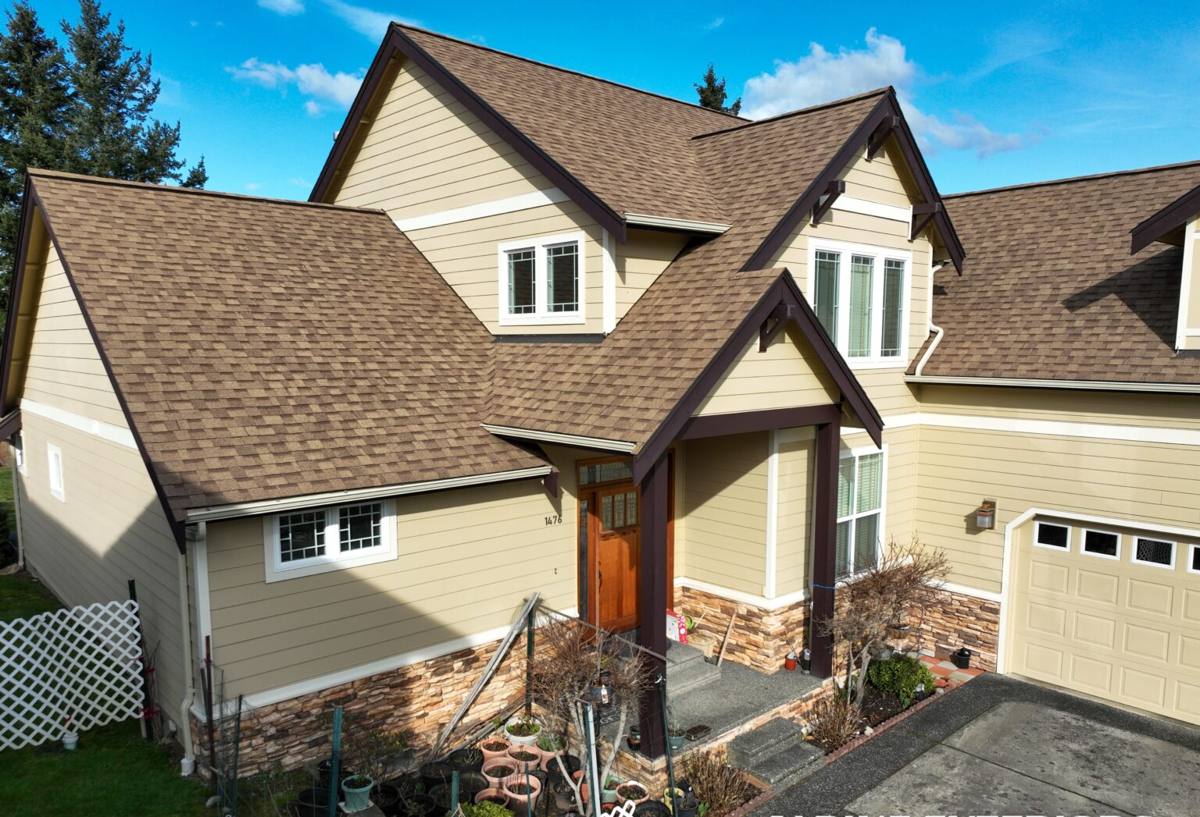
Signs Your Windows Are Due for Replacement
Coastal wear doesn't always look dramatic at first. It usually shows up as a handful of small, related problems around the same window before it becomes an obvious failure. Walk your exterior and interior sills and look for these:
- Fogging or a visible film between panes — a sign the seal has failed and the insulating gas has escaped
- Corroded or stiff locks, cranks, and hinges, especially on windows facing the water or prevailing wind
- Soft, discolored, or spongy wood at the sill or lower frame corners
- Persistent drafts you can feel with a hand near the frame on a windy day
- Paint that keeps bubbling or peeling on the frame no matter how often it's repainted
- Green or black growth on the sill or exterior casing that returns shortly after cleaning
- Windows that are noticeably harder to open, close, or lock than they used to be
Any one of these on its own might just need a repair. Several showing up together, especially on the same wall, usually means the window assembly itself — not just the glass or the paint — is past its useful life.
What a Correct Window Replacement Job Actually Involves
Flashing and Water Management Come First
The window itself is only part of the system. What happens around it — the flashing tape, the sill pan, the way the weather-resistive barrier laps over and under the window flange — determines whether water gets managed or trapped. In a driving-rain, high-humidity climate like Blaine's, a sill pan that directs incidental water back out, rather than letting it pool against the sheathing, is not optional. This is the step that gets skipped most often by crews rushing a job, and it's the step that causes rot years later, long after the installer is gone.
Air Sealing and Insulation
Once the window is set plumb, level, and square, the gap between the frame and the rough opening needs to be sealed and insulated correctly — not overpacked with expanding foam that can bow the frame, and not left with gaps that let cold, damp air infiltrate. Done right, this step also cuts down on condensation on the interior of the glass during our cooler, wetter months.
Hardware Suited to Salt Air
Locks, cranks, hinges, and screws should be rated for coastal or marine-grade exposure where the window faces the bay or open wind. Standard hardware can start showing corrosion within a couple of seasons in a salt-air environment; upgraded hardware costs a little more up front and saves you from sticky, failing locks down the road.
Choosing the Right Frame Material for This Climate
There's no single "best" window material for every home — the right choice depends on your home's exposure, your budget, and how much upkeep you want to take on. Here's how the common options hold up specifically against salt air, driving rain, and a long wet season:
| Frame Material | Coastal Moisture Performance | Maintenance | Typical Trade-Off |
|---|---|---|---|
| Vinyl | Won't rust or corrode; handles damp exposure well | Low — occasional cleaning | Fewer color/finish options than other materials |
| Fiberglass | Very stable in temperature swings and moisture; strong seal retention | Low | Higher upfront cost than vinyl |
| Wood-clad | Good if cladding and flashing detail are done right; interior wood still needs protection from condensation | Moderate to high | More sensitive to installation quality in wet climates |
| Aluminum | Prone to corrosion in salt air unless marine-grade and properly finished | Moderate | Conducts cold, which can increase condensation on interior frame |
For homes close to the bay or exposed to prevailing wind and rain, we typically steer customers toward vinyl or fiberglass for the frame material itself, simply because they don't give salt air anything to corrode. Wood-clad windows can still be a good fit for homes where the look matters most, but they demand more attention to the flashing detail and, over time, more upkeep from the homeowner.
What Drives the Cost of a Window Replacement in Blaine
Every home and every opening is a little different, so we don't quote sight unseen — but the main cost drivers are consistent from job to job:
- Frame material and glass package (standard double-pane versus upgraded low-E or triple-pane glass)
- Whether the opening needs repair to sheathing, framing, or sill material before the new window goes in
- Full-frame replacement versus insert (pocket) replacement, where the existing frame is left in place
- Number of windows done at once — bundling multiple openings typically reduces the per-window cost
- Access and height, such as second-story or hard-to-reach windows
Homeowners on this stretch of coastline sometimes ask whether it's worth paying more for upgraded glass or hardware. In most cases, yes — the incremental cost of better seals, coastal-rated hardware, and a properly detailed sill pan is small compared to the cost of dealing with rot or a failed seal in five to eight years instead of fifteen or twenty.
How Our Process Works
We keep the process straightforward and try to minimize disruption to your home:
- Free on-site estimate — we look at each opening, note any signs of water intrusion or frame damage, and talk through material and glass options for your home's exposure
- Written quote with clear scope, so you know exactly what's included before any work starts
- Scheduling around weather windows — we plan installation days with an eye on the forecast, since a dry window matters for a clean install
- Removal and inspection of the rough opening, with any needed sheathing or sill repair addressed before the new window goes in — not covered up
- Installation with proper flashing, sill pan, air sealing, and hardware suited to your home's exposure
- Final walkthrough, cleanup, and a check that every window opens, closes, and locks the way it should
Why a Crew That Already Works in Blaine Makes a Difference
Window replacement is a trade where local experience shows up in small decisions that matter a lot over time: how much flashing overlap to use given the typical wind-driven rain angle here, which hardware finishes actually hold up near the water, and how to sequence a job around Whatcom County's wetter stretches of the year so the opening isn't left exposed longer than necessary. A crew that only occasionally works this coastline is learning those lessons on your house. A crew that works Blaine regularly already knows them.
Local experience also means straight answers about what your home actually needs. Not every window on a home needs the most expensive glass package, and not every opening needs a full-frame replacement — sometimes an insert replacement is the honest, cost-effective call. We'd rather tell you that up front than upsell a job your home doesn't need.
Caring for New Windows Through Moss Season and Winter Storms
A properly installed window in a good frame material needs relatively little upkeep, but a few habits go a long way in this climate:
- Rinse sills and tracks periodically during moss season to keep organic growth from taking hold
- Check and clear weep holes on vinyl and fiberglass frames so water can drain instead of pooling
- Lubricate locks and cranks annually, especially on windows with more direct wind and salt exposure
- Look at exterior caulking and sealant lines each fall before the wet season sets in, and flag any cracking early
Staying ahead of these small items is what lets a well-installed window last the full length of its expected service life instead of showing coastal wear early.
Get a Free, No-Pressure Estimate
If your windows are showing any of the signs above, or you just want an honest read on whether repair or replacement makes more sense for your Blaine home, we're happy to take a look. There's no pressure and no obligation — just a straightforward assessment and a clear quote. Use the form below to get started.