 Glenhaven Siding
 Board & Batten Siding Built for Silver Beach's Coastal Climate
Board and batten has become one of the most requested siding profiles in Silver Beach, and it's easy to see why. The vertical lines read as clean and modern on newer builds, but they also sit comfortably on older Whatcom County homes with a more traditional or farmhouse look. It works as a full exterior, as an accent on gables and entries, or as a way to break up large wall planes on a two-story home. But board and batten is also one of the least forgiving profiles when it's installed wrong — the flat panel faces and long vertical seams either shed water the way they're supposed to, or they trap it. In a neighborhood dealing with salt-laden air, driving rain, and months of damp shade, that difference shows up fast.
This page covers what board and batten siding needs to hold up specifically in Silver Beach, what a correct installation looks like, and why we install it exclusively in James Hardie fiber cement rather than the wood-based or vinyl alternatives that are also sold under the "board and batten" name.
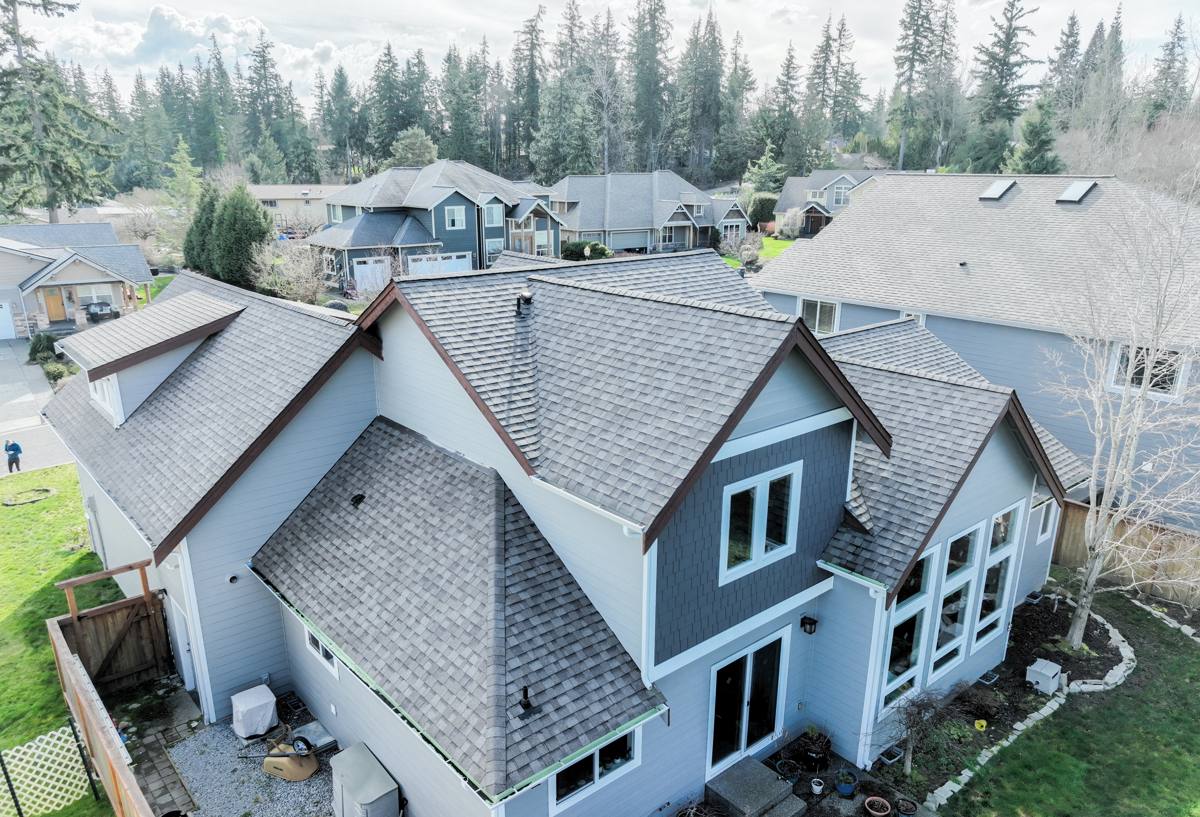
What Silver Beach Homes Are Up Against
Salt Air and Slow Corrosion
Homes near the water deal with airborne salt settling on every exterior surface, not just the siding. Over years, that salt film accelerates corrosion on fasteners, flashing, and any metal trim that isn't rated for it. It also holds moisture against the wall longer than dry inland air would, which matters on a profile like board and batten where the battens themselves create dozens of extra vertical seams for water to find.
Driving Rain and Wind-Driven Wetting
Rain that falls straight down is manageable for almost any siding. Rain that's pushed sideways by wind is a different problem — it gets forced up under laps, into gaps around trim, and behind panels that aren't sealed or gapped correctly. Whatcom County gets its share of wind-driven storms off the water, and board and batten's vertical seams are exactly where that kind of rain looks for a way in if the installation didn't account for it.
A Long Moss Season
Shade, moisture, and mild temperatures for much of the year add up to a long window for moss and algae growth on north-facing and heavily shaded walls. Moss holds water against the siding surface far longer than bare wall would on its own, which is hard on any organic or semi-organic material and a real test of a coating's ability to stay intact and stay clean.
Why Board & Batten Still Works Here — When It's Built Right
None of this means board and batten is a bad fit for Silver Beach. The profile itself sheds water fine when it's detailed correctly — the risk isn't the look, it's the execution. A correctly built rainscreen gap, proper flashing at every horizontal transition, and a material that doesn't swell, rot, or absorb water at the cut ends solves almost every problem this climate creates. That's a very different statement than "any board and batten will work here," and it's the reason we treat this as a climate-specific installation, not a one-size-fits-all product.
What a Correct Board & Batten Installation Actually Involves
Water-Resistive Barrier and Rainscreen Gap
Every installation starts underneath the siding, not with it. A continuous water-resistive barrier goes over the sheathing, lapped correctly at every seam, with flashing integrated at windows, doors, and any penetration before a single panel goes up. Behind the battens and panels, we build in a rainscreen gap using vertical furring strips. That gap lets any moisture that does get past the siding drain and dry out instead of sitting against the wall — it's the single biggest factor in how a board and batten wall performs over 15 or 20 years in a wet climate.
Panel and Batten Layout
Panel spacing and batten placement have to be planned before installation, not adjusted on the fly. Battens need to land on framing or furring with consistent spacing, joints need to be staggered and backed properly, and layout has to account for window and door locations so trim details are clean rather than pieced together. Rushed layout is one of the most common causes of premature caulk failure and water intrusion on this profile.
Fastening and Caulking
Fasteners have to be corrosion-resistant and rated for the material and the environment — this matters more in a salt-air setting than almost anywhere else fasteners get installed. Caulk and sealant get used at transitions and terminations, not as a substitute for correct flashing. A wall that depends on caulk to stay dry is a wall that will eventually leak; caulk should be the backup, not the primary defense.
James Hardie Board & Batten Options We Install
We install James Hardie fiber cement exclusively, and board and batten is one of the profiles Hardie makes specifically for this look. HardiePanel vertical siding paired with HardieTrim battens gives you the classic board and batten appearance in a non-combustible, engineered material that doesn't rot, swell at the edges, or feed moss the way wood-based products can. For projects wanting a more refined, tighter-reveal look, Hardie's Artisan panel and trim system is built for exactly that.
Both come pre-primed or with Hardie's factory-applied ColorPlus finish, which is baked on under controlled conditions rather than field-applied. In a climate with this much rain and shade, a factory finish that doesn't rely on a painter getting perfect conditions on installation day is a real advantage — it also carries its own finish warranty separate from the product warranty.
How Hardie Board & Batten Compares to the Alternatives
"Board and batten" gets sold in several different materials, and they don't perform the same way once they're on a wall exposed to salt air and long wet seasons. Here's how the common options compare:
| Material | Moisture Behavior | Salt Air / Corrosion | Long-Term Maintenance |
|---|---|---|---|
| James Hardie fiber cement | Does not swell or rot; engineered for wet climates | Non-combustible, stable; use corrosion-resistant fasteners | Periodic cleaning; ColorPlus finish holds color for years |
| LP SmartSide (engineered wood) | Treated to resist moisture, but still wood-based at the core | Coating protects against salt exposure while intact | Cut edges and seams need ongoing attention |
| Cedar / primed spruce | Absorbs moisture readily; prone to cupping and swelling | No inherent corrosion resistance; relies fully on coating | Repainting and re-sealing on a recurring cycle |
| Vinyl board and batten | Sheds water on the surface but seams and channels can trap it | Doesn't corrode, but can become brittle over time | Low upkeep, but limited repair and color options |
Wood-based panels can perform well when they're maintained on schedule, but "on schedule" is the operative phrase — a missed recoat cycle in a climate this wet accelerates damage quickly. Vinyl avoids that maintenance burden but comes with its own trade-offs in appearance, impact resistance, and how it ages in direct weather. We standardized on Hardie because it holds up to this specific climate — salt air, driving rain, and moss season — without asking the homeowner to stay on top of a recoating schedule to keep it that way.
Our Process for Silver Beach Projects
- Walk-through and assessment — we look at existing siding, sheathing condition, drainage, and any areas showing past moisture damage or moss buildup.
- Detailed estimate — a written scope covering material, flashing details, and any repairs needed before siding goes on, so there are no surprises mid-project.
- Prep and water management — old siding removal, sheathing repair if needed, water-resistive barrier, flashing, and rainscreen furring installed before any panel touches the wall.
- Panel and batten installation — laid out and fastened to spec, with attention to consistent reveals and clean trim lines.
- Final detailing — caulking at terminations, touch-up where needed, and a walk-through with the homeowner before we call it done.
Maintaining Board & Batten in a Moss-Prone, Salt-Air Neighborhood
Correctly installed Hardie board and batten is low-maintenance, not no-maintenance. A little seasonal attention keeps it performing the way it's supposed to for decades:
- Rinse siding gently once or twice a year to clear salt residue and airborne grime, especially on walls facing open water or prevailing wind.
- Check shaded, north-facing walls for early moss or algae growth and clean it off before it spreads or holds moisture against the surface.
- Keep gutters clear and downspouts directed away from the foundation so runoff isn't sheeting down wall sections during heavy rain.
- Trim back vegetation and tree cover that keeps any wall section shaded and damp longer than the rest of the house.
- Inspect caulking at trim, windows, and terminations every couple of years and have any cracked or failed sections redone before they let water in.
- Watch for chalking, fading, or lifted caulk lines — early signs worth a quick look rather than waiting for a bigger repair.
Why Hire a Crew That Already Works Silver Beach
Board and batten installed to spec on paper and board and batten installed correctly for this specific stretch of Whatcom County coastline are not always the same thing. A crew that already works Silver Beach knows which walls take the worst of the wind-driven rain, which lots stay shaded and damp longer through moss season, and where salt exposure is worse than it looks from the street. That local knowledge shapes real decisions — flashing details, fastener choice, where extra attention to the rainscreen gap matters most — before the first panel ever goes up. It's the difference between siding that looks right for a season and siding that performs for decades.
If you're weighing board and batten for a home in Silver Beach, we're glad to walk the exterior with you, point out anything the current siding is telling us, and put together a clear, no-pressure estimate. Use the form below to get started.