 Glenhaven Siding
 Decking Built for What Columbia Weather Actually Does
Homes in the Columbia area deal with a specific combination of conditions that decking has to survive, not just look good on installation day. Moist, salt-tinged air moving in off the water corrodes hardware and accelerates the breakdown of untreated wood. Long stretches of driving rain push moisture into every gap, seam, and fastener hole a deck has. And Whatcom County's extended shoulder seasons - wet, shaded, and mild for months at a time - create ideal conditions for moss and algae to take hold on any horizontal surface that doesn't drain and dry quickly.
None of that is unusual for this part of Washington. But it does mean a deck built the way you'd build one in a drier climate is going to underperform here. Board selection, fastener choice, substructure ventilation, and drainage details all need to account for the fact that this deck will spend a large share of the year damp.
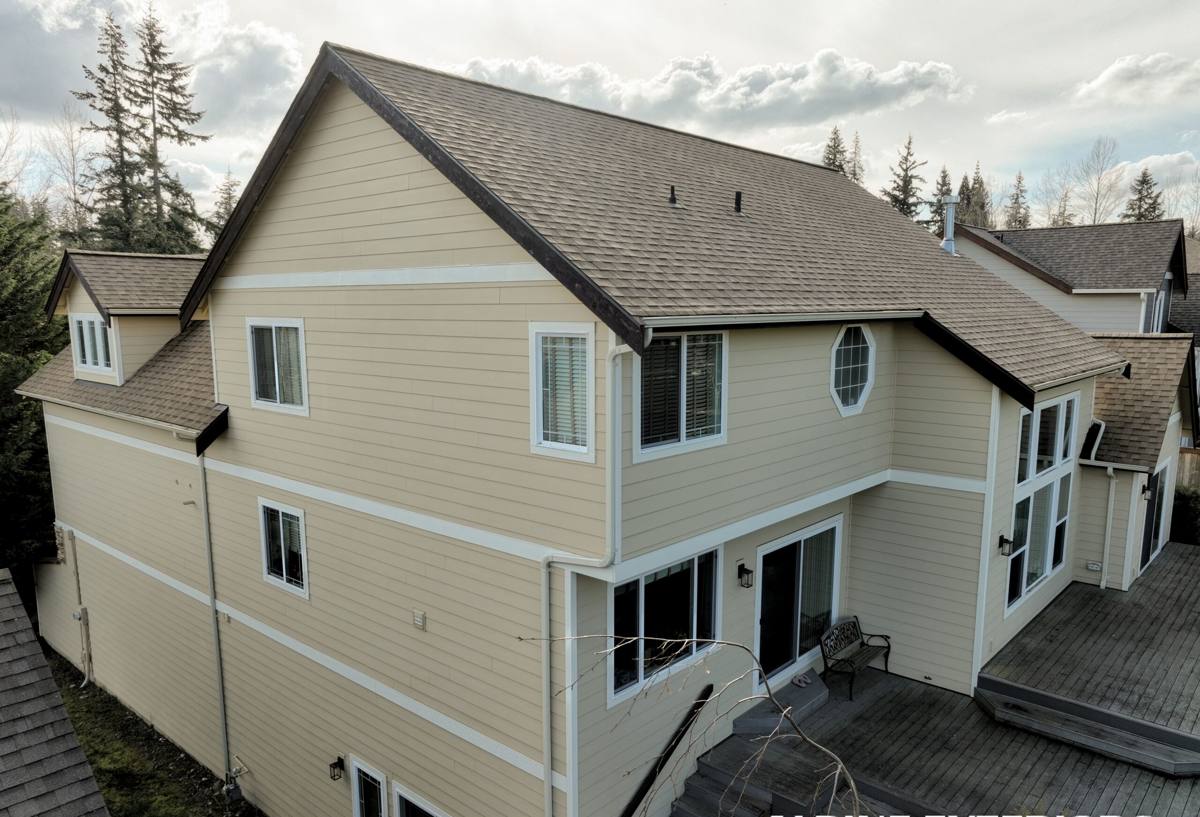
What a Correct Composite Deck Install Involves
Composite decking is popular in Columbia because it resists the rot, splintering, and graying that wood decking suffers under constant moisture exposure. But composite boards are only as good as the structure underneath them and the details of how they're fastened. A correct install is mostly about what you don't see once the boards are down.
Substructure and Drainage
The framing beneath a composite deck still needs to be treated lumber or an approved alternative, properly sized for the span, and set up so water moves off the site instead of pooling underneath. In a climate with this much rainfall, we pay close attention to:
- Joist spacing tightened to manufacturer specs for the board profile being used, since composite deflects differently than wood
- Proper slope away from the house so water sheds rather than sitting against the ledger board
- Flashing at the ledger connection that actually keeps water out of the rim joist, not just a bead of caulk
- Ventilation gaps under low-clearance decks so the substructure can dry between rain events
- Joist tape or an equivalent moisture barrier on top of the framing to slow rot at the fastener points
Fastening and Board Spacing
Composite boards expand and contract with temperature and moisture more than most homeowners expect. Gap spacing between boards has to account for that movement, and it has to be consistent, or you end up with boards that buckle or leave uneven seams within a couple of seasons. We use fasteners rated for the specific composite product being installed - stainless or coated hardware, not whatever happens to be on the shelf - since corrosion from salt-laden air is a real issue for lower-grade fasteners here.
Railings, Fascia, and Trim
Railing posts need solid blocking behind them, not just a lag bolt into a rim joist that flexes. Fascia boards should be installed with a small gap or venting detail so moisture doesn't get trapped against the composite and encourage mold growth on the underside, which is a common complaint we see on decks that were installed too tight to the structure.
Composite vs. Other Decking Materials for This Climate
We install composite decking because, for most Columbia homeowners, it's the best balance of upfront cost, appearance, and long-term maintenance in a climate this wet. That doesn't mean it's the right answer for every project, and it's worth understanding the trade-offs honestly.
| Material | Moisture Behavior | Moss/Algae Resistance | Maintenance |
|---|---|---|---|
| Composite (capped) | Doesn't absorb water into the board core; resists warping | Good, but still needs periodic cleaning in shaded, damp spots | Occasional wash, no staining or sealing |
| Pressure-treated wood | Absorbs and releases moisture constantly; prone to cupping over time | Moderate - moss takes hold faster on rough, porous wood | Annual cleaning, periodic staining/sealing to keep performing |
| Cedar | Naturally rot-resistant but still moisture-permeable | Moderate; softens with age in constant damp shade | Regular sealing to preserve color and resistance |
| Uncapped composite | Can absorb surface moisture at cut edges without proper sealing | Lower than capped boards in shaded, wet conditions | More attention to edge sealing at cuts and fastener points |
Our standard for Columbia projects is capped composite decking, since the capped shell sheds water and resists staining far better than uncapped boards once you're a few years into a Pacific Northwest wet season. When a homeowner wants wood for cost or aesthetic reasons, we'll build it correctly and explain the maintenance schedule that keeps it performing - that's a legitimate choice, just a different maintenance commitment.
How We Handle a Columbia Deck Project
Our process doesn't change dramatically from job to job, but knowing the neighborhood helps us plan around things like typical lot drainage patterns, tree cover, and how exposed a given site is to wind-driven rain or salt air.
- On-site assessment: We look at existing structure (if any), grade, drainage, sun/shade exposure, and how close the site is to salt air influence.
- Design and material selection: We walk through board profiles, colors, and railing options, and we're upfront about which choices hold up better in constant damp shade versus more exposed, sunnier spots.
- Permitting: Deck projects in Whatcom County typically require a permit depending on height, size, and attachment to the structure. We handle that process rather than leaving it to the homeowner.
- Demolition (if replacing an existing deck): We remove old decking and inspect the substructure before deciding what can be reused - a lot of "just resurface it" jobs turn out to need framing repair once the old boards come off.
- Framing and structural work: Ledger flashing, joist layout, drainage slope, and blocking for railings are all addressed before a single composite board goes down.
- Decking installation: Boards, fasteners, and fascia are installed to the manufacturer's spec for gap spacing and clearance.
- Final walkthrough: We go over care and cleaning expectations specific to this climate before we consider the job done.
What Drives Cost on a Composite Deck Project
Every deck is different, so we don't quote sight-unseen prices, but these are the main factors that move the number up or down on Columbia projects specifically.
| Factor | Why It Matters Here |
|---|---|
| Existing structure condition | Framing damaged by years of moisture exposure often needs replacement, not just new decking on top |
| Height and railing requirements | Taller decks need more substantial post blocking and code-compliant railing systems |
| Board profile and brand | Capped composite costs more upfront than uncapped or wood but reduces maintenance costs over time |
| Site access | Sloped lots or limited equipment access common in this area can add labor time |
| Drainage and flashing needs | Sites with poor natural drainage may need additional grading or drainage work before decking begins |
Living With Composite Decking in a Wet, Mossy Climate
Composite decking cuts down maintenance significantly compared to wood, but "low maintenance" doesn't mean "no maintenance," especially in a climate that stays damp and shaded for long stretches of the year. A simple seasonal routine keeps a composite deck performing the way it should:
- Sweep debris off the deck regularly, especially fallen leaves and needles that trap moisture against the boards
- Wash the deck surface at least once or twice a year with a soft-bristle brush and mild soap and water to prevent surface algae from taking hold
- Rinse salt residue off the surface periodically if the property is close to salt air influence
- Keep gutters and downspouts near the deck clear so overflow doesn't dump extra water onto the decking or substructure
- Check railing posts and fasteners annually for any looseness, since freeze-thaw cycles and moisture can work hardware loose over time
- Trim back overhanging vegetation that keeps sections of the deck in constant shade and slows drying
Why Hiring a Crew That Already Works in Columbia Matters
A lot of deck problems we get called to fix didn't come from bad materials - they came from a build that didn't account for local conditions. A crew that already works in and around Columbia knows which board profiles and fastener grades actually hold up here, understands the local permitting process, and has seen firsthand what happens when drainage details get skipped on a site with heavy rainfall and long damp seasons. That local track record matters more than it might seem on paper.
It also means we're not learning on your project. We've made the adjustments - tighter joist spacing here, better ledger flashing there, corrosion-resistant hardware as a standard rather than an upgrade - based on what actually holds up in this part of Whatcom County, not a generic install checklist written for a drier climate.
Signs an Existing Deck in Columbia Needs Attention
If you're deciding whether to repair, resurface, or fully replace a deck, a few warning signs point toward a bigger problem than surface wear:
- Soft or spongy spots in the decking surface, which usually indicate moisture has reached the substructure
- Persistent moss or algae that comes back within weeks of cleaning, suggesting a drainage or shade issue rather than a surface problem
- Rust staining around fasteners, a sign the original hardware wasn't rated for this climate
- Visible gaps or movement at the ledger board connection to the house
- Railing posts that flex or feel loose when pushed
Any of these are worth a professional look before they turn into a structural repair instead of a decking upgrade.
If you're weighing options for a new composite deck or wondering whether an existing one in Columbia needs repair or replacement, we're happy to take a look and give you a straightforward, no-pressure estimate. Use the form below to get started.