 Glenhaven Siding
 Siding Replacement in Columbia: Built for This Climate, Not Just This House
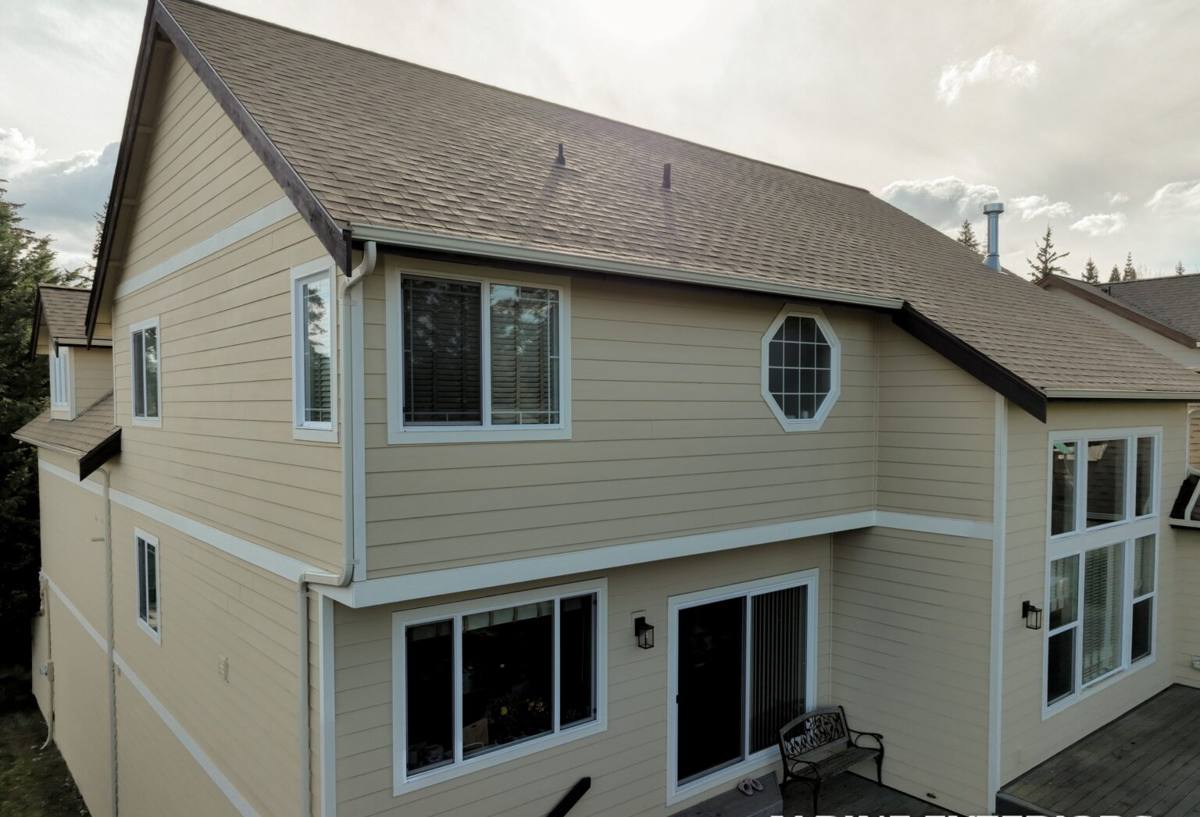
Homes in the Columbia area of Glenhaven sit in one of the tougher siding environments in Whatcom County. You've got salt-laden air moving in off the water, driving rain that comes in sideways during the fall and winter storm cycles, and a moss season that stretches longer here than it does further inland. Any siding job in this pocket of Glenhaven has to be evaluated against all three of those pressures at once, not just picked from a catalog and nailed up. That's the lens we use on every Columbia estimate: what does this specific wall assembly need to survive here, not just look good on install day.
This page is about one thing — full siding replacement for homes in Columbia — and what separates a job that holds up for decades from one that starts failing at the seams within a few years.
Why Columbia Homes Wear Siding Out Faster
Salt Air
Proximity to salt water means airborne chloride settles on exterior surfaces and accelerates corrosion of anything metal — nails, fasteners, flashing, trim screws. Siding materials that rely on unprotected metal components, or coatings that break down under salt exposure, age faster here than the same product would inland. It also means paint and factory finishes get tested harder; a finish that's marginal in a dry climate often fails outright near the water.
Driving Rain
Whatcom County storms don't always come straight down. Wind-driven rain gets forced sideways and upward under laps, around trim, and into any gap in the water-resistive barrier. A siding system's real job isn't keeping water off the surface — it's managing the water that inevitably gets behind the surface. Homes in Columbia need siding installed with that assumption built in from the first course.
Moss Season
Tree cover and prolonged damp conditions mean moss and algae have a long runway to establish themselves on north-facing and shaded walls. Moss holds moisture against the substrate far longer than open air ever would, which is exactly the condition that rots wood-based products and delaminates cheaper composites. A siding material's resistance to sustained moisture contact — not just occasional rain — matters more here than in drier parts of the state.
Signs Your Columbia Home Needs Siding Replacement, Not Just Repair
- Soft or spongy spots when you press on the siding, especially near the bottom courses or under windows
- Persistent moss or dark staining that comes back within a season of cleaning
- Visible cupping, warping, or buckling panels
- Paint that's failing in sheets rather than just fading
- Cracks that run along seams or fastener points
- Rising energy bills paired with drafts near exterior walls
- Interior signs — peeling paint, musty smell, or staining on walls that back up to exterior siding
- Siding that's original to a home built more than 20-25 years ago with no documented replacement
If you're only seeing one or two of these, targeted repair may still make sense. Multiple signs, especially soft spots combined with moss that keeps returning, usually mean the underlying water-resistive barrier has already been compromised and patching the surface won't fix what's happening behind it.
What a Correct Siding Replacement Actually Involves
Tear-Off and Inspection
Replacement starts with full removal of the old siding, not installation over top of it. That's the only way to actually see the sheathing, framing, and any rot or moisture damage that's been hiding. In a climate like this one, skipping that inspection step is how homeowners end up with new siding over a wall that was already failing underneath.
Water-Resistive Barrier and Flashing
This is the layer that does the real work of keeping wind-driven rain out of the wall assembly. Every window, door, and penetration gets flashed and integrated with the barrier so water is directed out and down, never trapped behind the cladding. Given how much driving rain Columbia sees, this step gets more attention here than it might on a job in a drier part of the state — it's genuinely the difference between siding that lasts and siding that fails from the inside out.
Siding Installation
Proper fastening, correct nailing patterns, factory-specified gaps and clearances, and attention to how each course laps over the one below it. Corners, trim, and butt joints are where most premature failures start, so they get particular care.
Finish and Detailing
Caulking only where the manufacturer specifies it (not as a substitute for proper flashing), touch-up of any factory finish nicked during install, and a final check of every seam and penetration before the job is called done.
Why We Install Only James Hardie Fiber Cement
When homeowners in Columbia ask us to replace their siding, our recommendation is James Hardie fiber cement, and only James Hardie. We don't install vinyl, LP SmartSide, Cemplank, Allura, or bare wood siding like primed spruce or cedar. That's not a marketing position — it's a standard we've held to because of what this specific climate does to alternatives over time.
Fiber cement is non-combustible, which matters for long-term fire resistance in a way vinyl and wood-based products simply can't match. Hardie's ColorPlus factory finish is baked on and warrantied against fading and peeling in a way that field-applied paint on wood siding isn't. Hardie also engineers specific product lines (their HZ5 and HZ10 formulations) for different moisture and freeze conditions, which is relevant in a coastal, high-rainfall county like this one. The trade-off is that fiber cement is heavier, requires correct fastening technique, and costs more upfront than vinyl — we think that trade-off is worth it for a house that has to survive salt air, sideways rain, and moss season year after year, and we'd rather tell you that plainly than sell you something we don't believe holds up.
How Siding Materials Compare in This Climate
| Material | Moisture Behavior Here | Maintenance Burden | Typical Lifespan Locally |
|---|---|---|---|
| James Hardie Fiber Cement | Engineered for high-moisture climates; resists moss-driven rot | Occasional wash; factory finish holds color | 30+ years with correct install |
| Vinyl | Can warp/buckle with temperature swings; seams are moisture entry points | Low, but limited repair options once damaged | 15-25 years, shorter near salt air |
| LP SmartSide (engineered wood) | Wood-based core is vulnerable if moisture gets behind it | Requires vigilant caulk/paint maintenance | Variable; sensitive to installation quality |
| Cedar or Primed Spruce | Natural wood absorbs moisture; moss contact accelerates rot | Highest — regular refinishing needed | Highly variable, often under 20 years here |
Our Process, Start to Finish
- Estimate and Assessment — We walk the exterior, check for existing moisture damage, and talk through what your home actually needs.
- Proposal — A clear scope of work and price, in writing, before anything starts.
- Scheduling — We work around Whatcom County's weather windows to avoid starting tear-off right before a stretch of heavy rain.
- Tear-Off and Inspection — Old siding comes off, sheathing gets inspected, and we flag anything unexpected before proceeding.
- Water Management Install — Barrier, flashing, and trim integration done to spec.
- Hardie Installation — Panels, fasteners, and details installed to manufacturer specification.
- Final Walkthrough — We review the finished job with you and address anything before calling it complete.
Cost Factors for Columbia Siding Replacement
| Factor | Why It Matters |
|---|---|
| Home size and wall complexity | More corners, dormers, and trim details add labor time |
| Extent of hidden damage | Rotted sheathing found during tear-off adds repair scope |
| Siding profile chosen | Lap width, shingle-style panels, and trim details price differently |
| Color and finish | Factory ColorPlus finishes vs. field-painted options |
| Access and site conditions | Tree cover, slope, and staging space affect labor |
We don't quote a number without seeing the house — anyone who does is guessing, and guessing on a coastal property with unknown hidden moisture damage is how homeowners get surprised mid-project.
Timing It Around Moss Season and Weather
We generally recommend scheduling siding replacement outside of the wettest stretch of the year when possible. Tear-off exposes your sheathing to the weather until the new water-resistive barrier is in place, so picking a drier window reduces risk and keeps the job moving efficiently. That said, moss and algae growth is a year-round concern once siding is compromised, so if you're already seeing soft spots or recurring moss stains, it's worth getting an assessment scheduled rather than waiting for a "better" season — problems under compromised siding don't pause for good weather.
What to Check Before Hiring Anyone for the Job
- Washington contractor license number, active and in good standing
- Proof of liability insurance and bonding
- A written scope of work, not just a verbal quote
- Manufacturer training or certification if they're installing a specific branded product
- Willingness to explain their water-management approach, not just the visible siding choice
- Local references or a track record of work in Whatcom County specifically
A crew that already works in Columbia and the broader Glenhaven area understands the specific combination of salt exposure, rain direction, and moss pressure your home is dealing with. That's not something you can fully substitute with general siding experience from a different climate — the details that matter here (flashing at grade, fastener corrosion resistance, moisture-tolerant product selection) are things local experience teaches you fast and inexperience teaches you the expensive way.
Get a Straight Answer About Your Siding
If you're not sure whether your Columbia home needs a full siding replacement or just targeted repair, the fastest way to know is to have it looked at. We'll give you a free, no-pressure estimate, tell you honestly what we see, and explain what a correct job would involve — no scare tactics, no upsells. Fill out the form below to get started.