 Glenhaven Siding
 Cordata's Climate Is Harder on Siding Than Most Homeowners Realize
Cordata sits in a part of Whatcom County where three things work against exterior siding at the same time: moisture-laden air off the Salish Sea, long stretches of driving rain that hit walls at an angle rather than falling straight down, and a moss season that can run most of the year in shaded and north-facing exposures. Any one of these is manageable. Together, they punish siding materials that depend on paint film, caulk joints, or a water-shedding surface alone to stay dry.
Salt-tinged air accelerates corrosion on fasteners, trim flashing, and any exposed metal. Driving rain finds its way past lap joints and butt seams that would be fine in a drier climate. And moss doesn't just look bad — it holds moisture against the wall assembly, feeds off the organic content in some siding materials, and can work into seams and fastener heads over years. A siding system for Cordata needs to handle all three at once, not just resist rain in a lab test.
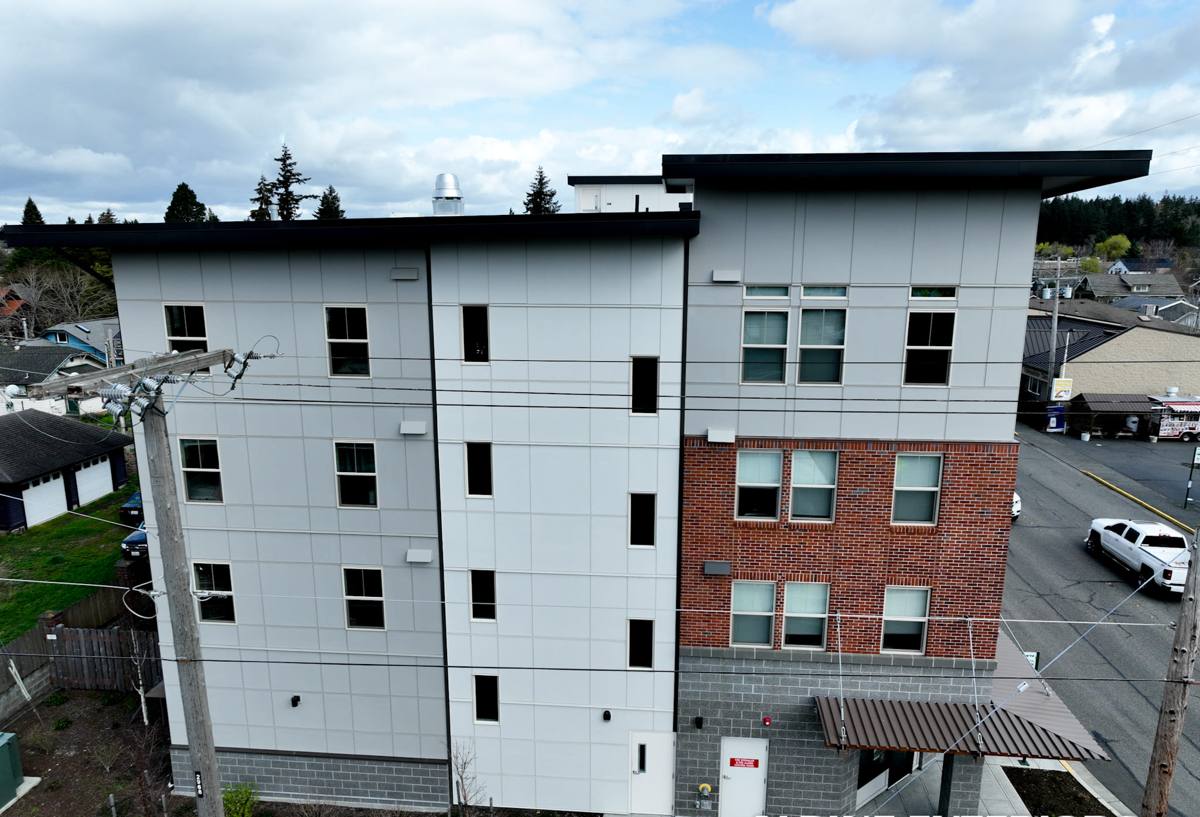
Why We Install Only James Hardie Fiber Cement
We made the decision some years ago to install one product line — James Hardie fiber cement — and stop installing vinyl, LP SmartSide, or other fiber cement alternatives. That's not a marketing position; it's a practical one built around what actually holds up in this climate over decades, not just years.
HZ5 Engineering for the Pacific Northwest
James Hardie makes region-specific product formulations under its HZ (HardieZone) system, and the HZ5 line is engineered for climates like ours — high moisture exposure, freeze-thaw cycling, and extended damp periods. The core material is Portland cement, sand, and cellulose fiber, which means there's no wood content for moisture to feed decay in, and no foam or wood-substrate core that can swell or delaminate if water gets behind it.
ColorPlus Factory Finish vs. Field Painting
Most James Hardie siding we install carries the ColorPlus finish — a coating baked on in a controlled factory environment rather than sprayed or rolled on site. That matters in Cordata specifically because field-applied paint depends on dry conditions during application and periodic recoating to keep performing. A factory finish is more consistent, better bonded to the substrate, and backed by its own finish warranty separate from the substrate warranty. It also means fewer weekends spent repainting because a wall gets afternoon sun and rain within the same day.
What a Correct James Hardie Installation Actually Involves
The siding board itself is only part of the system. Most siding failures we get called out to inspect — regardless of brand — trace back to installation details, not the panel material. In a climate that drives rain sideways and keeps humidity elevated for months, these details matter more than they would somewhere drier.
Water Management Behind the Cladding
Correct installation starts with a drainable water-resistive barrier and, in most cases we recommend, a rainscreen gap between the barrier and the back of the siding. That gap lets any moisture that does get past the cladding drain and dry out instead of sitting against the wall sheathing. Flashing at windows, doors, decks, and every horizontal penetration has to be integrated with the water-resistive barrier in the correct shingle-lap order — flashing is the part of a siding job that fails silently for years before it shows up as a stain or soft spot.
Fastening and Manufacturer Clearances
James Hardie publishes specific fastener types, spacing, and penetration depth requirements, along with minimum clearances from grade, roof lines, decks, and abutting surfaces. Those clearances exist specifically to keep splash-back, ground moisture, and roof runoff away from the bottom edge of the siding — exactly the kind of chronic wetting that's common in a rainy coastal climate. Installing to spec is also what keeps the manufacturer's warranty valid; deviating from it, even in ways that look fine at first, can void the coverage a homeowner is paying for.
What We See on Cordata Homes That Owners Should Know About
Moss and moisture-driven wear show up in fairly predictable patterns on homes in this area. Knowing what to look for helps catch problems while they're still cosmetic rather than structural.
| What You Notice | Likely Cause | Why It Matters |
|---|---|---|
| Green or black growth on north-facing walls | Reduced sun exposure, prolonged dampness, moss spores settling in seams | Holds moisture against the surface; left long enough it can affect fastener integrity |
| Paint peeling or chalking on older siding | Field-applied finish breaking down under repeated wet/dry cycling | Once the finish fails, the substrate underneath is exposed to direct weathering |
| Soft spots near ground level or under decks | Insufficient clearance from grade, or splash-back from hardscaping | Often a sign moisture has been wicking into the material for a long period |
| Staining below window and door trim | Missing or improperly lapped flashing | Indicates active water intrusion behind the cladding, not just surface staining |
| Corroded or rust-streaked fasteners | Non-compatible fastener material in a salt-influenced air environment | Weakens the fastening system and stains the finish over time |
Our Process, Start to Finish
We keep the process straightforward and give homeowners a clear sense of what's happening at each stage, since a siding replacement is disruptive enough without added uncertainty.
- On-site assessment. We walk the full exterior, check for hidden moisture damage at trim, corners, and penetrations, and look at drainage and grading around the foundation.
- Written estimate. A clear scope covering removal, any sheathing repair, water-resistive barrier and rainscreen approach, product line and profile, color, and trim details.
- Tear-off and sheathing check. Old siding comes off and the sheathing underneath gets inspected before anything new goes on — this is the point where hidden rot, if any, gets found and fixed rather than covered up.
- Water-resistive barrier and flashing. Installed and integrated at every window, door, and penetration before a single piece of siding goes up.
- James Hardie installation to manufacturer spec. Correct fastening, spacing, and clearances throughout, with trim and joint detailing matched to the product line chosen.
- Final walkthrough. We go over the completed work with the homeowner, including care and maintenance specific to the product and finish installed.
Cost Factors for a Cordata Siding Project
Every home is different, so we don't quote a number until we've seen the house, but the same handful of factors drive cost on most projects in this area.
| Factor | Why It Affects Price |
|---|---|
| Extent of hidden damage found at tear-off | Rot or moisture damage to sheathing has to be repaired before new siding goes on |
| Home size and wall complexity | More corners, dormers, and trim detail mean more labor and material cuts |
| Product line and profile | Lap, shingle, and panel profiles, plus ColorPlus color selection, price differently |
| Rainscreen and water barrier upgrades | Adding or upgrading a drainage gap improves long-term performance but adds material and labor |
| Access and site conditions | Multi-story sections, tight lot lines, and limited staging space affect scaffolding and labor time |
Living With Fiber Cement in a Moss-Prone Climate
James Hardie siding is low-maintenance compared to painted wood alternatives, but "low-maintenance" isn't "no-maintenance" in an environment where moss and organic growth are a fact of life. A short annual routine keeps a Hardie exterior performing the way it's designed to.
- Rinse siding annually with a garden hose and soft brush — avoid high-pressure washing directly at seams and joints
- Keep gutters clear so water isn't overflowing onto wall sections below
- Trim back vegetation and tree cover that keeps north- and shade-facing walls persistently damp
- Check caulking at trim and penetrations yearly and have gaps resealed before winter rains set in
- Address any moss growth early with a gentle wash rather than letting it establish in seams
- Watch for any staining below windows or doors and have flashing checked if it appears
Why Hiring a Crew That Already Works in Cordata Matters
Siding performance in this area comes down to details that are specific to the local climate and building conditions — rainscreen decisions, flashing sequencing, fastener selection, and clearance planning aren't generic checklist items, they're judgment calls informed by what actually happens to a wall assembly through a Whatcom County winter. A crew that installs James Hardie regularly in Cordata and the surrounding area has already seen how these details play out over years on homes with similar exposure, orientation, and weather patterns. That local pattern recognition is what separates a siding job that looks right on install day from one that still performs correctly a decade later.
If you're weighing a siding replacement or repair on a Cordata home, we're happy to take a look and walk you through what your home specifically needs — no pressure, no upsell, just a straight assessment and a clear estimate. Reach out using the form below to schedule a free consultation.