 Glenhaven Siding
 Why Cordata Homes Wear Differently Than You'd Expect
Cordata sits inside the same maritime weather pattern that shapes exterior work across Whatcom County: cool, wet winters, a long shoulder season of drizzle and fog, and enough proximity to Bellingham Bay that salt-laden air is a real factor on siding, trim, and fasteners. None of that is dramatic on any single day. It's the accumulation that gets homeowners — moisture that never fully dries out between storms, moss and algae that get a head start in shaded, tree-covered yards, and salt air that slowly degrades finishes and metal components that weren't chosen with that exposure in mind.
Siding that was fine in a drier inland climate, or siding installed without real attention to water management, tends to show its age faster here. That's not a knock on any one product — it's just the reality of what driving rain and a months-long moss season do to a building envelope over ten, fifteen, twenty years.
What "Driving Rain" Actually Does to Siding
Wind-driven rain doesn't just wet the surface of your siding — it pushes moisture sideways and upward, into laps, seams, and anywhere a fastener penetrates the material. A siding system that isn't installed with the right overlaps, flashing, and drainage plane behind it will eventually let that water find a path inward. Over years, that shows up as soft trim, stained sheathing, or paint that won't hold no matter how often it's redone.
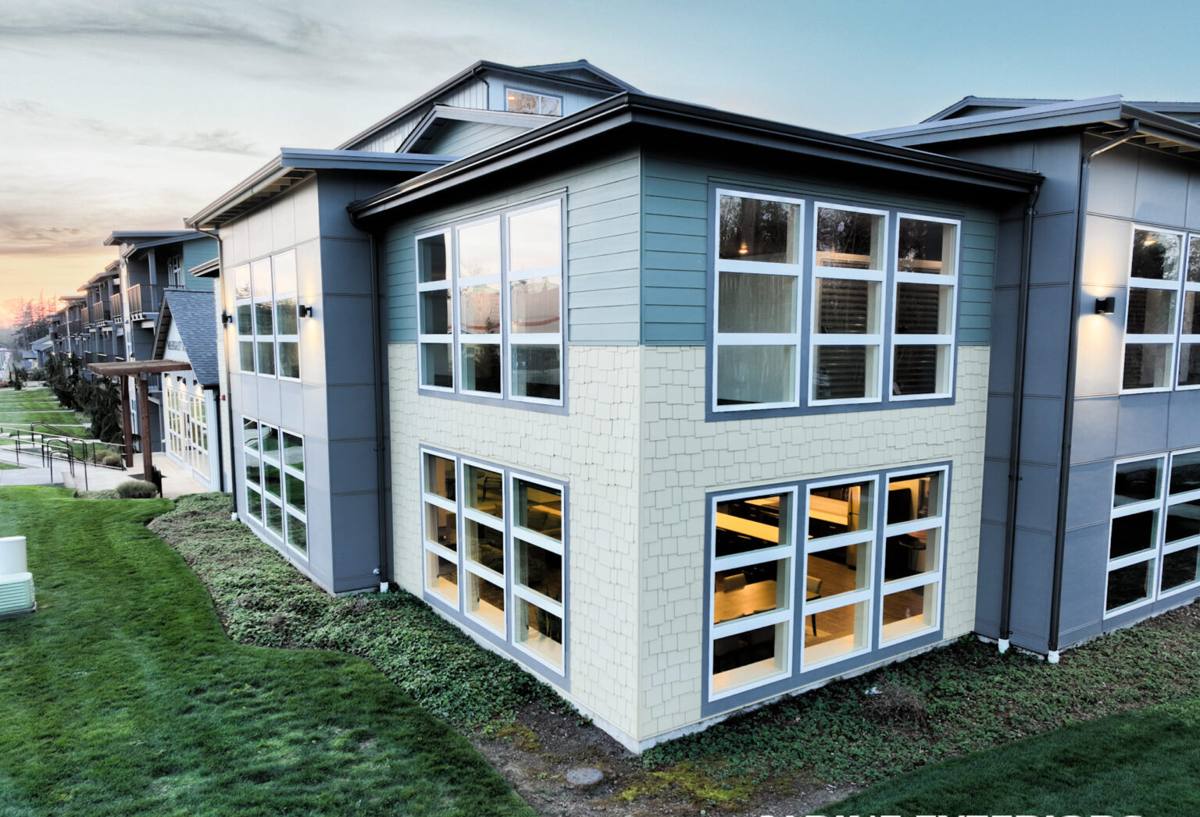
Signs a Cordata Home Needs Siding Replacement, Not Just a Patch
Not every siding problem calls for a full replacement, but in this climate a lot of small issues are symptoms of something bigger happening behind the surface. Before we recommend a full tear-off, we look for these together with the homeowner:
- Persistent moss or dark streaking that comes back within a season or two of cleaning
- Soft, spongy, or bubbling spots when you press on the siding, especially near the bottom courses and around windows
- Paint that's failing in patches rather than evenly across the wall
- Visible warping, cupping, or separation at the seams and corner boards
- Rust streaks or corroded fasteners, especially on walls that catch prevailing wind and rain
- Rising energy bills without another clear cause, which can point to a compromised weather barrier
- Siding that's simply reached the end of its expected service life for its material type
If you're only seeing one or two of these, a repair or targeted board replacement may be enough. If you're seeing several at once, especially soft spots combined with paint failure, that's usually moisture that's been working behind the siding for a while — and that's a replacement conversation, not a patch conversation.
What a Correct Siding Replacement Actually Involves
A siding replacement is only as good as what's underneath it. Pulling off old siding and nailing up new boards over a compromised or missing weather barrier just resets the clock on the same failure. On every Cordata project, the work happens in this order:
1. Tear-Off and Inspection
We remove the old siding and inspect the sheathing underneath for rot, soft spots, or prior water damage. This is the point where hidden problems — often the real reason the old siding failed — get found and dealt with before anything new goes up.
2. Repair and Prep
Any damaged sheathing gets replaced. We're not going to fasten new siding to compromised wood and call it done.
3. Weather-Resistive Barrier
A new house wrap or weather-resistive barrier goes on, lapped correctly from the bottom up so water is always directed outward and down, never trapped behind the wall.
4. Flashing at Every Penetration
Windows, doors, hose bibs, vents, and any other penetration get properly flashed. This is one of the most commonly rushed steps in the trade, and it's also the single biggest predictor of whether a wall stays dry for the next twenty years or starts failing in five.
5. Siding Installation to Manufacturer Spec
Correct fastener type and spacing, correct clearance from grade and roof lines, correct gapping at butt joints — all of it matters more in a wet climate than a dry one, because any shortcut becomes a moisture entry point that a dry climate would have forgiven.
6. Trim, Caulking, and Finish Details
Trim boards, caulking at the right (and only the right) joints, and a final inspection walk-through before we call the job done.
Why We Only Install James Hardie Fiber Cement
We made a decision as a company to install James Hardie fiber cement siding exclusively, and we don't apologize for it or hide it. We don't install vinyl, LP SmartSide, Cemplank, Allura, primed spruce, or cedar. Every one of those products has legitimate uses and plenty of homeowners are happy with them elsewhere. Our reasoning is specific to what we've seen hold up — and what doesn't — in this climate.
Vinyl siding is affordable and low-maintenance, but it's a thin material that expands and contracts with temperature swings, can crack in impacts, and doesn't offer real protection against the kind of driving, wind-pushed rain this area sees regularly since it relies almost entirely on the wall assembly behind it rather than the siding itself to keep water out. Wood and primed spruce products look great initially but require an ongoing maintenance commitment — repainting, caulking, moisture monitoring — that most homeowners underestimate until moss and constant dampness start winning that fight. Engineered wood products like LP SmartSide perform reasonably well when installation and maintenance are followed to the letter, but they remain a wood-based substrate, and wood-based substrates are inherently more sensitive to sustained moisture exposure than fiber cement.
James Hardie fiber cement is non-combustible, doesn't expand and contract the way vinyl does, resists moisture-driven warping and rot in a way wood-based products structurally can't, and comes with a factory-applied ColorPlus finish that holds color and resists the fading and streaking that shows up fast in a wet, salt-influenced climate. Hardie also engineers specific product lines (their HZ5 line, for example) for climates like ours, meaning the product itself — not just the paint on top of it — is built with this kind of weather in mind. It carries a strong transferable warranty, which matters if you ever sell the home. None of that means Hardie is maintenance-free or magic. It still needs to be installed correctly, caulked correctly, and painted with a quality product when the factory finish eventually needs refreshing decades down the road. But it starts from a materially stronger position against everything this climate throws at a wall.
Comparing Siding Options for a Cordata Home
| Factor | James Hardie Fiber Cement | Vinyl | Wood / Primed Spruce |
|---|---|---|---|
| Moisture resistance | High — non-combustible, dimensionally stable | Moderate — relies on wall assembly behind it | Low to moderate — vulnerable to sustained dampness |
| Moss/algae staining | Factory finish resists staining better than paint-only surfaces | Can stain; limited repainting options | Prone to staining, especially in shaded, damp areas |
| Maintenance | Occasional cleaning; repaint only when finish ages out | Low, but limited repair options if damaged | Regular repainting and caulk inspection |
| Impact/wind resistance | High | Can crack or blow off in high wind | Moderate, depends on species and thickness |
| Fire resistance | Non-combustible | Combustible | Combustible |
| Typical lifespan when installed to spec | Multiple decades | 15–25 years, product dependent | 10–20 years without diligent upkeep |
This isn't meant to say the other materials are worthless — it's meant to show why, for the specific conditions this region deals with, we settled on one product system and stopped installing the rest.
Our Process for a Cordata Siding Replacement
Every home is different, but the process itself stays consistent:
- Walkthrough and assessment — we look at your current siding, check for hidden moisture damage where we can access it, and talk through what you're seeing and what concerns you
- Written estimate — a clear scope of work and pricing, no vague allowances hiding the real cost
- Scheduling around the weather — in this climate, timing matters; we plan tear-off and weather-barrier installation for windows where we can keep your walls protected
- Tear-off, repair, and installation — following the sequence above, with sheathing repair handled honestly if it turns up, not glossed over
- Final walkthrough — we go over the finished work with you before we consider the job complete
Permits and Local Requirements
Siding replacement projects in Whatcom County can involve permitting depending on scope, especially if sheathing repair or structural work is needed. We handle that process rather than leaving it for the homeowner to sort out.
Why a Crew That Already Works in Cordata Matters
There's a real difference between a contractor driving in from out of the area for a one-off job and a crew that regularly works neighborhoods like Cordata. A local crew already understands how the microclimate here behaves — which sides of a house typically take the worst of the wind-driven rain, how much moss pressure to expect given the tree cover common in established Whatcom County neighborhoods, and how salt air exposure tends to show up on fasteners and trim over time. That knowledge shapes real decisions on the job: where to be extra careful with flashing, which details are worth the extra time, and what maintenance schedule actually makes sense for your specific home rather than a generic recommendation.
It also means accountability. A crew that plans to keep working in your neighborhood for years has every reason to do the job right the first time and stand behind it — reputation in a community like this travels.
Living With Your New Siding: Moss Season and Beyond
Even correctly installed, high-quality siding benefits from some basic seasonal attention in this climate:
- Rinse siding periodically, especially shaded and north-facing walls where moss gets a head start
- Keep gutters clear so overflow isn't running down your siding during heavy rain events
- Trim back vegetation and tree limbs that keep walls shaded and slow to dry
- Check caulking at trim and penetrations every year or two, and touch up before small gaps become water pathways
- Address any impact damage or chipped finish promptly rather than letting moisture get a foothold
None of this is heavy maintenance — it's the kind of upkeep that, done consistently, is the difference between siding that looks good for decades and siding that starts showing problems in year eight.
Get a Straightforward Estimate
If your Cordata home is showing signs of siding trouble, or you're just planning ahead, we're happy to take a look and give you an honest read on what you're dealing with. Reach out for a free, no-pressure estimate — no upsell script, just what we'd actually recommend for your home and why.