 Glenhaven Siding
 Building Decks in Cordata for the Climate That's Actually Here
Cordata sits inland enough from the water to feel like it should be sheltered, but Whatcom County weather doesn't work that way. Homes here still get salt-tinged air off the Sound on windy days, long stretches of driving rain through fall and winter, and a moss season that can run six months or more if a surface never fully dries out. A deck built to a generic national spec — the kind of deck that would be fine in a dry inland climate — does not hold up the same way here. The framing, the decking material, the fastener choice, and the slope all need to account for moisture that sits around longer than most manufacturers assume.
We build and repair decks throughout the Glenhaven area, and Cordata is one of the neighborhoods we're in regularly. That matters more than it sounds like it should, because deck problems in this climate are almost always slow-motion moisture problems, and the fixes are specific to how local lots drain, how much shade a given yard gets, and how exposed a deck is to weather off the water.
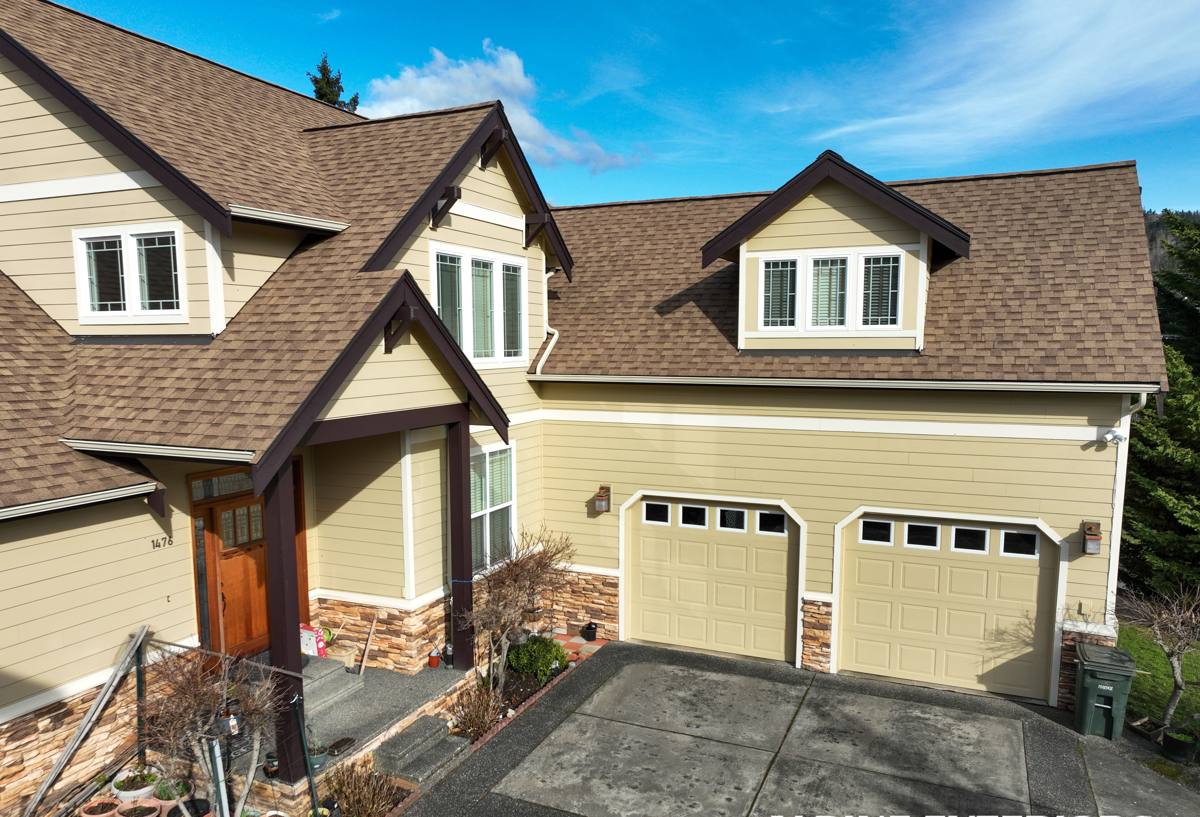
Where Cordata Decks Actually Fail
When we're called out to look at an aging or failing deck in this area, the damage almost never starts at the surface people notice first. It starts underneath or behind the parts you can see.
Ledger Board and House Connection
The ledger board — where the deck attaches to the house — is the single most common failure point in this climate. Driving rain gets pushed sideways by wind, finds its way behind poorly flashed ledger connections, and rots the rim joist or sheathing from the inside out. This kind of damage is often invisible until the deck is already unsafe.
End Grain and Fastener Points
Cut ends of boards, notches, and anywhere a fastener penetrates the decking are where water gets absorbed fastest. In a climate with this much sustained wet weather, unsealed or poorly sealed end grain is often the first place rot or fastener corrosion shows up, well before the rest of the board looks worn.
Shaded, Low-Airflow Areas
Decks tucked under overhangs, near mature trees, or on the north side of a house dry out slowest. Those are also the spots where moss and algae establish first, and where a slick, low-friction surface becomes a real slip hazard in wet months.
Decking Material: What Actually Makes Sense Here
There's no single "best" decking material — there's a best material for a given budget, sun exposure, and how much upkeep a homeowner actually wants to do. In a moss-prone, high-rainfall climate like Whatcom County's, the trade-offs shift compared to drier regions.
| Material | Moisture & Moss Behavior | Maintenance | Typical Lifespan |
|---|---|---|---|
| Pressure-treated wood | Absorbs water readily; needs sealing to resist moss and cupping | Annual cleaning and re-sealing recommended | 10–15 years with upkeep |
| Cedar | Naturally rot-resistant but still needs finish maintained; moss can take hold if left untreated | Periodic cleaning and re-staining | 15–20 years with upkeep |
| Composite decking | Doesn't absorb water like wood, but surface texture affects how much moss and algae can grip | Occasional washing; no sealing or staining | 25+ years, brand-dependent warranty |
| PVC decking | Fully moisture-resistant board; least hospitable surface for moss growth | Lowest maintenance of the common options | 25+ years, brand-dependent warranty |
We don't push one material on every job. Cedar still makes sense for homeowners who want a natural look and are willing to keep up a finish schedule. Composite and PVC make more sense for shaded lots or homeowners who are tired of re-sealing every year. What we do insist on, regardless of material, is that the substructure underneath is built correctly — because a premium decking board over a poorly flashed, poorly drained frame will still fail early.
A Note on Product Choice
We're selective about which composite and PVC lines we install. Some budget composite products on the market have had documented moisture-absorption and warping issues in wet climates, and their warranty structures can leave homeowners without recourse when that happens. We'd rather spec a mid-tier product with a solid track record and a warranty that actually holds up than install the cheapest board on the shelf and have a callback in three years.
Framing, Drainage, and Slope: The Part That Determines Lifespan
The decking surface is what a homeowner sees, but the framing underneath is what determines whether a deck lasts 10 years or 30 in this climate.
Flashing at the Ledger
Proper ledger flashing — metal flashing integrated with the house's existing weather barrier, not just caulk — is non-negotiable on any deck we attach to a structure. This is the detail driving rain exploits most often, and it's the one repair we see requested most on older Cordata decks.
Joist Protection
Joist tape or an equivalent moisture barrier over the top of each joist keeps standing water from soaking into end grain and fastener holes, which is where rot typically starts in a treated-lumber frame.
Slope for Drainage
A deck surface needs a slight slope away from the house — usually a small fraction of an inch per foot — so water sheds instead of pooling. On a flat or poorly sloped deck, standing water after a rain event is exactly the condition moss needs to establish, and it's a slip hazard for months at a time in a climate where the surface may never fully dry between storms.
Hardware and Fasteners
Coastal-rated, corrosion-resistant fasteners and structural hardware matter more here than in drier inland regions. Standard hardware can start showing corrosion within a few seasons when it's exposed to salt-tinged air and near-constant damp conditions; hidden fastener systems and stainless or coated hardware hold up considerably longer.
Design Choices That Reduce Moss and Slip Risk
- Board spacing and gapping sized to let water drain through rather than pool on the surface
- Railing and post placement that doesn't trap debris or block airflow across shaded sections
- Stair treads and high-traffic areas finished with a texture or product suited to wet-weather grip
- Planning overhangs and roof lines during design so the deck isn't sitting in constant runoff from the house
- Choosing decking color and finish with an eye toward how visible algae staining will be over time
Our Process, Start to Finish
1. On-Site Assessment
We walk the lot, look at sun and shade patterns, existing drainage, and how the deck will tie into the house. For replacement projects, we also assess the condition of the existing structure to see what's salvageable.
2. Design and Material Selection
We talk through material trade-offs honestly — budget, maintenance tolerance, and how exposed the space is — and put together a plan and a written estimate before any work starts.
3. Permitting
Most deck projects in Whatcom County require a permit, particularly for elevated structures or anything attached to the house. We handle that process as part of the job.
4. Build
Framing and flashing details come first, since they're the part that gets covered up. We don't move to decking installation until the substructure is inspected and sound.
5. Final Walkthrough
We walk the finished deck with the homeowner, cover basic care for the specific material installed, and make sure everything is signed off before we consider the job done.
Maintenance Checklist for Cordata Homeowners
- Sweep debris (leaves, needles, seed pods) off the deck regularly, especially in fall
- Wash the surface at least once or twice a year to interrupt moss and algae growth before it takes hold
- Check the ledger board area and any spots where the deck meets the house for signs of staining or soft wood
- Re-seal or re-stain wood decking on the schedule the product calls for — don't stretch it another season
- Clear gutters and downspouts near the deck so runoff isn't draining directly onto the surface or framing
- Inspect railings, stairs, and fasteners annually for corrosion or looseness
Why a Local Crew Matters for This
A deck built by a crew that hasn't worked this climate before tends to make the same mistakes: standard fastener specs, minimal ledger flashing, decking chosen on price alone. We build in Glenhaven and the surrounding Whatcom County neighborhoods regularly, Cordata included, and the details we build in — flashing, slope, hardware, material selection — come from having seen what fails here and why. That's not a marketing line, it's just what happens when the same crew keeps working the same climate and pays attention to callbacks.
If you're planning a new deck or need an honest look at whether an existing one is still sound, we're happy to come out, walk the site, and give you a straightforward estimate — no pressure, no upsell. Reach out through the form below to get started.