 Glenhaven Siding
 Decks Built for Nooksack's Wet Side of the Mountains
A deck in Nooksack does a different job than a deck in a dry climate. It's not just an outdoor living space — it's a structure that has to survive months of standing moisture, shaded ground that never fully dries out, and a long stretch of the year when moss and algae have every advantage. Homes here back up to river bottomland, tree cover, and pasture, and all of that adds up to more humidity sitting against wood than most manufacturers assume when they write their warranties.
We build and repair decks throughout the Nooksack area as part of our regular service territory, not as an occasional add-on to siding work. That matters because deck framing and siding face the same enemy — trapped moisture — and a contractor who thinks about both at once builds a deck that doesn't quietly rot the wall it's attached to.
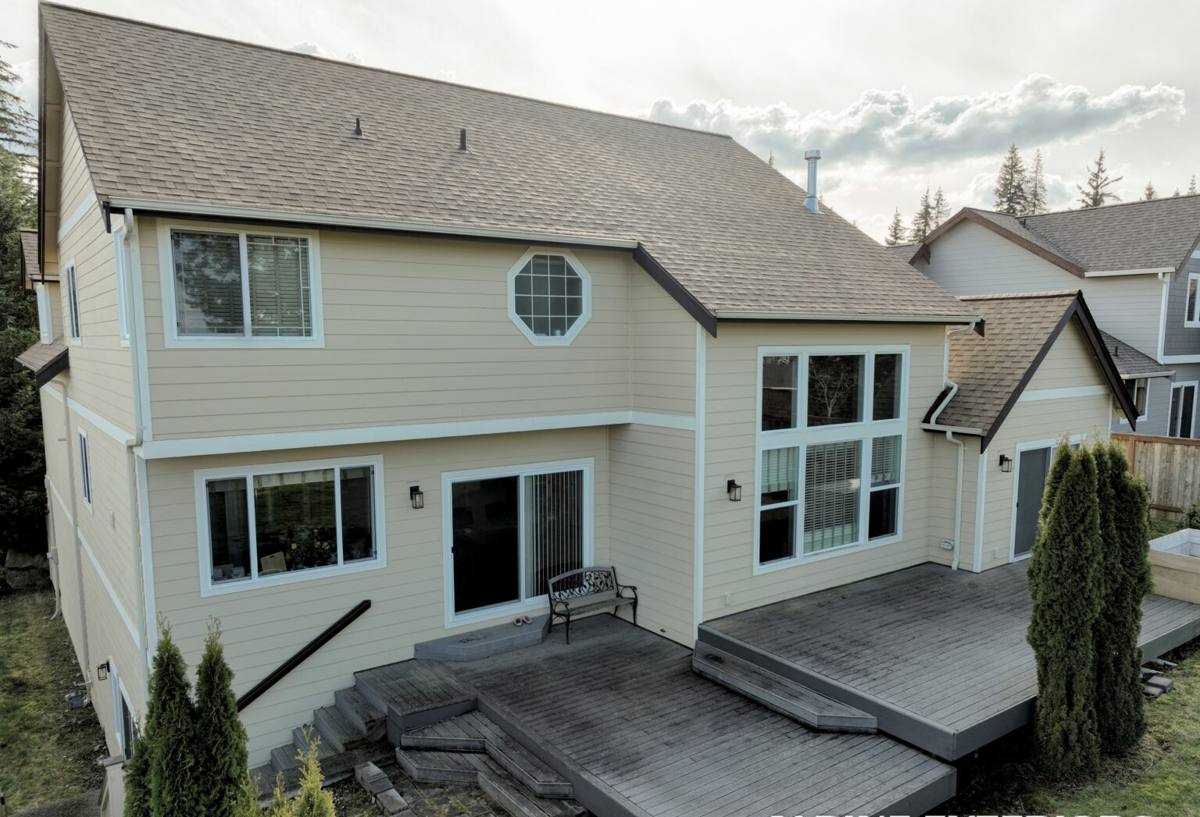
What Whatcom County Weather Does to an Outdoor Deck
Every material decision on a deck should start with a honest look at what the climate actually does to it over ten, twenty, thirty years. In this part of Whatcom County, that means:
Moss, Algae, and Standing Moisture
Shaded yards, tree cover, and a long stretch of overcast, damp weather give moss and algae a long runway every year. On horizontal surfaces like deck boards, that growth isn't just cosmetic — it holds moisture against the wood and makes the surface slick and unsafe underfoot. Board spacing, airflow under the deck, and surface texture all affect how fast moss takes hold and how easy it is to knock back.
Driving Rain and Wind-Driven Water
Rain here doesn't always fall straight down. Wind-driven rain gets pushed sideways into ledger connections, stair stringers, and any spot where the deck meets the house. If flashing and water management aren't done correctly at that connection, water finds its way behind the siding and into framing that's never meant to stay wet.
Salt Air and Corrosion
Properties closer to the water deal with a steady low-level exposure to salt-laden air, which accelerates corrosion on fasteners, joist hangers, and any exposed metal hardware. Using the wrong grade of screw or hanger might look fine for a year or two before it starts to fail quietly, underneath boards where no one is looking.
Freeze-Thaw and Ground Movement
Whatcom County doesn't get brutal winters, but it gets enough freeze-thaw cycling that footings poured too shallow, or posts set without proper drainage, can shift over a few seasons. A deck that starts out level can develop a lean or a bounce if the substructure wasn't built for local ground conditions from day one.
Choosing the Right Decking Material for a Nooksack Property
There's no single "best" decking material — there's a best material for your budget, your maintenance appetite, and how much shade and moisture your specific yard deals with. Here's how the common options actually compare in this climate:
| Material | Moisture Behavior | Maintenance | Typical Lifespan Here |
|---|---|---|---|
| Pressure-treated lumber | Resists rot chemically, but still needs to dry between rain events | Annual cleaning, periodic re-staining or sealing | 15-20 years with upkeep |
| Cedar | Naturally moisture-resistant, but softer and more prone to surface checking | Regular sealing to hold color and resist moss | 15-25 years with upkeep |
| Capped composite | Doesn't absorb water or feed rot, but can trap moss on the surface if not cleaned | Occasional washing, no staining or sealing | 25-30+ years |
| PVC decking | Fully moisture-proof, best resistance to mold and moss staining | Lowest maintenance of the group | 25-30+ years |
Pressure-Treated Lumber
Still the most affordable option, and a fine choice if you're willing to clean and reseal it on a schedule. Skip that maintenance in this climate and you'll see graying, splintering, and moss buildup faster than the lumber's chemical treatment can fight off.
Cedar
A step up in appearance and natural rot resistance, cedar is a good fit for homeowners who want a traditional wood look and are committed to sealing it every year or two. Left unsealed, cedar grays quickly and holds moisture in a damp, shaded yard.
Composite and PVC
For homeowners who want to spend their weekends doing something other than deck maintenance, capped composite or PVC boards are the honest recommendation. They cost more up front, but they don't rot, don't need staining, and hold up to moss and algae exposure far better than any wood product. The trade-off is a higher initial cost and, on some products, a plastic-like feel underfoot compared to real wood.
The Structural Details That Actually Matter
The decking surface is what you see — but the framing underneath is what determines whether the deck is still safe and level in fifteen years. This is where corners get cut, and it's the part of the job that matters most in a wet climate.
Ledger Board and Flashing
The ledger board — where the deck attaches to the house — is the single most common failure point on decks in this region. If it isn't properly flashed to shed water away from the house framing, moisture gets trapped between the ledger and the siding and rots both from the inside out, often for years before it's visible. Correct flashing detail here isn't optional; it's the difference between a deck that lasts and a hidden repair bill down the road.
Footings and Post Bases
Footings need to be sized and set below frost depth with post bases that hold the post off the concrete, so water doesn't wick straight up into the wood. On sites with poor drainage, that also means grading and gravel work around the footing so water doesn't pool against it every winter.
Fasteners and Hardware
Given the corrosion pressure from moisture and, on some properties, salt air, we use corrosion-resistant, code-rated fasteners and joist hangers rated for the specific decking material — not whatever's cheapest at the hardware store. Mismatched hardware is a common source of premature hanger rust and squeaky, loosening connections.
Our Deck Building Process
Every deck we build in the Nooksack area follows the same sequence, whether it's a small ground-level platform or a full multi-level structure off the back of the house:
- On-site assessment. We walk the property, check sun and shade exposure, existing drainage, and how the deck will tie into the house.
- Design and material selection. We talk through decking material, railing style, and layout based on your budget and how much maintenance you actually want to do.
- Permitting. We handle the permit application and inspection scheduling required for the project, so you're not chasing paperwork.
- Framing and flashing. Footings, posts, ledger flashing, and joist framing go in first — this is the stage that determines the deck's lifespan, and we don't rush it.
- Decking, railing, and stairs. Surface material and railing are installed to code, with attention to board spacing for drainage and airflow underneath.
- Final walkthrough. We review the finished deck with you, including how to care for the specific material you chose.
Permits, Setbacks, and Local Code
Most decks above a certain height or size require a building permit, and setback rules can affect how close a deck can sit to a property line, especially on smaller or riverside lots common around Nooksack. Requirements are set locally, so we confirm what applies to your specific property and handle the permit process as part of the job rather than leaving it for you to sort out. Skipping a required permit can create real problems later, at resale or with insurance, so we don't cut that corner even on smaller projects.
Keeping a Nooksack Deck Healthy Year After Year
Whatever material you choose, a little seasonal attention goes a long way in this climate. A simple maintenance routine:
- Sweep leaves and debris off the deck regularly, especially in fall — trapped organic matter is what feeds moss and mold.
- Wash the surface once or twice a year with a deck cleaner or diluted solution to knock back moss and algae before it takes hold.
- Check and reseal wood decking (pressure-treated or cedar) on the schedule recommended for that product — usually every one to two years.
- Inspect ledger flashing and any spot where the deck meets the house for gaps, cracks, or staining that suggests trapped moisture.
- Look under the deck once a year for soft spots, rust on hardware, or standing water that isn't draining properly.
- Keep gutters and downspouts near the deck clear so roof runoff isn't dumping extra water onto or under the structure.
Why a Local Crew Matters for a Nooksack Deck
A deck built by a crew that doesn't work this climate regularly tends to look fine on installation day and show its problems two or three winters later — moss taking over shaded boards, a ledger connection that was never properly flashed, hardware rusting faster than it should. We build in Whatcom County conditions every week, so material choices, flashing details, and drainage planning aren't guesswork — they're standard practice. That local familiarity also means faster response if something needs a look after a hard winter, and a crew that already understands how this property's shade, drainage, and exposure will treat the deck we're building.
If you're planning a new deck or need an honest look at one that's showing its age, we're glad to come take a look. Request a free, no-pressure estimate using the form below and we'll walk the property with you before you commit to anything.