 Glenhaven Siding
 Why Decks in Columbia Take More Punishment Than Most
If you live in the Columbia area near Glenhaven, you already know your deck works harder than a deck in a drier inland town. Whatcom County's marine climate means your outdoor structure is dealing with three things at once, almost year-round: salt-laden air off the water, long stretches of driving rain, and a moss season that can stretch from late fall well into spring. None of these are dramatic on their own, but stacked together over years, they quietly break down even a well-built deck.
Salt air accelerates corrosion in fasteners, brackets, and any exposed metal hardware. Driving rain doesn't just wet the surface of your deck boards — wind-driven moisture gets forced into seams, end grain, and joints where standing water would never normally reach. And moss doesn't just look bad; it holds moisture against wood and composite surfaces far longer than open air ever would, which is exactly the condition that leads to rot, mildew staining, and slick, unsafe walking surfaces.
We repair decks throughout the Columbia area with this specific combination of stressors in mind. A repair approach that works fine in a dry eastern Washington climate often falls short here, because it doesn't account for how much moisture this deck is actually going to see over its lifetime.
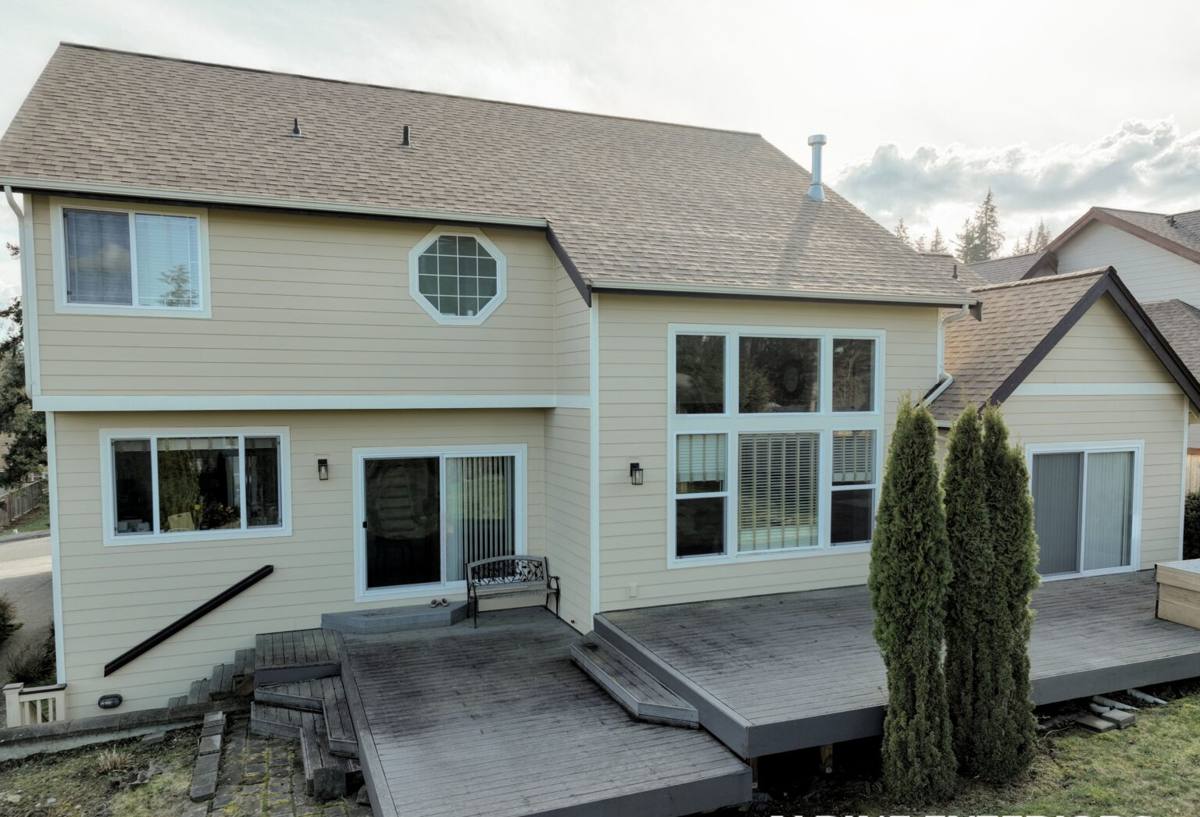
Common Signs a Columbia Deck Needs Repair
Deck problems in this climate tend to start small and stay hidden until they're not. Here's what we look for, and what you should check for yourself between professional inspections.
- Soft or spongy spots underfoot, especially near the house, stair landings, or anywhere water tends to pool
- Rust streaking below screw heads, joist hangers, or railing brackets
- Green or black staining that keeps coming back within weeks of cleaning
- Gaps opening up between deck boards, or boards that have started to cup or crown
- Railings or stair posts that feel loose or flex when you lean on them
- A musty smell coming from underneath the deck, which often points to trapped moisture in the framing
- Flaking, peeling, or bubbling on any painted or stained surfaces
- Visible daylight or gaps where the deck ledger board meets the house
Any one of these on its own might be minor. Two or three together, especially combined with the deck's age, usually means it's time for a proper inspection rather than another round of surface cleaning.
What a Correct Deck Repair Actually Involves
Structure First, Surface Second
A repair that only addresses what you can see from the top is not a repair — it's a temporary cover-up. Before we touch a single deck board, we check the framing underneath: joists, beams, posts, and especially the ledger board where the deck attaches to the house. In this climate, that connection point is one of the most common places for hidden rot to develop, because water runs off the house and collects right where the deck meets the wall.
Fasteners and Hardware
Salt air is hard on standard hardware. If we find fasteners or joist hangers that are rusting or corroding, we don't just tighten what's loose — we replace with hardware rated for coastal and wet-climate exposure, so the repair doesn't need to be redone in a few years because of the same corrosion problem.
Decking and Railings
Individual board replacement only works if the boards around the repair are still sound. We check moisture content and structural integrity of adjacent boards before deciding whether a section can be spot-repaired or whether a wider run needs to come up. Railings and stair components get the same scrutiny, since these are safety items, not just cosmetic ones.
Drainage and Airflow
A huge part of preventing repeat damage in a wet climate is making sure water actually leaves the deck instead of sitting on it. That means checking board spacing, flashing at the house connection, and airflow underneath the deck. A deck that can't shed water and dry out between rains will keep rotting no matter how many boards you replace.
Repair vs. Replacement: How We Help You Decide
Not every deck problem calls for a full rebuild, and not every deck is worth saving as-is. Here's the general framework we use when evaluating a Columbia-area deck.
| Factor | Favors Repair | Favors Replacement |
|---|---|---|
| Framing condition | Joists and ledger are sound, isolated soft spots | Widespread rot in structural framing |
| Age of deck | Under 15-20 years, built to a reasonable standard | Older deck nearing the end of typical material life |
| Extent of damage | Limited to a few boards, one section, or hardware | Damage scattered across most of the deck surface |
| Code and safety | Railings, spacing, and attachment already meet current standards | Original build predates current safety requirements |
| Moisture history | Damage traced to a fixable cause (bad flashing, clogged drainage) | Chronic moisture problem built into the original design |
We'll walk you through where your deck lands on this before recommending anything. Our goal is an honest answer, not the most expensive one.
Our Deck Repair Process
- On-site inspection. We check the deck surface, framing, hardware, and the ledger connection to the house, noting moisture content where it matters.
- Written scope and estimate. You get a clear breakdown of what needs repair, what's optional, and why — no vague line items.
- Repair work. Structural issues get addressed first, followed by decking, railings, and hardware. We use fasteners and connectors suited to this region's moisture and salt exposure.
- Drainage check. We confirm the repaired area sheds water properly and airflow underneath hasn't been blocked.
- Final walkthrough. We go over the work with you before calling the job done.
Materials: What We Use and Why
For structural repairs, we favor pressure-treated lumber rated for ground contact or wet exposure, paired with corrosion-resistant fasteners and connectors — standard galvanized hardware can start showing surface corrosion faster than owners expect once it's exposed to this area's salt air and near-constant moisture cycles.
For decking surfaces, both quality wood and composite boards have a place, and the right choice depends on your existing deck, your budget, and how much maintenance you want to take on. Wood decking gives a natural look and is straightforward to spot-repair, but it needs regular cleaning, sealing, and moss control to hold up here. Composite decking resists moisture absorption and rot better over time, which matters in a climate with this much sustained rainfall, but it comes at a higher upfront cost and isn't always the right match for an older wood-framed deck. We'll talk through the honest trade-offs for your specific situation rather than pushing one material as a default.
Moss, Mildew, and Long-Term Deck Care
Even a freshly repaired deck will start collecting moss again if nothing changes about how it dries out. A few habits go a long way in this climate:
- Sweep leaves and debris off the deck regularly, especially in fall and winter, so they don't trap moisture against the boards
- Keep gutters and downspouts clear so runoff isn't draining directly onto or under the deck
- Clean visible moss and algae promptly rather than letting it establish and spread
- Check railings and stair connections once or twice a year for looseness or corrosion
- Reseal or restain wood decking on the schedule appropriate for the product, not just when it looks faded
None of this replaces a professional inspection, but it does buy time between repairs and helps you catch small problems before they become structural ones.
Why Hire a Crew That Already Works in Columbia
Deck repair advice that ignores where you live isn't much use. A crew that regularly works decks in the Columbia area and elsewhere around Glenhaven already knows how salt air behaves on hardware, how long moss season really runs here, and which framing details tend to fail first in this specific combination of rain and coastal exposure. That's the difference between a repair that holds up and one that becomes a recurring expense.
We're a Whatcom County crew, and this climate is the one we build and repair for every day — not a set of conditions we're adjusting for on the fly.
If your deck in the Columbia area is showing any of the warning signs above, or it's simply been a while since anyone looked at the framing underneath, we're happy to take a look. Request a free, no-pressure estimate using the form below, and we'll give you a straight answer on what your deck actually needs.