 Glenhaven Siding
 Why Decks in Puget Wear Out Differently Than Decks Inland
A deck in Puget is fighting a different battle than one twenty miles inland. The combination of salt-laden air off the water, driving wind-driven rain, and a moss season that can stretch from October well into spring puts a specific kind of stress on outdoor structures. Fasteners corrode faster. Moisture gets pushed sideways into joints that were designed for vertical drainage. Shaded, north-facing sections stay damp for days after a storm, which is exactly the environment moss and algae need to take hold on decking, stair treads, and railings.
None of this means a deck in Puget is doomed — it means the replacement has to be built with those specific conditions in mind, not just built to a generic code minimum. That's the difference between a deck that needs attention again in five years and one that holds up through two or three decades of Whatcom County winters.
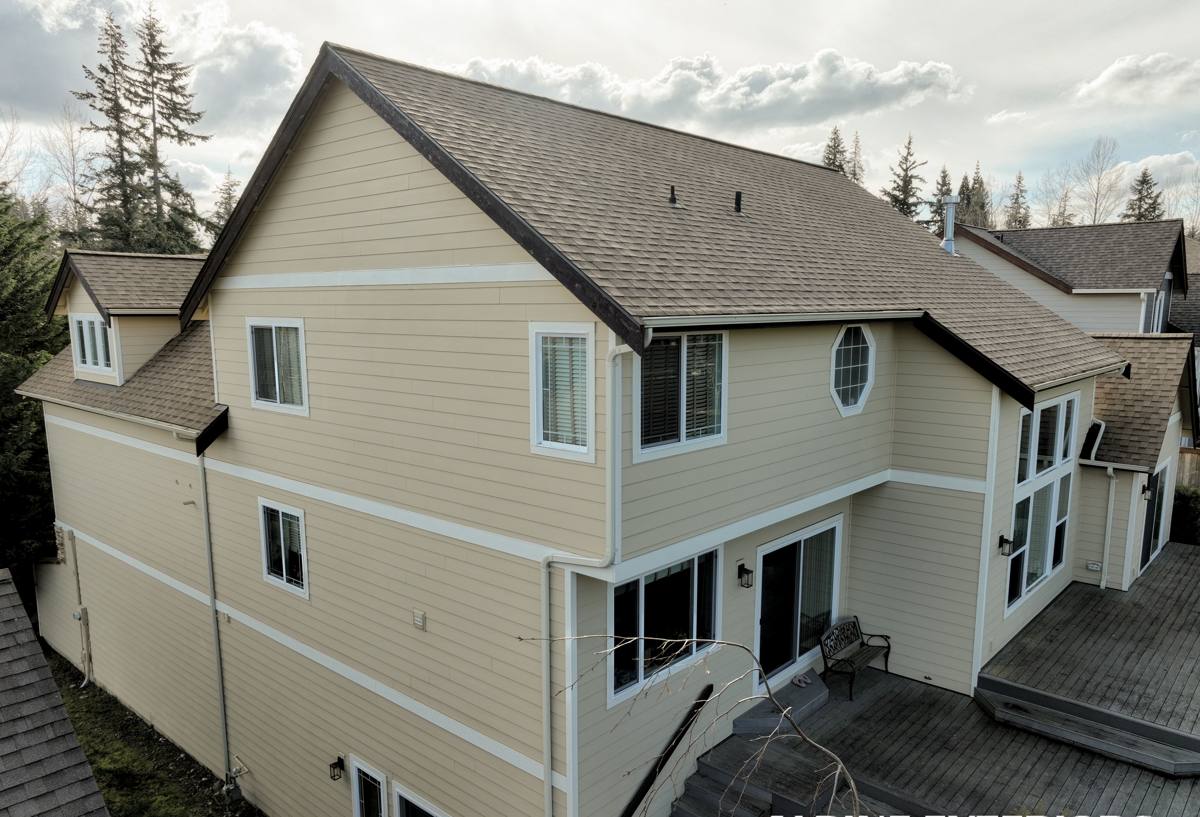
Signs a Puget Deck Needs Replacement, Not Another Repair
Homeowners often ask whether a problem area can just be patched. Sometimes it can. But there are specific signs in this climate that point to full replacement being the honest answer rather than a short-term fix:
- Soft or spongy spots in the decking, especially near the house or in shaded corners — this usually means moisture has been sitting in the wood fibers for a long time.
- Rust streaking below fastener heads or around joist hangers, which signals the hardware is failing, not just cosmetic staining.
- Persistent moss or black-green algae that returns within weeks of cleaning — a sign the deck isn't drying out between rain events.
- Visible gaps or movement where the ledger board meets the house, which is a moisture-intrusion risk to the structure itself, not just the deck.
- Railings that flex or posts that feel loose at the base, which is a safety issue and often a sign the substructure below is compromised.
If a deck is showing one or two of these in isolated spots, targeted repair can make sense. When several show up together, it's usually a sign the whole system — framing, fasteners, and decking — reached the end of its service life at roughly the same time, which is common with older builds that weren't specified for this coastal climate to begin with.
What a Correct Deck Replacement Actually Involves
A deck replacement done right is not just swapping old boards for new ones. It's a full rebuild of the system, starting from the point where the deck attaches to the house and working outward.
Ledger and House Connection
The ledger board — where the deck ties into the home — is the single most important moisture control point on the entire structure. In a climate with this much driving rain, the flashing detail here has to shed water away from the house wall, not just sit against it. This is one of the most common places we find failure on older Puget-area decks: a ledger that was face-nailed with minimal or no flashing, slowly feeding water into the rim joist and siding behind it.
Footings and Framing
Footings need to be sized and set to current frost and load requirements, and framing lumber needs to be rated for ground contact or exposure where it's within splash range of soil or standing water. We also pay close attention to joist spacing and blocking, since undersized framing is a common shortcut on older builds that shows up later as bounce or sag.
Fasteners and Hardware
Given the salt air, fastener choice matters more here than in most parts of the state. Standard galvanized hardware corrodes noticeably faster near the water than it does even a few miles inland. We use stainless or high-grade coated fasteners and connectors rated for coastal exposure, because replacing decking boards is a lot cheaper than replacing decking boards twice because the hardware underneath them failed first.
Decking Surface and Drainage
The visible surface is what homeowners notice, but the drainage behind and beneath it is what determines how long that surface actually lasts. Proper board spacing, joist protection tape, and a slope away from the house all matter more in a climate where the deck rarely gets a long stretch of dry weather to fully shed moisture on its own.
Decking Material Options for This Climate
There's no single "best" decking material for every home — it depends on budget, maintenance appetite, and how much sun or shade the deck gets. Here's how the common options actually perform under Puget's salt air, rain, and moss pressure:
| Material | Moisture & Moss Behavior | Maintenance | Typical Lifespan Here |
|---|---|---|---|
| Pressure-treated wood | Absorbs moisture readily; needs sealing to resist moss and graying | Annual cleaning and periodic sealing | 10–15 years with upkeep |
| Cedar | Naturally moisture-resistant but softer; still needs finish maintenance in shaded areas | Regular cleaning, periodic finish renewal | 15–20 years with upkeep |
| Capped composite | Sheds moisture well, resists moss growth much better than raw wood | Occasional washing, no sealing/staining | 25–30 years |
| PVC decking | Fully sealed surface, best moisture and algae resistance of the group | Minimal — occasional rinse | 25–30+ years |
We install all of these depending on what a homeowner wants, but we're upfront about the trade-offs. Composite and PVC cost more up front and the color palette is more limited than stained wood, but in a climate where moss and moisture are a constant fight, the reduced maintenance burden is often worth it. Wood decking isn't a bad choice — it just needs an honest maintenance commitment to hold up here, and we'll tell you that plainly rather than oversell a lower-maintenance product you don't actually want.
The Substructure Details That Get Skipped Elsewhere
A lot of deck failures we see in this area trace back to substructure shortcuts that are invisible once the decking boards are down. A few details we treat as non-negotiable on every replacement:
- Self-adhering joist tape over every joist top, so fastener penetrations don't become entry points for water.
- Proper ledger flashing that integrates with the home's existing siding and building paper, not just caulk sealed over a gap.
- Post bases set above grade with a drainage gap, so posts aren't sitting in standing water after heavy rain.
- Adequate airflow beneath the deck where skirting is used, so the underside can actually dry out between storms.
These aren't upgrades — they're the baseline of a correctly built deck in a climate like this one. Skipping them is how a 20-year deck turns into a 10-year deck.
How We Handle a Puget Deck Replacement
- On-site assessment. We look at the existing structure, note where moisture or moss has concentrated, and check the ledger connection and footings before quoting anything.
- Honest scope discussion. We tell you plainly whether full replacement or targeted repair is the right call, and walk through material options based on your budget and maintenance preference.
- Permitting. Deck replacements of most sizes require a permit through the applicable local jurisdiction; we handle that paperwork so you don't have to chase it down.
- Demo and structural rebuild. Old decking, framing, and hardware come out; footings, ledger flashing, and framing go in to current standards.
- Decking installation. Boards, railings, and stairs are installed to your chosen material's spec, with fastener spacing that accounts for wood movement in wet-dry cycles.
- Final walkthrough. We go over the finished deck with you, including what maintenance (if any) the material you chose actually needs going forward.
What Drives the Cost of a Deck Replacement
Every deck is different, so we won't quote a number without seeing the site, but these are the factors that move the price up or down:
| Factor | Why It Matters |
|---|---|
| Deck size and height | More square footage and elevated decks with taller footings and railings require more material and labor |
| Decking material chosen | Wood costs less upfront; composite and PVC cost more but need far less long-term maintenance |
| Condition of the substructure | If footings and framing are sound, some can potentially be reused; if not, full rebuild adds cost |
| Access to the site | Decks with tight side-yard access or steep grade take longer to demo and rebuild |
| Railing and stair complexity | Custom railings, multiple stair runs, or built-in features add labor and material |
Why a Crew That Already Works Puget Matters
Deck-building basics are the same everywhere, but a crew that regularly works Puget and the broader Glenhaven area already knows which details actually matter here versus which are just code minimums. We know to spec fasteners for salt-air exposure without being asked. We know which shaded, low-airflow deck layouts are going to fight moss no matter what material goes down, and we say so upfront instead of letting a homeowner find out the hard way. And because we're already familiar with the permitting process for decks in this part of Whatcom County, there's less back-and-forth delay between quote and start date.
That local familiarity also means we're not guessing at how a deck will hold up — we've seen how different materials and details perform on homes with the same weather exposure yours has, and we build accordingly.
Keeping a New Deck in Good Shape
Whatever material you choose, a few habits go a long way toward getting the full lifespan out of a new deck in this climate:
- Sweep debris and standing leaves off the surface regularly, especially in fall and through moss season.
- Rinse or lightly scrub shaded, north-facing areas more often than sunny spots, since they dry out slower.
- Check that gaps between boards stay clear so water can drain through rather than pooling on top.
- If you chose wood, keep to the sealing schedule your installer recommends — skipping a year in this climate shows up fast.
- Have railings and stair connections checked periodically, since loose hardware is often the first sign of a moisture issue starting underneath.
If you're weighing a deck replacement in Puget and want a straight answer on whether repair or full rebuild makes sense for your situation, we're happy to take a look. The estimate is free, there's no pressure, and you'll get an honest read on what your deck actually needs — just fill out the form below.