 Glenhaven Siding
 Building Decks for Deming Homes Near Glenhaven
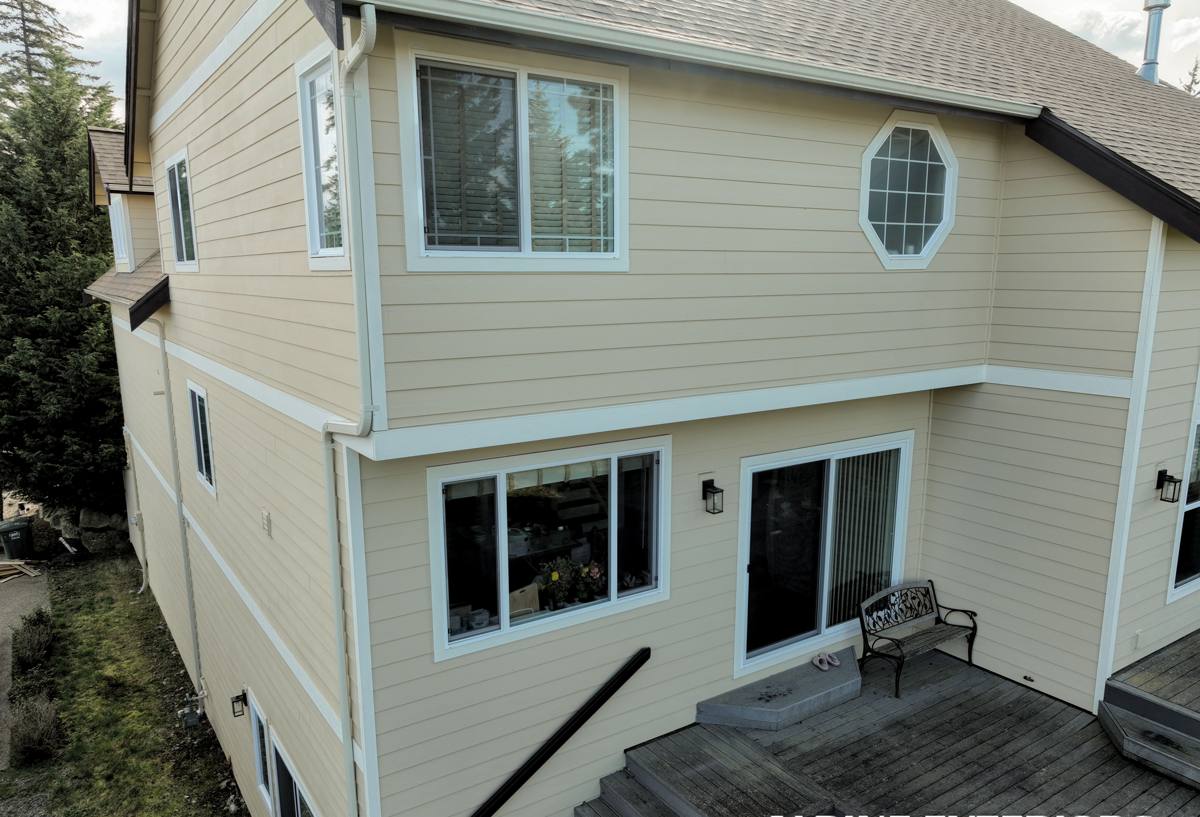
Deming sits in a part of Whatcom County where weather isn't an occasional inconvenience — it's a design condition. A deck built here has to survive months of driving rain, long stretches of shade and dampness that feed moss and algae, and the slow corrosive drip of salt-laden air moving in off the water. A deck that would hold up fine in a dry inland climate can start showing problems within a few seasons out here if it wasn't built with this specific environment in mind. We build and repair decks for homeowners throughout the Deming area, and our approach is shaped by what actually happens to a deck in this corner of Washington over ten, twenty, and thirty years — not just what looks good on install day.
What the Local Climate Actually Does to a Deck
Three things drive almost every deck failure we see in this region, and they compound each other.
Driving Rain
Storms here rarely fall straight down. Wind-driven rain gets pushed sideways under railings, into ledger connections, and along the underside of boards where it lingers instead of running off. Any deck design that assumes water only hits the top surface is already behind. Flashing, slope, and drainage gaps matter as much as the decking material itself.
Moss and Algae Season
Whatcom County's long wet season, combined with the shade many Deming lots get from surrounding trees, creates ideal conditions for moss and algae to take hold on horizontal wood surfaces. Once established, moss holds moisture directly against the board, which accelerates rot from the top down — not just from the ground up like people usually expect. A deck with poor airflow underneath or tight board spacing will grow moss faster than one built to shed water and breathe.
Salt Air
Even a modest distance from open water is enough for airborne salt to accelerate corrosion on fasteners, joist hangers, and any exposed metal hardware. Standard interior-grade screws and connectors will rust and weaken years before the wood around them fails, which is how you end up with a deck that looks solid but has compromised structural connections underneath.
What a Correctly Built Deck Looks Like Out Here
A deck built for Deming's conditions isn't a different-looking deck — it's the same deck built with different priorities underneath the surface.
- Stainless steel or heavy hot-dip galvanized fasteners and joist hangers rated for coastal-adjacent exposure, not standard exterior-grade hardware
- Proper ledger board flashing where the deck meets the house, since this is the single most common point of hidden rot on older decks
- Consistent board spacing and joist layout that allows airflow underneath the decking to help wet boards dry between storms
- A slight, deliberate slope away from the house so water doesn't pool against the structure
- Footings set below frost depth and sized for saturated soil conditions, not just dry-season soil bearing
- Railing posts and structural connections that don't rely on hidden fasteners alone in areas exposed to the worst wind-driven rain
None of this is exotic. It's standard good practice applied consistently, instead of skipped in the spots that don't show on install day but matter five years later.
Choosing a Decking Material for This Climate
There's no single "correct" decking material for Deming — there's a correct decision given your budget, how much upkeep you want to do, and how much shade your yard gets. Here's how the common options actually perform under local conditions.
| Material | Moss/Algae Resistance | Maintenance | Typical Lifespan Here |
|---|---|---|---|
| Pressure-treated wood | Low — needs regular cleaning and sealing to resist growth | Annual cleaning, periodic sealing/staining | 10-15 years before major repairs |
| Cedar | Moderate — natural oils help but fade over time | Regular cleaning, re-oiling or staining every 1-2 years | 15-20 years with upkeep |
| Composite decking | Good — resists rot, but surface algae can still grow and needs washing | Occasional washing, no sealing or staining | 25-30 years, manufacturer-dependent |
| PVC/capped polymer | Best — fully synthetic surface sheds moisture and resists staining | Occasional washing | 25-30+ years |
Wood costs less upfront but demands the most consistent maintenance to fight moss and moisture in this climate — skip a year of cleaning and sealing here and you'll notice it faster than you would somewhere drier. Composite and PVC cost more initially but hold up with far less intervention, which is worth weighing against how much time you actually want to spend maintaining a deck. We'll walk you through the real trade-offs for your specific site and budget rather than pushing one material as the automatic answer.
Framing and Structure: The Part You Don't See
Decking gets replaced every couple of decades; the framing underneath is supposed to last the life of the structure. That's why we treat the substructure as the more important half of the job, even though it's the part homeowners see the least.
On older Deming decks we're asked to inspect or rebuild, the most common failure point isn't the visible boards — it's the ledger connection to the house, the joist hangers, and any post bases sitting in or near standing water. Wind-driven rain finds its way behind poorly flashed ledgers over years, and hardware that wasn't rated for salt-air exposure corrodes from the inside out long before it shows visible rust on the surface. When we rebuild or repair a deck, we open up and check these connection points rather than just resurfacing over a structure we haven't verified.
Footings and Posts
Whatcom County soil holds moisture well into the dry months in shaded areas, which affects how footings need to be sized and set. We dig to proper frost depth and account for the specific drainage conditions of your lot rather than using a one-size formula for every yard.
Ventilation Underneath
A deck built low to the ground with poor underside airflow will trap moisture and grow moss faster, even on the top surface. Where grading allows, we build in enough clearance and, where needed, address ground cover under the deck to reduce the moisture load feeding into the structure from below.
How Our Process Works
We keep the process straightforward, because the details that matter are in the build, not the paperwork.
- On-site assessment. We look at your lot's drainage, sun/shade exposure, existing structure if there is one, and how the deck will connect to your home.
- Design and material walkthrough. We go over decking and railing options with honest trade-offs for maintenance, cost, and how each performs against local moss and moisture.
- Written estimate. Clear scope, materials, and timeline before anything starts — no surprise add-ons once work begins.
- Permitting. We handle the permit process where required so the structure is inspected and up to code.
- Build. Footings and framing first, with hardware and flashing chosen for this climate, then decking and railings.
- Final walkthrough. We check the completed deck with you and go over what basic maintenance it needs going forward.
Repair, Replace, or Rebuild?
Not every deck problem in Deming means starting over. If the framing is sound and the issues are limited to surface wear, moss staining, or a handful of failing boards, targeted repair can extend the life of a deck for years at a fraction of full replacement cost. But if the ledger connection is compromised, joist hangers have corroded, or posts are sitting in chronically wet soil, patching the surface just hides a structural problem that will keep getting worse. Part of our estimate process is telling you honestly which category your deck falls into, even when the answer is "this needs less work than you think."
Ongoing Maintenance for This Climate
Whatever material you choose, a few habits go a long way toward keeping a Deming deck solid through the wet season.
- Sweep debris and standing leaves off the deck regularly — trapped organic material is what feeds moss growth
- Wash the deck surface at least once a year to remove early algae and moss before it takes hold
- Check and clear gaps between boards so water and debris aren't trapped between them
- Inspect railing posts and ledger flashing annually for signs of movement, staining, or corrosion around fasteners
- Reseal or restain wood decking on the schedule appropriate to the product — don't wait until it's visibly gray and worn
- Keep nearby vegetation trimmed back to improve airflow and sun exposure on shaded sides of the deck
What a Deck Project Typically Costs
Every deck is different, but these are the main factors that move the price up or down for a project in this area.
| Factor | Effect on Cost |
|---|---|
| Decking material (wood vs. composite vs. PVC) | Largest single factor — material cost per square foot varies significantly |
| Deck size and shape | Larger footprints and complex angles increase material and labor |
| Height and footing depth | Elevated decks and difficult soil conditions require more substantial framing and footings |
| Railing style | Cable, glass, or custom railing systems cost more than standard baluster railing |
| Site access and demolition | Removing an old deck or working a hard-to-access lot adds labor time |
| Hardware grade | Coastal-rated stainless or heavy-galvanized hardware costs more than standard exterior-grade, but is worth it here |
We give straight, itemized estimates so you can see exactly where the cost is going, and we'll flag any place where a cheaper option would mean sacrificing durability you'd regret in a few years.
Why Hire a Crew That Already Works in Deming
Deck building isn't the same job in every part of the country, and it isn't even the same job everywhere in Whatcom County. A crew that mostly builds decks in a dry climate may not think twice about ledger flashing details or hardware corrosion resistance, because it's never cost them a callback. A crew that works this specific area — with its combination of driving rain, shaded moss-prone lots, and salt air off the water — builds those details in as standard practice, not upgrades. We're not guessing at what holds up here; we're building to what we've seen actually last, and what fails, in decks throughout Deming and the surrounding Glenhaven area.
If you're planning a new deck, replacing an aging one, or just want an honest read on whether your current deck is sound, we're happy to take a look. Reach out for a free, no-pressure estimate using the form below.