 Glenhaven Siding
 Why Windows Take a Different Kind of Beating in Nooksack
Nooksack sits in a part of Whatcom County where the weather doesn't do anything halfway. You get salt-laden air moving in off the coast, long stretches of driving rain that hits siding and window assemblies sideways rather than straight down, and a moss season that can stretch for months where everything north-facing or shaded stays damp far longer than it should. Windows are one of the first places that combination shows up as a problem — not because the glass fails, but because the frame, the seals, and the flashing around the opening weren't built or installed to handle sustained moisture exposure.
A window that's "energy-efficient" on a spec sheet in a dry climate isn't automatically the right choice here. For Nooksack homes, efficiency and durability have to be solved together, because a frame that's degrading from moisture intrusion will lose its thermal performance long before its rated lifespan is up.
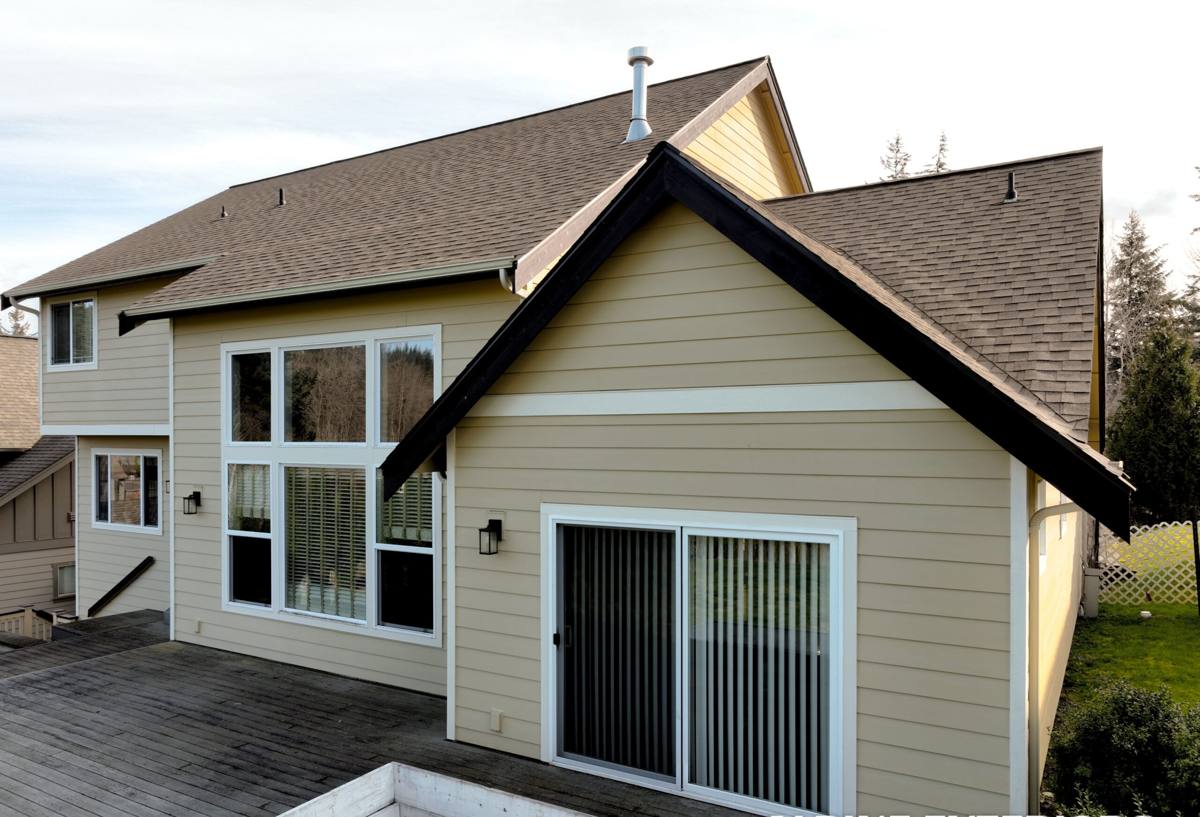
What Energy-Efficient Actually Means in This Climate
"Energy-efficient" gets used loosely in window marketing, so it's worth being specific about what actually matters for a Whatcom County home:
- U-factor — how well the window resists heat loss. Lower is better for our mild-but-damp winters, where the goal is retaining indoor heat without over-relying on the furnace.
- Solar Heat Gain Coefficient (SHGC) — how much solar heat passes through the glass. In this region, moderate SHGC glass is usually the right call since we don't get the sustained direct summer heat that drives cooling-focused glazing decisions elsewhere.
- Air infiltration rating — how much air leaks around the sash even when it's closed. This matters more here than in drier climates because a leaky window isn't just a comfort or energy problem — it's a moisture entry point.
- Frame performance — the frame itself needs to hold its shape and seal integrity through repeated wet-dry cycles, not just insulate well on day one.
A window that scores well on paper but uses a frame material or seal design that struggles with sustained moisture will underperform its rating within a few years in this climate. That's the gap we're solving for.
Frame Material: What Holds Up Here and What Doesn't
Frame material is the single biggest factor in how a window performs over time in a salt-air, high-rain environment. Here's how the common options compare for this specific climate:
| Frame Material | Moisture & Salt Air Behavior | Maintenance | Best Fit |
|---|---|---|---|
| Vinyl | Doesn't corrode or absorb moisture; seams and welds are the weak point over time | Low — occasional cleaning | Most homes prioritizing efficiency and low upkeep |
| Fiberglass | Very stable dimensionally in wet/dry cycling; holds paint and seals well | Low to moderate | Homes wanting long-term stability and paintable trim |
| Wood / Wood-clad | Handsome but vulnerable at joints and sills if finish or cladding fails | High — requires regular inspection and refinishing | Homeowners committed to ongoing upkeep for a specific look |
| Aluminum | Conducts heat and cold poorly (thermal performance), and bare aluminum can pit in salt air over time | Moderate | Limited residential use; better suited to commercial applications |
We don't push wood-clad frames on homes in this area as a default — not because the product is bad, but because the maintenance burden of keeping the finish and sealant intact under this much sustained moisture is a real ongoing cost most homeowners underestimate. If a homeowner wants that look and is prepared for the upkeep, we'll install it correctly. But for most Nooksack properties, vinyl or fiberglass frames give better efficiency-per-dollar over a 15-20 year horizon with far less babysitting.
What a Correct Installation Actually Involves
The window unit itself is maybe half the equation. The other half is how it's tied into the wall and siding around it — and this is where most of the long-term problems we get called out to fix actually originate. A correct installation includes:
- Removing the old unit and inspecting the rough opening for hidden rot or moisture damage before anything new goes in
- Installing (or correcting) a proper drainage plane and flashing sequence so water is directed out, not trapped behind the siding
- Sealing the sill pan and jambs so wind-driven rain can't track sideways into the wall cavity
- Using sealants and tapes rated for sustained UV and moisture exposure, not general-purpose caulk
- Integrating the new window's flashing correctly with the existing siding or house wrap, so the whole assembly sheds water as one system
- Insulating the gap between the frame and the rough opening properly — gaps that are overstuffed or left empty both hurt efficiency
Skipping any one of these steps can still produce a window that looks fine and closes properly on install day, while quietly setting up a moisture problem that shows up as soft trim, interior staining, or a musty smell a year or two later — right in step with our wet season.
Where We See Problems Show Up First
On homes in and around Nooksack, the recurring failure points aren't usually the glass or the sash hardware — they're at the edges. Sills that were never properly pitched to shed water. Flashing that was tucked behind the siding instead of over it, so water gets funneled straight into the wall. Caulk used as the primary seal instead of proper flashing, which fails once the caulk ages and cracks. And moss or organic buildup on nearby siding, trim, or roof lines holding moisture against the window assembly for extended periods during the wetter months, well past what the original installation was built to handle.
None of these are exotic problems, and none require an unusual fix — but they do require someone who's actually looking for them, which is a matter of installation habits and local experience more than product quality.
Our Process for a Nooksack Window Project
We keep this straightforward and don't add steps that don't earn their place:
- On-site assessment — we look at existing window condition, framing, and any signs of past moisture intrusion before quoting anything.
- Measurement and product selection — matched to the specific exposure of each opening (a north-facing window shaded most of the day has different needs than a south-facing one).
- Removal and opening inspection — old units come out carefully so we can check the rough opening and sheathing underneath.
- Flashing and drainage correction — we fix what's there rather than installing a new window over an old problem.
- Installation and sealing — set, shimmed, insulated, and sealed to spec, not just caulked and trimmed.
- Cleanup and walkthrough — we show you the finished work and explain anything worth keeping an eye on.
What Affects Price
We don't publish fixed pricing because window projects vary a lot house to house, but the main cost drivers are consistent:
| Factor | Why It Matters |
|---|---|
| Number and size of openings | More or larger windows means more material and labor |
| Frame material chosen | Vinyl, fiberglass, and wood-clad carry different material costs |
| Condition of the existing opening | Hidden rot or framing damage adds repair time before install |
| Access and story height | Second-story or hard-to-reach windows take longer and need more setup |
| Glazing package | Double vs. triple-pane, low-E coatings, and gas fill options affect unit cost |
Most full-home window replacement projects land in a broad mid-four to low-five-figure range depending on these factors, but the only way to get a number that means anything is a walkthrough of your specific home.
Why Local Experience Matters More Than It Sounds Like It Should
A crew that's worked windows in and around Nooksack and greater Whatcom County has already seen how the local rain patterns, humidity, and moss growth interact with different siding and window setups over time. That's not a marketing point — it changes practical decisions on-site, like which side of a house needs extra flashing attention, how much clearance to leave for drainage given the seasonal moss and organic buildup, and which sealant products hold up rather than failing after one wet season. Crews without that local baseline aren't doing anything wrong on purpose, but they're often making judgment calls based on a drier or milder climate than the one your house actually sits in.
Ready for an Honest Look at Your Windows?
If your windows are original to the house, feel drafty, or you've noticed fogging, soft trim, or staining nearby, it's worth having someone look before it turns into a bigger repair. We offer free, no-pressure estimates for Nooksack homeowners — we'll walk the exterior with you, tell you honestly what's worth replacing now versus what can wait, and give you real numbers based on your home, not a generic average. Use the form below to get started.