 Glenhaven Siding
 Custom Windows Built for Everson's Weather
Everson sits inland from the coast, but that doesn't mean the home is spared from what Whatcom County weather does to a window system over time. Driving rain off the Nooksack lowlands, long stretches of gray damp weather, and the moss and mildew season that follows every fall and winter all put steady pressure on window frames, sills, and the flashing details around them. Add in the salt-laden air that moves through the broader Whatcom County region and settles on exterior materials, and you have a climate that is genuinely hard on window installations that were not built or installed with that exposure in mind.
When we talk about "custom windows" for a home in Everson, we're not just talking about picking a style out of a catalog. We mean sizing, flashing, and sealing a window system correctly for the specific wall assembly, siding type, and sun/wind exposure of that particular house — and doing it in a way that holds up to years of wet-dry cycling instead of failing quietly behind the trim.
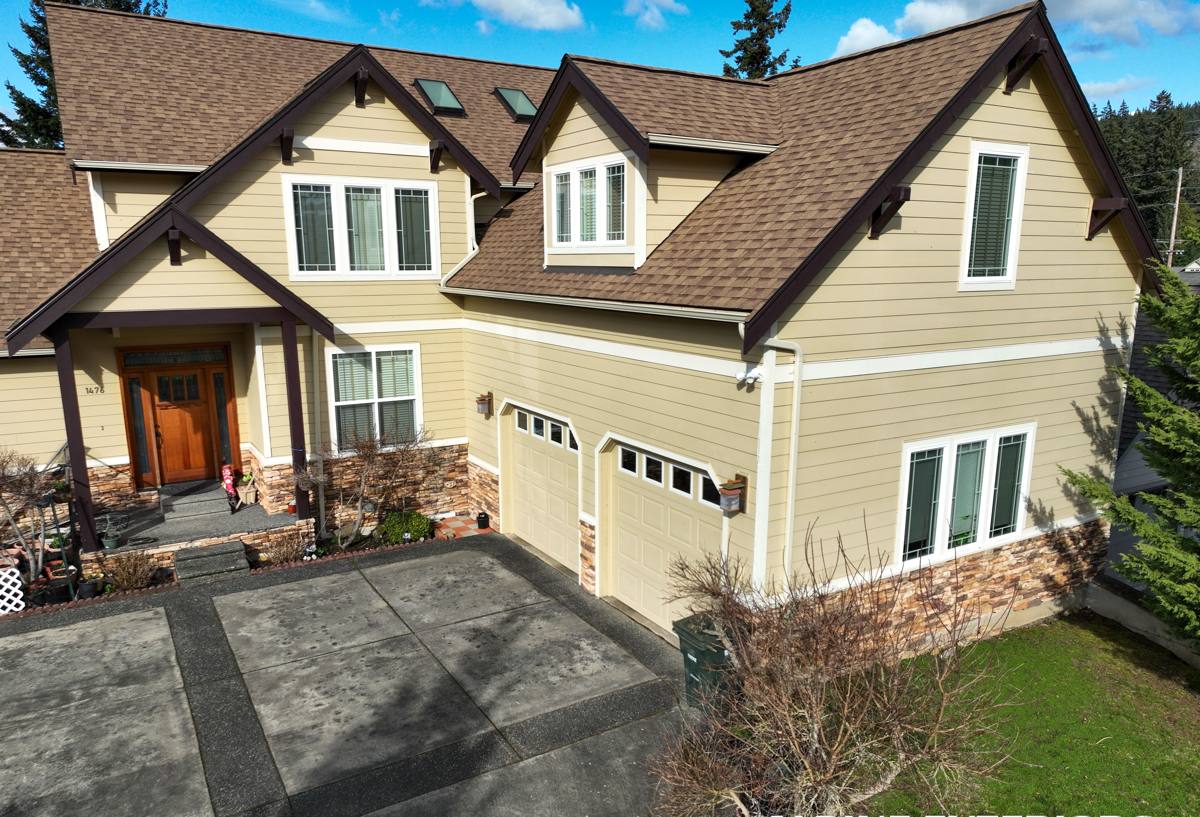
What Local Homes Actually Need From a Window Replacement
Most of the window problems we get called out for in this part of Whatcom County aren't really about the glass. They're about what's happening around the glass — the frame material, the sill pan, and the flashing that ties the window into the wall. Here's what tends to go wrong on older or poorly installed windows in this climate:
- Wood or composite sills that stay damp too long after rain and start to soften or rot at the corners
- Failed or missing sill pan flashing, letting water track down into the wall framing instead of draining back out
- Condensation building up between panes on older dual-pane units, a sign the seal has failed
- Caulk-only sealing around the frame with no proper flashing behind it, which looks fine until it doesn't
- Moss and algae staining collecting in horizontal grooves and drip caps that don't shed water fast enough
- Single-pane or poorly rated older windows that make the home noticeably colder near exterior walls in winter
A correct window replacement addresses all of that — not just the visible glass and trim, but the water management behind it that you never see once the job is done.
Getting the Installation Right: Flashing and Moisture Management
This is the part of a window job that separates a good installation from one that causes problems three or five years down the road. In a climate with as much driving rain as Whatcom County sees, the window opening has to be treated as a system:
Sill Pan and Drainage
Every window opening should have a sloped sill pan that directs any water that gets past the window itself back out to the exterior, not down into the wall cavity. This is one of the most commonly skipped steps in budget window replacements, and it's usually the reason a homeowner ends up with hidden rot years later.
Flashing Sequence
Flashing tape and building paper or house wrap need to be layered correctly — like shingles — so water always sheds outward and downward, never into a seam. Jamb flashing, head flashing, and the housewrap integration all have to happen in the right order relative to each other.
Sealant as a Backup, Not the Primary Defense
Caulk and sealant are the last line of defense, not the main water barrier. A window that relies mostly on a bead of caulk to stay dry will eventually leak once that sealant ages, shrinks, or cracks — which happens faster here given how many wet-dry and freeze-thaw cycles the exterior goes through each year.
Correct flashing and sill pan work is honestly more important to the long-term performance of a window than the brand of glass installed. We treat it that way on every job.
Choosing the Right Window Type for an Everson Home
There isn't one "best" window for every house — the right choice depends on the home's age, wall construction, sun exposure, and how the homeowner uses the space. Here's how the common options compare for this climate:
| Window Factor | What to Consider Here |
|---|---|
| Frame Material | Vinyl and fiberglass resist moisture absorption better than wood in a climate with long wet seasons; wood requires more upkeep to avoid rot at joints |
| Glazing | Dual-pane is standard for this climate; low-E coatings help with both winter heat retention and summer glare without changing the look of the glass |
| Frame Color/Finish | Darker exterior finishes can show pollen, moss spores, and water spotting faster in damp, shaded areas of the house |
| Operating Style | Casement windows seal tighter against driving rain than sliders because the sash compresses against the frame when latched |
| Sill Design | A sloped, properly flashed sill sheds water regardless of frame material — this matters more than the material choice itself |
We'll walk through these trade-offs with you in plain terms before any order is placed, based on where the window sits on the house and what direction it faces.
Our Process for a Custom Window Job
A window replacement is disruptive to a home, so we keep the process organized and predictable from the first visit to the final walkthrough.
1. On-Site Assessment
We look at the existing window openings, check for signs of past moisture intrusion or rot around the frames, and measure precisely — custom window openings on older Whatcom County homes are rarely perfectly square, and that affects fit.
2. Product Selection
We go over frame material, glazing, and operating style options based on the specific wall, exposure, and budget — no pressure toward a particular brand or upsell package.
3. Removal and Opening Prep
Old windows come out carefully, and we inspect the framing underneath before anything new goes in. If we find soft wood or old water damage, we address it before installing the new window rather than sealing a problem behind new trim.
4. Flashing and Installation
New sill pan, flashing tape, and housewrap integration go in per the sequence described above, followed by the window unit itself, shimmed and secured to manufacturer spec.
5. Sealing, Trim, and Cleanup
Exterior sealant, interior and exterior trim, and a full site cleanup finish the job. We walk the homeowner through the finished work before we consider it done.
Siding and Trim Integration Around Windows
Windows don't exist in isolation from the siding around them, and this is where a lot of leaks actually originate — not from the window unit itself, but from a poor transition between the window trim and the surrounding siding. When we replace windows on a home, we pay close attention to how the new unit ties into the existing siding, whether that's fiber cement, vinyl, or wood. If the siding around an opening is already showing damage, it's worth addressing at the same time as the window work, since re-trimming a window against failing siding just moves the same water problem a few inches over.
This is also where the long moss season in this part of Washington matters. Moss and algae hold moisture against trim boards and window sills far longer than plain rain exposure alone, which accelerates rot in wood trim and can stain lighter-colored vinyl and fiberglass frames. Keeping window trim clear of moss buildup and making sure water has somewhere to go is a simple maintenance habit that meaningfully extends the life of a window installation.
Signs Your Current Windows Need Attention
Homeowners often wait too long to address window problems because the damage isn't visible from inside. A few warning signs worth acting on:
- Fogging or moisture between panes that doesn't clear
- Soft or spongy wood at the sill or lower corners of the frame
- Paint or finish bubbling near the window trim
- Drafts near the window on a still day, not just during storms
- Visible gaps between the window frame and siding or trim
- Difficulty opening or latching a window that used to operate smoothly
Any one of these on its own isn't necessarily an emergency, but they're worth having looked at before the next wet season sets in.
Why Hire a Crew That Already Works in Everson
General remodeling contractors can install a window. What's harder to get right without local, climate-specific experience is the flashing detail, the sill pan slope, and the sealant choices that actually hold up to this region's rain patterns and moss growth year after year. We've built our process around what this specific climate does to a window installation over time, not around a generic national install guide. That matters most in the parts of the job no one sees again once the trim goes back on — which is exactly where most future leaks originate if they're done wrong the first time.
If you're weighing a window replacement for a home in Everson, we're glad to take a look and give you a straightforward assessment — no pressure, no inflated urgency. Reach out for a free, no-obligation estimate using the form below, and we'll walk the property with you and talk through what your home actually needs.