 Glenhaven Siding
 Deck Replacement for Everson Homes: What This Climate Demands
Everson sits along the Nooksack River in the farmland east of Lynden, in a part of Whatcom County where river-valley humidity, low-lying fog, and a long stretch of wet weather each year all work against anything built to sit outside. A deck is one of the first things on a property to show that wear, because unlike a wall, it has no roof overhead and takes moisture from above and below at the same time.
When a deck in Everson starts failing, it's rarely one obvious problem. It's usually a combination of aging lumber, corroding fasteners, and boards that have spent years trapping moisture instead of shedding it. Replacing that deck the right way means understanding what actually caused the old one to wear out, and building the new one so it doesn't repeat the same failure points. This page covers what a deck replacement should involve for a home in this specific part of Whatcom County, and how our process works from first look to finished build.
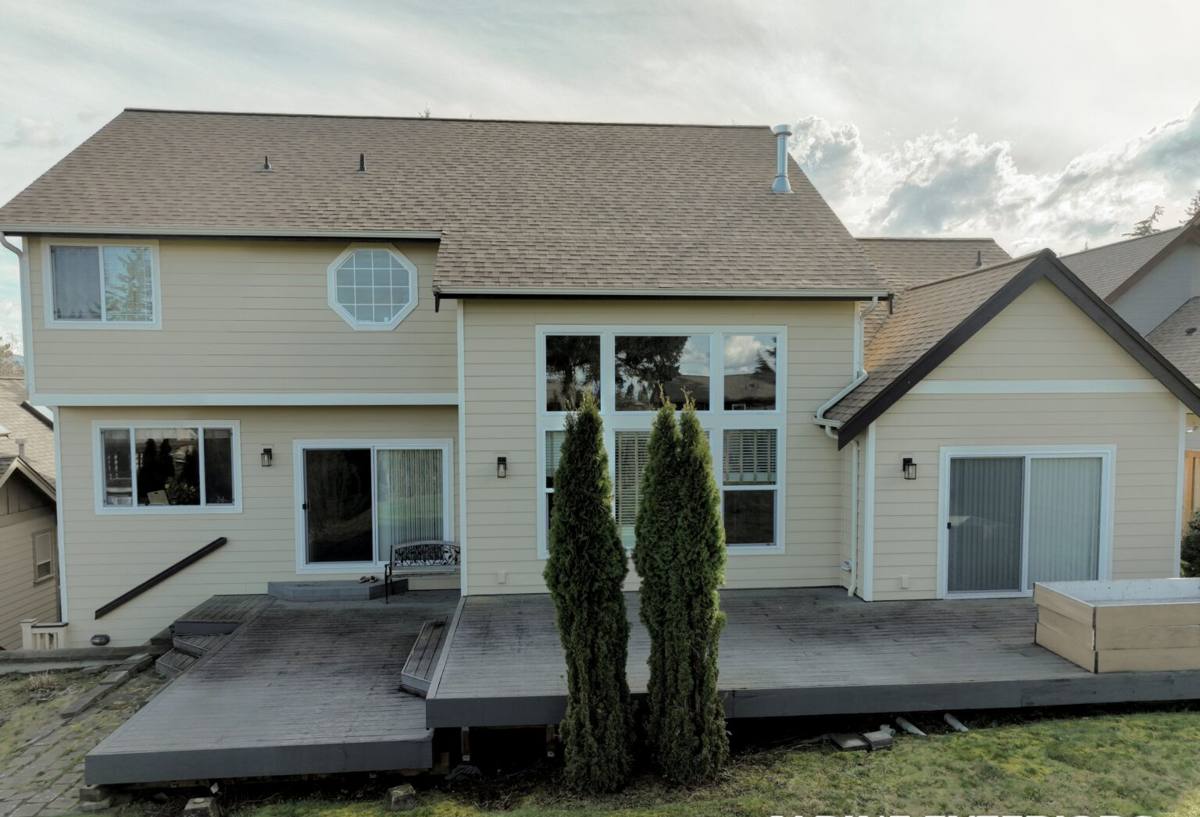
How to Tell a Deck Needs Replacing, Not Just Repairing
Not every tired-looking deck needs a full rebuild. Sometimes a few boards, a section of railing, or a coat of sealant is genuinely enough. But there's a point where patching a deck costs more over time than replacing it, and where continuing to repair it means working around problems in the framing that a new coat of stain can't fix. Signs worth taking seriously include:
- Soft or spongy spots in the decking or framing when you walk across them, especially near the house or in shaded corners
- Fasteners that are visibly rusted, staining the wood around them, or backing out of the boards
- A railing post that flexes or feels loose when you lean on it
- Persistent moss or dark staining that comes right back within weeks of cleaning
- Gaps or cracks that have opened up between boards as the wood has aged and moved
- Visible daylight or gaps at the ledger board where the deck meets the house
- A deck more than 15-20 years old built with older fastening methods or untreated hardware
One or two of these on their own might point to a repair. Several at once, especially anything involving the framing or the ledger connection, usually means the deck has reached the end of what repair can fix.
What Everson's Climate Does to an Aging Deck
Marine-Influenced Moisture, Even This Far Inland
Everson doesn't sit on the water, so it doesn't take the direct salt exposure that towns closer to Bellingham Bay or the Sound deal with. But Whatcom County as a whole sits under a marine-influenced climate, and that moisture-heavy air still reaches inland, just in a diluted form. Combine that with the humidity that settles into the Nooksack River valley, and exposed metal hardware, fasteners, and connectors on an older deck still corrode faster here than they would in a genuinely dry inland climate.
Driving Rain and Valley Fog
Fall and winter in this part of the county mean long stretches of steady, wind-pushed rain, and the low-lying farmland around Everson holds fog and damp air longer after a storm than higher or more open ground does. That combination means a deck surface here doesn't just get wet, it stays wet longer between dry spells, which matters a lot for how fast wood decking and framing deteriorate.
A Moss Season That Runs Most of the Year
Mild temperatures and sustained moisture give moss and mildew a long growing season across Whatcom County, and a horizontal deck surface is one of the easiest places for it to take hold, since it holds water longer than a vertical wall. Shaded decks, north-facing decks, and decking under trees near the river corridor are usually the first to show it, and any decking with even a little surface porosity gives it something to grip.
Choosing Decking Material for a Replacement in Everson
Material choice matters more on a replacement than it might seem, because the whole point of replacing a deck is not having to do it again in another ten years. The three main categories homeowners choose between are pressure-treated or cedar wood, capped composite, and cellular PVC.
Wood
Pressure-treated lumber and cedar remain popular for their natural look and lower upfront cost, but both need regular sealing or staining to hold up against sustained valley moisture, and both are more vulnerable to fastener corrosion over time than capped or synthetic alternatives. Left unmaintained even a season or two, wood in this climate is usually the first material to show moss, graying, and soft spots.
Capped Composite
Capped composite boards have a plastic shell wrapped around a wood-fiber composite core, which resists moisture absorption, staining, and UV fade far better than uncapped composite or raw wood. In a climate with this much sustained dampness, that cap layer does real work rather than just adding a marketing claim — it's the difference between a board that needs occasional washing and one that needs ongoing sealing.
Cellular PVC
PVC decking contains no wood fiber at all, so it doesn't absorb moisture the way even capped composite can at cut edges or fastener holes. It typically costs more than composite and can flex slightly more under heavy point loads, but for a deck that sits in a lot of shade or stays damp longer than the rest of the yard, some homeowners find the added moisture resistance worth the extra cost.
| Material | Handling Sustained Moisture | Moss Resistance | Upkeep |
|---|---|---|---|
| Cellular PVC | Excellent — no wood fiber to absorb moisture | Strong, smooth non-porous surface | Occasional washing |
| Capped composite | Strong — cap layer resists moisture and staining | Good on most product lines | Occasional washing |
| Uncapped composite | Moderate — some moisture absorption at exposed fiber | Fair; more prone to buildup over time | Periodic cleaning |
| Cedar | Moderate — natural resistance, but needs sealing | Fair when sealed and maintained | Regular oiling or sealing |
| Pressure-treated wood | Weak against sustained damp exposure over time | Poor without regular treatment | Regular sealing or staining |
What a Correct Deck Replacement Involves
A deck replacement is a chance to fix everything the old deck got wrong, not just swap out worn boards for new ones on the same framing. Done right for a property in this part of the county, a replacement includes:
- Full removal of the old decking, framing, and any hardware showing corrosion or decay, rather than building new boards over an old, uninspected structure
- Framing material sized correctly for the span and load, rated for sustained outdoor moisture exposure
- Corrosion-resistant fasteners and connectors throughout, not standard hardware that starts rusting within a few damp seasons
- Proper ledger board flashing where the deck ties into the house, since that connection point is one of the most common places water gets into an older deck
- Correct board gapping for drainage and material movement, so rain and condensation can actually drain and dry between boards instead of sitting
- Joist spacing matched to the specific decking product's span rating rather than a generic framing layout
- Grading and airflow underneath the deck so moisture doesn't sit trapped against the new framing between storms
- Railing and post attachment built to current structural standards, not just matched to whatever the old deck had
Skip any one of those and a new deck can still look good on day one. The shortcuts show up a few winters later, in the same places the old deck failed.
How Our Replacement Process Works
We start with a site visit to actually look at the existing deck, not just quote off a photo. That means checking the framing and ledger connection for hidden rot, looking at drainage and grading around the deck's footprint, and getting a sense of sun, shade, and moisture patterns across the space through the day. From there we walk through decking material options that fit the budget and how the space actually gets used.
Permitting in Everson generally follows Whatcom County's standard setback, structural, and elevation requirements for deck construction, and we handle that as part of the job. Once permitted, demolition comes first, followed by inspection of anything the old deck's framing was hiding, then new framing and fastening sized and specced for this climate, then the decking surface, railing, and any stairs or trim. We finish with a walkthrough of what your specific decking material actually needs going forward, which for most modern products is minimal but not nothing.
Keeping Your New Deck Performing Long-Term
Even a properly built replacement deck needs some routine attention in this climate to reach its full lifespan. Worth keeping on a seasonal checklist:
- Rinse the deck surface periodically to clear pollen, dust, and organic buildup before it works into the surface or cap layer
- Keep gaps between boards clear of leaves and debris so water can drain and air can move the way the design intends
- Check railing posts and hardware once a year for early corrosion or loosening, especially heading into the wet season
- Trim back branches or plants overhanging the deck that hold moisture against it or block sun and airflow
- Address any soft framing or standing water underneath right away — that's a structural issue, and it doesn't improve on its own
Why It Matters That We Already Work Everson
A crew that mostly builds decks elsewhere in the county can still put one together competently, but an Everson replacement has variables that don't come up the same way everywhere — river-valley humidity that keeps a deck damp longer after a storm, fog that settles into low farmland and doesn't burn off as fast as it does on higher ground, and moss pressure from shaded, tree-lined lots near the river corridor. Working this area regularly means we're not guessing at those conditions on your project. We've seen which materials and fastening details actually hold up to Everson's specific mix of driving rain, valley moisture, and a moss season that runs most of the year, and which shortcuts turn into callbacks a few winters down the road.
That familiarity also shows up in the smaller decisions on a replacement — how to grade and vent the space underneath a particular lot, or giving a straight answer about what your deck actually needs versus what's just an upsell.
Get a Straight Answer About Your Deck
Whether your current deck has a few soft spots or clearly needs to come out and be rebuilt from the framing up, we're happy to take a look and walk you through the options honestly. Reach out below for a free, no-pressure estimate on your Everson deck replacement.