 Glenhaven Siding
 Metal Roofing Built for Everson's Climate
Everson sits in a stretch of Whatcom County where weather doesn't do subtlety. Homes here take on driving rain off the Nooksack valley, damp marine air carrying salt inland from the Sound, and a moss season that can run eight months out of the year if a roof gives it the chance. A roof in this area isn't just shedding water for a few storms a year — it's under nearly constant moisture load, and that changes what "correct installation" actually means. Metal roofing, done right, handles that load better than most other options, but only if the details are right.
We work on homes throughout Everson and the surrounding Glenhaven service area, and the roofs we see fail early almost never fail because metal was the wrong material. They fail because of shortcuts in flashing, fastening, or underlayment that don't show up until year three or four, when the first real leak shows up in a ceiling that has nothing to do with where the water actually got in.
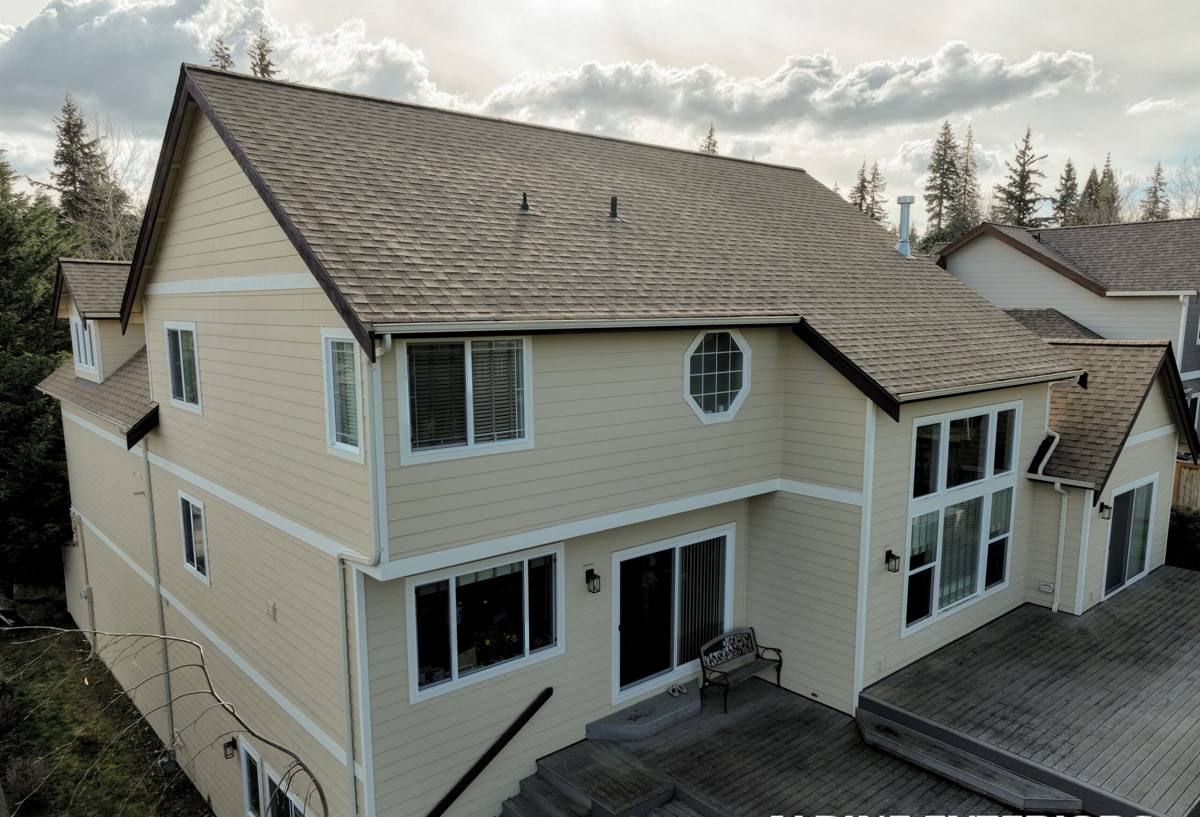
Why Metal Roofing Makes Sense Here
Standing Up to Driving Rain
Wind-driven rain doesn't just fall on a roof — it pushes sideways under laps, around penetrations, and into any gap that a lazier installation left open. A properly seamed metal roof, whether standing seam or a quality metal shingle system, sheds that water fast and gives it very few places to work its way backward. Steep-slope metal in particular relies on gravity doing most of the work, which matters on a roof that's wet more often than it's dry.
Resisting Moss and Organic Growth
Moss needs two things to take hold: moisture and a rough surface to grip. Composition shingles give moss both. Metal gives it neither — the surface is smooth, drains quickly, and doesn't hold the fine grit and organic debris that moss spores need to root in. That doesn't mean a metal roof never sees moss or algae streaking, especially in shaded, north-facing sections common on tree-lined Everson lots, but what does grow sits on the surface instead of working into it, and it comes off without damaging the roofing underneath.
Standing Up to Salt Air
Everson is inland, but Whatcom County's proximity to the Sound still means salt-laden air moves through on prevailing winds, especially during winter storm systems. Salt accelerates corrosion on unprotected metal and eats at fasteners faster than people expect. This is a material and hardware selection issue, not a reason to avoid metal roofing — it just means the panel coating, fastener grade, and flashing metal all need to be chosen for a marine-influenced climate, not a dry inland one.
What a Correct Metal Roof Installation Involves
Underlayment and Ice/Water Protection
In a climate this wet, the underlayment is doing real work, not just serving as a formality under the panels. We use synthetic underlayment rated for extended exposure, with self-adhered ice and water membrane at eaves, valleys, and any low-slope transitions where standing water is more likely. On a roof that stays damp for weeks at a stretch during our rainy months, this layer is what keeps a small leak from becoming a rot problem in the decking.
Fastening and Panel Movement
Metal roofing expands and contracts with temperature swings more than most homeowners realize. Fastening systems that don't account for that movement — especially exposed-fastener systems installed too tight or in the wrong pattern — work themselves loose over a few seasons of freeze-thaw and wet-dry cycling. Standing seam systems with concealed clips handle this movement without stressing the fasteners at all, which is one reason we favor them on homes that will see decades of this weather.
Flashing Details
Almost every roof leak we get called out to investigate traces back to flashing, not the field of the roof. Chimneys, skylights, dormers, and wall-to-roof transitions all need step flashing, counter-flashing, or custom-bent metal work that matches the actual geometry of the house — not a generic trim piece bent to approximate it. This is where experience on local roof types matters more than the roofing material itself.
Ventilation
A hot, poorly ventilated attic under a metal roof in a wet climate is a recipe for condensation on the underside of the decking, which causes rot from the inside even if the roof surface is perfect. We check ridge and soffit venting as part of any metal roof project, because installing new roofing over an underventilated attic just moves the moisture problem instead of solving it.
Metal Roofing Options: A Comparison
| System | Best For | Maintenance | Typical Lifespan |
|---|---|---|---|
| Standing Seam | Steep roofs, homes wanting a clean modern look, max wind/rain resistance | Low — no exposed fasteners to loosen or corrode | 40-60+ years |
| Metal Shingle/Shake Panels | Homes wanting a traditional shingle or shake appearance with metal durability | Low to moderate | 30-50 years |
| Exposed-Fastener Panel | Budget-conscious projects, outbuildings, shops | Moderate — fasteners need periodic inspection and occasional replacement | 20-40 years |
For primary residences in the Everson area, we most often recommend standing seam or a quality metal shingle system. Exposed-fastener panel has its place, particularly on secondary structures, but the maintenance burden of fastener upkeep in a climate this wet is worth knowing about before it goes on a house roof.
Metal Roofing vs. Composition Shingle in This Climate
This isn't about one product being bad — it's about matching material to conditions. Composition shingle roofs are a reasonable, lower-upfront-cost option, and we install and repair them too. But in an area with Everson's moss pressure and rainfall totals, shingles need more frequent moss treatment, more frequent inspection for granule loss, and a shorter realistic service life before full replacement. Metal costs more up front and asks less of the homeowner over the following decades. Which one makes sense depends on how long you plan to own the home, your budget timeline, and how much roof maintenance you want to be doing.
Our Process on an Everson Metal Roof Project
- On-site assessment — we inspect the existing roof, decking condition, attic ventilation, and any known trouble spots before quoting anything.
- System selection — we walk through panel type, gauge, and coating options suited to the home's exposure and your budget.
- Tear-off or overlay evaluation — we tell you honestly whether your existing roof can support an overlay or needs full tear-off; we don't push a bigger job than the house needs.
- Underlayment and flashing installation — the part that determines whether the roof performs for 10 years or 50.
- Panel installation — fastened or clipped per manufacturer spec for our wind and rain exposure.
- Final walkthrough — we go over the finished roof with you, including what routine maintenance (if any) it actually needs.
Signs Your Everson Roof May Need Attention
- Moss buildup in valleys, north-facing slopes, or along eaves
- Streaking, staining, or dark patches on shingles or panels
- Granule buildup in gutters (composition roofs) or chalking on metal finishes
- Rust spots or corrosion around fasteners, flashing, or panel edges
- Soft spots, sagging, or visible daylight in the attic around roof penetrations
- Interior ceiling stains, especially after a heavy rain event
- Loose, lifted, or rattling panels after windstorms
Catching any of these early is almost always cheaper than waiting. A minor flashing repair costs a fraction of what deck replacement and interior repair cost after months of a slow, hidden leak.
Why a Local Crew Matters for This Job
Metal roofing installation isn't forgiving of guesswork, and a crew that only occasionally works this far north doesn't build the same instinct for Whatcom County's rain patterns, moss growth, and salt exposure that a crew working Everson and Glenhaven roofs regularly does. We know which slopes on which orientations tend to hold moisture longest, which flashing details fail first on local roof pitches, and which fastener and coating specs actually hold up here versus in a drier climate spec sheet. That local pattern recognition is part of what you're paying for when you hire a crew that already knows this area, not just part of what you're paying for the metal itself.
Maintenance: What a Metal Roof Actually Needs
One of the real advantages of metal roofing in this climate is how little ongoing maintenance it demands compared to shingle roofing. That said, "low maintenance" isn't "no maintenance." A simple annual check — clearing debris from valleys, confirming gutters are draining freely, and a visual scan for any lifted panels or flashing after major windstorms — goes a long way. We're happy to handle that inspection for customers who'd rather not get on a ladder themselves, especially on steeper roof pitches.
Get a Straight Answer for Your Everson Home
Every roof and every lot is a little different — tree cover, slope orientation, and existing roof condition all factor into what makes sense for your home. If you're weighing metal roofing for a home in Everson, we're glad to come take a look, walk the roof, and give you a straightforward assessment along with a free, no-pressure estimate. There's no obligation — just an honest read on what your roof actually needs.