 Glenhaven Siding
 Board & Batten Siding in Fairhaven: Built for the Neighborhood, Built for the Weather
Fairhaven has a look to it — a mix of older homes with real character and newer builds designed to fit in alongside them. Board and batten siding shows up a lot in this kind of neighborhood, and for good reason. The vertical lines read as craftsman, farmhouse, or coastal cottage depending on the trim and color, and it works on everything from a modest one-story to a larger two-story home near the water. It's a look Fairhaven homeowners ask for by name.
But board and batten is also one of the least forgiving siding profiles when it's installed without attention to detail. The vertical battens create dozens of extra seams compared to standard lap siding, and every one of those seams is a potential path for water if it isn't handled correctly. In a neighborhood exposed to salt air, driving rain, and a long moss season, that margin for error gets even thinner. This page is about what board and batten needs to actually hold up in Fairhaven — not just look good the day it goes up.
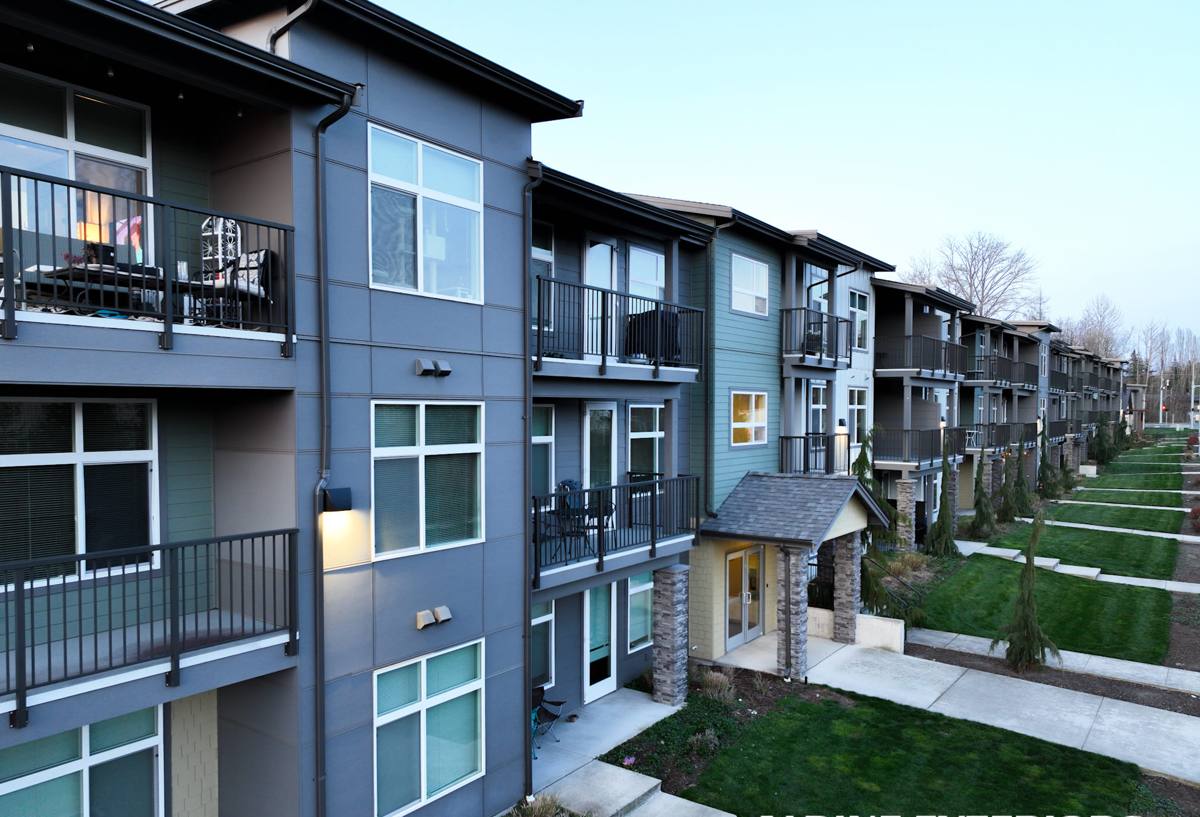
What Fairhaven's Climate Does to Board & Batten Siding
Whatcom County's coastal weather is harder on vertical siding profiles than most homeowners expect. Three things matter most for board and batten specifically:
Salt Air
Homes closer to the water deal with airborne salt that accelerates corrosion on anything metal — fasteners, flashing, trim screws. Board and batten has more exposed fastener points than lap siding because the battens themselves need to be fastened down their full length. If those fasteners aren't corrosion-resistant, they're often the first thing to fail, well before the siding material itself shows any wear.
Driving Rain
Storms moving in off the water don't just fall straight down — wind-driven rain gets pushed sideways into wall assemblies, and vertical battens can actually channel water downward along the seams if the drainage plane behind them isn't right. On a well-built wall, that water sheds harmlessly. On a wall without proper flashing and drainage, it works its way behind the siding and into the sheathing.
A Long Moss Season
Whatcom County's wet season runs long, and shaded, tree-covered lots — common in and around Fairhaven — stay damp for weeks at a time. Moss and algae don't just grow on roofs; they take hold on siding too, especially on the north and west-facing walls that dry out slowest. Siding that holds moisture, or that has nowhere for moisture to escape, grows moss faster and holds it longer.
Where Board & Batten Installations Go Wrong
Most board and batten failures we see aren't about the siding material — they're about installation shortcuts that don't show up until years later. The most common problems:
- Battens face-nailed directly to the wall with no drainage gap behind them, trapping moisture against the sheathing
- Standard fasteners used instead of corrosion-resistant ones, leading to rust streaks and fastener failure in salt-air exposure
- Missing or undersized flashing at window and door heads, where board and batten's vertical lines make water runoff patterns different from lap siding
- Butt joints and panel seams caulked as the primary water barrier instead of properly flashed and lapped
- Battens spaced or fastened inconsistently, which looks fine on install day but telegraphs unevenness as the home settles
Each of these is fixable at the time of installation for very little added cost. Almost none of them are fixable later without pulling siding back off.
What a Correct Board & Batten Installation Actually Involves
Done right, board and batten is a system, not just a pattern of boards nailed to a wall. Here's what we make sure is in place on every Fairhaven project:
- A drainage gap (rainscreen) behind the panels so any moisture that gets past the outer layer can drain and dry instead of sitting against the wall
- Corrosion-resistant, manufacturer-approved fasteners rated for coastal and high-moisture exposure
- Properly lapped and sealed housewrap or weather-resistive barrier underneath, with flashing integrated at every window, door, and penetration
- Batten spacing and fastening patterns that follow the manufacturer's engineering specs, not just what looks even from the ground
- Factory-finished panels and trim, reducing the number of field-cut edges that need to be sealed and painted on site
None of this is exotic. It's the difference between a crew that's installed board and batten dozens of times in this climate and one that's following a generic install guide written for a drier region.
Material Options for the Board & Batten Look
Board and batten can be built with more than one material, and the choice matters more here than in a milder climate. This is where we're upfront about why we only install one of them.
| Material | How It Handles Salt Air & Rain | How It Handles Moss Season | Long-Term Upkeep |
|---|---|---|---|
| James Hardie fiber cement (HZ10 panel + batten) | Non-combustible, dimensionally stable, factory-sealed edges resist moisture intrusion | Doesn't swell or rot when damp; factory finish resists mildew staining | Occasional gentle wash; ColorPlus finish holds up without repainting on the original schedule |
| Vinyl board and batten | Can warp or become brittle with temperature swings and salt exposure over time | Traps moisture behind panels if not vented correctly; moss and algae show clearly on the surface | Low upkeep but limited repair options if a section cracks or fades |
| Engineered wood (LP-type) board and batten | Vulnerable to moisture at cut edges and fastener points if seals fail | Wood-based core is at risk of swelling or delaminating in prolonged damp conditions | Requires more diligent caulk and paint maintenance to keep water out |
| Real wood (cedar) board and batten | Handles salt air reasonably but battens and boards move with moisture cycles | Most prone to moss growth and rot without frequent sealing and cleaning | Highest maintenance — repainting, re-caulking, and rot inspection on a recurring basis |
We install James Hardie fiber cement exclusively. It's not the only material that can be shaped into a board and batten profile, but it's the one that holds its dimensions, resists moisture at the panel and batten level, and carries a manufacturer finish warranty built for exactly this kind of coastal, high-moisture climate. We'd rather turn down a job than install a product we don't think will hold up on a Fairhaven home.
Our Process for Fairhaven Board & Batten Projects
Every project starts with a walk-around of the home, not a quote pulled from square footage alone. We're looking at sun exposure, wind direction relative to the water, existing moisture damage, and how the current siding has aged — all of which shape the install details that matter most.
- On-site assessment: We check the existing wall assembly, sheathing condition, and any trouble spots (window heads, roof-wall intersections, ground clearance) before quoting the job.
- Plan the drainage and flashing details: Board and batten depends on what's happening behind it. We map out the rainscreen gap, housewrap laps, and flashing at every penetration before a single panel goes up.
- Install to manufacturer spec: Fastener type, spacing, and batten layout follow James Hardie's engineering guidelines for this climate zone — not a generic install pattern.
- Final walkthrough: We review the finished job with you, including where the drainage gap is and what basic upkeep looks like going forward.
Why It Matters That We Already Work in Fairhaven
A crew that's worked this neighborhood before already knows things a first-timer would have to learn on your dime: which lots hold moisture longest, how close the water sits to a given block, and what the wind-driven rain pattern actually looks like on a two-story wall facing the wrong direction. That local knowledge shows up in small decisions — where extra flashing gets added, which fastener spec gets used, how the drainage plane is detailed at a tricky roofline — that don't show up on a spec sheet but matter a lot ten years down the road.
It also means we're not disappearing after the invoice is paid. We're working in Fairhaven and the greater Glenhaven area regularly, which matters if a warranty question ever comes up.
Maintenance: Keeping Board & Batten Siding Ahead of Moss and Salt
Correctly installed board and batten doesn't need much, but "not much" isn't "nothing":
- Rinse the siding annually, focusing on shaded, north-facing walls where moss and algae take hold first
- Keep gutters clear so overflow isn't running down the wall and saturating panels near the roofline
- Trim back vegetation that shades the wall and keeps it damp longer than it should be
- Have caulked joints and trim inspected every few years, since caulk is a maintenance item even on a well-built wall
- Watch for any rust streaking near fasteners or trim, which is worth a quick look before it becomes a bigger repair
None of this requires a professional visit every year, but a home in Fairhaven that never gets any attention will show moss and moisture wear faster than one that gets a simple annual once-over.
Get a Straight Answer on Your Fairhaven Board & Batten Project
If you're weighing board and batten for a Fairhaven home, we're glad to walk the property with you, look at your specific exposure to wind and moisture, and give you a straightforward estimate — no pressure, no inflated scope. Fill out the form below to get started.