 Glenhaven Siding
 Why Fairhaven Homes Are Hard on Windows
Fairhaven sits close enough to the water that salt-laden air is a daily fact of life, not an occasional nuisance. That air finds its way into every gap in a window assembly — corroding hardware, breaking down seals, and dulling finishes years before they'd fail on a house further inland. Add in driving rain that comes sideways off Bellingham Bay during winter storms, and a mossy, shaded, damp season that can stretch for months, and you've got one of the tougher window environments in Whatcom County.
Most window failures we see on Fairhaven homes aren't about the glass. They're about what's happening around the glass: failed seals letting moisture into wall cavities, corroded hardware that won't lock or lift smoothly anymore, and rot starting at sills and corners where water collects and never fully dries out between storms. A window that looks fine from the curb can already have water tracking behind the trim.
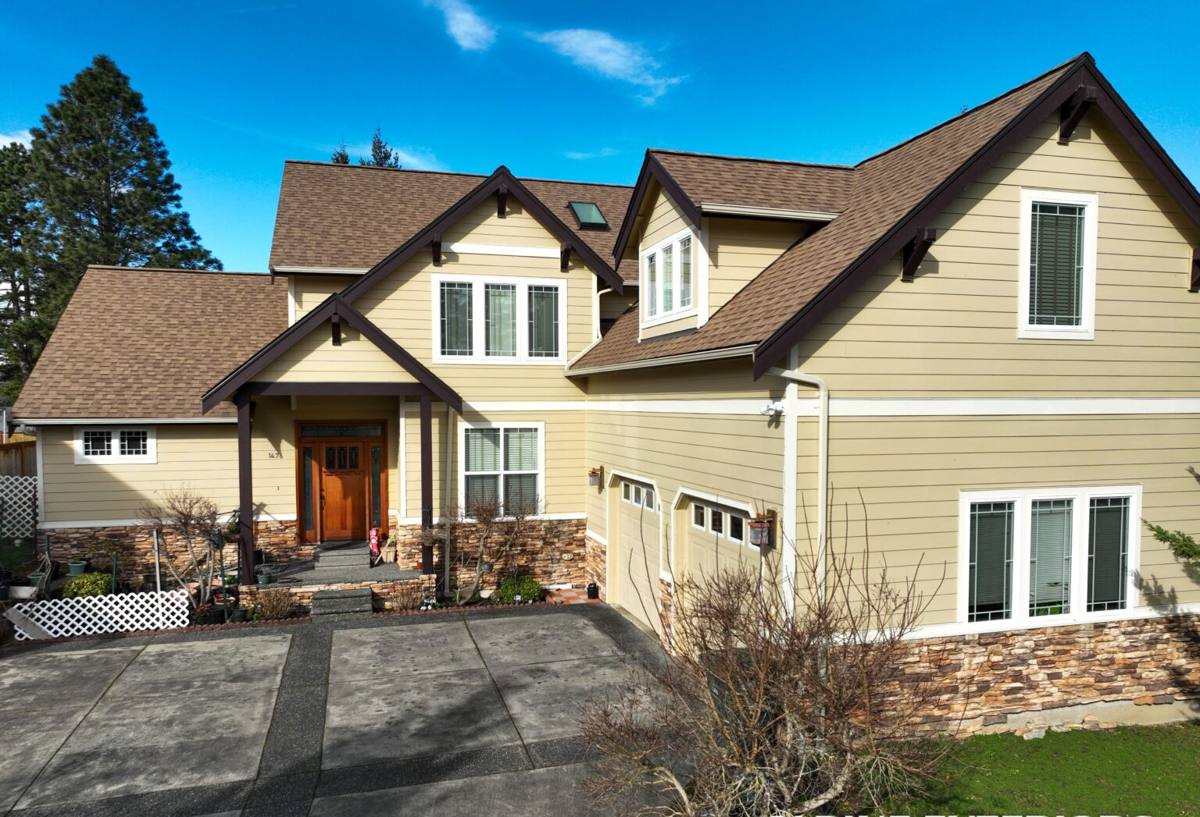
What "Correct" Looks Like on a Fairhaven Window Job
A custom window installation done right isn't just fitting a new unit into an old opening. In a marine climate like this one, the details around the window matter as much as the window itself.
Flashing and Water Management
Every opening needs proper flashing — a sill pan to catch and direct any water that gets past the window, house wrap integrated correctly at the head and jambs, and flashing tape sequenced so water always sheds outward and down, never back into the wall. Skipping or rushing this step is the single most common cause of hidden rot behind window trim in this area.
Sealing That Actually Holds
Caulk and sealant choice matters more here than in a dry climate. We use sealants rated for continuous exposure to moisture and UV, and we don't rely on caulk alone to do a flashing detail's job. Caulk is the last line of defense, not the whole plan.
Hardware That Resists Corrosion
Locks, hinges, and cranks near the coast need corrosion-resistant hardware and finishes. Standard hardware that's fine 20 miles inland can start pitting and sticking within a few seasons of Fairhaven salt air.
Choosing Window Materials for a Marine Climate
There's no single "best" window material — the right choice depends on your home's style, budget, and how much upkeep you want to take on. Here's how the common options hold up specifically against salt air, driving rain, and moss-season dampness:
| Material | Salt Air / Coastal Performance | Moisture & Moss Resistance | Maintenance |
|---|---|---|---|
| Vinyl | Good — won't corrode or rust | Good, but track debris/mildew in frame grooves | Low — occasional cleaning |
| Fiberglass | Excellent — very stable, minimal expansion/contraction | Excellent — dimensionally stable in wet-dry cycles | Low |
| Aluminum-clad wood | Good on exterior face if properly sealed | Moderate — exposed wood interior needs monitoring | Moderate |
| Solid wood | Requires diligent upkeep near salt air | Needs regular refinishing to prevent rot | High |
| Aluminum (uncoated/older style) | Poor — prone to pitting and corrosion over time | Fair | Moderate to high |
For most Fairhaven homes, we steer clients toward fiberglass or high-quality vinyl for the sash and frame, especially on elevations that take the brunt of weather off the water. Wood-look interiors can still be achieved with clad options if you want that traditional appearance without the bare-wood maintenance burden.
A Note on Glass Packages
Standard dual-pane glass is a baseline, not the ceiling. In a climate with this much moisture cycling, we typically recommend low-E coated glass with argon fill — it cuts condensation risk on the interior pane during cold, damp stretches and helps with energy performance year-round. For homes with heavy tree cover and persistent shade (common in moss-prone areas), a slightly wider warm-edge spacer can also reduce the interior fogging some homeowners notice on north-facing rooms.
Our Installation Process
- On-site assessment. We inspect existing openings, sills, and framing for hidden moisture damage before quoting anything — you shouldn't pay for a new window over a rotten sill.
- Custom measurement and ordering. Every opening is measured individually; older Fairhaven homes are rarely perfectly square, and custom windows need to account for that.
- Removal and inspection. Once the old unit is out, we check the framing and sheathing underneath. This is where hidden rot or past water intrusion shows up.
- Repair as needed. Any compromised framing or sheathing gets repaired before the new window goes in — installing a new window into a damaged opening just hides the problem.
- Flashing and sill pan installation. Water management goes in before the window does, sequenced correctly from the bottom up.
- Window installation and shimming. The unit is set plumb, level, and square, then shimmed and fastened per manufacturer specs.
- Sealing and insulation. Gaps are insulated (not overpacked, which can bow the frame) and exterior joints are sealed with marine-grade sealant.
- Interior and exterior trim. Trim is fitted and finished to match your home's existing look.
- Final walkthrough. We test operation, check seals, and walk the job with you before calling it done.
What Drives Cost on a Custom Window Project
Every home and opening is different, so we don't quote sight-unseen — but these are the main factors that move the price up or down:
| Factor | Why It Matters |
|---|---|
| Window material and glass package | Fiberglass and upgraded glass cost more upfront but hold up better in salt air |
| Opening condition | Hidden rot or framing damage adds repair time before the window can go in |
| Window size and configuration | Custom shapes, oversized units, and multi-panel configurations take more labor |
| Access and story height | Second-story or hard-to-reach windows require more setup and safety planning |
| Number of windows | Whole-house replacement typically has a better per-window cost than one-off jobs |
| Trim and finish work | Matching historic or detailed trim profiles adds finish carpentry time |
As a rough starting point, homeowners in this area typically budget anywhere from a few hundred dollars for a single standard replacement window up to several thousand for larger custom units or full-house projects — but the only way to get a real number is a site visit.
Living With Windows in a Salt-Air, Moss-Season Climate
Even a well-installed window needs some seasonal attention here. A short annual routine goes a long way toward protecting your investment:
- Rinse exterior frames and glass periodically to remove salt residue, especially after winter storms
- Check and clear weep holes so water can drain out of the frame instead of pooling
- Inspect exterior caulk lines each fall before the wet season sets in, and touch up any cracked or separated sealant
- Wipe down and lubricate hardware (locks, cranks, hinges) once or twice a year to prevent corrosion-related sticking
- Keep nearby vegetation trimmed back to reduce shade and moisture buildup that encourages moss and mildew around frames
- Watch for soft spots or discoloration on interior sills and trim — early signs of a seal that's starting to fail
Why Local Installation Experience Matters
Window installation isn't identical everywhere in Washington. A crew used to drier east-side conditions or inland installations doesn't always account for the flashing details, sealant choices, and hardware specs that hold up against Fairhaven's specific combination of salt air, wind-driven rain, and long damp seasons. We work in this climate regularly, which means we're not guessing at what fails here — we've seen which details matter and which corners can't be cut, whether that's a beach-facing bungalow or a shaded lot dealing with persistent moss.
We also know that Whatcom County's building codes and energy requirements apply to window replacement projects, and we handle that side of the job so you don't have to track it down yourself.
Signs It's Time to Replace, Not Repair
Not every window issue means full replacement. But a few signs usually point that direction:
- Visible fogging or moisture between panes (a failed seal that can't be repaired)
- Soft, spongy, or discolored wood at the sill or frame corners
- Windows that won't stay open, lock securely, or operate smoothly despite lubrication
- Persistent drafts or noticeably higher heating costs in rooms with older windows
- Visible gaps between the frame and siding, or paint/finish failure that keeps recurring
If you're only seeing one or two of these on an otherwise sound window, a repair or reseal might be enough — we'll tell you honestly which situation you're in rather than pushing a full replacement you don't need.
If you're weighing new windows for a Fairhaven home, we're happy to take a look and talk through what your specific openings need. Reach out for a free, no-pressure estimate using the form below.