 Glenhaven Siding
 Fairhaven's Coastal Climate Puts Real Stress on Siding
Fairhaven sits close enough to the water and to the broader marine weather patterns of Whatcom County that its homes take on a different kind of wear than siding a few miles inland. Salt-laden air, wind-driven rain, and a moss season that can run most of the year all work on exterior cladding in ways that are easy to underestimate until a wall starts showing real damage. Siding repair here isn't just cosmetic touch-up work — done right, it's about understanding why a section failed in the first place and fixing that cause, not just the surface.
Salt Air and Metal Fasteners
Coastal and near-coastal air carries fine salt content that accelerates corrosion on exposed fasteners, flashing, and trim hardware. Over years, corroding nails and screws can loosen boards, streak paint finishes, and create small gaps where moisture works its way behind the siding. It's a slow process, which is exactly why it often goes unnoticed until a board is already loose or a stain has set in.
Driving Rain and Wind-Driven Moisture
Storms coming off the water don't just fall straight down — wind pushes rain sideways into laps, seams, and trim joints that were never meant to handle water pressure from that angle. Siding that's caulked, flashed, or lapped correctly sheds this fine. Siding with even minor installation gaps or aging caulk lines can start taking on moisture that shows up later as swelling, staining, or soft spots.
The Long Moss Season
Whatcom County's damp, mild climate keeps conditions favorable for moss and algae growth on shaded and north-facing walls for much of the year. Beyond the green staining, moss holds moisture directly against the siding surface, which is a problem for any material that isn't engineered to resist sustained dampness, and it can accelerate deterioration at seams and butt joints where moisture already tends to collect.
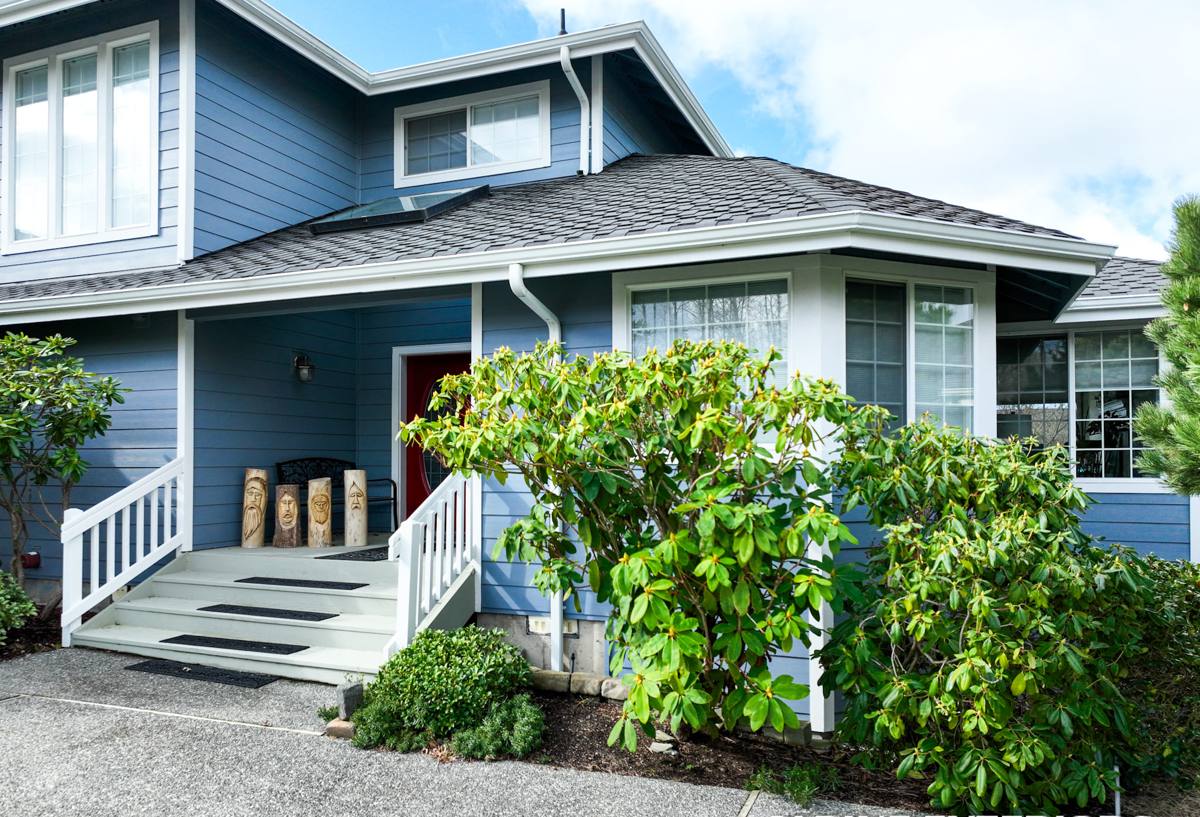
Signs Your Fairhaven Home Needs Siding Repair
Most siding problems give warning signs well before they become structural. Catching them early keeps a repair a repair, instead of letting it grow into a full section replacement.
- Soft, spongy, or bulging spots when you press on a board, especially near the bottom courses or under windows
- Visible gaps, warping, or boards pulling away from the wall
- Persistent moss, algae, or dark streaking that keeps returning after cleaning
- Cracked, peeling, or bubbling paint in one localized area rather than across the whole wall
- Rust streaks running down from fastener heads or trim pieces
- Caulk lines that have shrunk, cracked, or pulled away from joints and trim
- A musty smell or visible staining on interior walls that back up to exterior siding
What a Correct Siding Repair Actually Involves
Diagnosing the Cause, Not Just the Symptom
A patch that goes over a damaged board without addressing why it failed usually fails again. Correct repair work starts with pulling back enough siding to see what's actually happening underneath — the condition of the water-resistive barrier, the flashing at windows and penetrations, and whether the framing itself has taken on moisture. In a climate like Fairhaven's, that inspection step matters more than it does in drier regions, because moisture problems here rarely stay isolated to one board.
Matching Material and Finish
Repairs need to match the surrounding siding in profile, exposure, and finish, or the patched section will always stand out and can behave differently in weather than the rest of the wall. This is straightforward when the original siding is a fiber cement product with a known factory finish; it gets more complicated with older materials that have faded unevenly or are no longer manufactured, which is one reason we're upfront with homeowners about when a clean match is realistic and when a broader section replacement is the more honest recommendation.
Common Repair Scenarios We See Around Fairhaven
The specific damage pattern usually points straight to the cause:
- Bottom-course rot or softness — typically moisture wicking up from grade, splash-back, or failed flashing at the foundation line
- Damage clustered under windows or at trim joints — usually a sign of caulk failure or missing kick-out flashing letting wind-driven rain behind the siding
- Isolated impact damage — cracked or dented boards from storm debris or accidental contact, cosmetic but worth sealing quickly before moisture gets into the crack
- Chronic moss and staining on shaded walls — a maintenance and moisture-management issue as much as a cleaning one
- Loose or bowing boards along fastener lines — often corroded or under-driven fasteners losing their grip over time
Repair or Replace? Weighing the Factors
Not every damaged section needs full replacement, and not every repair is worth doing if the underlying siding is nearing the end of its service life. These are the factors we walk through with homeowners:
| Factor | Favors Repair | Favors Replacement |
|---|---|---|
| Extent of damage | Isolated to one or a few boards | Spread across multiple walls or elevations |
| Underlying moisture barrier | Intact and sound | Compromised or original barrier failing |
| Age of existing siding | Well within expected service life | Already near or past it |
| Material match availability | Close match achievable | Discontinued or badly faded, patch would be visible |
| Cause of damage | One-time event (impact, isolated flashing failure) | Systemic issue (widespread moisture intrusion, material breakdown) |
Our Repair Process
We keep the process straightforward and honest from the first visit:
- Inspection — we look at the damaged area and enough of the surrounding wall to understand scope, checking fasteners, flashing, and the condition of what's behind the siding where accessible
- Diagnosis and plan — we tell you plainly whether it's a targeted repair, a larger section replacement, or something that needs a broader conversation about the wall's overall condition
- Material sourcing — we match profile and finish as closely as possible, or recommend the honest alternative when a clean match isn't realistic
- The repair itself — removing damaged material, correcting whatever let moisture or damage in (flashing, caulking, fastening), and installing the replacement to the same standard as new work
- Cleanup and walkthrough — we leave the site clean and walk the repair with you before we call it done
Why We Repair and Rebuild With James Hardie Fiber Cement
When a repair calls for new siding material — whether that's a handful of boards or a full wall section — we use James Hardie fiber cement, and we don't install vinyl, LP SmartSide, or other fiber cement alternatives. It's a standard we hold across every job, not just new installs. In a climate that puts down driving rain, salt air, and long stretches of damp shade, fiber cement resists moisture-driven swelling and rot in a way wood-based and engineered-wood products can struggle with over time, and it's non-combustible, which matters in this region for its own reasons. James Hardie's ColorPlus factory finish also holds color more consistently than field-applied paint, which is a real advantage when we're trying to match a repair into existing siding down the road — a factory-baked finish ages more predictably than paint applied on site. When a homeowner's existing siding isn't Hardie and a repair turns into a larger conversation about replacement, this is the direction we're honest about recommending, and why.
Why a Crew That Already Works Fairhaven Matters
Siding repair isn't generic work. A crew that's spent time on homes in this specific area already knows which wall orientations take the worst of the wind-driven rain, where moss tends to build up fastest, and what corroded-fastener damage looks like at this stage versus that stage. That local pattern recognition speeds up diagnosis and helps avoid the mistake of patching a symptom while leaving the actual cause — a flashing gap, a barrier failure, a chronic moisture pocket — to keep working on the wall. It also means realistic expectations about timelines and weather windows, since repair work in this climate often needs a dry stretch to do properly.
After the Repair: Simple Maintenance That Extends the Fix
A good repair holds up longer with a little basic upkeep. A few habits go a long way in Fairhaven's conditions:
- Rinse moss and algae off shaded walls before it builds up into a thick mat
- Keep gutters clear so runoff isn't sheeting down onto siding it wasn't meant to handle
- Trim back vegetation that keeps a wall section shaded and damp longer than the rest of the house
- Do a quick visual check after major storms for loose boards, new gaps, or fresh staining
- Recaulk trim joints and penetrations before the old caulk fully cracks and pulls away
If you're seeing soft spots, staining, loose boards, or persistent moss on your Fairhaven home, it's worth having someone look at it before the damage spreads. We're happy to come take a look and give you a straightforward, no-pressure estimate on what it would take to fix it right — just fill out the form below.