 Glenhaven Siding
 Why Fairhaven's Waterfront Position Wears Out Siding Faster
Fairhaven sits close enough to the water that homes here take on a different kind of weather than siding just a few miles inland. Salt-laden air off the bay works its way into seams, fasteners, and any spot where paint or caulk has started to fail. Add Whatcom County's long stretch of driving rain each fall and winter, and you get siding that stays wet longer than manufacturers ever tested for in a lab. Then comes moss season — stretching from late fall well into spring — when shaded north walls, tree-lined lots, and anything tucked under an eave stays damp for weeks at a time.
None of this means Fairhaven homes need exotic materials. It means they need siding that's dimensionally stable, resists moisture intrusion at the material level, and holds a factory finish instead of relying on repainting to stay sealed. It also means the installation details — flashing, gaps, fastening, drainage behind the panel — matter more here than they would in a drier inland town.
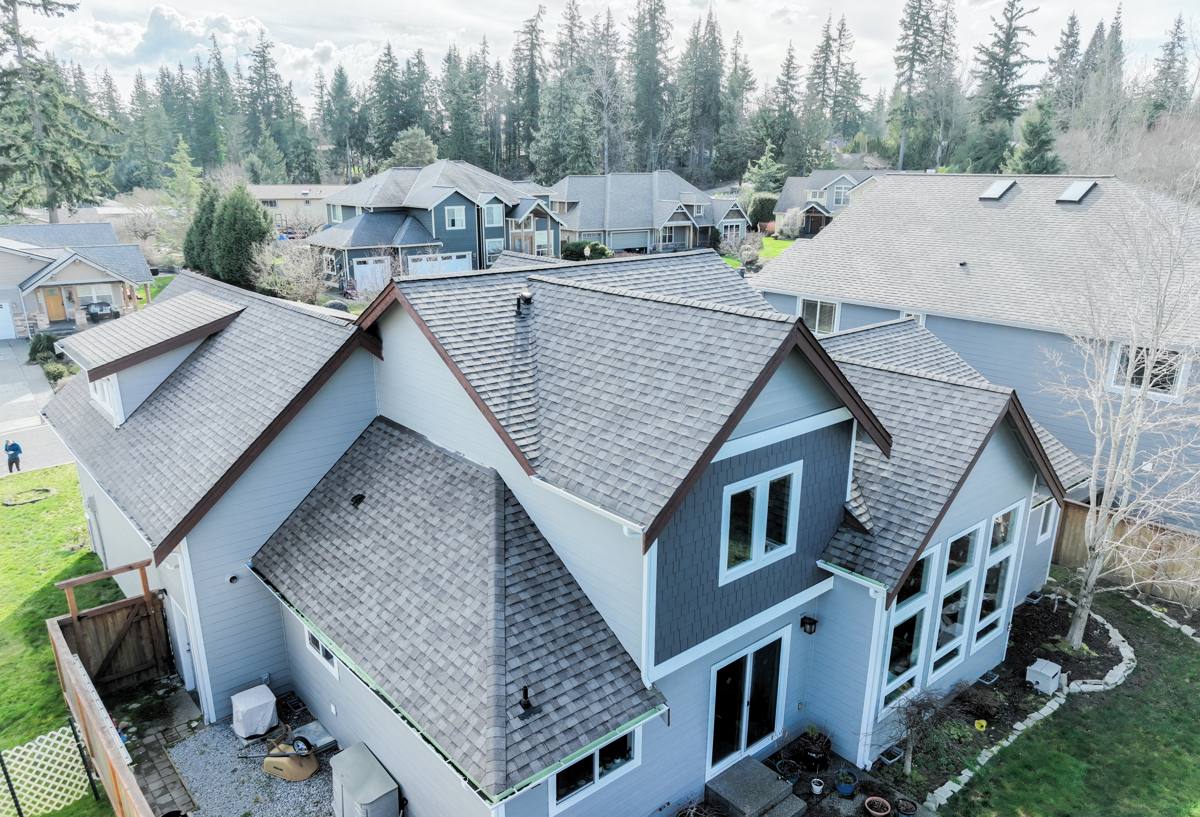
What "Correct" Actually Means on a Siding Replacement
A siding replacement is not just pulling off old panels and nailing up new ones. Done right, it's a full envelope job. Skipping any of the following steps is how homeowners end up redoing the same wall again in eight or ten years instead of thirty:
- Full tear-off to bare sheathing, not an overlay on top of failing siding
- Inspection and repair of any rotted sheathing or framing found underneath
- New weather-resistive barrier installed shingle-style so water sheds outward, not inward
- Correct window, door, and penetration flashing — the single most common source of hidden rot
- A drainage gap or rainscreen approach where wall assembly and exposure call for it
- Proper fastener type, spacing, and embedment for the specific siding product
- Factory-finished or field-finished trim and caulking done to the manufacturer's actual spec
Any contractor can make new siding look good from the curb for the first year. The difference shows up five, ten, and twenty years later, and it's almost always traceable back to what happened at the sheathing and flashing stage, not the visible panel itself.
Why We Only Install James Hardie Fiber Cement
We've made a deliberate call as a company: we install James Hardie fiber cement siding and nothing else. Not vinyl, not LP SmartSide, not Cemplank or Allura, not primed spruce or cedar. That's not a marketing angle — it's what we're willing to stand behind on homes in this climate.
Vinyl siding is affordable and low-maintenance in the sense that it doesn't need painting, but it's a thin, flexible material that expands and contracts with temperature swings and can crack or warp under the kind of driving, wind-pushed rain Fairhaven gets off the water. Wood and primed spruce look great on day one, but they demand consistent repainting and caulking to stay sealed — miss a maintenance cycle in a damp, moss-prone microclimate and rot can start before it's visible. Engineered wood products like LP SmartSide use resin-treated wood strand technology that performs reasonably well, but it's still a wood-based product with wood's fundamental vulnerability to sustained moisture exposure, which matters most in exactly the kind of long, wet winters this area gets.
James Hardie fiber cement is cellulose fiber, sand, and cement — non-combustible, dimensionally stable, and engineered specifically to resist the kind of moisture cycling that breaks down other materials. Hardie's HZ5 product line is formulated for harsher, wetter climates like the Pacific Northwest, and the ColorPlus factory finish is baked on under controlled conditions rather than sprayed on-site, which means better adhesion and a longer stretch before repainting is ever needed. It's also backed by a strong, transferable warranty — worth something when the product is actually installed to spec, which is the other half of the equation we control directly.
What We're Not Saying
We're not claiming vinyl or wood siding is garbage, or that every other product fails. Plenty of siding materials perform fine in the right application with the right maintenance. We're saying that for the specific combination of salt air, sustained rain, and moss exposure that Fairhaven homes deal with, fiber cement is the material we're comfortable standing behind long-term — so it's the only thing we put on a wall.
Signs a Fairhaven Home Needs Replacement Rather Than Repair
Not every siding problem calls for a full replacement. But a few signs usually mean patching won't hold:
- Soft or spongy spots when you press on the siding, especially near the bottom courses or under windows
- Persistent moss or algae growth that returns within weeks of cleaning
- Paint that's failing across large sections rather than one or two spots
- Visible warping, buckling, or gaps that have widened over a season or two
- Consistently damp or musty smells near exterior walls inside the home
- Siding that's original to a home built more than 25-30 years ago
If it's isolated to one wall or a small section, a targeted repair may make sense. If it's spread across multiple elevations, especially the north- and west-facing walls that take the most weather, full replacement is usually the more honest recommendation — and the more cost-effective one over time.
Our Process for a Fairhaven Siding Replacement
1. On-Site Assessment
We walk the exterior, check for soft spots and existing damage, and look at how the home is oriented relative to prevailing wind and rain. A home facing the water directly gets a different exposure conversation than one tucked behind a hill or trees.
2. Tear-Off and Sheathing Inspection
Old siding comes off completely. Any rot or moisture damage in the sheathing gets addressed before anything new goes up — this is the step that gets skipped by crews trying to move fast, and it's the one that determines whether the new siding lasts.
3. Weather Barrier and Flashing
New weather-resistive barrier goes on correctly lapped, with flashing detailed at every window, door, and penetration. This is where most long-term leaks actually originate, not in the siding panels themselves.
4. Hardie Installation to Manufacturer Spec
Panels, fasteners, and clearances are installed to James Hardie's published installation guidelines — not general carpentry judgment. Spec compliance is also what keeps the manufacturer's warranty intact if it's ever needed.
5. Trim, Caulking, and Final Finish
Trim details and caulking are finished to match the ColorPlus system so the whole envelope performs as one assembly, not a patchwork of parts.
Cost Factors on a Fairhaven Siding Job
Every home is different, but a few factors consistently move the price on a siding replacement in this area:
| Factor | Why It Matters Here |
|---|---|
| Extent of sheathing damage found at tear-off | Salt air and long moss season increase odds of hidden rot behind older siding |
| Home size and number of stories | More wall area and higher work means more labor and equipment |
| Trim and architectural detail | Bay windows, multiple gables, and dormers add cutting and flashing time |
| Siding profile and exposure chosen | Lap width, texture, and color all affect material cost within the Hardie line |
| Site access and staging | Waterfront and hillside lots can limit equipment access and add labor |
We give straightforward, honest numbers based on what we actually find on your home — not a low estimate that grows once the walls are open.
Why Local Experience in Fairhaven Actually Matters
A crew that regularly works Fairhaven and the surrounding Glenhaven area already understands how this specific stretch of coastline behaves — which walls take the worst of the weather, where moss tends to establish first, and how salt exposure differs from a job a few miles inland. That's not something you can fully substitute with a generic install manual. It shows up in decisions like where to add extra flashing attention, how to detail a wall that faces directly into prevailing wind-driven rain, and which parts of a home deserve the closest inspection at tear-off.
Keeping New Siding Performing Through Moss Season
Fiber cement siding installed correctly needs very little upkeep, but a short annual routine keeps it looking and performing its best through the wet months:
- Rinse siding gently once or twice a year to clear salt residue and early moss growth
- Keep gutters clear so water isn't sheeting down walls it shouldn't touch
- Trim back vegetation that shades walls and keeps them damp longer than necessary
- Check caulking at trim joints periodically and touch up if it starts to separate
- Address any impact damage promptly rather than letting a chip sit exposed
If your Fairhaven home's siding is showing its age or you're just weighing options before winter, we're happy to take a look and give you a straightforward, no-pressure estimate. Use the form below to get started.