 Glenhaven Siding
 Geneva's Siding Has a Harder Job Than Most
Homes in the Geneva area of Glenhaven sit under a combination of weather stresses that most siding products were never designed to handle at once: salt-laden air moving in off the water, long stretches of driving rain, and a moss season that can run half the year in the shade of mature evergreens. Any one of those is manageable. Together, they shorten the life of the wrong siding material fast.
Salt air is corrosive to fasteners and finishes, and it accelerates the breakdown of anything that relies on a painted or coated surface film rather than a material that's colored all the way through. Driving rain doesn't just wet a wall — in Whatcom County's wind patterns it drives water sideways and upward under laps and trim, which means the water management behind the siding matters as much as the siding itself. And moss doesn't just sit on a roof; it colonizes damp, shaded siding surfaces too, holding moisture against the wall long after a storm has passed.
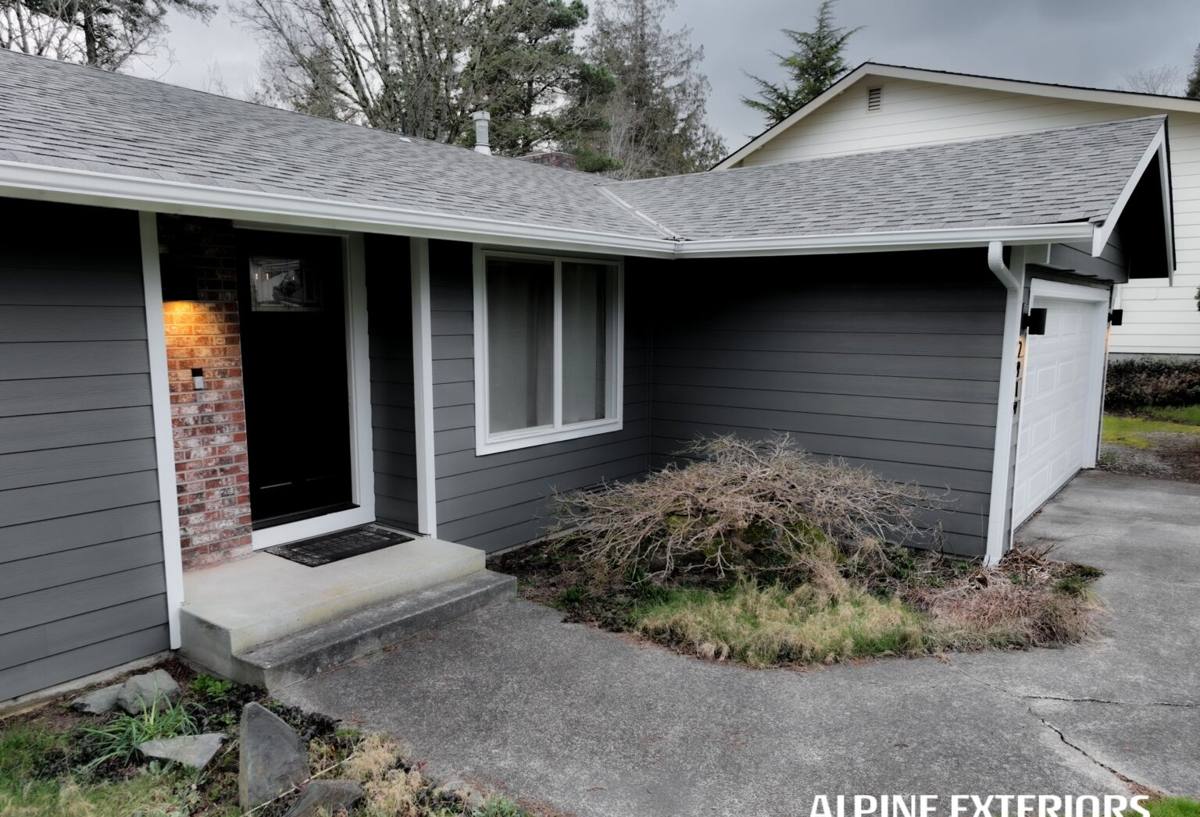
What This Climate Does to the Wrong Material
We get called out to a lot of Geneva homes where the siding looks fine from the street but is failing where you can't see it. Wood-based products swell and check when they take on repeated moisture cycles. Vinyl doesn't rot, but it doesn't stop water either — it relies almost entirely on what's behind it, and in a high-rain, high-humidity area that puts a lot of pressure on flashing and house wrap that may be decades old. Engineered wood products can perform well for years and then fail quickly once a seal is compromised, because the substrate itself isn't moisture-resistant.
None of this means those products are junk. It means they ask a homeowner to get every detail of installation and long-term maintenance right, in a climate that doesn't forgive mistakes. That's the honest reason we standardized on one material instead of offering all of them.
Why We Install Only James Hardie Fiber Cement
James Hardie siding is fiber cement — sand, cement, and cellulose fiber, non-combustible, and dimensionally stable in a way that wood-based and vinyl products can't match. It doesn't swell, warp, or provide fuel for pests. The ColorPlus factory finish is baked on rather than field-applied, which matters directly here: a factory-cured finish holds up to salt air and UV exposure far longer than a job-site paint coat, and it's backed by its own dedicated warranty against fading and peeling. Hardie also engineers specific product lines for different climate zones (HZ5 for areas with freeze-thaw exposure, HZ10 for warmer, wetter regions), so the board itself is matched to the moisture and temperature profile of where it's installed rather than being one generic product everywhere.
What a Correct Installation Involves in Geneva
Fiber cement siding performs the way it's supposed to only when it's installed to Hardie's published specifications — and skipping steps is where most "siding failures" actually come from, not the material itself. In a location dealing with wind-driven rain and salt exposure, a few details matter more than usual:
- Rainscreen gap: A ventilated air gap between the siding and the water-resistive barrier lets any moisture that does get past the cladding drain and dry out, instead of sitting against the wall sheathing.
- Flashing at every penetration: Windows, doors, hose bibs, and vents all need proper head flashing and drainage detailing — this is the single most common place we find water damage on older Geneva homes during tear-off.
- Correct fastener spacing and type: Hardie specifies fastener placement, embedment depth, and corrosion-resistant fastener types precisely; over-driven or under-driven nails are a leading cause of premature panel movement and paint stress.
- Proper clearance at grade and roofline: Siding held too close to the ground, a deck, or a roof plane wicks up moisture and stays damp longer — a real problem anywhere moss thrives.
- Factory-mitered or properly caulked joints: Butt joints and trim intersections are where water intrusion starts if they're rushed.
None of this is exotic. It's just detail work that takes longer to do correctly than to do quickly — which is exactly where corners get cut on lower-bid jobs.
Our Process for Geneva Homes
Because we already work this part of Whatcom County regularly, we're familiar with the moisture patterns and common construction ages in and around Geneva, and we don't have to relearn local conditions on every job.
1. On-Site Assessment
We look at the existing siding, the condition of the wall sheathing where accessible, current flashing details, and any moss or moisture staining that points to a drainage problem rather than just a cosmetic one.
2. Tear-Off and Substrate Check
Old siding comes off so we can actually see the sheathing underneath. This is where hidden rot or past water damage shows up — better to find and address it now than to bury it under new siding.
3. Water Management First
House wrap or building paper, flashing, and the rainscreen gap go in before a single piece of Hardie board is installed. This layer does most of the long-term work; the siding is the second line of defense, not the only one.
4. Installation to Spec
Fastener pattern, joint treatment, and clearances follow Hardie's installation requirements, which is also what keeps the manufacturer's warranty intact.
5. Final Walkthrough
We review the finished work with the homeowner, including trim, caulking lines, and any touch-up needs, before calling the job done.
Fiber Cement vs. Other Siding Materials for This Climate
| Material | Moisture Behavior | Maintenance in Salt Air / High Rain | Typical Finish Life |
|---|---|---|---|
| James Hardie Fiber Cement | Dimensionally stable; does not rot or swell | Low — factory-cured ColorPlus finish resists fading | Long, warrantied finish |
| Vinyl | Doesn't absorb water but relies entirely on the barrier behind it | Can become brittle and discolor faster near salt air | Finish is not repaintable if it fades |
| Cedar / Primed Spruce | Absorbs moisture; prone to swelling, checking, and rot without diligent upkeep | High — regular refinishing and sealing needed | Depends heavily on maintenance schedule |
| Engineered Wood (e.g., LP SmartSide) | Treated to resist moisture, but substrate can fail quickly once a seal is broken | Moderate — caulking and seams need regular inspection | Performance drops sharply after a breach |
What Drives Cost on a Geneva Project
| Factor | Why It Matters Here |
|---|---|
| Substrate condition | Hidden moisture damage found during tear-off may need repair before new siding goes on |
| Amount of trim and detail work | Windows, corners, and roofline transitions all need flashing and finish work |
| Siding profile and color | Lap width and ColorPlus color selection affect material cost |
| House size and stories | Access and labor time scale with square footage and height |
| Removal and disposal | Tear-off of old siding adds labor and haul-away cost |
We won't know your real number until we see the house, but we can walk you through where your project falls on this list during the estimate.
Simple Maintenance Once It's Installed
Part of why we like fiber cement for this area is how little ongoing work it actually asks for compared to wood-based alternatives. A basic yearly routine covers most of it:
- Rinse the siding down once a year to clear salt residue and organic buildup before moss gets a foothold
- Keep gutters clean so overflow doesn't run down the wall face
- Trim back vegetation that keeps a section of wall shaded and damp
- Re-caulk any trim joints if you notice gaps opening up over time
- Walk the exterior after major storms and check for any impact damage
Signs It's Time to Replace, Not Patch
Not every siding problem means a full replacement, but a few signs point toward it rather than a repair:
- Soft or spongy spots when you press on the wall, indicating rot in the sheathing behind the siding
- Persistent moss or dark staining in the same spots year after year, even after cleaning
- Paint or finish that's peeling or chalking across large sections rather than one localized area
- Visible warping, buckling, or gapping at seams and corners
- Recurring interior signs — musty smells or discoloration on interior walls near exterior corners
If you're seeing any of these on a Geneva home, it's worth having someone look at what's happening behind the siding, not just at the surface.
If you'd like an honest look at your home's siding and what it would take to do it right, we offer free, no-pressure estimates for Geneva-area homeowners — just fill out the form below to get started.