 Glenhaven Siding
 Sudden Valley's Climate Is Hard on Ordinary Siding
Homes in Sudden Valley sit in one of the more demanding pockets of Whatcom County when it comes to exterior wear. The combination of salt-laden air moving in off the Sound, long stretches of driving rain, and a moss season that can run for months puts steady pressure on whatever material is nailed to the wall. Siding here doesn't fail all at once — it fails slowly, through years of moisture cycling, algae growth, and UV exposure that most manufacturers never account for in their marketing photos.
That's the backdrop for every siding decision we make on a Sudden Valley home. We're not choosing a product because it looks good in a showroom; we're choosing it because it has to survive a specific set of conditions, year after year, without babysitting from the homeowner.
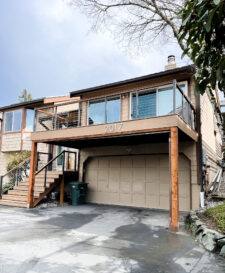
What Salt Air, Rain, and Moss Actually Do to a Wall
Salt Air and Corrosion
Airborne salt doesn't just affect homes directly on the water. It travels on wind and settles on siding, trim, and fasteners throughout the area, accelerating corrosion in anything metal and slowly breaking down finishes that weren't engineered to resist it. Over time, this shows up as fastener bleed, chalking paint, and premature fading on lower-grade materials.
Driving Rain and Water Intrusion
Wind-driven rain doesn't just wet the surface of a wall — it finds every gap, unsealed seam, and poorly lapped joint and pushes water behind the siding. Once moisture gets past the cladding, it's the water-resistive barrier, flashing, and drainage plane doing the real work. Siding that swells, warps, or wicks water at the edges turns a manageable amount of rain into a long-term rot problem.
Moss and Sustained Moisture
Whatcom County's moss season isn't a cosmetic issue — it's a moisture issue. Moss holds water against a surface far longer than open air would, and on shaded, north-facing, or tree-sheltered walls (common throughout Sudden Valley's wooded lots) that sustained dampness is exactly what feeds rot in wood-based products and coating failure in lower-grade composites.
Why We Install Only James Hardie Fiber Cement
We made a deliberate decision to standardize on James Hardie fiber cement siding for every home we work on, including here in Sudden Valley. Fiber cement is non-combustible, dimensionally stable, and doesn't swell or rot the way wood-based products can when they take on moisture. Hardie's HZ5 product line is specifically engineered for climates like ours — wet, temperate, and prone to long damp stretches — with a formulation built to resist moisture damage rather than just tolerate it.
We also value the factory-applied ColorPlus finish, which is baked on under controlled conditions rather than field-applied. That matters directly for the salt-air and UV exposure common here: a factory finish holds color and resists fading far more consistently than paint applied on-site after installation, and it carries its own finish warranty on top of the substrate warranty.
Standardizing on one product also means our crews aren't relearning installation details from job to job. Every fastener pattern, clearance measurement, and flashing detail we use on a Sudden Valley home is one we've repeated many times, on the same climate, with the same failure points to watch for.
What a Correct Fiber Cement Installation Involves
Fiber cement siding is only as good as the installation behind it. The product itself is durable, but a rushed or generic install can undermine that durability in ways that don't show up until years later.
Water Management Comes First
Before a single plank goes up, the wall needs a proper water-resistive barrier and, on most Sudden Valley homes, a rainscreen gap that lets any moisture that does get behind the siding drain and dry out instead of sitting against the sheathing. This step matters more here than in drier climates precisely because of how much rain the wall will see over its lifetime.
Clearances and Fastening
James Hardie specifies clearances from grade, roofing, decks, and other transitions for a reason — those gaps let water shed away from the siding instead of wicking up into it. We hold to those clearances rather than treating them as optional. Fasteners are placed according to Hardie's blind- or face-nailing specifications, using corrosion-resistant fasteners appropriate for our salt-air exposure.
Joints, Flashing, and Trim
Every butt joint, window head, and penetration is a place where wind-driven rain wants to get behind the cladding. Correct flashing at these points — not just caulk — is what actually keeps water out over the long run. Caulk has its place, but it's a backup, not a substitute for proper flashing and lapping.
Finish Integrity
With ColorPlus products, cut edges and field touch-ups use Hardie's matched touch-up products so the factory finish's protection isn't compromised at the seams. Sloppy field painting is one of the more common ways a good product gets shortchanged by a careless install.
Choosing the Right Hardie Line for a Sudden Valley Home
Not every Hardie product or profile is the right fit for every house, and part of our job is matching the product to the home rather than defaulting to whatever is easiest to install.
| Product | Best Fit For | Why It Fits Sudden Valley |
|---|---|---|
| HardiePlank Lap Siding (HZ5) | Most single-family homes | Traditional profile, engineered for wet climates, wide color range |
| HardiePanel Vertical Siding | Modern facades, accent walls, gables | Clean lines, pairs well with board-and-batten detailing on shaded or wooded lots |
| HardieShingle Siding | Craftsman and cottage-style homes | Textured look without the moisture risk of real wood shingles |
| HardieTrim Boards | Corners, window and door surrounds | Matches fiber cement performance at the most water-exposed edges |
Color selection matters here too. Darker ColorPlus tones can help mask early moss and algae staining between cleanings, while lighter tones show it sooner but read as more traditional on many Sudden Valley homes. Neither is "wrong" — it's a conversation about maintenance tolerance as much as looks.
Our Process on a Sudden Valley Project
- On-site assessment: We walk the exterior, check for existing moisture damage, and evaluate shade patterns, drainage, and grade clearance specific to the lot.
- Moisture and sheathing check: Before any new siding goes on, we confirm the sheathing underneath is sound. Covering rot with new siding only hides the problem.
- Water-resistive barrier and rainscreen: Installed to current best practice for our rainfall exposure, not just minimum code.
- Product and color selection: Matched to the home's style, sun exposure, and the homeowner's maintenance preferences.
- Installation: Hung to James Hardie's fastening and clearance specifications, with flashing detailed at every joint and penetration.
- Final walkthrough: We review the completed work with the homeowner and flag any maintenance items specific to the site — shaded areas prone to moss, gutters that need extra attention, and so on.
Living With Fiber Cement Siding in a Moss-Prone Climate
Fiber cement dramatically reduces the maintenance burden compared to wood siding, but "low maintenance" isn't "no maintenance" anywhere in Whatcom County. A little seasonal attention goes a long way toward protecting the investment.
- Rinse siding annually with a garden hose and soft brush — avoid high-pressure washing, which can force water behind joints and damage the finish.
- Keep gutters clear so overflow doesn't run down the face of the siding and feed moss growth.
- Trim back vegetation and tree limbs that keep walls shaded and damp longer than they need to be.
- Check caulking at trim and penetrations every year or two and have it renewed before it fails, not after.
- Address any moss or algae growth early with a gentle cleaning approach rather than letting it establish.
- Have siding inspected after major windstorms for any impact damage or loosened trim.
What Fiber Cement Siding Costs to Install
Every project is different, but the main cost drivers are consistent from house to house. We walk through these with every Sudden Valley homeowner before providing a number, rather than quoting off a square-footage average that ignores the specifics of the home.
| Factor | Impact on Cost |
|---|---|
| Existing sheathing condition | Rot repair or sheathing replacement adds cost but is not optional if found |
| Home size and wall complexity | More corners, gables, and trim details increase labor time |
| Product line and profile | Panel, lap, and shingle styles carry different material and install costs |
| Color selection | Standard ColorPlus colors vs. specialty finishes can shift pricing |
| Site access | Wooded, sloped, or tight lots common in Sudden Valley can affect staging and labor |
| Removal of existing siding | Tear-off and disposal of old material is a separate line item from installation |
Why Local Experience in Sudden Valley Matters
A crew that already works in this community knows what to expect before they show up: the shade patterns that keep certain walls damp longer, the wind exposure that pushes rain into places a drier neighborhood wouldn't worry about, and the access considerations that come with wooded lots. That familiarity shortens the assessment phase and reduces surprises mid-project. It also means we're building a reputation in this specific community, not a generic service area — the work has to hold up because we're the ones who'll be asked to service it down the road.
If your Sudden Valley home is due for new siding, or you're seeing early signs of moisture damage, moss buildup, or a finish that's fading faster than it should, we're happy to take a look. We offer a free, no-pressure estimate — walk the property with you, answer your questions honestly, and give you a clear picture of what correct fiber cement installation looks like for your specific home.