 Glenhaven Siding
 Geneva sits along the Lake Whatcom shoreline in Whatcom County, and a deck out here spends its life under a different set of pressures than one built on a dry inland lot somewhere else in the state. Marine-influenced air carries salt and moisture that work steadily into fastener heads, brackets, and any exposed hardware. Driving rain during the fall and winter months finds its way into any ledger connection or decking gap that wasn't detailed correctly the first time. Add the tree cover common around the lake, which keeps a lot of deck surfaces shaded and slow to dry, and you get a moss season that runs longer here than homeowners moving in from drier parts of Washington usually expect. A deck replacement done right for a Geneva property accounts for all of that starting at the framing, not just at the decking surface.
What the Climate Does to a Deck Near Geneva
Most deck failures we see in this area don't start with the decking boards people notice first — they start underneath, at the ledger board, the joists, or the footings, in places that stay wet longer than they should between rain events. Sustained damp conditions near the lake mean end grain on framing lumber, fastener penetrations, and any spot where two pieces of wood sit tight against each other stay saturated for days at a time rather than drying out between storms. That's exactly the environment that drives wood rot, and it's also the environment moss and algae need to establish on horizontal surfaces like decking and stair treads.
Salt-tinged air moving through the region accelerates corrosion on anything metal — fasteners, joist hangers, post bases, and railing hardware all take more of a beating here than they would inland. A deck built with standard, non-rated fasteners can develop rust streaks and weakened connections years before the wood itself shows real wear. None of this means a deck here is doomed to a short life. It means the standard for materials and detailing has to be higher than "good enough for a dry climate," because the margin for shortcuts is smaller.
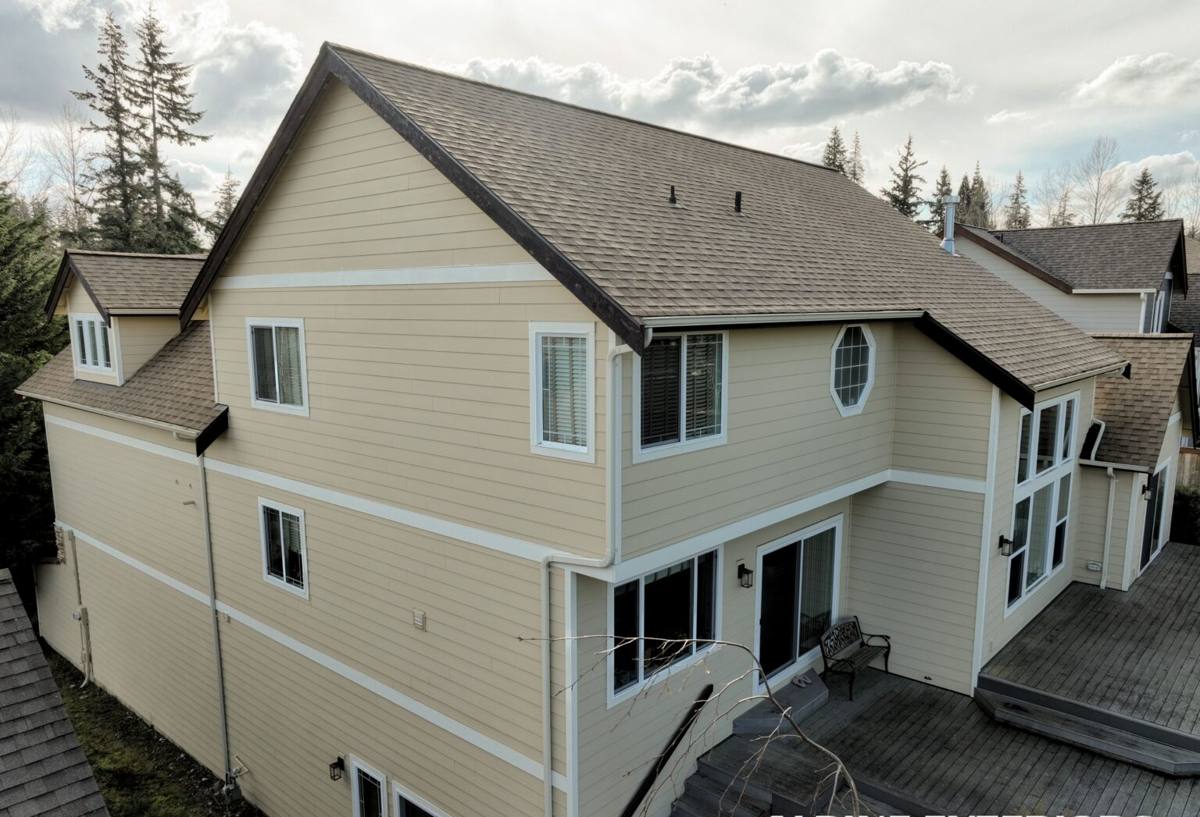
Signs a Deck Needs Replacement, Not Another Repair
Not every tired-looking deck needs to come out. But there's a point where patching boards or resealing the surface stops being a real fix and starts being a way to delay an inevitable full rebuild. We look at a few things when we're deciding which category a deck falls into:
- Soft, spongy, or spring-loaded footing when you walk across the deck, especially near the ledger or around post locations
- Visible rot, splitting, or discoloration at the ledger board where the deck attaches to the house
- Fasteners or joist hangers showing rust bleed, corrosion, or visible failure
- Persistent moss or algae growth that returns within weeks of cleaning, even after treatment
- Railings or stair stringers that feel loose or flex under normal use
- A structure built to an older code cycle, without documentation that footings and framing were sized for current load requirements
- Cupping, checking, or fastener pop-through across most of the decking surface rather than isolated boards
A deck with one or two of these issues confined to a small area might be a legitimate repair candidate. A deck showing several of them at once, or showing structural symptoms like soft framing or failing connections, is telling you the problem isn't cosmetic anymore.
What a Correct Deck Replacement Involves
A full deck replacement is a rebuild of a structure, not a surface swap, and treating it that way is what determines whether the new deck lasts fifteen years or thirty. The work generally breaks down into a few distinct stages, each of which matters more in a wet climate than it would somewhere drier.
Demolition and Assessment
Tearing out the old deck is also the point where we get an honest look at what's actually going on underneath — the condition of the ledger connection, any rot that's spread into the house's rim joist, and the state of existing footings. This is often where a homeowner learns whether a problem they thought was cosmetic has actually reached the framing.
Footings and Framing
Footings need to be sized and set to current code requirements, not just matched to whatever was there before, especially on older properties where the original deck may predate current standards. Framing lumber, joist spacing, and beam sizing all get selected to the load and span requirements of the specific deck design, and every framing connection — joist hangers, post bases, structural screws — gets specified in a corrosion-resistant rating appropriate for this climate, not a generic interior-grade fastener.
Ledger Attachment and Flashing
Where the deck attaches to the house is the single most consequence-heavy detail on the whole project, covered in more depth below. Getting it wrong doesn't just risk the deck — it risks water intrusion into the house itself.
Decking, Railing, and Stairs
The visible finish work goes on last: the decking surface, railing system, and stairs, installed with fastening patterns and gapping that account for the material's expected movement and this region's moisture exposure.
The Ledger Board: the Detail Most Decks Get Wrong
If there's one connection point that determines whether a deck stays sound for decades or starts failing within a handful of years, it's the ledger board — the piece that attaches the deck directly to the house's framing. Done correctly, the ledger is through-bolted (not just nailed) into the house's rim joist, sits behind proper flashing that directs water away from the house sheathing rather than into it, and includes a gap or standoff that lets water and air move behind the deck framing instead of trapping moisture against the house.
Done incorrectly — which is common on older decks and on repairs that reuse an existing ledger connection without inspecting it — the ledger sits tight against the siding with no flashing, water tracks behind it every time it rains, and the house's own wall framing starts rotting from the inside, often long before anyone notices from the outside. In a climate with as much sustained rain as this region gets, that's not a minor construction detail. It's the difference between a deck replacement and a future siding and framing repair project that could have been avoided.
Choosing a Decking Material for This Climate
The decking surface itself is the most visible decision on the project, and it's also the one homeowners have the most opinions about going in. Every material below can perform well here if it's installed correctly and maintained as intended — the honest differences are in moisture behavior, maintenance load, and how each one ages over time in a shaded, damp environment.
| Material | Moisture Behavior Near the Lake | Maintenance Reality |
|---|---|---|
| Composite decking | Doesn't absorb water or rot; resists moss better on capped products | Occasional cleaning to prevent surface algae film; no staining or sealing required |
| Pressure-treated pine | Treatment resists rot in the wood itself, but surface stays damp longer in shade | Needs periodic sealing or staining; more prone to visible moss without upkeep |
| Cedar | Naturally rot-resistant but still absorbs and releases moisture with humidity | Regular sealing or oiling needed to hold color and resist graying and checking |
| Tropical hardwood (e.g., ipe) | Very dense and naturally durable, but expensive and unforgiving to install poorly | Low rot risk but still benefits from periodic oiling; installation sensitivity is higher |
For a lot of Geneva-area homeowners dealing with heavy shade and a long wet season, composite decking ends up being the practical choice simply because it removes moisture absorption and staining maintenance from the equation entirely. That said, homeowners who want the look and feel of real wood and are willing to keep up with sealing schedules can get a long service life out of cedar or a quality pressure-treated product — it's a legitimate trade-off between upfront cost, maintenance commitment, and appearance, not a case where one option is simply wrong.
What Drives Deck Replacement Cost
Every deck project is priced around its own specifics, but the same handful of factors move the number up or down on almost every job we quote in this area:
| Factor | Why It Matters |
|---|---|
| Deck size and shape | Square footage and the number of angles, steps, or level changes directly drive material and labor |
| Height above grade | Taller decks need more substantial footings, posts, and often guardrails to code |
| Decking material chosen | Composite typically costs more upfront than pressure-treated but less over time in maintenance |
| Existing structure condition | Rot found in the ledger or rim joist during demo adds scope that isn't visible until tear-out |
| Railing style and stairs | Cable rail, glass panel, or custom stair configurations cost more than standard baluster railing |
| Permit and inspection requirements | Whatcom County permitting adds time and a line item but confirms the structure is built to code |
We won't quote a price without seeing the property, but these are the factors that actually move the number, and we'll walk through each one specific to your deck before giving you a figure.
Our Deck Replacement Process
- On-site assessment: we look at the existing deck, the ledger connection, and the ground conditions to understand what we're actually working with before recommending anything.
- Design and material selection: size, layout, decking material, and railing style get decided together, with a clear look at cost trade-offs for each choice.
- Permitting: we handle the permit and inspection requirements that apply to the project rather than leaving that step to the homeowner.
- Demolition: the old structure comes out, and we inspect the ledger and rim joist area for hidden rot before framing begins.
- Framing and ledger installation: footings, posts, joists, and a properly flashed ledger connection go in to current code and this climate's standard.
- Decking, railing, and stairs: the finish work goes on last, fastened and gapped for the material's expected movement in this climate.
- Final walkthrough: we go over the finished deck with you directly, including any maintenance expectations for the material you chose.
Why a Crew That Already Works Geneva Matters
A lot of what separates a deck that holds up for decades from one that starts having problems within a handful of years comes down to judgment calls that don't show up on a generic set of plans: how much standoff a ledger needs given a specific wall's exposure, where a deck is likely to stay shaded and slow-drying given the tree cover and the property's orientation to the lake, and which fastener rating is actually justified given how much salt-influenced air moves through a given part of Whatcom County. Crews who work this area's exteriors regularly have already seen these patterns repeat from property to property, and that familiarity shows up in decisions made on-site rather than in a sales conversation.
It also matters for follow-through. A deck is a structure attached to your house, and if something needs to be revisited a few years down the road, having worked with a local crew that's still around and familiar with the property makes that conversation a lot simpler than starting over with someone new.
What to Ask Before Hiring a Deck Contractor
- Are they licensed and insured to perform deck and structural construction work in Washington State?
- Will they pull the required permit, or are they suggesting you skip it?
- Can they explain their ledger flashing and fastener approach in specific terms, not just general reassurance?
- Do they size footings and framing to current code requirements rather than just matching what was there before?
- What does their workmanship warranty actually cover, and for how long?
A contractor who can't answer these directly, or who seems eager to skip permitting to save time, is telling you something important about how the rest of the project is likely to go.
What to Expect if You're Considering a Project
Most homeowners near Geneva reach out about a deck for one of two reasons: something specific is bothering them — soft framing, a failing ledger connection, persistent moss, or a deck that's simply reached the end of its life — or they're planning ahead before a visible problem shows up, which usually opens up more design options and avoids emergency pricing. Either way, a straightforward look at the current structure tells us what's actually going on before any recommendation gets made.
We're glad to walk a Geneva-area property, take a real look at the existing deck's framing and ledger connection, and give you a direct assessment of whether replacement makes sense now or whether the structure has some life left in it. If you'd like that conversation, reach out below for a free, no-pressure estimate.