 Glenhaven Siding
 James Hardie Siding for Columbia Homes
Columbia is one of the areas in and around Glenhaven where a home's siding does real work, not just cosmetic work. Salt-tinged air, rain that comes in sideways as often as it falls straight down, and a moss season that stretches well past what most homeowners expect all put steady, cumulative pressure on whatever's covering the outside of the house. We install James Hardie fiber cement siding exclusively, and this page is specifically about what that means for a Columbia property: what the local climate demands from siding, what a correct Hardie installation actually involves, how we run a project here, and why it matters that the crew doing the work already knows this area.
We're not going to walk through every siding brand on the market. We made a professional decision years ago to install one system and stand behind it completely, and Columbia's exposure is a good example of why that decision holds up under real conditions rather than just looking good on paper.
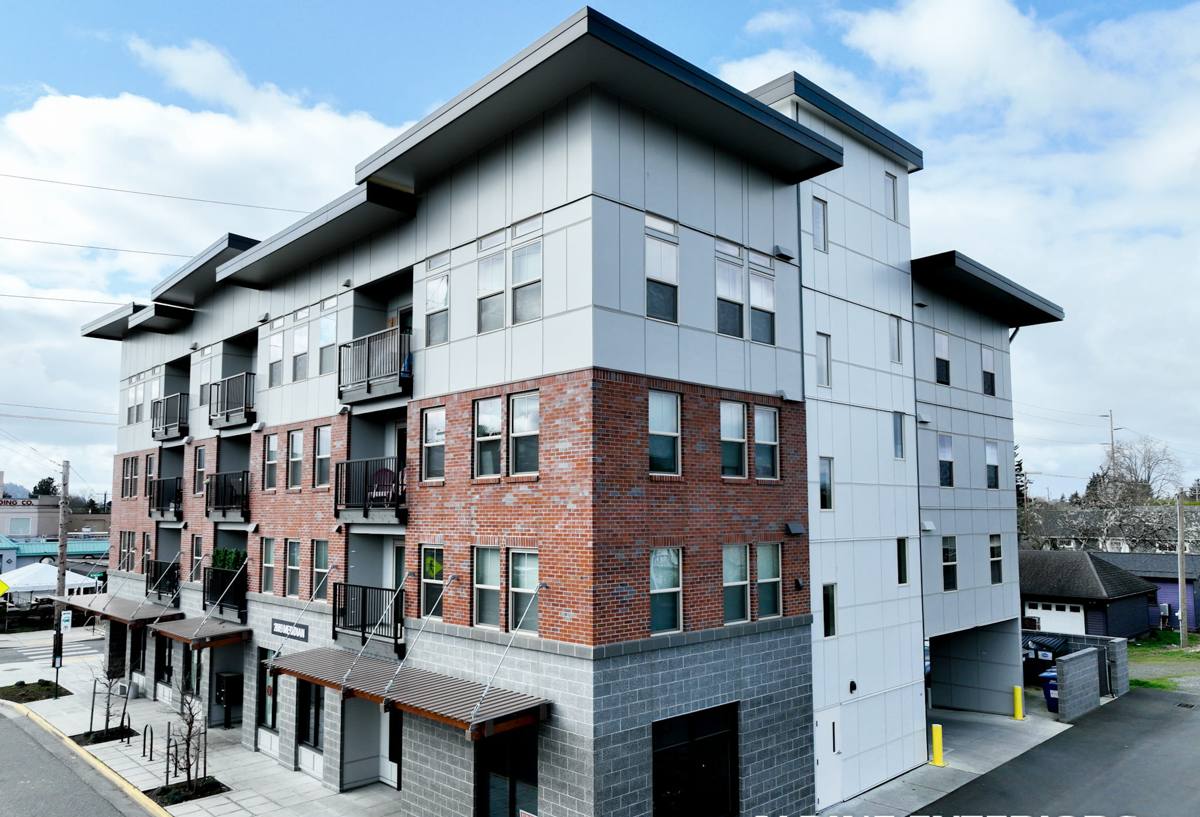
What Columbia's Climate Actually Puts Siding Through
Salt Air
Glenhaven's proximity to the water means homes throughout the area, including Columbia, pick up salt-laden moisture in the air on a regular basis. That salt exposure accelerates corrosion in fasteners, flashing, and any exposed hardware, and it wears down lower-grade paints and coatings faster than a drier inland climate ever would. Siding and trim that weren't specified with that in mind tend to show it early — chalky finishes, rust streaks below nail heads, and caulk joints that fail well ahead of schedule.
Driving Rain
Rainfall totals only tell part of the story here. What matters more is that Whatcom County's storms frequently push rain sideways into a wall rather than letting it fall straight down and shed off cleanly. That kind of wind-driven rain finds its way into lap joints, trim seams, and any spot where flashing was skipped or caulk was asked to do a flashing detail's job. A siding system that would hold up fine somewhere calmer can still let water in here if the installation details weren't handled correctly.
A Long Moss Season
Shaded walls, north-facing exposures, and any part of a Columbia lot with tree cover stay damp for extended stretches through most of the year, which is exactly the condition moss and mildew need to establish and spread. On wood-based or wood-look siding, that sustained dampness isn't just an appearance issue — it holds moisture against the wall assembly and, left alone, becomes a real path toward rot behind the siding, not just on top of it.
Why James Hardie Fits This Exposure
We install Hardie's HZ5 product line for this climate zone specifically, which is engineered for regions with sustained moisture exposure and freeze-thaw cycling rather than a generic, one-size-fits-all formulation. A few things about the system make it a genuine fit for Columbia, not just a brand preference:
- Non-combustible fiber cement core: it doesn't feed a fire the way wood-based or wood-derived siding can, which matters for household safety and often for insurance considerations.
- Factory-applied ColorPlus finish: color is baked on under controlled factory conditions rather than brushed on in the field, so it resists the fading and chalking that salt air and UV exposure cause over time far better than site-applied paint.
- Dimensional stability: fiber cement doesn't swell, cup, or warp the way engineered wood products can after repeated wet-season moisture cycles, which matters more here given how long that wet season runs.
- Strong transferable warranty: Hardie backs its products with a real warranty structure, provided the installation follows spec, which gives a homeowner actual protection rather than a marketing claim.
We don't install vinyl, LP SmartSide, Cemplank, Allura, primed spruce, or cedar. Every one of those products has a place in the broader market and plenty of homeowners who are satisfied with them elsewhere. But for Columbia's specific combination of salt, wind-driven rain, and a long wet season, we've made a professional call that one system we trust completely beats offering a cheaper option that quietly shifts maintenance risk onto the homeowner a few years down the line.
What a Correct Installation Involves
Choosing the right material only gets a Columbia home halfway there. The rest comes down to installation details that are easy to skip and expensive to fix later.
Fastening and Clearance
Fastening patterns need to account for wind exposure and moisture cycling rather than following a generic minimum. Siding also needs proper clearance from grade and from roof lines, decks, and patios below it — clearance that's often tighter than it should be on older homes, and one of the first things worth checking during a walkthrough.
Flashing and Joints
Joints should be lapped and detailed correctly, not simply butted together and caulked. House wrap and flashing need to actually integrate with the siding system rather than relying on caulk to bridge gaps that flashing should have covered in the first place. Window and door openings, roof-to-wall transitions, and any deck ledger attachment points are where sloppy flashing shows up as a leak first, often long before it's visible from the outside.
Choosing the Right Profile
Hardie offers several siding profiles, and the right one depends on the home's style and how much exposure a given wall sees, not just personal preference:
| Profile | Best Fit | Notes for Columbia's Climate |
|---|---|---|
| HardiePlank lap siding | Most traditional single-family homes | The most common and proven choice; horizontal laps shed driving rain effectively when installed with correct overlap |
| HardiePanel vertical siding | Gables, accents, modern-style homes | Fewer horizontal joints for water to find, often used on higher-exposure gable ends |
| HardieShingle | Craftsman or cottage-style homes | More seams overall, so flashing and installation care matter even more here |
Comparing Siding Options for a Columbia Home
Homeowners comparing materials before committing to a project deserve an honest look at the trade-offs, not just a sales pitch for whichever product we install.
| Factor | James Hardie Fiber Cement | Vinyl | Engineered Wood / Cedar |
|---|---|---|---|
| Moisture behavior in this climate | Does not absorb moisture into the core; resists swelling and rot | Doesn't absorb moisture but can warp or crack under temperature swings | Can absorb moisture at cut edges or coating failures, leading to swelling or rot over time |
| Fire resistance | Non-combustible | Can soften or melt under heat exposure | Combustible, wood-based material |
| Finish durability against salt air | Factory ColorPlus finish resists fading and chalking | Color is molded in but can fade and chalk with UV exposure | Depends heavily on field-applied coating quality and maintenance schedule |
| Ongoing maintenance | Periodic washing; no repainting needed with ColorPlus | Low maintenance but prone to cracking on impact | Requires regular recoating or painting to keep moisture out |
| Warranty structure | Strong transferable warranty when installed to spec | Varies by manufacturer, often shorter on finish | Varies; coating and substrate warranties are often separate |
None of these alternative products are without merit elsewhere. But when we weigh them against what Columbia's salt air, driving rain, and moss season actually do to a wall assembly over a couple of decades, fiber cement is consistently the material that holds up with the least maintenance and the fewest surprises.
How We Approach a Columbia Siding Project
- Walkthrough and assessment: we look at the existing siding, trim, and any visible trouble spots — moss, soft sections, gaps at joints — and talk through what's actually going on before recommending anything.
- Substrate check: once old siding comes off, we check the sheathing and framing underneath for hidden moisture damage, which is common on older homes where siding has been failing quietly for a while.
- Material and color selection: we help choose the right Hardie profile, texture, and ColorPlus color for the home, factoring in wall orientation and how much sun and salt exposure each side actually gets.
- Installation to spec: correct fastening, flashing, clearance, and joint detailing, done the same way whether it's a visible front elevation or a shaded side wall nobody sees.
- Final inspection and cleanup: a walkthrough to confirm the work meets both manufacturer spec and our own standard, plus a clean job site when we're done.
- Warranty paperwork: registering the installation so the homeowner has the transferable warranty documentation on file, not just a verbal assurance.
Why a Crew That Already Works Columbia Matters
A lot of what makes siding hold up in Columbia over the long run comes down to details a generic, one-time crew is more likely to miss: which wall orientations stay wet the longest through the winter, where moss tends to establish first, how much clearance siding actually needs above grade given how wet the ground stays, and how flashing needs to be layered so it performs through a full wet season rather than just passing a dry-day look-over. A crew that installs siding in this area regularly starts to see these patterns repeat from house to house, and that familiarity shows up in small, on-site judgment calls — fastener placement, where flashing is required versus where caulk is appropriate, exactly how a J-channel or corner detail should be handled — that a homeowner rarely notices directly but absolutely feels in how the home performs over the following decade.
Signs Your Columbia Home's Siding Needs Attention
- Moss or dark staining that returns quickly after cleaning, especially on shaded or north-facing walls
- Soft or spongy siding near the bottom of a wall or around window and door trim
- Rusting fasteners, corroding flashing, or chalky, faded finish
- Visible gaps at seams, corners, or trim joints
- Cracked, warped, or missing siding sections after a storm
- Paint or coating that keeps failing no matter how often it's redone
- Rising energy bills that may point to a wall assembly that's no longer sealing properly
What to Expect When You Reach Out
Most Columbia homeowners who contact us have noticed something specific — visible moss, a soft spot near a window, siding that's simply reached the end of its life — while others are planning ahead rather than reacting to a problem. Either way, we start with an honest look at what's actually happening on the house before recommending anything. If a section can be repaired and matched into existing Hardie siding, we'll say so. If the underlying issue calls for a full re-side, we'll explain why rather than defaulting to whichever answer is more profitable for us.
If you're in Columbia and thinking about new James Hardie siding, or just want an honest read on what your current siding is dealing with, we're glad to take a look. Reach out using the form below for a free, no-pressure estimate.