 Glenhaven Siding
 Sehome's Climate Puts Real Stress on Siding
Homes in the Sehome area of Glenhaven sit in a stretch of Whatcom County where the weather doesn't let up for long. Salt-laden air off the water works into seams and fasteners year-round, driving rain hits siding sideways during fall and winter storms, and the region's long, damp shoulder seasons keep shaded walls and north-facing elevations wet for weeks at a time. Add in a moss season that can run from late fall through spring, and you've got a climate that punishes any siding material with a weak spot in its moisture management.
This isn't a marketing exaggeration — it's the reason so many older homes in this part of Glenhaven show soft trim, peeling paint, or streaked and stained siding well before the rest of the house is due for updates. The siding on a Sehome home isn't just cosmetic. It's the first line of defense against a climate that's actively working to get behind it.
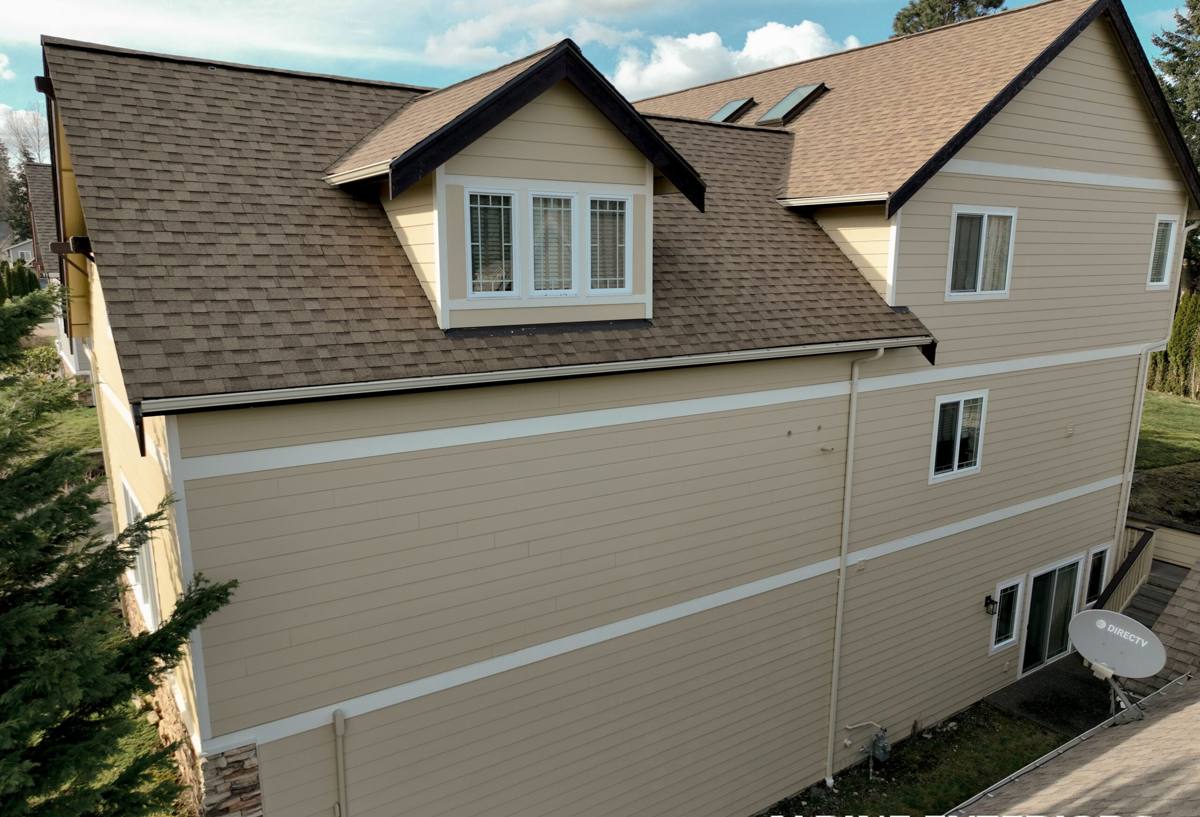
Why We Install Only James Hardie in This Area
We standardized on James Hardie fiber cement for every job we take on, including in Sehome, because it's the one siding system engineered specifically for climates like this one. James Hardie makes HZ5 products for exactly the wet, coastal-influenced conditions found across Western Washington — the formulation and factory finish are built around resisting moisture intrusion, not just shedding water when everything is installed perfectly.
Fiber cement is non-combustible, doesn't swell or rot the way wood-based products can, and holds its factory-applied ColorPlus finish far longer than field-painted materials. We won't put vinyl, LP SmartSide, primed spruce, cedar, or other fiber cement brands on a home in this area — not because those products have no merit anywhere, but because we've made a professional call that they carry trade-offs (moisture sensitivity, maintenance burden, or finish longevity) that don't hold up as well against Whatcom County's wet, salt-exposed weather. Hardie is what we stand behind here.
What HZ5 Actually Changes
HZ5 isn't a different look — it's a formulation adjustment for regions that see more moisture cycling and freeze-thaw stress than the national average. For a Sehome home, that means the board itself is engineered to handle the repeated wet-dry cycles that come with a long moss season and frequent driving rain, rather than just tolerating them.
Comparing What Homeowners in Sehome Actually Weigh
Most homeowners looking at siding options in this area are comparing the same handful of materials. Here's an honest look at how they stack up against the specific demands of this climate.
| Material | Moisture Behavior in Coastal/Wet Climate | Maintenance Over 15+ Years | Finish Longevity |
|---|---|---|---|
| James Hardie fiber cement (HZ5) | Engineered for wet, moisture-cycling climates; resists swelling and moisture intrusion when installed to spec | Low — occasional wash, no repainting for many years | Factory ColorPlus finish, long-lasting when correctly installed |
| Vinyl siding | Sheds water but seams and panels can allow moisture behind the cladding; can warp in temperature swings | Low, but cracking and fading show over time | Color is baked into the material but fades unevenly with UV and salt exposure |
| LP SmartSide / engineered wood | Wood-based core is more moisture-sensitive; edge and cut-end sealing is critical and easy to get wrong | Moderate — edges and seams need monitoring | Field or factory finish, but wood-based substrate is the weak point |
| Cedar / primed wood | Natural material, absorbs moisture readily; performs poorly without diligent upkeep in wet climates | High — repainting/staining on a recurring cycle | Finish breaks down fastest of the group, especially on rain-exposed elevations |
None of this means the other materials are junk — vinyl and engineered wood both have a place on plenty of homes. It's that when we're the ones putting our name on the install, we want a material where the climate is working with the product, not against it.
What a Correct James Hardie Install Involves
Fiber cement siding is only as good as the installation behind it. Hardie's own data and warranty terms are clear that most siding failures trace back to installation errors, not the product itself — and in a wet climate like Sehome's, those errors show up faster.
The Details That Matter Most Here
- A properly lapped weather-resistive barrier (WRB) behind the siding, with all seams and penetrations sealed before a single board goes up
- Correct flashing at windows, doors, and any horizontal trim — this is where driving rain finds its way in on poorly built walls
- Proper fastener spacing and type, driven flush (not overdriven) to avoid cracking the board or breaking the moisture seal
- Minimum clearance from grade, decks, patios, and roof lines so splashback and standing moisture don't sit against the bottom course
- Caulked and painted cut ends, since a factory-finished board that's been field-cut needs that cut edge sealed to keep water out
- Rainscreen or proper drainage plane detailing on elevations that take the brunt of wind-driven rain
Skip any one of these and you can end up with moisture trapped behind a product that's otherwise rated to handle this climate. That's the gap between "James Hardie siding" and "James Hardie siding installed correctly" — and it's the whole reason installation quality matters as much as the material choice.
Our Process, Start to Finish
Every Sehome job starts with an on-site look at the home — not a phone estimate. We check the existing wall assembly, look for any moisture damage or rot already present under the old siding, and assess drainage around the foundation and any low-clearance areas. From there:
- We walk the exterior with you and point out anything we find, good or bad, before any work is scoped
- We provide a written estimate that spells out the Hardie product line, color, and trim details specific to your home
- Old siding comes off and the wall sheathing gets inspected — any rot or damage gets addressed before new WRB goes on, not covered up
- WRB, flashing, and drainage details go in first, since this is the layer that actually keeps water out over the long run
- Hardie boards are installed to manufacturer spec, with attention to fastening, clearances, and sealed cut ends
- A final walkthrough with you, so you know exactly what was done and what maintenance (if any) it needs going forward
Color and Finish for This Setting
James Hardie's ColorPlus finish is factory-applied and baked on under controlled conditions, which gives it a more consistent, longer-lasting result than siding painted on-site — especially useful on a home that's going to take on salt air and UV exposure across every season. The available palette runs from deep, saturated tones to lighter coastal neutrals, and trim boards can be matched or contrasted depending on the look you're going for. Because the color is part of the manufactured board rather than a surface coat, it holds up better against the fading and chalking that shows up on painted wood siding in this area after a few wet seasons.
Warranty and Long-Term Value
James Hardie backs its fiber cement products with a strong, transferable non-prorated warranty — a real advantage if you plan to sell the home down the road, since that coverage moves to the next owner rather than resetting. ColorPlus finishes carry their own finish warranty separate from the substrate coverage. Warranty terms are tied to correct installation, which is another reason the installation details above aren't optional extras — they're what keeps the manufacturer's coverage intact if something ever does go wrong.
Why a Crew That Already Works Sehome Matters
Siding work in this part of Glenhaven isn't identical to siding work in a drier inland climate. A crew that's used to installing in Whatcom County's wet, salt-influenced conditions knows to slow down on flashing details, knows which elevations take the worst of the driving rain, and knows what moss growth on an old wall usually means underneath. That local familiarity shows up in fewer callbacks and a wall assembly that's actually built for the weather it's going to face, not just for a generic install checklist.
Living With James Hardie Siding Through Moss Season
Correctly installed Hardie siding needs very little from a homeowner, but a few habits go a long way in this climate:
- Rinse siding periodically to keep salt residue and organic buildup from settling into the surface, especially on shaded or north-facing walls
- Keep gutters clear so overflow doesn't run directly down a wall section during heavy rain
- Trim back vegetation and tree cover that keeps a wall damp and shaded longer than it needs to be
- Check caulking at trim joints and penetrations every year or two, since caulk is a maintenance item even on a low-maintenance siding system
- Address any moss or algae growth early rather than letting it establish, particularly on horizontal trim and lower courses
None of this is heavy lifting — it's the difference between siding that looks good for decades and siding that needs attention sooner than it should.
If your Sehome home is due for new siding, we're happy to take a look and walk you through what a correct James Hardie install would involve for your specific house — no pressure, no obligation. Use the form below to request a free estimate.