 Glenhaven Siding
 Building Decks That Actually Hold Up in Lynden
A deck in Lynden lives a different life than one built somewhere dry and inland. Between the salt air drifting in off the water, the driving rain that comes sideways during winter storms, and a moss season that seems to stretch longer every year, a deck here is under constant low-grade attack. Most of the deck problems we get called out to fix in this area didn't come from bad luck — they came from a deck that was built to a generic spec instead of a Whatcom County spec.
This page is about one thing: custom deck construction for homes in the Lynden area of Glenhaven, and what it actually takes to get a deck right in this specific climate. Not a national checklist. Not a one-size-fits-all product pitch. What local ground conditions, moisture patterns, and weather actually demand from the structure, the decking surface, the fasteners, and the finish.
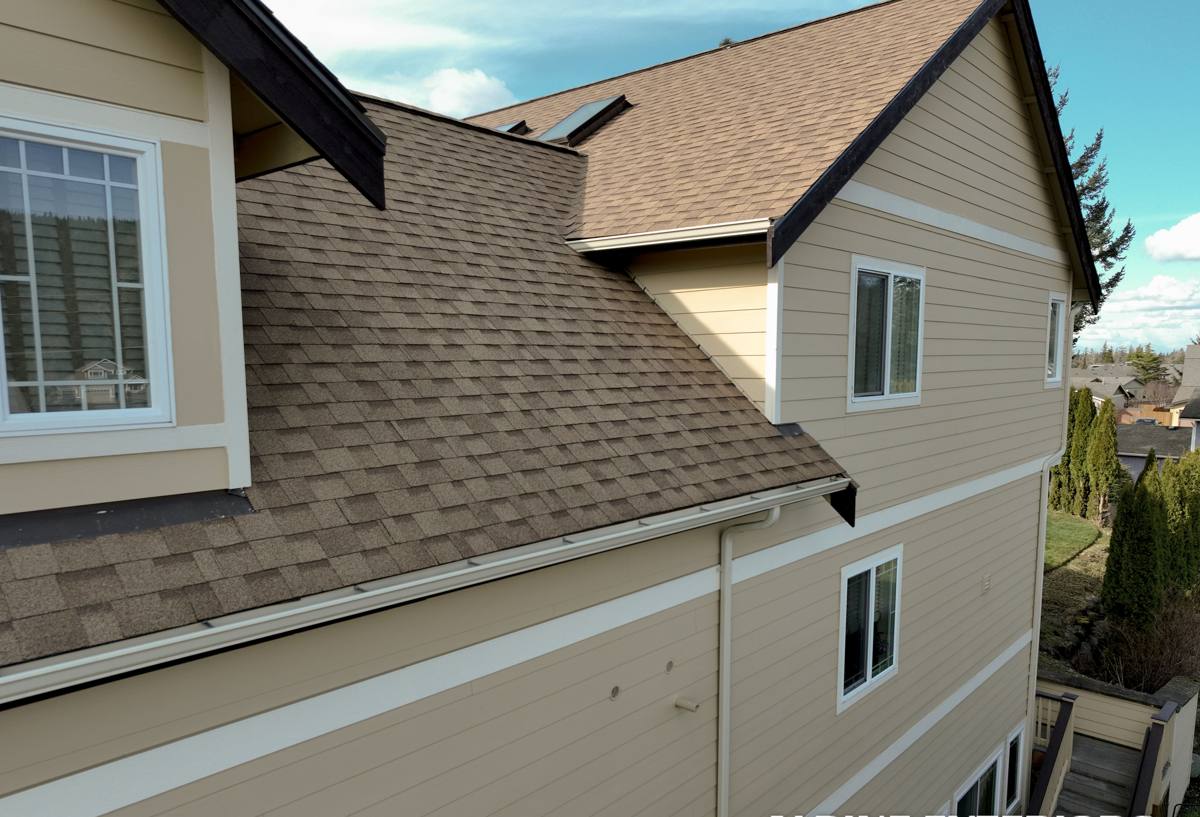
What Lynden's Climate Does to a Deck Over Time
Whatcom County weather is deceptively hard on exterior wood and composite structures. It's rarely dramatic — no hurricanes, no extreme freeze-thaw cycling like the Midwest — but it's relentless. That's the part people underestimate.
Salt Air and Metal Fatigue
Homes closer to the water pick up salt-laden air that settles on every exposed surface, including deck fasteners, joist hangers, and railing hardware. Standard zinc-coated screws and connectors that would last decades in a dry inland climate can start showing corrosion in a fraction of that time here. Once a fastener starts to corrode, it weakens exactly where you can't see it — inside the joint.
Driving Rain and Water Intrusion
Rain in this region doesn't just fall, it drives — pushed sideways by wind off the water and through the valley. That means water gets forced into places a calm, straight-down rain never would: under railing base plates, behind ledger board flashing, into end-grain cuts on decking boards, and into any gap where two materials meet without proper sealing.
Moss, Algae, and Surface Breakdown
Lynden's moss season is long, largely because the conditions that grow moss — shade, moisture, and mild temperatures — are present here most of the year. Moss and algae aren't just cosmetic. On wood decking, they hold moisture against the board surface, which accelerates rot. On composite decking, buildup in the grain pattern can make boards dangerously slick and, if left unaddressed, stain permanently.
What a Correctly Built Deck Looks Like Here
A deck that's going to perform in this climate isn't built with different tools — it's built with different priorities. The structural bones matter as much as the surface people walk on.
Substructure and Framing
- Ledger board flashing that actually sheds water away from the house band board, not just a bead of caulk
- Joist tape or a comparable moisture barrier on top of every joist, so fasteners don't create a wick point into the wood
- Stainless steel or heavy-duty coated fasteners and hardware rated for coastal exposure, not standard interior-grade hardware
- Proper airflow underneath the deck — low decks with no ventilation trap moisture and grow moss and mildew in the crawlspace faster than anywhere else on the structure
- Footings sized and set for our local soil and frost conditions, not a generic span table pulled from a national code minimum
Decking Surface Choices
There's no universal "best" decking material — there's a best material for a given budget, maintenance appetite, and exposure level. Here's how the common options actually compare for a Lynden-area install.
| Material | Moisture Behavior | Moss/Algae Resistance | Maintenance |
|---|---|---|---|
| Pressure-treated wood | Absorbs and releases moisture with seasons; needs sealing to control swelling | Low unless treated and cleaned regularly | Annual cleaning and re-sealing recommended |
| Cedar | Naturally moisture-resistant, but still an organic material that will weather | Moderate; still needs periodic cleaning | Periodic oiling or staining to maintain color and protection |
| Composite decking | Doesn't absorb water into the board core, but surface film can trap moisture on top | Can still grow surface algae in shaded, damp spots without cleaning | Low; occasional washing to prevent buildup |
| PVC/capped polymer | Fully moisture-sealed board surface | Best resistance of the group; slick buildup still possible in deep shade | Lowest; soap-and-water cleaning as needed |
For homes in shadier, damp-prone spots of the Lynden area, we usually steer clients toward composite or capped polymer decking specifically because of how much less upkeep it demands against moss compared to bare wood — not because wood is a bad material, but because the maintenance burden in this exact climate is higher for it.
Railings, Fasteners, and the Details That Get Skipped
Most deck failures we're asked to diagnose in this area aren't failures of the decking boards themselves — they're failures at the connection points. Railing posts that were through-bolted without proper flashing. Stair stringers set directly on grade without a gap for water to escape. Fasteners that were the wrong grade for a coastal environment. These are the details that separate a deck that looks fine for two years from one that holds up for twenty.
A Practical Pre-Build Checklist
- Confirm ledger flashing integrates with existing siding and house wrap, not just caulked over it
- Specify stainless or coastal-rated hardware for every structural connection, not just the visible fasteners
- Plan for a minimum ventilation clearance under low decks
- Choose a decking material based on the actual sun/shade exposure of that specific spot on the property, not a blanket choice for the whole house
- Include a stair and railing layout that sheds water off flat surfaces rather than pooling it
- Ask what the fastening pattern is for composite or PVC boards — hidden fastener systems have their own moisture and gapping requirements
Our Process for a Lynden Deck Project
We keep the process straightforward because a deck build shouldn't feel like a mystery to the homeowner paying for it.
1. On-Site Evaluation
We walk the actual space — sun exposure, shade patterns, drainage, existing structure if it's a rebuild — before recommending a single material. A deck on the shaded north side of a Lynden lot needs different decking than one that gets full afternoon sun.
2. Material and Layout Discussion
We go over the honest trade-offs between wood, composite, and capped polymer for that specific location, along with railing style, stair placement, and any code-required elements like guard height and baluster spacing.
3. Build, With Attention to the Parts You Won't See
Flashing, joist protection, hardware grade, and ventilation get handled the same way whether or not anyone will ever inspect them after the boards go down — because those are the parts that determine whether the deck is still solid in fifteen years.
4. Final Walkthrough
We walk the finished deck with the homeowner, cover basic maintenance expectations for the material chosen, and make sure everything meets what was discussed at the start.
Why Hiring a Crew That Already Works in This Area Matters
A deck built to a generic national spec will often pass a basic inspection and still fail early here, because the spec never accounted for salt air, wind-driven rain, or a moss season that runs most of the year. A crew that regularly works Lynden and the broader Glenhaven area already knows which fastener grades hold up, which decking surfaces actually resist moss buildup instead of just claiming to, and where water tends to find its way into a structure in this specific climate.
That local pattern recognition is the difference between a deck that needs board replacement in year five and one that just needs a wash-down and an occasional hardware check for the next couple of decades.
Maintenance Realities After the Build
No decking material in Whatcom County is truly maintenance-free — that's a marketing phrase, not a fact of the climate. What varies is how much maintenance and how often.
- Wood decking benefits from an annual inspection for soft spots, especially near ground contact points and stair stringers
- All decking types should be swept clear of wet leaf and debris buildup through fall, since trapped organic matter is what starts moss growth
- Railing hardware and structural connectors are worth a visual check once a year for early corrosion, particularly on homes closer to the water
- A periodic wash-down — even just a stiff brush and mild cleaner — does more to prevent moss than any sealant alone
If you're planning a new deck, replacing an aging one, or just want an honest read on whether your current deck's problems are cosmetic or structural, we're happy to come take a look. The estimate is free, there's no pressure attached to it, and you'll get a straight answer about what your specific property actually needs — use the form below to get started.