 Glenhaven Siding
 Windows Built for Lynden's Weather, Not Just Its Openings
Lynden sits in a part of Whatcom County where the weather doesn't do anything in half measures. Winters bring long stretches of driving rain that comes in sideways more often than straight down. Damp air off the Puget Sound region lingers in shaded corners of a house for months. And nearly every property in this area has a moss season — that stretch where anything horizontal, shaded, or slow to dry starts growing green. Windows here don't just need to look good and open smoothly. They need to shed water fast, resist the slow creep of moisture into wall cavities, and hold up to salt-laden air without their seals, hardware, or finishes breaking down early.
"Custom" in this context doesn't mean fancy shapes or oversized glass for its own sake. It means the window is sized, flashed, and specified for the actual opening and actual exposure of your house — not a stock size that's close enough. On older Lynden homes especially, openings are rarely perfectly square or a standard dimension, and the difference between a window that's custom-fit and one that's shimmed and caulked into place shows up as a callback a few winters later.
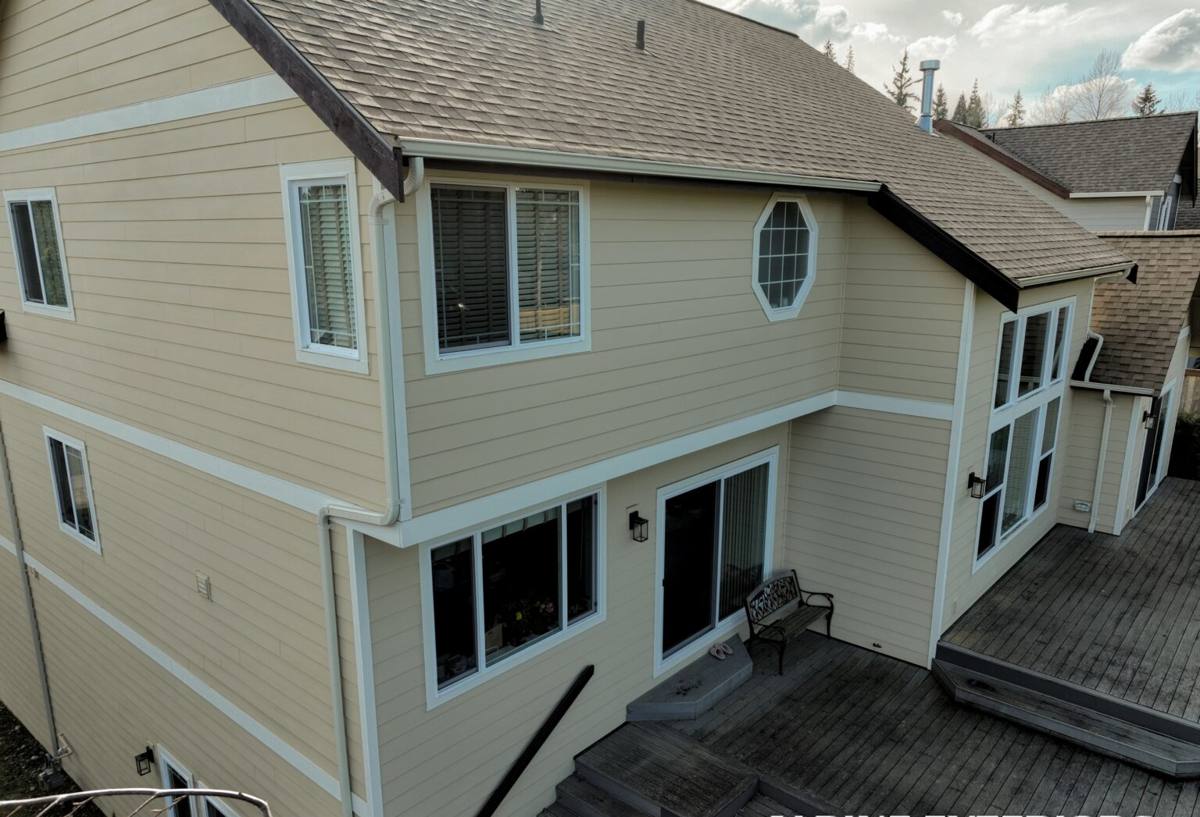
What Whatcom County Weather Actually Does to a Window
It helps to understand the specific ways this climate attacks a window assembly, because it explains why some shortcuts that work fine in drier climates fail here.
Driving rain and wind-driven moisture
Rain that hits a window straight-on mostly runs off. Rain that's pushed sideways by wind gets forced up under sills, into corner joints, and behind trim if the flashing and sealant details aren't done correctly. A window can look watertight for years and still be slowly wicking moisture into the framing around it.
Salt air and hardware corrosion
Proximity to Puget Sound means airborne salt reaches further inland than most homeowners expect. Salt exposure accelerates corrosion on lesser-grade hardware, screws, and metal window components. Locks that used to move smoothly start binding. Cheaper cladding and fasteners show pitting and discoloration years before they should.
Moss, algae, and prolonged dampness
Shaded sills, north-facing walls, and anywhere airflow is limited stay damp longer here than in drier regions. That extended dampness is exactly what moss and mildew need to take hold on sills, trim, and caulk lines. Once organic growth gets a foothold in a seam, it holds moisture against the material and speeds up rot and finish failure.
Temperature swings and condensation
Cool, wet winters against a heated interior create real condensation pressure on glass and frames. Low-quality glazing or a poor seal shows this first — fogging between panes, or a steady drip line on the interior sill.
Signs Your Current Windows Are Losing the Fight
Most window failure in this climate is gradual. By the time it's obvious, there's usually been water intrusion for a while. Here's what we look for, and what you should watch for between now and your next estimate.
- Fogging or a milky haze between panes of double- or triple-glazed units — the seal has failed and the gas fill is gone
- Soft or spongy wood at the sill or the trim directly below the window
- Paint that bubbles, peels, or won't hold near the bottom corners of the frame
- Visible moss or dark staining creeping along the sill or into caulk joints
- Drafts you can feel with a hand near the frame on a windy day
- Windows that are difficult to open, close, or lock — often a sign the frame has racked slightly out of square
- A musty smell in the room, especially after a stretch of heavy rain
- Visible daylight or gaps around the frame from outside
Any one of these on its own isn't necessarily an emergency. Several together, especially combined with soft wood, usually means water has been getting behind the window for a while and it's worth having someone look before it turns into a larger repair.
What "Correct" Actually Looks Like
A window replacement done right in this climate involves more than swapping the sash. The opening itself has to be prepped and protected, because the window unit is only as good as what it's sealed into.
Removal and opening inspection
Once the old window is out, we check the framing, sill, and sheathing for hidden rot or moisture damage before anything new goes in. On older Lynden homes this step regularly turns up sill damage that wasn't visible from outside — better to find and fix it now than seal it behind a new window.
Flashing and water management
This is the step that determines whether a window lasts fifteen years or thirty in this climate. Proper flashing — sill pan, jamb flashing, and head flashing integrated with the house wrap or building paper — directs any water that does get past the exterior seal back out, instead of letting it pool at the sill or track into the wall cavity.
Sizing and shimming
Custom sizing means the unit is built or ordered to fit the actual opening, shimmed square and plumb, and fastened per manufacturer spec — not forced into a close-enough hole and packed with extra caulk to hide the gap.
Sealing and finish work
Exterior sealant, interior air sealing, and trim work all have to be done in the right order and with materials rated for this climate's moisture exposure. Skipping interior air sealing is a common shortcut that leads to condensation problems down the line.
Choosing Materials That Hold Up Here
There's no single "best" window material — the right choice depends on your home's exposure, your maintenance appetite, and your budget. Here's how the common options actually perform in Whatcom County conditions.
| Material | Moisture & Salt Air Performance | Maintenance | Typical Fit |
|---|---|---|---|
| Vinyl | Good — won't rot or corrode, though lower-grade vinyl can warp with sun/temperature swings | Low — occasional cleaning | Budget-conscious replacements, rental properties |
| Fiberglass | Excellent — very stable in temperature swings, resists moisture and salt exposure well | Low | Homes with heavy weather exposure, long-term owners |
| Wood (unclad) | Requires diligent upkeep — attractive but vulnerable to this climate's dampness and moss season if not maintained | High — regular painting/sealing | Historic homes where matching original character matters |
| Wood-clad (aluminum or fiberglass exterior) | Good — exterior cladding protects the wood core from direct weather | Moderate | Homes wanting a wood interior look with better exterior durability |
| Aluminum | Fair — durable but a poor thermal performer and can corrode with prolonged salt exposure unless properly finished | Low to moderate | Less common for residential in this climate |
We generally steer clients away from unclad wood on exposed, shaded, or west-facing walls in this area unless they're genuinely committed to the maintenance schedule — not because the material is bad, but because the combination of driving rain and long damp stretches punishes any gap in upkeep faster here than in drier climates.
Glass and Energy Performance
Glass selection matters as much as frame material for comfort and condensation resistance. Double-pane, low-E, argon-filled units are the standard baseline for this climate. Triple-pane adds further insulation value and is worth considering on north- or west-facing rooms that catch the worst of the wind and rain, or for homeowners prioritizing energy costs and comfort near the glass. Whatever the configuration, the seal quality matters more than the marketing — a well-made double-pane unit will outlast a poorly sealed triple-pane one.
Our Process for Lynden Homeowners
- On-site assessment. We look at each opening individually — exposure, existing damage, framing condition — not just a tape measure and a quote.
- Material and glass recommendation. Based on that specific wall's exposure to wind, rain, and sun, not a one-size answer for the whole house.
- Accurate measurement and custom ordering. Units are ordered to the real opening dimensions.
- Removal, inspection, and any needed repair. We address rot or damage found in the opening before installing anything new.
- Installation with proper flashing and sealing. Sill pan, flashing integration, shimming, and sealant done to manufacturer and code standard.
- Interior and exterior finish work. Trim, caulking, and cleanup done to match the rest of the home.
- Final walkthrough. We check operation, seals, and finish with you before calling the job done.
Permits and Code Considerations
Window replacement in Whatcom County can involve permitting depending on the scope — particularly if window openings are being resized, if it's a full-house replacement, or if the work is part of a larger remodel. Egress requirements also apply to bedroom windows in many cases. We handle the permit question as part of the estimate process so there are no surprises partway through the job.
Why a Crew That Already Works Lynden Matters
A contractor who works this specific corner of Whatcom County regularly has already seen how homes here age — which orientations take the worst weather, which older building techniques tend to hide moisture problems, and which materials actually hold up through a full moss season rather than just looking good on install day. That's different from general contracting experience elsewhere. It means fewer surprises during the job and a better chance the flashing and sealing details are done right the first time, since they've been done here before, on houses facing the same rain and salt air yours does.
It also means being reachable if a question comes up after the job — about a warranty item, a maintenance question, or just how a new window is supposed to operate — without dealing with a crew that's moved on to a different region entirely.
Get a Straightforward Estimate
If your windows in Lynden are showing any of the wear signs above, or you're planning ahead for a remodel, we're happy to take a look and give you an honest read on what's needed — no pressure, no inflated scope. Use the form below to request a free estimate.